The GCO 2022 year in review

The GCO 2022 year in review

2022<br />
annual report

The GCO 2022 year in review

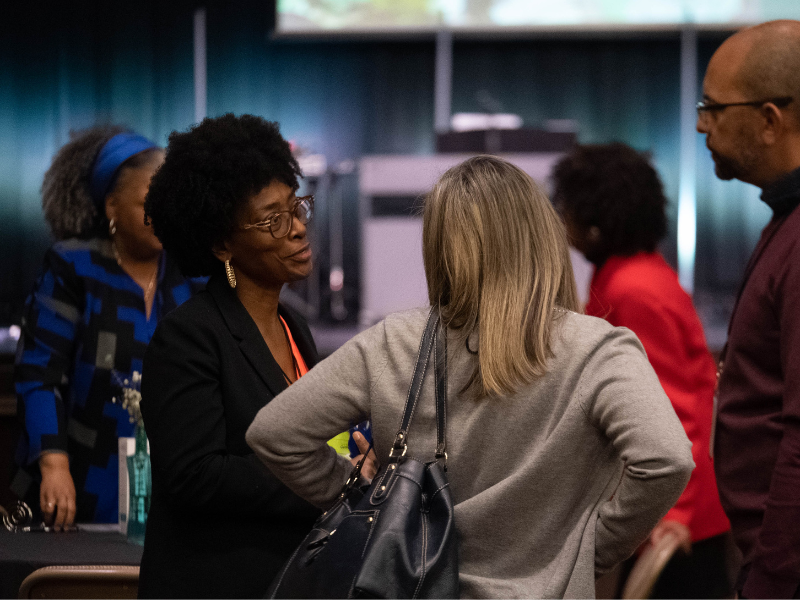
Curious about our projects. progress, and achievements over the past year? The Georgia Center for Opportunity 2022 Annual Report is now available online. This year-in-review consolidates the most crucial information about where we’ve been and where we’re headed, all in one place.

We’re incredibly proud of the strides we’ve made for Georgia families in 2022. The GCO team stepped into 2022 on the other side of the COVID-19 pandemic, ready to lead the charge toward helping our neighbors thrive in education, work, and at home. In today’s climate, the need to alleviate suffering in our communities has never been more urgent.

Here at GCO, we believe that change at the community level is the most important of all. While state and federal policies can drive positive results, nothing is as personally impactful as change close to home. When our friends, families, and neighbors build better lives for themselves, those stories don’t just impact the individuals involved. They reverberate into the greater community. 

Throughout 2022, we remained laser focused on local change. Here’s how we made an impact: 

  • We supported 715 families across the state.
  • Our team hosted 13 workshops and trainings, with 234 in-person attendees and 266 virtual attendees.
  • Through the BETTER WORK program, we continued to help Georgia’s most vulnerable individuals find self-supporting, meaningful work.
  • Our Gwinnett County and Columbus BETTER WORK chapters expanded to 400 new job-seekers, 95 workplace partners, and 42 mentors.
  • GCO added Missouri and Utah to the BenefitsCliffs.org program, fueling our ongoing goal to encourage employment by overhauling the social safety net—bringing the overall initiative to 12 states (one-third of the nation’s population).
  • Our team successfully advocated for a bill during the Georgia General Assembly’s 2022 session that expands the state’s tuition tax credit scholarship by $20 million—giving over 4,000 additional students access to the program.
  • We attracted over 500 individuals to be a part of our relationship enrichment program, offering the classes across seven nonprofit partner agencies and seven schools.
  • Through assessments administered by the University of Georgia, we showed that our programs improve behaviors, attitudes, and knowledge, which are all top indicators of future relational wellbeing.
  • GCO’s Promise Scholarship campaign drove 1,050 messages and 7,573 calls to lawmakers across 10 districts. 

In addition to our impact, we garnered some notable achievements:

  • Randy Hicks, GCO president and CEO, was named the 2022 recipient of State Policy Network’s Thomas A. Roe Award.
  • The GCO team received the State Policy Network’s Bob Williams Award for Outstanding Policy Achievement.
  • GCO was included in Atlas Network’s “Top 10 to Watch in 2022” 

While state and federal policies can drive positive results, nothing is as personally impactful as change close to home.”

“While state and federal policies can drive positive results, nothing is as personally impactful as change close to home.”

Throughout our report, we share stories of triumph: marriages revitalized, able-bodied workers gainfully employed, benefits cliffs overcome, and educational opportunities that honor students’ individual needs. You’ll get a glimpse of not only our state and local impact, but of some of the individual lives GCO’s work touched over the past year. These are just a few of our successes, and we’re thrilled to drive more transformation in Georgia over the coming year.

We’re proud of the legacy we’re helping to build for families and individuals in Georgia. Through stronger jobs, educational opportunities, and families, we’re bringing hope and positive charge to the most vulnerable people in our state. Most importantly, we wouldn’t be here without your support. 

Here’s to an impactful 2023.

Read our 2022 annual report here.

Arkansas creates educational opportunity. It’s time for Georgia to step up

Arkansas creates educational opportunity. It’s time for Georgia to step up

student struggling with school work.

Arkansas creates educational opportunity. It’s time for Georgia to step up

Key Points

  • Arkansas is the fourth state in the U.S. to legislate universal educational opportunity — the others are Arizona, Utah, and Iowa.
  • Georgia Senate passed the Georgia Promise Scholarship Act (SB 233) in a 33-23 vote. It will go on to the House next, where it has traditionally faced more opposition.
  • Georgia Senate passed the Georgia Promise Scholarship Act (SB 233) in a 33-23 vote. It will go on to the House next, where it has traditionally faced more opposition. 

Arkansas recently joined a growing list of states that have approved Education Scholarship Accounts, empowering parents to make the best decisions for their child’s unique educational needs.

The accounts, called Education Freedom Accounts (EFAs), will contain around $6,600 in funds per student every year. Families can then use the available funds to pay for education-related fees, including tuition, tutoring, textbooks, therapies, and other costs which have been approved by the state. 

It will take three years to fully phase in the act. By the end of the third year, all students in Arkansas will be eligible for EFAs.

The creation of these accounts makes Arkansas the fourth state in the U.S. to legislate universal educational opportunity — the others are Arizona, Utah, and Iowa.

Now, Georgia could be next.

Last week, the Georgia Senate passed the Georgia Promise Scholarship Act (SB 233) in a 33-23 vote. It will go on to the House next, where it has traditionally faced more opposition. 

If enacted into law, the Georgia Promise Scholarship Act would fund $6,000 per student every school year. Promise Scholarships would give families the financial freedom to select an educational environment that best fits their child’s needs. A wide range of educational expenses would be approved under the act, including tutoring, virtual classes, private school tuition, homeschool curriculum, special needs therapies, technology, college courses, and more. 

In the wake of the pandemic, parents nationwide are demanding more options for their children’s education. Learning loss is one of many major crises to arise from nationwide lockdowns. At Georgia Center for Opportunity, we believe it is the state’s responsibility to help reverse that loss.

Families across the state need access to more opportunities now. With Promise Scholarships, Georgia’s children will have more opportunities to excel at school. Every child deserves empowerment through a high-quality education that works best for him or her. We believe that Georgia should lend support to every educational option for its students, including alternatives like homeschooling and virtual learning. 

Promise Scholarships would give families the financial freedom to select an educational environment that best fits their child’s needs.

Promise Scholarships would give families the financial freedom to select an educational environment that best fits their child’s needs.

Over the past few years, more and more families have embraced alternatives to public education. While the majority of students across Georgia still attend public schools (and will likely continue to in the future), a growing minority of families are choosing differently. And, as the nation collectively faced an unprecedented pandemic, parents began to realize how many options were available to them outside the traditional school system.

Traditionally, families who select private schools or opt to homeschool receive no financial support to do so. Despite that choice, their tax dollars continue to fund public schools whose services they do not use. 

Parents with special needs children struggle to find school systems that will accommodate their children’s needs. Often, they find that one facility lacks all the important resources they need so their children can thrive at school. While they could opt to build a hybrid program for their children, which might include home healthcare or virtual classes, those alternatives are cost-prohibitive. 

Ultimately, we believe that tax dollars should follow each child, meeting their unique needs along the way. There is no one-size-fits-all solution when it comes to education. Public, private, home, and virtual education are of equal value, and as each family decides what is best for their children, Georgia should be willing to meet them where they are. 

As the Georgia Promise Scholarship Act moves to the House, we urge you to contact your local representative to advocate for this bill. Our children can’t wait any longer for educational support that fits their individual needs and allows them to thrive. The future is depending on us.


Let’s transform parenting in Georgia! Recapping the Raising Highly Capable Kids kickoff event

Let’s transform parenting in Georgia! Recapping the Raising Highly Capable Kids kickoff event

Let’s transform parenting in Georgia! Recapping the Raising Highly Capable Kids kickoff event

Key Points

  • Positive relationships impact the opportunities and potential future for every child.
  • GCO is partnering with RezilientKids to bring the evidence-based program, Raising Highly Capable Kids to the Gwinnett area.
  • GCO is recruiting partners who are willing to local partners who could hold a class and for adults who might be interested in taking it.

Nothing has more impact on the life of a child than positive relationships.

That basic truth was the cornerstone of a kickoff event March 9 to launch the Raising Highly Capable Kids (RHCK) program across Georgia.

We’re thrilled to report that 43 people representing more than 20 community organizations attended the event at First United Methodist Church of Lawrenceville. The kickoff helped us build an inaugural network of RHCK trainers and liaisons who will help the Georgia Center for Opportunity (GCO) team bring the program to communities.

Attendees at the kickoff event heard from Angela Davis, regional representative for the Southeast region for RezilientKids, the national nonprofit that publishes the RHCK program. She shared how the program will work in Georgia.

Angela Davis of RezilientKids shares the power of Raising Highly Capable Kids with Gwinnett-area leaders.

Angela Davis of RezilientKids shares the power of Raising Highly Capable Kids with Gwinnett-area leaders.

What is RHCK?

GCO has partnered with RezilientKids to present the program to adults across Georgia. RHCK is a 13-week evidence-based parenting program developed to build stronger families by empowering parents with the confidence, tools, and skills they need to raise healthy, caring, and responsible children.

The program increases parents’ knowledge and skill level of the essential building blocks every child needs — the 40 Development Assets from Search Institute, which are proven to increase childhood resiliency and academic achievement.

The lessons are available to schools, nonprofits, churches, and other organizations focused on helping to build stronger families for Georgia — and ultimately stronger communities. Through a community grant issued by RezilientKidz, GCO is facilitating course offerings for interested parents who want to learn more effective skills and strategies as they raise their children.


What’s next?

We’re still looking for partners across Georgia to bring the RHCK program to parents. We are starting an interest list for local partners who could hold a class and for adults who might be interested in taking it.

If you are interested in referring contacts or getting involved in other ways, contact Joyce Mayberry, JoyceM@foropportunity.org, to start the conversation.

The Georgia Promise Scholarship (SB 233): Questions and Answers

The Georgia Promise Scholarship (SB 233): Questions and Answers

The Georgia Promise Scholarship (SB 233): Questions and Answers

Key Points

  • The Georgia Promise Scholarship is a statewide program that empowers parents to access the best education for their child. It creates state-funded scholarships that give eligible families up to $6,500 per student for each school year.
  • Eligibility is limited to students zoned for low-performing public schools and who meet certain other criteria.
  • Applications will be open for families during four periods in 2026. Sign up to be notified of application deadlines and tips.

Across the country and in Georgia, parents have been calling for more choice and flexibility in K-12 education. In 2024, Georgia took a major step forward by passing the state’s first-ever education savings account program, the Georgia Promise Scholarship.

The program started during the 2025-2026 school year, and it gives eligible families up to $6,500 per year to access the education opportunity best suited to their child’s needs. Visit the program website for more information on how to apply. 

What is the Georgia Promise Scholarship? 

The Promise Scholarship gives families financial support to access education opportunities outside the public school system. Families can receive up to $6,500 per year for approved education expenses. This type of program is also known as an education savings account.

How does the Georgia Promise Scholarship work?

The state sets aside the scholarship amount in an account that the parent can direct. Parents can use these funds to choose the education environment that supports their child’s unique learning needs.

When does the Promise Scholarship program open? 

There will be four application periods for families in 2026:

  • March 1-31
  • May 1-31
  • August 1-31
  • November 1-30

Families accepted into the program will receive funding for the 2026-2027 school year. See the Georgia Promise Scholarship website for more details.

What can Georgia families use Promise Scholarships for? 

Families can use the funds for a variety of educational expenses, giving them flexibility to choose the best education for their child’s needs. Approved expenses include: 

  • Private school tuition and fees 
  • Tutoring services 
  • Textbooks and curriculums 
  • Education therapies 
  • Education-related technology 
  • Transportation costs

Who can apply for a Promise Scholarship? 

To be eligible, families and students must meet the following criteria:

  • Parents must have lived in Georgia for at least one year, with exceptions for active-duty military families.
  • The student must be zoned for an eligible public school (one included on the Governor’s Office of Student Achievement’s list of the bottom 25% of public schools based on performance). 
  • The student must have been enrolled in a Georgia public school for two consecutive semesters or be a rising kindergarten student.
  • The student can’t be enrolled in a local school system, charter school, or state charter school while participating in the scholarship program.

The program prioritizes lower-income Georgia families. If applications exceed available slots, priority goes to families with household incomes below 400% of the Federal Poverty Level (roughly $129,000 for a family of four).

Parents must agree to use the accounts only for qualifying educational expenses. Once a child receives a scholarship, they remain eligible through 12th grade, until they enroll in a public school, or until they leave Georgia.

How is the Promise Scholarship amount determined?

Amounts have initially been set at $6,500, which is approximately the average per-pupil amount the state sends to local school districts based on Georgia’s current student funding formula. The final 2026-2027 scholarship amount will be announced soon.

Who does the Georgia Promise Scholarship help?

Parents: Parents know better than anyone that children are unique and that a one-size-fits-all education approach doesn’t work for most kids. Georgia’s Promise Scholarship gives parents financial support to access other education opportunities when the local public school isn’t the best fit.

Students: For families seeking alternatives to under-performing public schools, Promise Scholarships provide an opportunity for students to access other school options, including those that may not be available or affordable otherwise. 

Public schools: States with robust education choice programs see better outcomes for all students, including those in the public school system. Education savings account programs, in particular, have a track record of empowering public schools to improve their budgets and increase student achievement.

Are Promise Scholarships the same thing as school vouchers?

No, they’re two different types of programs. School vouchers allow parents to use public education dollars for private school tuition only. Parents can use the Promise Scholarship for a wider range of education expenses, offering families more flexibility. 

Are Promise Scholarships the same thing as 529 plans?

No. With a 529 plan, parents are responsible for contributing money to an account to save for their child’s education expenses. Promise Scholarships are state-funded and don’t require parents to contribute any of their own money. Parents can choose to use a Promise Scholarship account for education savings because up to 50% of unused funds can be carried forward to the next school year, but the account doesn’t have the same tax benefits that 529 plans do.

Do other states have programs like Georgia’s Promise Scholarship? 

Yes, 18 states have adopted some form of an education savings account program, including all of Georgia’s immediate neighbors. 

Several other states are moving their education savings account programs to a universal eligibility set-up, where every kid has access regardless of income, race, zip code, or other circumstance. 

Georgia is paying attention, and legislators are considering options that will grant Promise Scholarship eligibility to more families. During the state’s 2025 legislative session, senators introduced SB 124, which would allow the children of active-duty military families to be eligible for the Promise Scholarship program, even if they aren’t zoned for a low-performing public school. Georgia lawmakers also introduced SB 152, which would grant eligibility to the biological or adopted children of foster parents, even if their local school isn’t under-performing. 

These bills didn’t become law in 2025, but they could be reintroduced in the 2026 legislative session. If they move forward, they could give more kids the best possible opportunities at school and in life. 

Do Promise Scholarships take money away from Georgia’s public schools? 

No. The Promise Scholarship is funded separately from the money allocated to public schools.

Will Promise Scholarships help low-income families? 

Yes. Programs like the Promise Scholarship are some of the most equitable education pathways for students. They give low-income families more opportunity to access schooling options that are often only available to families with greater financial resources.

Georgia’s Promise Scholarship is also set up to give lower-income families priority if applications exceed the number of slots available.  

Does the Promise Scholarship hurt homeschooling families? 

No. There are no provisions in the proposed law that would prevent homeschooling families from continuing down that education path. 

In fact, Georgia’s Promise Scholarship could make homeschooling an even more feasible option. Eligible families can use the funds to pay for curriculums, courses, tutoring, or other education resources needed to homeschool.

Does the Promise Scholarship hurt homeschooling families? 

No. There are no provisions in the proposed law that would prevent homeschooling families from continuing down that education path. 

In fact, Georgia’s Promise Scholarship could make homeschooling an even more feasible option. Eligible families can use the funds to pay for curriculums, courses, tutoring, or other education resources needed to homeschool.

Georgia is one of the top states for economic freedom

Georgia is one of the top states for economic freedom

Financial freedom - ATL

Georgia is one of the top states for economic freedom

Key Points

  • Georgia continues to be one of the most business friendly states. 
  • Georgia did not impose strict lockdowns during the pandemic. 
  • We believe that when the government refrains from heavy-handed intervention in the economy, everything from community life to poverty rates, job opportunities, upward mobility, and life expectancy will keep getting better.

Georgia is one of the most economically free states in the entire country, and that means more opportunity for our residents. That’s according to a new report from the Fraser Institute that tracks economic freedom in North America.

It’s clear that people across the country are realizing what a great place Georgia is to work and raise a family. According to Census.gov, Georgia is also among the top 10 most populous states in the U.S., and our population grew during the COVID-19 pandemic. We believe that our economic freedom is directly tied to this influx of new Georgia residents who moved into the state between 2021 and 2022.

The Fraser Institute report backs this statement. In the report, five out of the top 10 states for economic freedom are also in the top 10 list for population growth. Conversely, virtually all the states (roughly 17) losing population over the last few years are among the worst states in the nation for economic freedom.

“The truth is, the economic results Georgia has enjoyed over the past few years translate into our people’s wellbeing.”

“The truth is, the economic results Georgia has enjoyed over the past few years translate into our people’s wellbeing.”

A closer look at Georgia’s economic freedoms

Relative to other states in the U.S., Georgia has a low tax burden. This includes income tax and business taxes. Georgia also has a relatively low regulation on businesses and sole proprietors. 

Georgia’s economic freedoms were already in place before the COVID-19 pandemic, but they became more apparent during the 2020 lockdowns. The Fraser Institute’s study covered the first five months of COVID restrictions in North America, and it showed that many of Georgia’s economic improvements were the direct result of the lack of tight restrictions in our state. 

During 2020, Georgia didn’t impose widespread lockdowns or restrictions. We lifted those restrictions as quickly and reasonably as we could, given the situation. Without the burden of long-term, severe economic restrictions and COVID-related mandates, we gave people and businesses room to grow. 


The good life, with room to grow

The truth is, the economic results Georgia has enjoyed over the past few years translate into our people’s wellbeing. Our economic freedoms here directly impact the daily lives of people from all backgrounds. By virtue of the state government’s low level of intervention, our communities are positioned to continually improve over time. 

While economic freedom may not be experienced the same way by all (because the poor in a free state may not — and likely do not — feel very free), economic freedom generally means that even the poor benefit. That’s because, in free economies, there’s more charitable giving, more organizations who can help, and more job opportunities to help someone escape poverty for good.

Here at Georgia Center for Opportunity, we believe that when the government refrains from heavy-handed intervention in the economy, everything from community life to poverty rates, job opportunities, upward mobility, and life expectancy will keep getting better. We’ll draw people here who want to share in and enjoy those economic opportunities. And together, we can continue working toward creating a brighter future for our state and the people who live here.

We’re helping the water industry over the next five years

We’re helping the water industry over the next five years

The Water Tower water industry

We’re helping the water industry over the next five years

Key Points

  • BETTER WORK Gwinnett and The Water Tower are partnering to expand water industry job training to high school students and young adults. 
  • The water industry will need to fill 1200 positions over the next five years. 
  • Without skilled water workers our community infrastructures will suffer.

BETTER WORK Gwinnett and  The Water Tower are joining forces. The Water Tower is a nonprofit organization “bringing together the public and private sectors of the water industry, side by side with academia and nonprofits, to tackle the industry’s greatest challenges.”  

The next five years are crucial for the water industry as they expect 1200 water-related jobs opening in North Georgia. This generates the need to recruit, train, and vary operations to be most effective for the communities served.  

A career in the water industry transcends pandemics and technology because it is a needed resource no matter what happens around us. To help fill the workforce needs, The Water Tower created training programs in the areas of Water and Wastewater Operators, Lab Analyst, Maintenance Technicians, and Field Technicians. The programs allow participants to receive the education and hands-on experience needed to walk into a living-wage career and not just a job.  

The training course was designed for those in high school work programs, and those who may be already working but looking to expand their knowledge and create a career path in order to provide for themselves and their families.  

Without skilled water laborers, many of the structures, products, and systems that are central to our daily lives would simply not exist. Furthermore, careers in the water industry offer stability, competitive wages, and opportunities for advancement, making them an important pathway to a fulfilling and prosperous life.


From protecting our precious water resources to providing clean and safe drinking water to communities, a career in this field is both fulfilling and impactful.

From protecting our precious water resources to providing clean and safe drinking water to communities, a career in this field is both fulfilling and impactful.

The water industry is a critical component of any healthy and thriving society, and the contributions of skilled laborers are truly invaluable. Careers in this field offer availability in many locations around the state, plus flexible hours to give workers the opportunity to create work-life balance.

To learn more about The Water Tower and the training programs offered, contact our BETTER WORK Gwinnett team. 

From protecting our precious water resources to providing clean and safe drinking water to communities, a career in this field is both fulfilling and impactful.