by Georgia Center for Opportunity | Oct 25, 2013
Breakthrough Norcross completed a series of meticulously planned working meetings and conversations with community stakeholders culminated on October 14th. This process was facilitated by GCO, but was driven by the nearly 70 non-profit, church, and other community leaders who have participated in the meetings. Each of these leaders have integral expertise and front line experience that provide insight into the specific barriers to opportunity that exist for Peachtree Corners and Norcross students.
The vision that these leaders have adapted for Breakthrough Norcross is:
Every child in the Norcross school cluster will have the necessary support to succeed academically, enter into a meaningful, self-sustaining career and develop into a contributing member of the community.
Success is not going to come easily, and it is certainly not going to come quickly, but this vision is worthy of intense pursuit, and given the unique mix of community assets and intervention programs within the Norcross cluster, I believe we are well positioned to begin the process of transforming our current reality into this great vision.
The image that comes to mind when I think of how this vision positions Breakthrough Norcross is one of a sculptor and large block of marble. Right now our community – the marble – definitely has some rough edges, and maybe some unsightly blemishes, but it’s still a large block of marble, ripe with potential.
Just as a sculptor starts with the end in mind, taking strategic, intentional action that will slowly move him toward his goal, we have painted a clear picture of where our efforts should take us, now all that’s left is to pick up the hammer and chisel. There will be some miss-strikes of the hammer, we might have to stop and re-tool for certain aspects of the project, and there will definitely be some blisters during the work. But, because we have a clear vision, we can now begin the work of making that vision into a reality.
by Georgia Center for Opportunity | Oct 22, 2013
You do not want to miss Taste Shop Give, Thursday, November 7th! If you were with us last year at the Atlanta History Center you will remember the great entertainment and awesome selection of auction items, as well as the featured favorite dishes of various U.S. Presidents, all prepared under the direction of renowned former White House chef Walter Scheib.
This year, Georgia Center for Opportunity’s third annual Taste Shop Give event will be held at The Ballroom at Twelve, Atlantic Station. The evening will include a live auction, allowing you the chance to bid on some fantastic items. Even better, Chef Scheib will be preparing a formal State dinner in the same fashion as he has prepared countless banquets for heads of State during his tenure under presidents, Bill Clinton and George W. Bush. You will also be presented with an inspiring story of his experience working at the White House when our great Nation was attacked by terrorists on September 11, 2001. This is an exclusive perspective that few of us have the privilege to hear.
www.youtube.com/user/marymillben
Taste Shop Give 2013 will also feature uplifting musical entertainment from two inspirational solo artists, Mary Millben and Shay Watson. Mary has been a featured soloist at The White House and the Kennedy Center, and for events hosting presidents, George W. Bush and Barak Obama, and many others. She performed at the 43rd Super Bowl halftime show with Bruce Springsteen and made her New York theatre debut in the Ray Roderick musical ‘S Wonderful. Prior to entertainment, Millben served as a presidential appointee to President George W. Bush and was recently named a global ambassador for Education Africa.
Shay Watson (www.shaywatson.com) has carved out a place for himself in the global music community as a songwriter, artist and producer. He has written and recorded music with numerous U.S. artists in a variety of genres. He has also had chart success in Europe. Shay is actively involved in Mission of Mercy, a Christian relief mission that helps find sponsors for poverty stricken children in underprivileged areas of the world.
These two artists are not only talented musicians, but socially active contributors to society.
This year we have a generous donor who is willing to match up to $50,000 in donations collected the evening of Taste Shop Give. Donations will be used to support our Breakthrough Georgia initiative. Our mission is to remove barriers to opportunity and ultimately help more Georgians achieve a better life. We do this by focusing our research, advocacy and delivery support on pathways that lead to success and self-sufficiency.
You can become a part of our mission! Join us November 7th for and unforgettable evening. For more information and to register as a guest, please access our event website www.foropportunity.org/tasteshopgive.
by Georgia Center for Opportunity | Oct 16, 2013

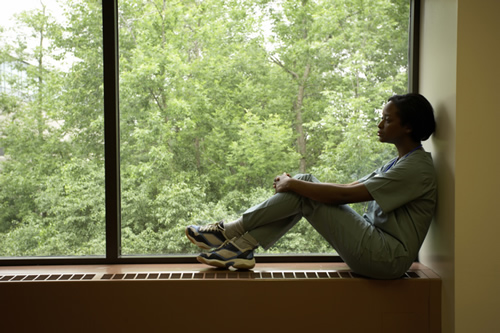
A young, single, African-American woman sat in front of me. Having recently lost her job of six-years in the medical field, she was struggling to keep her apartment and had no other sources of support. I emphasized the importance of not to surrendering and not losing hope. She recognized that I supported and understood her yet she didn’t look me in the eye because she couldn’t hold back the tears. Anyone might find themselves in a similar situation and for different reasons. Before we had even finished talking, another family needed help with translating. In that short moment, I realized how important volunteering for the Norcross Co-Op Ministry can be.
As a research fellow for the Breakthrough Norcross initiative, I was able to spend time volunteering for the Norcross Co-Op Ministry during a GCO day of service. Upon first hearing its name, the Norcross Co-Op Ministry, I expected to walk into a church setting. Instead the Co-Op seemed more like an organized state social service agency.
Serving as an intake volunteer, I observed people sitting in the lobby waiting to be directed into private cubicles where they sat and discussed their issues. Each year the Co-Op serves over 10,000 people in addition to partnering with 28 local churches. These partnerships allow for more resourceful and effective service to the community by donating food, clothes, baby items, Christmas gifts or even financial aid for bills or rent. Uniquely, the Co-Op is the only non-profit organization in Gwinnett County that provides temporary housing for the homeless.
Shaken, individuals enter with no food, no home, or no hope. The crowds seeking aid range from young adults, single mothers, elderly, homeless, educated and previously wealthy. Sadly, an overwhelming percentage of those seeking aid are minorities. Many come in after an unexpected job loss and need help gaining marketable skills to compete for another job. They wonder about educational options such as degrees, certifications or high school diplomas. Most simply need aid to provide for their immediate necessities.
Life’s unexpected circumstances often weaken people causing their family, state of mind and financial resources to collapse. Those who suffer unexpected misfortunes or lack necessary resources may feel hopeless and even fall into deeper troubles. The Co-Op exists to be present in times of emotional or financial downturn where it seems that there is no way out. In recognizing the value for a positive attitude and hope for a better future, the Co-Op is able to recommend churches and spiritual support. Its staff and volunteers instill hope and purpose while establishing trust with the community and providing essential resources.
This perspective is foundational to the Co-Op. The building was donated by businessman Jim Ellis, owner of a host of car dealerships throughout the region, in honor of his son who committed suicide. The Co-Op works to combat similar feelings of hopelessness. That is why the Co-Op has an exemplary ability and vision to change lives. We all have a hope for a better future; the Co-Op makes sure that the people who enter seeking help have reached hope and an expectation to change the reason why they entered in the first place.
by Georgia Center for Opportunity | Oct 9, 2013
As Breakthrough fellows at the Georgia Center for Opportunity (GCO), experiences in the community provide unique insights and personal touches to the research they lead. Recently Michael, Yenipher and Aundrea had the opportunity to visit Ivy Preparatory Academy, an all- girl charter school in our backyard here in Norcross, GA.

-
- Students at Ivy Prep practice their “ones” and “twos”. Courtesy: Ivyprepacademy.org
Michael:
From the moment we arrived I could tell Ivy Prep is devoted to one powerful mission – developing college-ready scholars. And not just for any college – this school strives to prepare its students to be scholars at our nation’s most prestigious colleges and universities.
Touring the campus, friendly student ambassadors directed us from classroom to classroom where we noticed that each time a teacher asked a question, instead of raising their hand or avoiding eye contact with the teacher, students would raise one or two fingers indicating that they either knew the answer (“ones”) or were unsure of it (“twos”). This method of student participation was just one unique aspect of the Ivy Prep culture we became familiar with during our tour.
Culture is a critical component in creating the unique setting at Ivy Prep. A week prior to starting sixth grade students learn to raise one or two fingers when responding to a question, what to wear and what not to wear, how they are to behave transitioning between classes, and so forth. This week of training, known as “Culture Week”, sets the tempo for the remainder of their educational experience at Ivy Prep. Additionally, the culture prepares students to thrive in alternative classroom settings. For high schoolers at Ivy Prep, an integrated technological approach– or blended learning model– allows students to complete all of their courses online with the exception of math and language arts providing more freedom to work at their own pace.
Yenipher:
While Touring Ivy Prep, there were posters of different colleges and universities, motivational quotes and pictures of role models everywhere. Interacting with a group of girls waiting outside a classroom, they spoke well of their school experience, were well disciplined, educated and motivated to go to college.
The visit solidified the importance of educational attainment. Parents sometimes underestimate the large percentage of time children spend in school, the importance of the quality of their education and the environment that shapes their development. It can take extra steps to find the right school for your child, but it can make a difference of a lifetime.
Through the example of Ivy Prep, it seemed many more students in Georgia can benefit from opportunities such as these. Many parents are just not aware of Ivy Prep or similar schools and how it can transform a child for the better. Parents need to value educational attainment in order for their child to do so. One values educational attainment by making sure that the school their child attends produces quality results and instills principles the parent believes in.
Aundrea:
Within the beautiful facilities of Ivy Preparatory Academy, it touched me as a woman of color to see such a diverse group of young ladies being directed to “Believe. Achieve. Succeed”–the school’s foundational motto. Likewise, the evident culture of college at Ivy Prep, attentive participation within the classrooms, and stylishly uniformed students bustling about all served as a great introduction to charter schools for me.
More than 2.3 million students now attend charter schools across the U.S., and these innovative models are quickly becoming staple education options in communities all around Georgia. For parents exploring alternatives to a traditional public schools, theses charter school settings can be positive learning environments for kids. Additional time in the classroom, blended learning models, and the single gender setting–which was adopted to give girls a chance to just be themselves–are some of the ways Ivy Prep aids their students in becoming successful scholars. And all without steep tuition costs!
Still, it is important to remember charter schools face obstacles similar to traditional public schools–such as constricted funding and surpassing state academic standards. If you are considering alternatives to traditional school settings it is important to be thorough in your search for finding the right learning environment for your child. There are many charter schools in the Metro Atlanta Area, so look for schools that fit your child’s interest or offer special programs. Take a tour of a school you are interested in to see the learning model in action. Investigate what success the school has had by checking out testing scores and college placement results. Or ask others in your community about their experience with charter schools. These were all important lessons from our day with the Ivies.
by Georgia Center for Opportunity | Oct 4, 2013
GCO’s Breakthrough Communities initiative is modeled, in part, on the collective impact framework developed by the Strive Partnership in Cincinnati, OH. Over the past few months we have participated in numerous opportunities to learn from Strive, most recently we attended Strive Together’s third annual Cradle-to-Career Network Convening, in Dallas, TX.
To kick the convening off Jeff Edmondson, Strive Together Managing Director, shared a list of “Knowledge Nuggets” that he had gathered over his years of work in the world of educational collective impact. Below are a few that resonated with the work that is taking place in our first Breakthrough Community, Peachtree Corners & Norcross.
“I don’t care where it lives, I care how it behaves.”
One of the first questions I was asked at the convening was, “Where do you live?” To which, I answered “Buford, GA.” The woman asking the question was quick to clarify what she was asking, “No, What is your anchor entity? Where does your partnership live?” Now I get it. I shared briefly about GCO and how it is serving to support the Breakthrough PCN initiative. This really framed this Knowledge Nugget for me. One axiomatic realization from the Convening is that there is no normal for cradle to career partnerships. Some “live” in universities, others in United Ways, some in community foundations, a cohort are backed by chambers of commerce. The bottom line is that it should not matter what organization is serving as an anchor entity or backbone support role, what matters is behavior – how successfully is the partnership achieving its collective impact goals.
“There is a difference between engaged and committed.”
This resonated with me immediately. Of course, as one sits across a table from a community leader and brings up the topic of education the leader will be engaged in the conversation. Often community leaders will even be very excited about the efforts that are developing. However, what keeps the wheels of collective impact turning is not engagement, but undoubtedly, commitment. The process simply requires an organizational trust and vulnerability that all but prohibits success without the true long-term commitment of all involved parties.
“Action looks different now.”
Why must you be committed? Because, inevitably, this process is going to open your eyes to ways that action is going to change. Whether you are a funder who has to learn to look past outputs to true measurable outcomes, a non-profit who realizes that a program is ineffective and must be modified or eliminated, or maybe a business who realizes that the true battle ground for work force development is not what you expected – action looks different. There is no room in collective impact for a program that doesn’t push an indicator. Collective impact depends upon continuous improvement, and always pushing toward what proves to be the best solution. It was clear in discussions with partnership directors from around the country that action does look different now.
Through efforts to begin developing a collective impact here in the Norcross and Peachtree Corners communities, we are seeing the truth of these simple quotes lived out, and learning how deeply interconnected they are. The reality is, what matters about an intervention or support program is not who provides it or where it is offered – what should be the bottom line is its efficacy. However, growing that perspective requires some collaboration, which will demand the commitment of involved parties. Ultimately, as this starts to happen action will begin to look very different – and hopefully fare more successful!


