Q&A with North Georgia Works

Q&A with North Georgia Works

North Georgia Works<br />

Q&A with North Georgia Works

Key Points

  • North Georgia Works is a vocational, residential, transitional work program for currently homeless men or men who were recently incarcerated.
  • Guys who are homeless are homeless for mainly three major reasons: They have a pretty intensive criminal history that prevented them from getting a job, they have mental health disabilities, or they have addiction issues.
  • How to handle relationships and how to handle family, how to build relationships, and how to identify good people to have relationships with are skills which will determine success for program graduates. 

Recently, the Georgia Center for Opportunity’s family team partnered with North Georgia Works to offer our relationship training curriculum. In this interview, we sat down with Michael Giddens, executive director of North Georgia Works, to hear more about his organization, the good work being done in the community, and how GCO is helping to advance their mission.

Q: Please introduce us to North Georgia Works. What’s your mission, history, and focus?

North Georgia Works is a vocational, residential, transitional work program for currently homeless men or men who were recently incarcerated. We were modeled after an organization in downtown Atlanta called Georgia Works.

North Georgia Works is a social enterprise. We have created a system that allows us to run a nonprofit staffing agency. So that allows us to approach companies in the area about getting our guys work and working with them for a year while they’re living in our buildings, getting life skills and other financial help and other issues taken care of.

Our guys are working the whole time, earning a little bit of money while they’re in the building. Then, when they graduate from the program, they already have been in the company for years, they’ve been able to save a lot of money. Plus, we’re able to help them get an apartment and a home.


Q: Please give us a rundown of who your typical client is.

Guys who are homeless are homeless for mainly three major reasons: They have a pretty intensive criminal history that prevented them from getting a job, they have mental health disabilities, or they have addiction issues.

So, everybody who comes into our building has one of those three. Or they are guys that have gotten into some trouble — they’ve been chronically arrested. We work with judges and other law enforcement agencies to serve the guys that are leaving jail. They’ll be court-ordered, most of the time, into our programs and be released to us. So they come to us from jail or they’re just about to get released from jail. Then they have to come to our program.


North Georgia Works

“I’m hoping to do with you guys is really help them start rebuilding those relationships, giving them the tools as they especially walk the 12 steps and they’re ready to start making amends. We can re-enter them into those relationships again and see if we can start rebuilding that and let them leave on a better foot.”


North Georgia Works

“I’m hoping to do with you guys is really help them start rebuilding those relationships, giving them the tools as they especially walk the 12 steps and they’re ready to start making amends. We can re-enter them into those relationships again and see if we can start rebuilding that and let them leave on a better foot.”


Q: What does your partnership with GCO look like?

Anybody who’s in a situation that will require a program like ours has enormous barriers. One of the biggest barriers they have is they have burned all bridges with their family. Most of the time, they have kids that they can’t see or they have spouses who have divorced them or parents who have finally given up on them.

Earlier this year, we noticed that a lot of our graduates were still having problems. It was all based on the fact that we had not taught them how to handle relationships and how to handle family, how to build those relationships, how to identify good people to have relationships with. It seems like a complete backdoor problem that our program wasn’t answering that was causing it to undermine everything that we did.

We decided we had to focus heavily on relationships. We started doing that. But that really wasn’t our expertise. Our expertise is jobs, vocational training, and addiction and recovery. We needed help.

When I met Joyce Mayberry, vice president of family at GCO, she told me about everything your organization does. I immediately knew there was a great opportunity to have your team come in and teach these elements on relationships. Your programming, your curriculum, your expertise has all been amazing.

Q: What was the first class like?

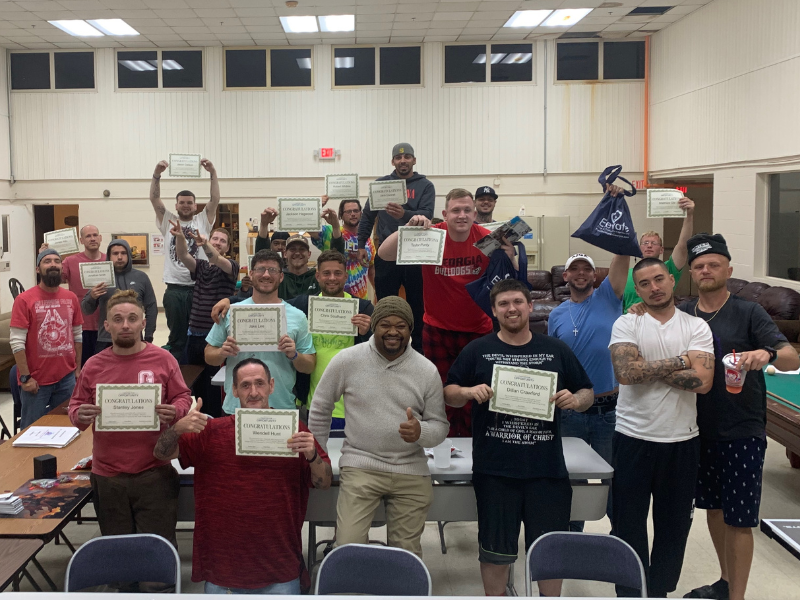
It was a resounding success. We’ve had multiple guys in our program that have re-evaluated current relationships they’re in based on that class. That’s one side of it. The other is that we want to restore their family relationships, relationships with kids, relationships with parents and brothers and sisters, and all those bridges that have all been burned.

Q: Can you share some of your outcomes?

There are two paths. The first path is we want to help our guys from getting into bad relationships. It’s like the GCO program “How to Avoid Dating a Jerk or Jerkette” — when I saw the name of that book, I knew that was the right avenue.

The second step is that every guy who comes into our building has had a kid that is not in their life. If they don’t have one it’s probably a blessing. So they have a kid out in the wild, that is being raised without a father. They themselves have the guilt and the issues of not being a father. They have baby mamas or ex-wives or whatever that they have kind of ruined, for obvious reasons, have kind of blocked out of their lives. They also have parents and brothers and siblings. They’re also kind of taking advantage of through the years.

So phase two, what I’m hoping to do with you guys is really help them start rebuilding those relationships, giving them the tools as they especially walk the 12 steps and they’re ready to start making amends. We can re-enter them into those relationships again and see if we can start rebuilding that and let them leave on a better foot.




Key Policy Takeaways from 30 years of Child Poverty Decline

Key Policy Takeaways from 30 years of Child Poverty Decline

child poverty

Key Policy Takeaways from 30 years of Child Poverty Decline

Key Points

  • Childhood poverty leads to worse educational attainment, worse future labor market outcomes, worse mental and physical health and development, and increased risk of engaging in delinquent behavior.
  •  A reduction in child poverty is tied to government programs which incentivize work. 
  • The key takeaway from the Census data which shows child poverty rates are falling and the Child Trends report which studied the causes of the decline is that, despite massive social safety net expansions, work and self-sustainability still played a larger role in lifting children out of poverty than government spending did.

by Alexander Adams


In a world marred by clickbait media headlines portending disaster, it’s always a relief when some rosy news can sneak its way into a major publication: “Poverty, Plunging” was the title of a recent New York Times newsletter. Fortunately, there happens to be strong backing for such a direct headline: According to a recent report by the firm Child Trends, a nonpartisan research center, in 1991 27.9% of children lived at or below the Census’ Supplemental Poverty Measure. Today, that number has fallen to 11.4%. 

This is undoubtedly fantastic news. The research is unequivocally clear: children living in poverty face worse lifetime outcomes on a whole host of measures. Childhood poverty leads to worse educational attainment, worse future labor market outcomes, worse mental and physical health and development, and increased risk of engaging in delinquent behavior. The reduction in child poverty makes the lives of millions of children better off and has positive externalities for everyone in the country.  

The Child Trends report asked a few fundamental questions regarding this amazing decline in child poverty, the key one being: what exactly caused this massive decline in child poverty?

According to the media’s portrayal of the report, the reduction was due to expanded social safety net and increased social safety net spending. Another New York Times article on the Child Trends report was headlined: “Expanded Safety Net Drives Sharp Drop in Child Poverty.” Opinion writers at the Washington Post took it a step further, arguing that the decline in child poverty since the 1990s debunks “arguments that…government help must be accompanied with work requirements.”  

But does it really?     

According to the Child Trends report itself, many of the programs proven to be successful in reducing poverty—the Earned Income Tax Credit (EITC), the Child Tax Credit, the Supplemental Nutrition Assistance Program (food stamps)—have work requirements. The EITC is actually an earnings supplement which has been shown to incentivize work. The expansion of work requirements for welfare programs in the 1990s increased labor force participation, according to research, which translated into more income and less poverty. 

In 1991 27.9% of children lived at or below the Census’ Supplemental Poverty Measure. Today, that number has fallen to 11.4%. 

In 1991 27.9% of children lived at or below the Census’ Supplemental Poverty Measure. Today, that number has fallen to 11.4%. 

The increased post-tax income due to work incentives and requirements has not only reduced poverty and increased income, but has had nonfinancial impacts as well such as improved educational outcomes for children. The Georgia Center for Opportunity has previously published work on the deleterious nonfinancial impacts of nonwork. Figure 1.1 of the Child Trends report also shows that child poverty was stagnant from the beginning of the War on Poverty to the mid-1990s. The decline in child poverty occurred after we replaced our no strings attached welfare system with a system replete with pro-work incentives and requirements (though, work remains to be done). 

Given all of this, it should be argued, based on the results of the report, that it was pro-work reforms and expansions to earnings supplement programs which directly promote work and self-sustainability that reduce child poverty — not unrestricted government spending.

Not only that, but according to the Child Trends report itself, the vast majority of the decline in child poverty is attributable to increases in earned income and not expanded social safety net programs. According to the report, child poverty fell 16.5 percentage points — from 27.9% to 11.4% — between 1993 and 2019. In 2019, they argue the child poverty rate would be 44% higher in the absence of social safety net expansions. This means, of that 16.5% drop, approximately 6% can be attributed to social safety net spending and over 10% is due to non-governmental factors.[1] 

These other factors represent the effect of earned post-tax income not provided by aid. While the social safety net played a role in material child poverty reduction, we can see that private income played an even larger role in that decline. 

At GCO, we promote self-sustainability and work precisely because we understand that work plays a larger role in lifting oneself up from poverty than government aid — and the Child Trends report supports that argument.

The key takeaway from the Census data which shows child poverty rates are falling and the Child Trends report which studied the causes of the decline is that, despite massive social safety net expansions, work and self-sustainability still played a larger role in lifting children out of poverty than government spending did. Further, among the programs which did measurably help the poor, it was policies oriented towards promoting work, not programs without work requirements, which usually had the largest impact.

[1] As the child poverty rate in 2019 was 11.4% in 2019, and it would be 44% higher without social safety net expansions, this means, without social safety net expansions, child poverty would be approximately 16.4% (11.4*1.44 = 16.4). 16.4 (no welfare) minus 11.4 (reality) = 6%. This means approximately 10.5 percentage points of the 16.5% decline in child poverty was due to increases in earned income, and only 6 percentage points due to social safety nets (16.5 – 10.5 = 6). 


Randy Hicks is the winner of the Thomas A. Roe Award

Randy Hicks is the winner of the Thomas A. Roe Award

Randy Hicks is the winner of the Thomas A. Roe Award

We are excited to announce Randy Hicks is the winner of the Thomas A. Roe Award given by the State Policy Network.

The award was created 30 years ago to pay tribute to leaders who embody innovation, conviction, courage, and solutions in public policy and whose achievements have advanced free-market philosophy. The award was named for the State Policy Network’s founder, who spent much of his life encouraging states to grow organizations who preserve American liberties. 

Georgia Center for Opportunity has been one of the host organizations for the State Policy Network’s Annual Meeting which is being held this week in Atlanta, GA. This is a gathering of organizations working on a state-level to promote realistic solutions to policy. It’s also a time for our team to collaborate with like-minded people and be inspired by new ideas and tactics.


Randy Hicks is the winner of the Thomas A. Roe Award!

Randy Hicks is the winner of the Thomas A. Roe Award.

Breakthrough Transforming Broken Relationships Into Flourishing Families

Breakthrough Transforming Broken Relationships Into Flourishing Families

Breakthrough Transforming Broken Relationships Into Flourishing Families

We must…launch a movement that encourages young people of all races to adopt a new cultural norm concerning education, entrepreneurship, hard work, faith, responsible parenthood, and the timing of strong family formation.
Ian Rowe, Agency

That’s a quote from Ian Rowe’s book, Agency, and the reason we asked him to join us for Breakthrough last month.


Breakthrough’s purpose was to allow us time together for a powerful discussion about family, community, young people, and relationships. 

We know the Success Sequence works, but how do we get this important information to younger generations so they can take advantage of this important “Pathway to Power” and understand that they have Agency in their lives?

Community. Relationships. Strong leadership examples. 

This means our bonds as a community are more important than ever. If we work as a team we can impact the lives of so many for good. We’ve put together a couple of videos from our event which will allow you to hear the wisdom shared by our speakers, like Ian Rowe, “who says that we have to teach young people that they have the power to make good choices in life and that they are not victims.” We hope you’ll take a moment to watch and listen, along with take action to make change happen.

If you’d like to get more involved there are some ways you can make a big impact. 

1. Take some time to learn how to have the healthiest relationships possible by signing up for classes offered by our team at GCO.

2.Talk to your children and other young people about the power of graduating high school, working hard, and marriage in helping them achieve their dreams. The Success Sequence IS the Pathway to Power.

3. Teach young people they are not victims and have control over the most important aspects of their lives. Ian Rowe’s four-point plan (F.R.E.E.) is a critical way to show young people that they have Agency.


Q&A: Andre and Takara explain how GCO’s Elevate class changed their relationship

Q&A: Andre and Takara explain how GCO’s Elevate class changed their relationship

Q&A: Andre and Takara explain how GCO’s Elevate class changed their relationship

Key Points

  • Andre and Takara Knighton have been married for 15 years. 
  • The couple was facing some challenges in their relationship, and Elevate turned out to be just what they needed!
  • Learn more about Elevate at https://foropportunity.org/elevate/

Andre and Takara Knighton stumbled across the Georgia Center for Opportunity’s Elevate relationship enrichment class purely by accident. But it was a wonderful accident! The couple was facing some challenges in their relationship, and Elevate turned out to be just what they needed. Check out this Q&A for more.

Q: Please introduce yourselves – your family background, kids, jobs, school, work, where you live, etc.

We are Andre and Takara Knighton. We have been married for 15 years and produced two beautiful and funny children. We currently live in Georgia but have lived in other states before deciding to reside here. We both have done social work in different fields, but after the pandemic we decided to focus more on our multimedia company, Vizion Image Media.

Q: How did you first learn about Elevate?

Takara learned about the program randomly at a county office. She was registering the car tags and while she was waiting saw a flier for Elevate. So she went home and started researching more about it.

Q: What prompted you to want to attend Elevate?

We were in a tight spot in our relationship. We had been allowing little things to bother us and had been a little distant from one another. We kind of lost ourselves in just life and slowly began to lose our friendship. So when Takara saw this flier and did her research on the program, we decided to just go for it. We went with expectations to try something new and honestly have set dates for ourselves that would also be a building block for our relationship.

To learn more about Elevate and how you can participate, visit:

foropportunity.org/elevate


Q: What was your experience like in the class? What did you learn?

 The class was eye opening. We saw couples who had been married for 20 years to newly married couples that also had the same stories. It was encouraging to know that there are couples—especially couples married longer than us—that just needed a little extra help to learn to reconnect. We learned how to look at each other again, but in a new light. The major thing we learned is how to stop and refocus our negative thoughts back to the positive. Sometimes when you have been with someone for so long you tend to focus on all the negative attributes of the person instead of the good qualities that brought you two together. Also, you forget to tell your spouse how much they mean to you and remind them of why you feel in love. Now we are telling each other almost two to three times a week what we appreciate about one another.


Q: Of the seven core relationship skills and qualities for success, which one did you find most impactful for your own relationship?

Definitely “Enlighten.” We weren’t dealing with each other in a healthy manner because we only focused on the past. We forgot that people can change and likes and dislikes can change. We still looked at each other as the 20-somethings we used to be. So we had to become enlightened about who our spouse was again. We had to discover our passions and loves separately and apart. We had to be more sensitive to each other’s feelings and listen. We had to rediscover “us.”  


Q: What are some reasons you can think of for other couples to attend Elevate?

We believe that everyone should experience this class because it does open your eyes to some questions that you may never have thought to talk about before. You can be married for two years or 25 years and still never think to ask your partner some of these questions. This class allows you to explore a new part of you, and the you in your relationship. People change over time and so does your relationship. So instead of ditching it because you changed, learn how to deal with the new you in your relationship and discover how you both can make the changes work.


Q: What are your future goals and plans?

 We plan on dating each other more and trying new things together. We definitely want to travel overseas again and take our kids on their first overseas adventure so they can learn about life and other cultures.