
by Georgia Center for Opportunity | Jan 25, 2017
Jamie Lord, GCO’s Director of Government Affairs, has been on the air waves discussing the benefits of school choice with the team at The Morning Show with Bill and Joel.

by Georgia Center for Opportunity | Jan 12, 2017
Research evidence loves company. Consistent findings from different populations mean the results are less likely to be an accident and more likely to demonstrate a trend.
A new report from Mississippi finds that parents using education savings accounts report high levels of satisfaction, consistent with surveys of a similar law in Arizona. Ninety-one percent of respondents reported some level of satisfaction with Mississippi’s accounts, and 98 percent of respondents reported being either “very satisfied” or “somewhat satisfied” with their educational choices after using an account. Seventy-one percent of parents in the survey reported being “very satisfied” with their choices.
Similar to accounts in Arizona, Florida, and Tennessee, the education savings accounts in Mississippi allow parents to buy educational products and services for their children using a portion of their child’s funds from the state funding formula. Parents can make multiple purchases simultaneously according to their student’s needs.
Mississippi lawmakers gave parents of children with special needs this flexible option in 2015 after years of criticism of state services for these students. Empower MS’s Brett Kittredge says, “It was clear that many of Mississippi’s most vulnerable children were being left behind and this pattern would only continue unless policymakers took action.” In 2014, the Jackson Clarion-Ledger reported that just 23 percent of Mississippi children with special needs graduated from a state high school.
Kittredge explains how Mississippi’s accounts are helping children like Lana Beard, who doctors diagnosed with fetal alcohol syndrome and visual perception disorder. The accounts helped the Beard’s access a school that has specialized services for children like Lana when her assigned district school was no longer the right fit. Her parents used the account to help cover tuition and services at the new school.
Thousands of families across Arizona and Florida have similar stories. In some cases, families use an account to help pay for personal tutors, online classes, home educational needs, and even college savings plans. In Arizona, where students from failing schools and military families are eligible for the accounts, along with children with special needs, approximately one-third of participants are using their account for more than one learning option.
In 2013, researchers from EdChoice and the Goldwater Institute studied the nation’s first education savings accounts in Arizona and also found parents were pleased with their choice to leave an assigned public school and use an account. All parents in the survey reported some level of satisfaction, and 71 percent of participants were “very satisfied,” even among the families that were satisfied with their child’s previous public school. Focus group research conducted by the Goldwater Institute has also found similar satisfaction levels.
Georgia policymakers preparing for the 2017 legislative session should use the growing research evidence on parent satisfaction with education savings accounts to support efforts to give state families similar options.
Even though Mississippi’s program is still in its infancy, Kittredge reports the number of applicants for the accounts in 2016-17 exceeded the state’s cap of 425. He says families are now on a waiting list for a chance to participate next year.
“Parents are the ultimate accountability rating,” Kittredge says. “That is why we believe understanding parental satisfaction with [education savings accounts] is so important in judging this program.”
Jonathan Butcher is a contributing scholar at GCO in addition to his role as the education director at the Goldwater Institute and senior fellow at the Beacon Center of Tennessee.
by Georgia Center for Opportunity | Nov 18, 2016
New research from EdChoice finds that Georgia’s scholarships for K-12 private school students have saved the state between $12 million and $85 million since 2011. Nearly two-dozen states have similar tax credit scholarship programs that allow individuals or businesses to make charitable contributions to K-12 private school scholarship organizations. The nonprofit scholarship organizations award scholarships to eligible students, and donors can take a credit on their state taxes that is equivalent to some or all of their donation.
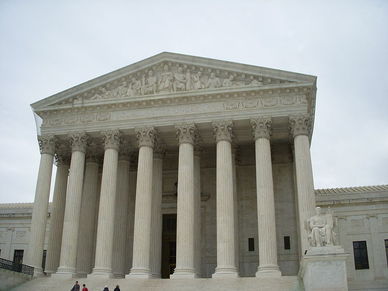
EdChoice’s findings come at an important moment for state families because the state supreme court is considering a challenge to the program. Two years ago, the Southern Education Foundation supported four Georgia residents’ lawsuit to block state families from using the scholarships for their children. Recently, the Cato Institute filed an amicus brief in support of the scholarships.
“We urge the court to affirm the determination that the tax-credit program does not violate the state constitution, focusing on the fact that it does not involve spending public funds for any sectarian purpose,” write Ilya Shapiro and David McDonald.
In Georgia, individuals and businesses can receive a dollar-for-dollar credit for their contribution to scholarship organizations up to certain limits ($2,500 for a married couple and businesses can claim no more than 75 percent of their tax liability). Since 2010, scholarship organizations have awarded more than 60,000 scholarships for students to use at K-12 private schools.
Teacher unions, school board associations, and other associations regularly challenge parent and student educational options in court. Fortunately for families, courts have upheld tax credit scholarships around the country, without exception. The U.S. Supreme Court upheld the nation’s oldest such scholarships, in Arizona, in 2011.
The decision paved the way for students like Gabe Alba-Rivera to discover opportunities he didn’t know existed before his scholarship. In my 2014 interview with Gabe, he explains that he was born in Mexico and had little more than broken pieces of his school’s roof to draw hopscotch squares at recess. A bucket of water served two purposes when he used the bathroom—the first as his bathroom pass, the second to flush the toilet.
After moving to Arizona, Gabe used a tax credit scholarship—nearly identical to the scholarships available to thousands of students across Georgia—to attend Brophy Prep, where he was active in the school Robotics Club. Gabe earned a spot at MIT, where he studies 3-D printers.
Twenty-eight scholarship organizations serve Georgia families, and these groups awarded more than 13,000 scholarships last year. The state supreme court should uphold the lower court ruling and protect families’ freedom to choose the best learning opportunity for their child.

by Georgia Center for Opportunity | Oct 26, 2016
In the dust-up of this election year, education settled near the bottom of the heap of news headlines. Before the final presidential debate, a Politico banner read, “Will Trump and Clinton Ever Debate Education?” Both candidates have education policy proposals, but these ideas have been buried under column inches devoted to hacked emails and sordid trysts.
Education may not be in the headlines now, but learning is front and center for parents and families across the country every day. And no matter who is elected, states and the federal government stand to ask taxpayers for another $600 billion or more next year to cover the educations of some 50 million students.
So, what could Donald Trump and Hillary Clinton’s education proposals mean for taxpayers and parents?
In September, Donald Trump announced that he is in favor of school choice. Before we celebrate, know that Trump volunteered taxpayers to pay $20 billion to provide more choices in education for low income students. The money will purportedly be repurposed federal funds—not requiring new money—yet this proposal is a stretch.
The largest portion of federal money for K-12 is directed by Title I of the Every Student Succeeds Act (ESSA), Washington’s education law, and totals approximately $15 billion, a figure close to the amount Trump plans to redirect. Last year, Congress fought for months over whether Title I could be repurposed as a school choice option for families. The proposal eventually failed.
Thus, Trump says he can do what Congress couldn’t with a significant sum of federal education money. Herein lies the problem with federal officials trying to meddle in issues best left to states, like education: It’s easy for a Washington lawmaker to overestimate his ability to build consensus around ideas he may like and underestimate the drudgery of the deliberative process.
Such drudgery has a purpose, namely to protect individuals and their interests by requiring lawmakers to engage in intentional, consensus-building efforts first. Even if he can build a consensus in Congress, Trump would have to convince state leaders that his idea would not interfere with states’ school choice programs, like Georgia’s tax credit scholarships or Special Needs Scholarship Program.
Furthermore, regulations inevitably follow money from Washington. President Obama signed ESSA in December 2015, and education officials around the country are still deciphering what the law means for states. We may not see the full litany of regulations until November, nearly a year after Congress voted on the law and the president made ESSA official.
Hillary Clinton has designs on more taxpayer money at the pre-kindergarten, K-12, and postsecondary levels. She plans to require taxpayers to pay for preschool for all 4-year-olds, regardless of a child’s learning needs at that age; spend more taxpayer money on computer science and school facilities; and allow taxpayers to pay tuition for college students coming from families making $125,000 or less.
While Trump’s promises are too broad to help states’ different needs (and expensive), Clinton’s are too specific (and also expensive). The job market changes too fast and Washington moves too slowly to adequately forecast future needs. Meanwhile, ideas like more money for school buildings are hardly innovative but surely expensive. The Wall Street Journal’s Daniel Henniger wrote recently that Clinton’s campaign promises amount to “pouring more federal money down the public-schools mine shaft.”
Regardless of what happens November 8, parents and state lawmakers should not expect the White House to solve the problems presented by only 37 percent of high school seniors being prepared for college work. Parents need quality opportunities to prepare their child for the future, whatever it may hold. State lawmakers should continue to broaden students’ horizons with education savings accounts and individual course choice options and protect existing learning opportunities like charter schools and private school scholarships.
Lawmakers’ responsibilities—especially state lawmakers’ responsibilities with respect to Washington—are to protect individual liberties and restore them as needed, no matter who sits in the Oval Office. Or perhaps because of who sits there.
Jonathan Butcher is a contributing scholar for the Georgia Center for Opportunity and Education Director at the Goldwater Institute.
The opinions expressed herein are those of the author and do not necessarily represent the opinions of the Georgia Center for Opportunity and are not intended to aid or hinder any political campaign or the passage of legislation before the US Congress or the Georgia General Assembly.