State agency officials in Georgia will have until Sept. 6 to come up with a plan to cut spending by 4 percent in 2020 and by 6 percent in 2021.
Gov. Brian Kemp has instructed agency heads to submit amended budget proposals that reflect the cuts along with their 2021 budget proposals….
Corey Burres, spokesperson for the nonprofit, free market Georgia Center for Opportunity, said it is possible that the tax revenues could decrease or stay flat in future months.
Tax revenues peaked in June 2018 when they finished up by 7 percent, nearly $146 million. But May’s revenue saw a 0.1 percent increase ($1 million) over May 2018.
Burres said there’s also concern over the scaling back of federal support for state programs “in the near future.”
Today, the Georgia Center for Opportunity (GCO) has released two new reports detailing precisely how the Georgia governor and lawmakers should enact federal healthcare waivers that will reform a healthcare system disproportionately impacting the poor.
Randy Hicks, GCO’s President and CEO, said the new reports come at a crucial time for healthcare reform in Georgia. “Due to a federal waiver application process approved by the Trump Administration, Georgia has a narrow window of opportunity to innovate at the local level to solve the healthcare crisis,” Hicks said. “More than 13 percent of Georgians still lack health insurance, and the cost of insurance in the individual markets have more than doubled since the enactment of the Affordable Care Act. We need a real solution to this crisis. This report lays the groundwork.”
The reports recommend the creation of a consumer-directed market system coupled with a reformed safety-net program. Key recommendations include:
Freedom and portability:Just like with other insurances, consumers want the leeway to shop for health insurance on their own terms and to not lose their plan when leaving a job. This solution drives down costs and keeps affordable health coverage long after they leave employment.
Affordability: There is a simple reason why 13.3 percent of Georgians lack any health insurance: affordability. As demonstrated by systems in Switzerland and the Netherlands, the solution is to achieve universal coverage. GCO’s healthcare proposals will create a market-driven program with safety-net subsidies, leading to universal coverage. Pricing will be transparent and consumers will easily shop for the best values.
A unified system: The current healthcare system is a fragmented hodgepodge of programs—Medicaid, PeachCare, Medicare, TriCare, VA services, and government-run exchanges. Contrary to this confusing system, GCO reforms would create a single program with government subsidies for low-income families that eliminate welfare cliffs and marriage penalties.
The safety net: The system still provides a vital safety net for those who aren’t able to afford health insurance on their own. Subsidies are provided through the Georgia Gateway to help low-income families pay their premiums.
Georgia legislators are currently considering HB 301 which would enable families to customize their children’s education to meet specific learning needs with an Education Scholarship Account (ESA). Experience and common sense tell us that no single system can meet the unique learning requirements of every child. ESA’s provide flexibility to find what works.
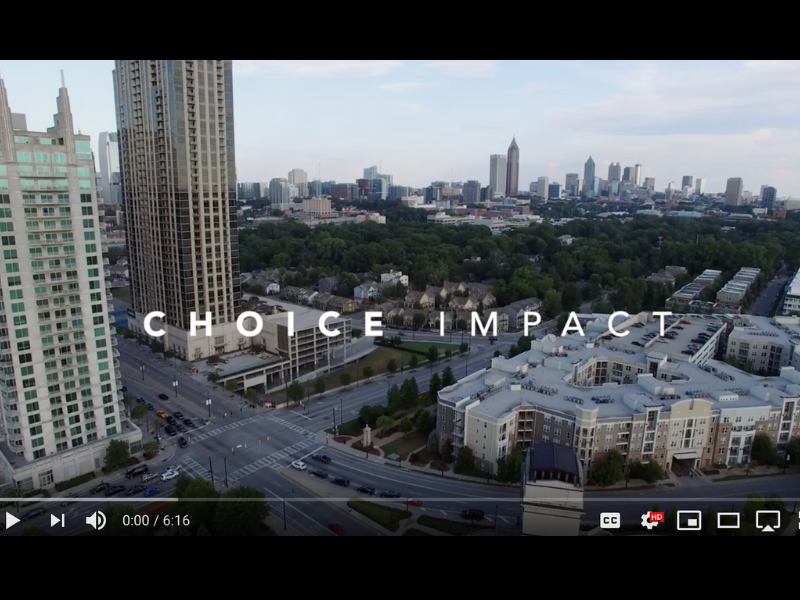
The video by Georgia Center for Opportunity displays the power of school choice options and a quality education. Children in Georgia’s most crime-ridden zip code are thriving and achieving their dreams because they had the opportunity to utilize school choice programs.
We want everyone to know about the students who are working hard to succeed.
Learn more about school choice in Georgia by clicking here.
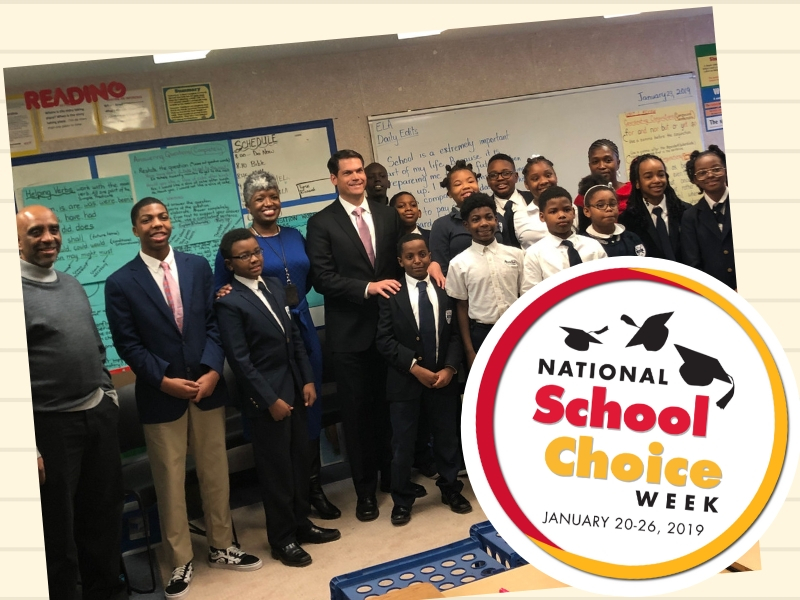
This week marks National School Choice Week, a program that began in 2011 and has rapidly grown across the country highlighting the benefits and need for more school choice options. Lt. Gov. Duncan is leading the state’s celebration at Atlanta Youth Acadamy in Southeast Atlanta by talking with students and parents yesterday about the importance of education, and how remaining focused on expanding school choice opportunities to students statewide is one of his top priorities.
“One of the most important things I can do every day as Lt. Gov. is remember one of the best gifts we can give a child in this state is a quality k-12 education,” stated Lt. Gov. Duncan as he spoke with a classroom of fifth graders and parents. “I want parents to know that and want them to see when we make laws, or adjust things in the laws, and create new policies we realize it is centered around the kids.”
The school is located near the federal prison, and the students’ median household income is about $23,000 a year. Fighting to overcome the neighborhood statistics, 62 percent of the students participate in Georgia’s tax credit scholarship program, and 100 percent of the students have graduated and gone on to postsecondary education.
The tax credit scholarship program has been wildly successful reaching the program’s cap within a matter of days for consecutive years. Lawmakers expanded the program last year by doubling the cap to $100 million starting in 2019.
A quality education is key. It provides a primary path for breaking cycles of poverty. GCO has played a crucial role in bringing real educational choice to upwards of 250,000 students and counting through Tax-Credit Scholarships, Special Needs Scholarships, and charter schools. As we move forward in the legislative session, we will continue to fight to expand Georgia’s current programs and to create education opportunity by pushing for the adoption of Education Scholarship Accounts.
Our work isn’t done until all of Georgia’s children can access the educational options that allow them to achieve the American Dream.
On December 5th, some of the nation’s most innovative researchers, policy experts, and community-based practitioners lead a series of discussions at Mercedes-Benz Stadium on solutions that are unlocking human potential in Georgia and around the country, enabling individuals and families to flourish.
Georgia is at a crossroads. We are enjoying the rewards of a growing economy and vibrant communities that make Georgia one of the country’s most popular places to do business and raise a family. However, hundreds of thousands of seemingly invisible men, women, and children are facing barriers that prevent them from achieving their dreams and reaching their potential, including the stain of a criminal record, being trapped in a welfare system that discourages work and family formation, and being ill-prepared for work or college as a student. The challenges are multi-dimensional and pose threats not just to individual well-being, but also to continued economic growth, opportunity, and mobility.
GCO takes over the Mercedes-Benz Stadium with Breakthrough!
Dr. Robert Lerman, Institute Fellow in the Center on Labor, Human Services, and Population at the Urban Institute discusses innovative measures to educate today’s students and the positive results they garner.
Jamie Lord leads the conversation about Education to What Degree: The Promise of Education Innovation with special guest interview Jack Harris, President of Junior Achievement, and panelists Ben Scafidi, Director of the Education Economics Center; Tyler Thigpen, Co-Founder and Head of School at the Forest School; Anthony Flynn, Executive Director and COO of 100 Black Men of Atlanta; Dr. Robert Lerman, Institute Fellow in the Center on Labor, Human Services, and Population at the Urban Institute.
Randy Hicks and Bellhops CEO Luke Marklin talk about the importance of dedicated employees and creating an atmosphere of loyalty.
GCO’s Joyce Whitted leads the panel discussion on Healthy Families: Incubators of the Next Generation, with Brian Amero, Henry County Superior Court Judge; Julie Baumgardner, President and CEO of First Things First; Brad Wilcox, Director of the National Marriage Project at the University of Virginia; and Erin Norman, Senior Solutions Consultant at Heart+Mind Strategies
The Delta SkyClub at Mercedes-Benz Stadium never looked so good.
Anthony Flynn, Executive Director and COO of 100 Black Men of Atlanta chats about the importance of educational choice for students to have every opportunity to succeed.
It was wonderful to have such a great group of sponsors in attendance at Breakthrough. We really enjoyed the time with our friends and the opportunity to make new ones.
GCO’s Bill Rogers leads the panelist in the conversation about “Business! Mankind was my Business.”: How Some Georgia Companies are Bringing Solutions and Hope to Disadvantaged Communities with panelists Greg Beadles, COO, AMB Sports and Entertainment; Chris Clark, President and CEO of Georgia Chamber of Commerce; Rodney Bullard, Vice President of Corporate Social Responsibility at Chick-Fil-A and Executive Director of the Chick-Fil-A Foundation.
Eric Cochling and panelists Dave Derocher, Managing Director of The Other Side Academy; Stacey Howell, Executive Director of Every Woman Works; Phillip Hunter, Executive Director of Georgia Works!; and Lloyd Martin, VP of Manufacturing and IT for CKS Packaging, Inc., discuss A Bolder Bottom Line: Work as the Most Effective Antipoverty Intervention and exactly what that looks like for their businesses.