Creating links that change lives: Georgia Center for Opportunity partners with Connect to Work GA

Creating links that change lives: Georgia Center for Opportunity partners with Connect to Work GA

Georgia Center for Opportunity and Connect to Work GA have partnered to help more job seekers find rewarding work in the Atlanta area.

Creating links that change lives: Georgia Center for Opportunity partners with Connect to Work GA

Key Points

  • The Georgia Center for Opportunity and Connect to Work GA have entered into a valuable partnership that will link job seekers with rewarding jobs in the Atlanta area.
  • The Georgia Center for Opportunity’s BETTER WORK program will prepare clients for work, and Connect to Work GA will then introduce them to employers. 
  • This collaboration will help lift job seekers above the poverty line by providing opportunities for successful careers and upward mobility.

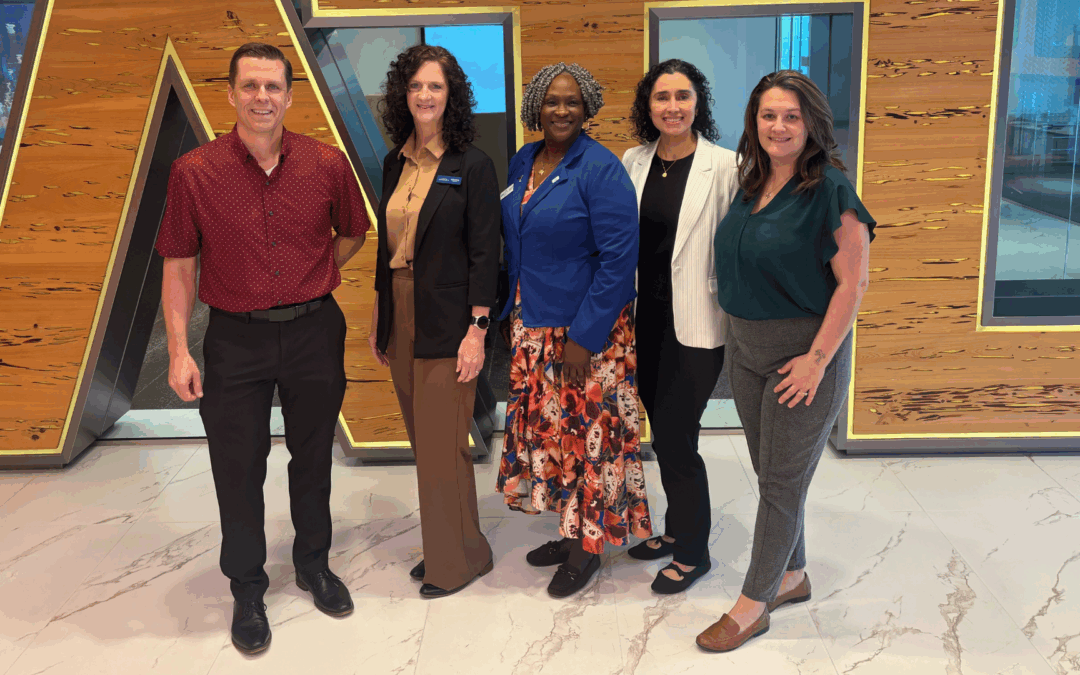
The Georgia Center for Opportunity (GCO) entered into a dynamic partnership with Connect to Work GA in October 2025. Together, the organizations will link participants in GCO’s BETTER WORK program with rewarding jobs in the Atlanta area. 

Eric Cochling, GCO’s Chief Program Officer and General Counsel, shared that “GCO is thrilled to partner with Connect to Work GA because it gives our BETTER WORK clients access to the powerful business network of the Metro Atlanta Chamber and the expertise of the Connect to Work team.”

Work is a gateway to a better future, and this collaboration will create a clearer path out of poverty and toward opportunity for many job seekers across Georgia.

Connecting Georgians to work and upward mobility

GCO’s BETTER WORK program joins forces with employers and local organizations in Gwinnett County and in the city of Columbus. Through these strong partnerships, GCO connects people with training and support services that can help them find meaningful work.

Connect to Work GA was launched by the Metro Atlanta Chamber in February 2025, with support from the Arthur M. Blank Family Foundation. The Foundation focuses on increasing access to career pathways for Georgians—and particularly for young people—so they can grow and thrive. 

In the spirit of the Foundation’s mission, the Chamber strives to advance economic growth around Atlanta, and Connect to Work GA contributes to that goal by bridging the gap between pre-qualified job candidates and employers who want to build their teams.

In the new relationship between GCO and Connect to Work GA, GCO’s BETTER WORK program will prepare clients for work by providing them with resume support, interview coaching, and job readiness training. Connect to Work GA will then link those individuals with employers by matching their skills with staffing needs. 

GCO will be a preferred provider of job candidates from Gwinnett County, giving GCO’s BETTER WORK clients a promising opportunity to find rewarding jobs with Metro Atlanta Chamber member companies.

Collaborating to build hope and vibrant communities through work

GCO and Connect to Work GA share the goal of making sure that every Georgian has the chance to experience the sense of dignity, purpose, and potential that comes from a meaningful job and upward mobility. They also aim to help communities across the state benefit from more successful businesses and vibrant local economies.

Together, the organizations will remove barriers to work and open doors to opportunity. In doing so, they will inspire hope and turn poverty into flourishing for many more Georgians, their families, and their communities.

Georgia candidates for governor should make welfare reform a top priority

Georgia candidates for governor should make welfare reform a top priority

Georgia news, in the news, current events, Georgia happenings, GA happenings

Georgia candidates for governor should make welfare reform a top priority

Buzz Brockway in the Atlanta Journal-Constitution

Originally published November 25, 2025

In their pitch to voters, the 2026 candidates for Georgia governor have mentioned they are likely to address tax reform, health care, jobs, immigration, child care and housing issues.

But none have mentioned a priority that is not only connected to those issues but has a significant impact on the well-being of millions of Georgia families — welfare reform. And with new federal work requirements set to take effect, policymakers will no longer be able to overlook Georgia’s public assistance programs.

With more than 1 million Georgians struggling to make ends meet, reforms to the safety net should be a top priority for Georgia’s next leader.

These low-income residents turn to Georgia’s safety net programs for help, including Medicaid for health insurance, the Supplemental Nutrition Assistance Program for food support and Section 8 for housing assistance.

System fails to move people out of poverty

Both Republicans and Democrats agree these programs are a critical support system for disadvantaged communities.

But disagreement tends to emerge over whether welfare truly serves these people — helping them move from reliance on public assistance to independence and a more fulfilling life.

On that measure, welfare is failing — and its shortfall should capture the attention of Georgia’s next governor.

Not only does Georgia’s welfare system — like nearly all states’ — fail at its stated goal of moving people out of poverty, but it also compels recipients to stay dependent, keeping them in a cycle of poverty that so often defines generations of low-income Americans.

Welfare discourages recipients from getting married before having children and from working — troubling given those factors align with two of the three indicators in the Success Sequence, a series of life milestones that research has shown are the keys to happier lives, stable families and upward mobility (the other factor is obtaining a high school degree).

Georgia’s next governor would do well to recognize that the implications of this flawed system extend beyond just welfare recipients. It has a significant impact on the state’s budget and economy.


Low labor participation rate is a warning

Social safety net programs, particularly Medicaid, are often the biggest expenses in a state’s budget. While the federal government partially funds welfare programs, the states are responsible for a significant share of the costs and are responsible for managing the system. With these high costs, policymakers should assess whether the billions spent on welfare is moving people out of poverty or keeping them on the economic sidelines.

And then there’s the direct impact on Georgia’s workforce. Georgia’s labor force participation rate, or the number of working-age people employed or looking for a job, is 60.6%. Or put another way, nearly 40% of Georgians, many of them prime-age men, who can work are choosing not to.

A low labor force participation rate is a warning sign for the state’s economic health. Every nondisabled Georgian who opts out of work isn’t just losing income — our state loses tax revenue, businesses lose workers and communities lose engaged citizens who are the foundation of thriving neighborhoods.

Georgia’s next governor should ask, then, why the state’s welfare programs fail to connect beneficiaries to resources they need to help them find a stable job. Unemployment is one of the primary reasons individuals seek assistance in the first place.

And yet when someone in Georgia turns to the welfare system for support, they are not connected to work. Workforce development programs exist, but they oddly operate separately than the social safety net.


Follow other states in integrating workforce aims with welfare

Fortunately, policymakers in Georgia have a road map to turn to called “One Door to Work,” which integrates workforce development with welfare. Under this policy, people who access the safety net for help are connected to one caseworker who not only helps them meet their immediate needs but connects them with resources to find a job. Utah passed this reform in the 1990s and now boasts the lowest numbers of people on Medicaid and food stamps — along with consistently low unemployment rates.

Louisiana passed One Door legislation in June. Mississippi created a task force to explore the reform. And Arkansas also recently approved an audit of its workforce and safety net programs to identify needed changes. Georgia should follow the lead of its southern neighbors to the West.

Welfare reform isn’t a second-tier issue. It’s central to sustaining Georgia’s current trajectory as a leader in economic opportunity. Georgia’s One Door gives the next governor a way to strengthen families, expand the workforce and set the state on a path to growth.

Read the full article here.

Buzz Brockway is the vice president of public policy at the Georgia Center for Opportunity.
