by Georgia Center for Opportunity | May 27, 2014

Recently, I had the privilege of attending an inspiring seminar sponsored by Chick-fil-A Foundation and Gifted Education Foundation (a GCO partner), entitled “Beyond Inspiration: Moving Ideas to Execution”. As I walked into the Chick-fil-A Discovery Center to find my seat, my eyes wandered around the state of art facility, I was ready to experience the learning lab and to be inspired!
Charles Lee, CEO of Ideation and author of Good Idea. Now What? How to Move Ideas to Execution, was the speaker for the seminar. Charles helps businesses and organizations craft and facilitate amazing ideas via creative business design, branding and innovative problem-solving.
In his opening he stated, “The greatest collections of human treasures are in the graveyard. There are too many songs and too many books that have been buried.” With this image in my mind, a moment of sadness came over me for the people who did not have the opportunity to share their ideas with the world. Then, a smile broke through when I thought about all the possible ideas being executed in the filled room.
Mr. Lee focused on three areas: creating a remarkable idea, idea-making best practices and developing a remarkable brand. When creating a remarkable idea, ask clarifying questions so that our ideas can connect to the world. Ask questions such as Who are You?, What do you do uniquely? , and What does it matter? He informed that a few best practices are to write down your ideas (rational and irrational) in order to stay focused and to take time to breathe in order for your ideas to grow and develop. Mr. Lee encouraged us to develop brand attributes that are “authentically you”. Making sure your visual identity is consistent with your brand is the utmost important internally and externally. These are just some areas discussed during the seminar intended to help inspire us to better execute our ideas.
After the seminar, we were escorted on a tour of the Chick-fil-A’s 80,000 square foot innovation center. My colleagues and I were amazed by this huge warehouse that was designed to encourage people to think outside the box. The space was colorful with an open office environment that celebrated creativity and service. In fact, red boxes climb the wall and hung onto the ceiling until the boxes eventually formed an airplane. This space was truly designed to nurture innovation.
One of my colleagues, Linda Newton, who also attended the event shared how her approach to work productivity was impacted by the workshop. She said, “I have a tendency to be a bit too social at work and often get distracted by others. Some points Charles made concerning productivity have led me to implement two practices that are helping me to be less distracted and more productive. I now only schedule meetings after lunch and I work with my office door closed each morning until lunchtime. These are two simple, yet effective tactics.”
For me, exhilarating and motivating are two words that come to mind when describing my experience at the Beyond Inspiration learning lab with Charles Lee and Chick-fil-A Innovation Center. As I think about the mission of GCO: to remove barriers to opportunity. The very nature of our education advocacy work comes to mind. We have been a strong voice in school choice by helping to expand academic options (i.e. tax credit scholarships, special needs scholarships, public school transfers, private schools and charter schools) for more than 15,000 children in Georgia. Through our grassroots outreach efforts we have trained more than 60 advocates on topics such as how to talk with a legislator, how to use social media, and blog writing and interviewing skills for media. Additionally, we created a School Choice Handbook to serves as a reference for anyone seeking school choice options. Though thousands of children have benefitted from our efforts, there are thousands of children who still need our help. Therefore, we will continue to be a champion for education reform and school choice options at the capitol and at a grassroots level.
As we continue to remove barriers, there is nothing more exhilarating and motivating to me than the goal of seeing all children in Georgia have the opportunity to receive a great education. My hope is for children to experience an environment where their innovation can be nurtured and they can be inspired just as I was in learning lab and in my work place.
by Georgia Center for Opportunity | May 23, 2014
 Georgia Center for Opportunity’s mission to remove barriers to opportunity is greatly facilitated through partnerships with organizations engaged in dynamic work in the community. Over the month of May the Breakthrough Fellows and GCO team members have ventured out, meeting with non-profits that serve unique at-risk populations. On one such trip, we were fortunate to speak with Jenn McEwen about her work at Wellspring Living, an organization dedicated to sheltering and restoring victims of sex trafficking.
Tucked away just outside of Atlanta’s city limits, Wellspring’s secluded campus creates a warm environment for its residents. Close to one hundred minors and adult survivors participate in the Wellspring Living for Girls and Empowered Living for Women programs. Services through both programs range from intensive one-on-one therapy for Domestic Minor Sex Trafficking (DMST) to job skills training. The women of Wellspring, who are almost all referred by the state-run organization Georgia Cares, generally stay up to eighteen months. However, additional time is provided where it is needed.
Our host, Ms. McEwen, noted that girls are often lured into the sex trade by pimps selling the fantasy of love, capitalizing on disruptive home lives, or through physical coercion. While many would still like to believe that sex trafficking is an issue confined to areas such as Southeast Asia, major American cities are now thriving hubs for illegal sex work and exploitation. Nationally, as many as 27 million people are victims of sexual exploitation, with a vast majority being children. In a town known for its glorified strip club culture, Atlanta’s underground sex industry generated more than $290 million in 2007. This figure is likely much higher now. More recent studies note that the average pimp in Atlanta makes over $30,000 a week.
In Georgia, much work remains to change policies that criminalize the victims of sex trafficking rather than the perpetrators who reinforce commercialized sex. Just last year, the city of Atlanta proposed to banish convicted prostitutes, pimps, and Johns, which would make it illegal for offenders to enter areas with high rates of prostitution. However, this city ordinance, referred to as Stay Out of Area-Prostitution (SOAP), was never successfully passed due concerns that such as measure would further disadvantage the exploited.
As prostitutes are arrested at higher and disproportionate rates to pimps and Johns, more intentional policies are needed that target both the supply and demand sides of sex trafficking. In San Francisco, CA and Knoxville, TN, convicted Johns are mandated to participate in classes that expose the truth about what happens to the exploited after services are rendered. These “John Schools”, as they are called, often include restorative justice elements where former sex workers run the one-day classes and share their stories.
One thing is for sure: more havens such as Wellspring Living are needed across the state of Georgia. Ms. McEwen shed light on the gaps in service and the resulting opportunities, both in policy and program delivery, that impact her work. Inter-agency collaborations and community partnerships remain an integral component to increasing the support available to the victims of sex trafficking. As family breakdown and limited access to quality education open the door for exploitation, we at GCO hope to establish a strong working relationship with Wellspring, creating new possibilities and better outcomes for victims.
by Georgia Center for Opportunity | May 20, 2014
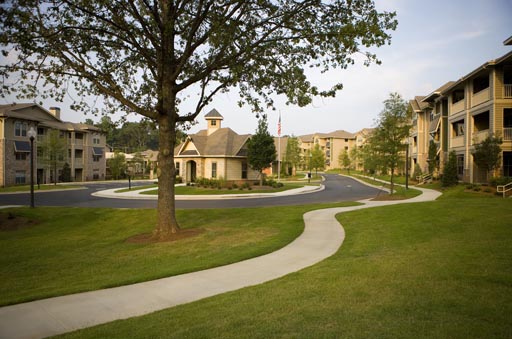
Recently I had the privilege of visiting Walton Village, a beautiful apartment community located in Marietta, Georgia. I, along with other GCO team members, visited Walton Village as part of our Breakthrough Fellowship experience to get a taste of other organizations in the community who share a common vision for seeing families thrive.
Walton Village is part of a larger network of apartments in metro-Atlanta area and Augusta that are owned and managed by Walton Communities. This privately held company has a unique mission of developing real estate in a way that builds strong communities and improves the quality of life of its residents. In addition to providing exceptional housing at an affordable price, the community offers educational, cultural, and recreational programs tailored to the hobbies, interests, and needs of the people they serve.[i]
Taking a similar approach to many partners in Georgia Center for Opportunity’s Breakthrough Norcross collective impact initiative, Walton Communities seeks to align itself with non-profits, schools, and other partners to achieve positive outcomes for families in their community.
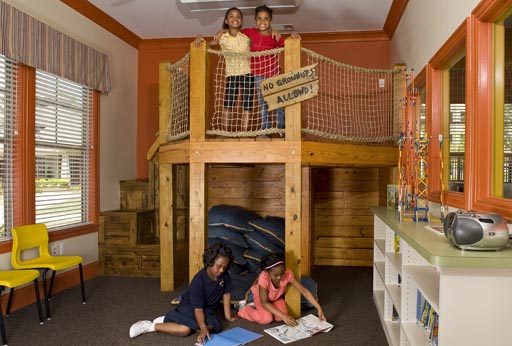
For instance, Walton Village partners with the non-profit, faith-based organization Parents With A Purpose to run their Adventure Center, which provides an after school enrichment program for primary school children in the neighborhood. The Adventure Center seeks to boost children’s love for reading by offering a fun environment where children can curl up with a book and let their imaginations run wild. One room even has a custom-built loft with a sign posted at the top that reads: “No Grown-Ups Allowed!” The program as a whole focuses on developing the children’s character and teaching them to take ownership of the place they’ve been given through keeping it neat and orderly.
One outcome that Walton Village has seen as a result of its educational efforts with the neighborhood children is improved test scores: One hundred percent of the elementary school children in Walton Village (who regularly participate in Adventure Center programs) were reported to have passed the state-based Criterion-Referenced Competency Test (CRCT). This is not only an important outcome for the local elementary school, as children from Walton Village comprise 40 percent of the school’s student body, but also a significant academic milestone in each student’s development.
One of the things I like best about Walton Village is the wide age range of residents the community attracts. The Legacy at Walton is specifically designed for senior living, while the other apartments are available for singles, couples, and families of all stages. Intentionally fostering an inter-generational community provides the opportunity for the younger and older residents to interact with and learn from each other. We learned of one woman in the community who volunteers her time in the children’s Adventure Center teaching the kids how to crochet. This opportunity allows her to pass on an enriching hobby that many children may never have learned, while allowing the children to invigorate her with the life and energy that they naturally bring.
Walton Village seeks to build authentic community by providing a platform for neighbors to help meet each other’s needs. The director of community relationships shared the story of a woman who, at a monthly social held for single-parents in the neighborhood, explained that her daughter would miss prom because she couldn’t afford to buy her a dress. Another resident, moved with compassion, spoke up and said that her daughter had an old dress that she could wear. Yet another at the dinner chimed-in and said that she was a seamstress and would be happy to make the necessary alterations. Still, another neighbor who was a hair-stylist spoke up and volunteered to arrange her hair. Before they knew it, these ladies had teamed up to help make the woman’s daughter – and their neighbor – feel beautiful on the night of her prom. The women were so proud to have been able to chip in to make this night special for her.

Another example of neighbors supporting one another can be seen in the way families have shared groceries with one another during times of financial need. Every two weeks, a food co-op run by Walton residents delivers an equivalent of $100 in groceries to families in Walton Village who have signed-up for this service. Some of the participating families, recognizing the needs of other neighbors who do not regularly benefit from this service, have been known to share the food that they received with families who are in a tight spot financially.
Walton Communities offers a great example of a for-profit company that seeks to eliminate the status quo by delivering needed services in an extraordinary way. They aren’t simply in the housing business – they are in the community-making business – and their efforts are changing the lives of the families living in their communities.
[i] Walton Communities Apartment Homes, “Our History: Walton Communities,” accessed May 6, 2014, https://www.waltoncommunities.com/about-us/walton-story.
by Eric Cochling | May 5, 2014
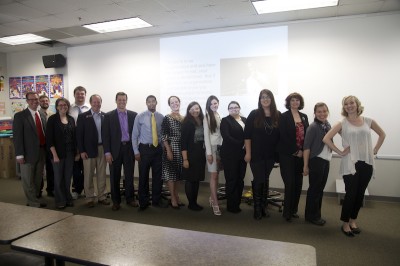
A little over a week ago, I had the pleasure of speaking on a panel at Georgia Gwinnett College to a group of students, including some future educators, students from the school’s honors program, and a few professors, who had been reading about the impact of school choice in America and in other parts of the world.
In my remarks, I noted that Brown was successful in eliminating official, legal enforcement of segregation and paved the way for integrated schools and gains in minority student achievement. Today, we don’t find government officials claiming a legal right to physically block a child’s entrance to a school because of his or her race. By that measure, Brown hit its mark.
Instead, in 2014, what we witness is a very different kind of school segregation driven largely by the zip code in which a child lives, which is largely a function of income.
Today, children are not so much being locked out of schools they would like to attend, as much as they are being locked into schools they wouldn’t choose if given an option.
This is especially true for lower and middle-income families who likely do not earn enough to move to a district with great schools or afford the cost of private tuition.
This is where school choice is able to help.
Given control over their education dollars (over $9,000 per year per student on average in Georgia), parents and their children would have the ability to select the school best suited for their needs, whether public, private, virtual or otherwise. Since each family would be given, essentially, the same base level of purchasing power, segregation based on income (enforced now by our zip code system) would be much less of a barrier.
For areas of the state, especially in more rural communities, where the local public school may be the only option right now, giving parents control of those education dollars would likely mean entrepreneurs would soon find ways to make additional options available, as each class of students (assuming an average of 23 children) would bring with them over $200,000 of funding each year. You can pay a teacher very well and buy a lot of materials with that kind of money.
Americans value choice in all areas of life and instinctively understand that the choices we make with our money drive improvements in the products we buy, whether the product is the food we eat, the houses we live in, or the cars we drive. The same thing could be true relative to the education our children receive.
The system will improve if we are allowed to vote with our wallets. It most likely will not until then.
For more reading on the power of school choice and creative ways communities are making it possible (in the US and abroad), I highly recommend the books that the students at GGC read this year:
Education Freedom In Urban America: Brown Vs. Board after Half a Century
By: David Salisbury and Casey Lartigue Jr.
The Beautiful Tree
By: James Tooled
Market Education: The Unknown History
By: Andrew J. Coulson
Why America Needs School Choice
By: Jay P. Greene
by Georgia Center for Opportunity | Apr 18, 2014

Crime needs to be punished. There is no doubt about that. Punishment for crime is a necessary part of maintaining a just society, preserving order and peace, and promoting life and happiness. Citizens need to know that there are consequences for breaking the law and to be motivated to do what is right for the good of society.
While punishment for crime is necessary, it also needs to be dispensed justly. Overly punitive measures can demoralize offenders and their families and cause them to lose faith in the criminal justice system.
Take mandatory minimum sentencing for drug offenses, for instance. This sentencing began in the 1980’s as a way for state officials to get “tough on crime.” However, it stripped judges of the ability to use discretion in sentencing drug offenders, resulting in scores of people spending far too many years behind bars for relatively minor drug offenses. This “tough on crime” mentality led to a massive overcrowding of our nation’s prisons, more costs to taxpayers, and increased recidivism.
When thinking about punishing offenders for their crimes, we must remember that 95 percent of those who enter prison will return to the community at some point. In other words, “today’s prisoners are tomorrow’s neighbors.”[i]
This reality should cause us to approach how we administer justice with a more balanced and humane perspective. We ought to be thinking with the end in mind: How best can we prepare a person for reentry at the moment of sentencing? What obstacles does a person need to overcome personally? Who does this person need to make amends with before he is released? What will keep this person from recidivating?
It is important that we remember that those who have committed crimes are people, and all people have inherent dignity and worth. If we allow ourselves to view a person as less than human, we are tempted to write him off and to refuse to engage in the hard work of helping him to overcome root issues that keep him from thriving. However, if we see those who commit offenses as humans worthy of the same dignity as any other human being, we will be more likely to see their possibility for redemption.
When we examine our own lives – our failings and the consequences of bad choices that we’ve made – we can learn to relate to offenders and have compassion on them. It should show us that just as we have been shown mercy at various points in our lives and given the chance to move forward, criminal offenders likewise could benefit from being shown mercy. This does not mean that we should forgo punishing justly according to the nature of one’s offense, but it should temper the manner in which we approach punishing crime and cause us to reexamine the ultimate outcomes we are trying to achieve. This paradigm shift should cause us to realize that the offender’s restoration to one’s victims, family, and community, is a better aim for our criminal justice system than merely punishment.
A better approach seems to be one that recognizes that crimes are fundamentally committed against other people, not simply the state. The harm one person inflicts upon another needs to be addressed and repaired as best as possible. Simply locking a person away and having the state deal with him is not going to address the needs of the victim, the offender, or the community. A deeper reconciliation is needed.
A criminal justice system that reflects this restorative approach would be far more likely to cultivate a humane and just society.
by Georgia Center for Opportunity | Apr 8, 2014
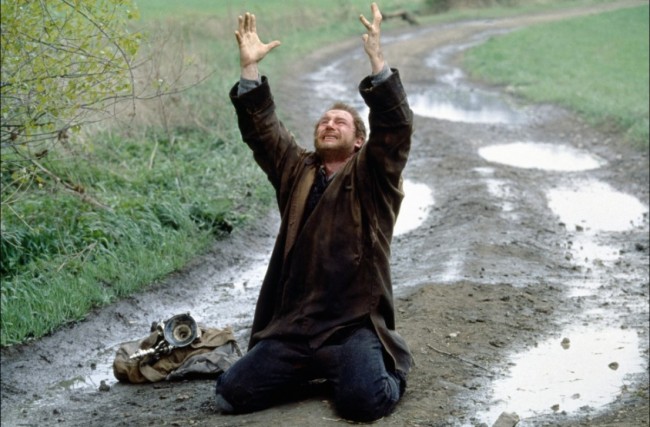
The Breakthrough Fellows, along with other GCO team members, recently had the opportunity to watch and reflect on the movie Les Misérables. For those unfamiliar with the story: an ex-convict, Jean Valjean, restores value to his life after a priest accepts him into his home and gives him a second chance to live with dignity. Though Valjean is able to turn his life around, the troubles of his past come to haunt him as his law-zealous adversary, Inspector Javert, recognizes him from his former life.
I found the story of Les Misérables so moving because it perfectly depicts the power of being grounded in morals and bringing purpose to one’s life. By accepting the challenge to become a new man, Valjean is able to transition his life from one stripped of purpose to one dedicated to serving others with true compassion. And though Inspector Javert’s pursuit continually disrupts Valjean’s peaceful life, the morals instilled by the priest are never forgotten. This serves Valjean immeasurably as he overcomes the temptation to slip back into his old ways.
Just as ethics and morals are vital to living well in our personal lives, organizations too must be grounded in values. This reflection on Les Misérables came just on the heels of a larger team discussion about the core values of Georgia Center for Opportunity. Under the example of a ship’s ballast (the heavy material that steadies a vessel), GCO’s President, Randy Hicks, listed Dignity , Humility, Integrity, Excellence, and Team as the traits that guide our work. Through evidence-based policy and community-based solutions, the true foundation of what we do is serving others with these values.
Integrity, Excellence, and Team are common core values for organizations that strive to produce high quality work. What I think makes GCO’s core values unique in the world of think tanks is our inclusion of Dignity and Humility. Often what makes policy effective is not the letter of what is written but rather the principles that connect laws and programs to a higher purpose. As human beings, each of us is inherently valuable and deserving of respect. We know that many of our fellow citizens face barriers to opportunity that limits their ability to thrive, driving our work and creating a sense of urgency. This is how Dignity is made manifest in our work.
But removing barriers to opportunity is complex, and the GCO staff certainly does not have all the answers. Thus we rely on the communities we serve to teach us about their challenges and we work with expert panels and community partnerships to help us identify and implement solutions. We work hard to affect change while keeping in mind our Humility, knowing the limits of what we can achieve alone and recognizing that our greatest impact is realized through working with others.
Human dignity lives by our ability to meet neighbors as equals irrespective of life circumstances, and the ability to accept the compassion of neighbors in times of need. In Les Misérables both Humility and Dignity are not only restoring forces in Jean Valjean’s life, but also guide his interactions with others as a new man. At GCO we recognize, as Jean Valjean did, that it is necessary to hold steadfast to one’s core values. The values that guide our personal lives and our work have the powerful ability to shape a better world around us and hold us to a higher purpose.

