Amid Recession Fears, Economically Free States Continue to Outperform

Amid Recession Fears, Economically Free States Continue to Outperform

In The News

Amid Recession Fears, Economically Free States Continue to Outperform


Florida Gov. Ron DeSantis recently responded to questions about California Gov. Gavin Newsom’s ads airing in Florida, “It’s almost hard to drive people out of a place like California given all their natural advantages, and yet they are finding a way to do it.” He noted that California is hemorrhaging its population because of bad progressive economic policies so that they could be more free

Florida ranks third in the nation for economic freedom, according to the Fraser Institute. And California ranks second to last…

What the June inflation numbers mean for the poor

What the June inflation numbers mean for the poor

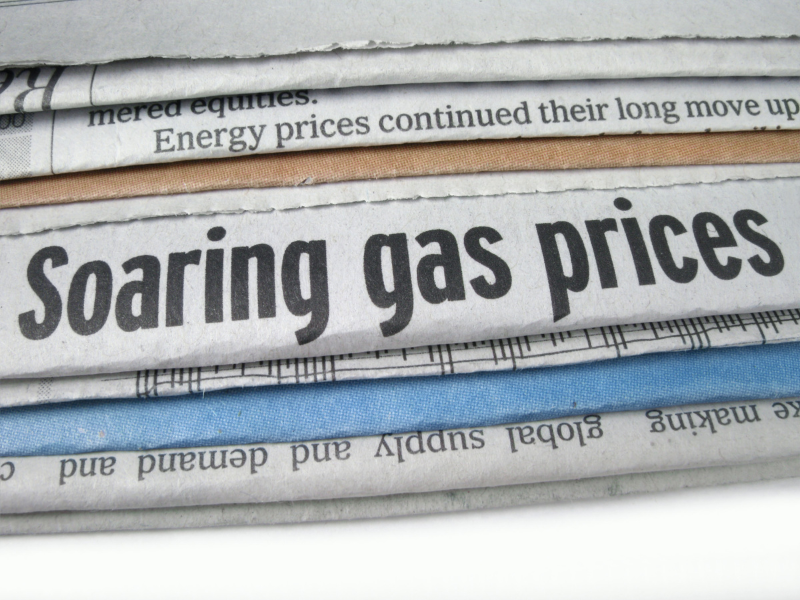
rising prices for gas

What the June inflation numbers mean for the poor

Key Points

  • BLS reports, some of the biggest increases in prices were soon for essentials like gas for your car and groceries for your kitchen table.
  • A new price floor has been established.
  • A way forward involves, curtail federal deficit spending and adopting supply-side economic policies. 

The inflationary environment in the U.S. and around the world continues to go from bad to worse. On July 13, the U.S. Bureau of Labor statistics announced that in June the Consumer Price Index (CPI) rose by 1.3%, not seasonally adjusted. That means, year over year, the CPI is now up 9.1%, which is the fastest pace of inflation in over four decades.

As the BLS reports, some of the biggest increases in prices were soon for essentials like gas for your car and groceries for your kitchen table: 

“The increase was broad-based, with the indexes for gasoline, shelter, and food being the largest contributors. The energy index rose 7.5 percent over the month and contributed nearly half of the all items increase, with the gasoline index rising 11.2 percent and the other major component indexes also rising. The food index rose 1.0 percent in June, as did the food at home index.”


The poor are hit hardest

The sad reality is that inflation shows few, if any, signs of lessening anytime soon. As we’ve said so many times before, the hardest hit are the poorest among us. 

For example, a recent survey revealed the alarming truth that some families are skipping meals to deal with raging inflation. While inflation is inconvenient for the upper middle class and wealthy and concerning for the middle class, it’s downright devastating for the working class and poor.

Meanwhile, wage increases are lagging behind price increases. People are falling further and further behind.


A new floor for prices

What’s even more devastating than spiking inflation month-in, month-out is the new price level. As the Georgia Center for Opportunity’s director of research Erik Randolph points out, inflation is only part of the equation. We should also be focusing on the price level, which is defined as the new “floor” for the prices we all pay in the economy. 

A gallon of milk might’ve cost $2.99 a year ago, for example, but now it’s $3.99. That new price is not going down, even as inflation eventually abates. A new price floor has been established and it becomes ingrained in our minds that a gallon of milk simply costs $4.

Simply put, leaving the price level elevated means we are leaving the economically disadvantaged further behind, exacerbating the economic divide in our nation.


A way forward

There are a number of public policy prescriptions that Randolph suggests for curbing inflation:

  • Curtail federal deficit spending.
  • Adopt supply-side economic policies, ones that cut red tape to reduce unnecessary government regulations, making it easier for entrepreneurs to start and expand businesses and for investors to take risks investing in business.

In our communities, initiatives such as BETTER WORK in the Atlanta and Columbus metro areas are also foundational to helping people find meaningful work, work that pays a living wage to better cope with highly inflationary times.


Amid Recession Fears, Economically Free States Continue to Outperform

Georgia experts blame federal government at least partly for state’s inflationary woes

In The News

Georgia experts blame federal government at least partly for state’s inflationary woes

Georgia isn’t immune to the highest inflation in decades, and local pundits say the federal government is at least partly to blame.

On Wednesday, the U.S. Bureau of Labor Statistics announced that the Consumer Price Index for All Urban Consumers increased 1.3% in June and 9.1% over the last 12 months. Both increases are seasonally adjusted.

Meanwhile, Erik Randolph, the Georgia Center for Opportunity’s director of research, said the country might not have even reached peak inflation, and federal lawmakers should consider a new approach to fix inflation.

“This new inflation reading ranks among the worst monthly inflation rates in U.S. history, and the worst in recent history,” Randolph said in a statement. “We have to go back to March 1980 — the last year of the [President Jimmy] Carter administration — to find a higher monthly inflation rate.


“The bottom line is that we may not have reached peak inflation, and there’s no telling how long the price level crisis will persist,” Randolph added. “Meanwhile, the rhetoric from the White House and Congress will do little to rectify the situation. There needs to be new thinking within the Washington Beltway.”

Read the full article here


Amid Recession Fears, Economically Free States Continue to Outperform

Georgia nonprofit: New labor numbers show Georgia is benefitting

In The News

Georgia nonprofit: New labor numbers show Georgia is benefitting

New data from the U.S. Bureau of Labor Statistics found that total nonfarm payrolls nationwide increased by 372,000 jobs in June, a higher-than-expected increase. At the same time, the national unemployment rate remained at 3.6%.

A Georgia nonprofit says the real story is found at the state level, as many workers are opting to leave many states for places like the Peach State.

“The job numbers are seen as positive overall, but the real story is at the state level where economically free states are performing so much better than more restrictive states,” Erik Randolph, the director of research for the Georgia Center for Opportunity, said in a statement.


the U.S. Bureau of Labor Statistics reported the unemployment rate remained at 3.6%

the U.S. Bureau of Labor Statistics reported the unemployment rate remained at 3.6%

UNEMPLOYMENT CASH

the U.S. Bureau of Labor Statistics reported the unemployment rate remained at 3.6%

Key Points

  • Total nonfarm payrolls for the U.S. rose by 372,000
  • Unemployment rate remained at 3.6%.

On Friday, the U.S. Bureau of Labor Statistics reported that total nonfarm payrolls for the U.S. rose by 372,000 in June and the unemployment rate remained at 3.6%. The increase was higher than expected.
The Georgia Center for Opportunity’s (GCO) take: “The job numbers are seen as positive overall, but the real story is at the state level where economically free states are performing so much better than more restrictive states,” said Erik Randolph, GCO’s director of research. “Of the 14 states that have recovered all their jobs lost due to the COVID-19 pandemic, 12 of them are governed by leaders more friendly to economic freedom. Recent migration data show that businesses and workers are leaving more restrictive states — like California and New York — to migrate to more free states, like Georgia, Texas, Florida, and Tennessee. These states are far better positioned to weather an economic recession as well.”
GA unemployment 3%
Georgia’s unemployment rate now stands at a record low of 3.0%

Georgia’s unemployment rate now stands at a record low of 3.0%

Georgia’s unemployment rate now stands at a record low of 3.0%

Key Points

  • Georgia is one of 14 states to fully recover from pandemic-related job loss.
  • States with severest lockdown are still struggling. 
  • There’s been a decline in labor force participation. 

Georgia’s unemployment rate now stands at a record low of 3.0% in May, according to new data from the U.S. Bureau of Labor Statistics released on Friday.

The Georgia Center for Opportunity’s (GCO) take: “Georgia is now one of only 14 states in the U.S. that have fully recovered from pandemic-related job loss,” said Erik Randolph, GCO’s director of research. “The states that imposed the severest lockdown measures due to COVID-19 are still struggling, and likely will be for months to come. All told, Georgia is in excellent company as one of the top states in job recovery. That being said, it’s important to remember that unemployment rates can be misleading. Since the pandemic, we’ve witnessed an acceleration of the decline in the labor force participation rate. Particularly concerning is the persistent problem of prime-working-age males being absent from the labor force. The number is estimated to be around 250,000 men in Georgia in 2021. A major policy goal in our state must be efforts to reengage this men in the labor force.”

GA unemployment 3%