Georgia Senate Failed to Pass Senate Bill 601, The Georgia Education Freedom Act

Georgia Senate Failed to Pass Senate Bill 601, The Georgia Education Freedom Act

Georgia Senate Failed to Pass Senate Bill 601, The Georgia Education Freedom Act

child at rally

The Georgia Senate failed to pass Senate Bill 601, the Georgia Education Freedom Act, by a vote of 20-29.

Today, the Georgia Senate failed to pass Senate Bill 601, the Georgia Education Freedom Act, by a vote of 20-29. The bill would have created Promise Scholarships, offering Georgia families up to $6,000 a year for any approved education expense, such as private school tuition, tutoring, homeschool curriculum, virtual classes, college classes, therapies (for kids with special needs), or technology.

The Georgia Center for Opportunity’s (GCO) take: “What a sad day for kids in Georgia. It’s disappointing that the best interests of Georgia’s schoolchildren have once again fallen prey to politics and special-interest groups,” said Buzz Brockway, vice president of GCO. “While lawmakers will soon return to their relatively safe districts and jobs, tens of thousands of Georgia kids will be left—once again—without access to the options that would let them flourish. Simply put, a vote against S.B. 601 was a vote against the many Georgia families who desperately need help. Particularly as our state emerges from the COVID-19 pandemic where so many students are left behind, it’s unconscionable that we would deny this lifeline to families.”

A recent poll from GeorgiaCAN found that 72% of respondents favor “expanding educational options by allowing a child’s state education dollars to follow that student to the school that best fits their needs, whether that is public, private, magnet, charter, virtual, or homeschool.” Support cut across party lines, with 79% of Republicans in favor, 78% of Independents, and 64% of Democrats.


statement, buzz

Education Rally: Access to More High-Quality Education Options

Education Rally: Access to More High-Quality Education Options

Education Rally: Access to More High-Quality Education Options

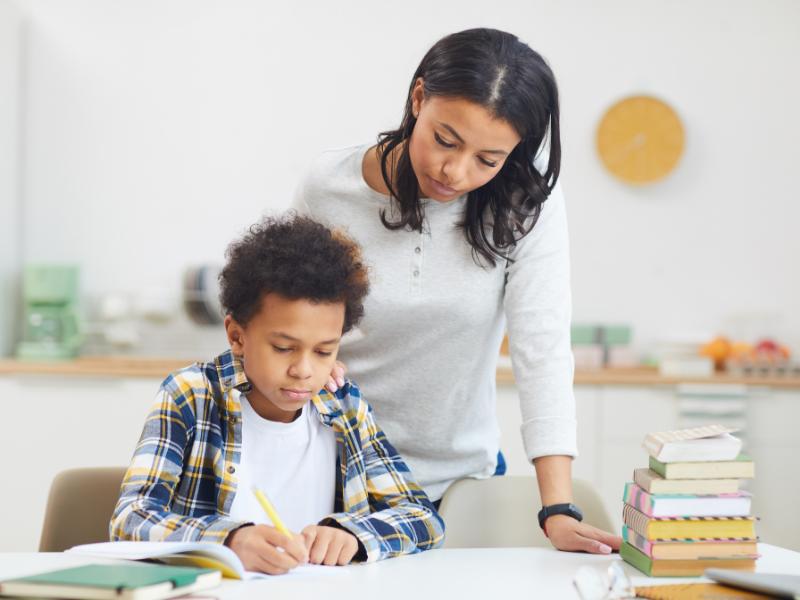
boy doing homework

Join other parents and community leaders on Liberty Plaza to spread the message that it is time for change in education

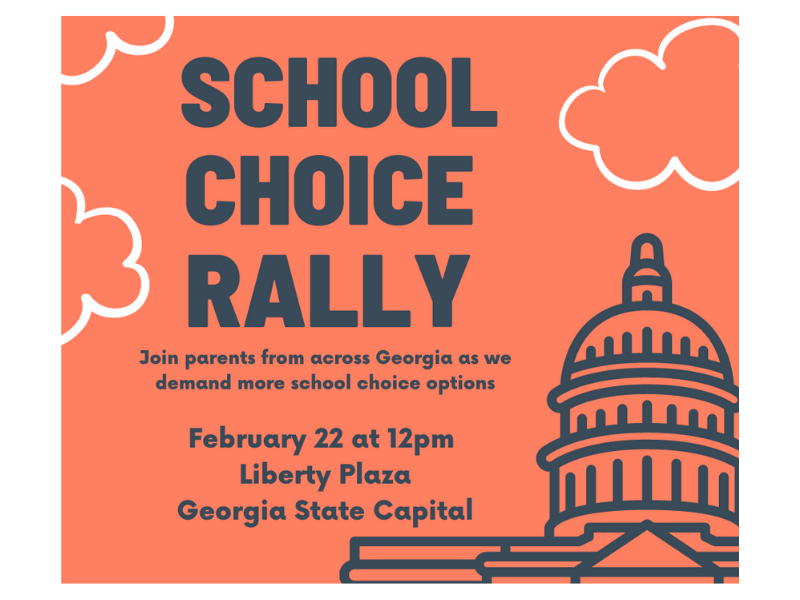
Today, hundreds of parents, families, and advocates will come together for a rally at noon on Liberty Plaza at the Georgia State Capitol to voice their support for more educational options through Promise Scholarships.

The Georgia Center for Opportunity’s (GCO) take: “The time for Georgia lawmakers to act is right now. Already, 23 other states have passed legislation in recent months to create or expand educational opportunity for their families,” said Buzz Brockway, GCO’s vice president of public policy. “Our state must follow their lead by passing Promise Scholarships, which are a huge leap in the right direction to put kids first.”


Buzz Statement

New Research: School Students Lag Behind in Literacy Almost Two Years Into the COVID-19 Pandemic

New Research: School Students Lag Behind in Literacy Almost Two Years Into the COVID-19 Pandemic

New Research: School Students Lag Behind in Literacy Almost Two Years Into the COVID-19 Pandemic

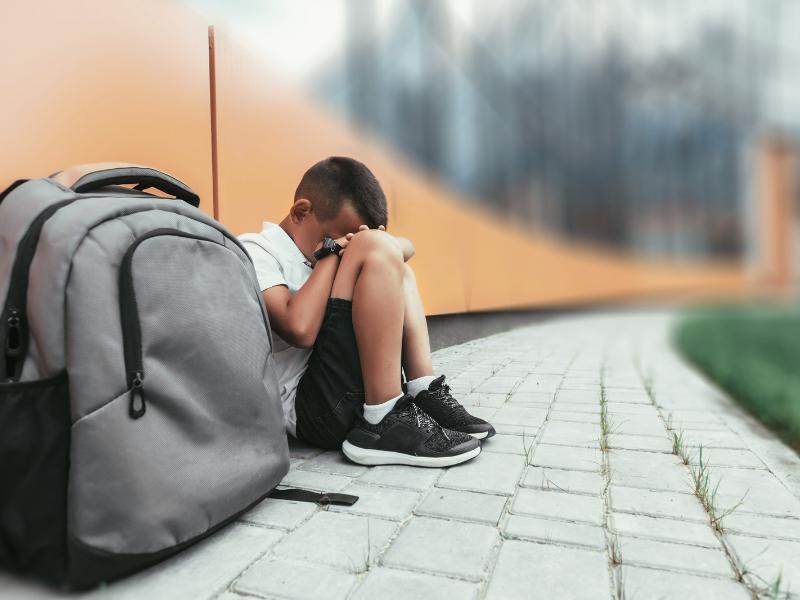
sad kid near bookbag

 New research brief shows that elementary school students lag behind in literacy almost two years into the COVID-19 pandemic

The mid-school-year assessment concluded that students in kindergarten, first grade, and second grade are the furthest behind compared to their pre-pandemic counterparts. Black and Hispanic students are bearing the brunt of those learning losses, with the literacy gap between minority students and white students larger than before the pandemic.

The Georgia Center for Opportunity’s (GCO) take: “Count this report as yet another entry in a long line of research studies showing the devastation of learning loss due to school shutdowns,” said Buzz Brockway, GCO’s vice president of public policy. “Georgia kids need the flexibility provided by Promise Scholarships now more than ever. We urge lawmakers to pass either House Bill 999 or House Bill 60 immediately. Both bills would provide up to $6,000 a year for families to choose alternatives to their locally zoned public school.”


buzz quote

State can give parents options and support traditional public schools

State can give parents options and support traditional public schools

State can give parents options and support traditional public schools

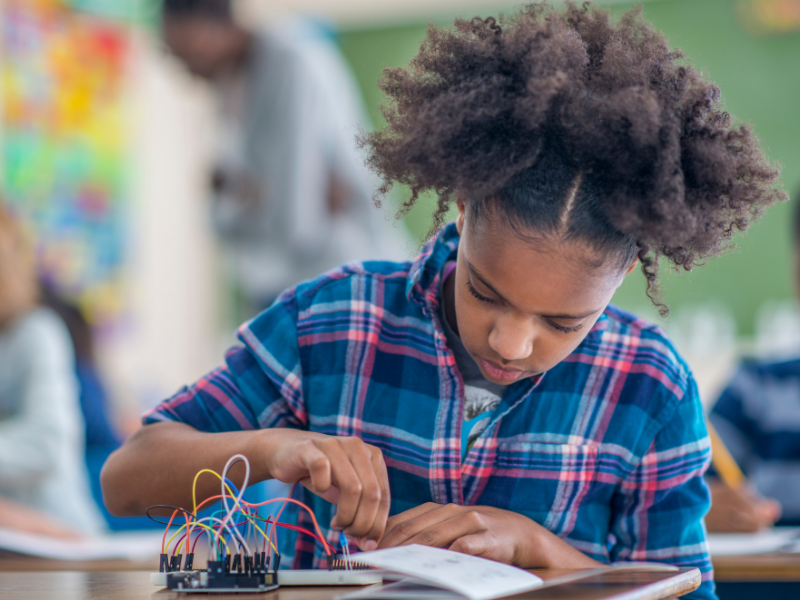
GIRL SCIENCE, ELECTRICAL BOARD

Educational choice is saving the state money


An updated analysis from EdChoice finds that Georgia’s two educational choice programs—the Special Needs Scholarship Program and the Qualified Education Expense Tax credit—have saved Georgia taxpayers between $605 and $1.1 billion through the 2018 fiscal year. That translates to between $4,355 and $8,013 in taxpayer savings per student participating in the programs.

Buzz - edu media statement

Georgia Center for Opportunity’s take:

 “There is a falsehood out there that if we expand access to different educational options for Georgia families we’ll end up hurting traditional public schools. Data like this from EdChoice clearly show this isn’t the case,” said Buzz Brockway, GCO’s vice president of public policy. “Our toxic political environment sets up a false dichotomy between giving families a choice in education and supporting traditional public schools. Our state can do both. In fact, if our goal is to do what’s best for students and families, then we must do both: Have properly funded and supported traditional public schools while providing options for families who need a different environment for their children to best thrive.”


Education Disruption

Education Disruption

Education Disruption

middle school charter school

The COVID19 pandemic has disrupted many things here in America. As every parent knows, one of the major disruptions took place in the realm of education. News has been coming out that among the disruptions in education has been the number of parents choosing to homeschool their kids. Now, we’re not talking about the quasi-homeschooling that all kids experienced when their schools closed and all the kids went to Zoom School. We’re talking about folks who have decided to unenroll their students from public or private school and teach their children themselves, most using a curriculum and resources crafted for homeschooling.

In March, the Census Bureau released results of their Household Pulse Survey. The Survey said…

By fall, 11.1% of households with school-age children reported homeschooling (Sept. 30-Oct. 12). A clarification was added to the school enrollment question to make sure households were reporting true homeschooling rather than virtual learning through a public or private school.

That change represents an increase of 5.6 percentage points and a doubling of U.S. households that were homeschooling at the start of the 2020-2021 school year compared to the prior year. 

In Georgia, the Survey additionally reported that a staggering 16% of households were homeschooling last fall. This is also the number of African-American households homeschooling nationwide (up from 3% pre-pandemic!). It will be interesting to see if data for the 2021-2022 school year reflects a return to public and private schools as school buildings reopen, or if these parents decide to continue homeschooling.

The reasons people choose homeschooling vary. Joyce Burgess of the National Black Homeschool Association explains why some African-Americans are choosing to homeschool: 

They’re making these conclusions that peer pressure, they don’t have to be bothered with unnecessary racism, they don’t have to be bothered with bullying, they don’t have to be bothered with negative peer pressure. Some parents have chosen to bring their children home because the virtual setting, some parents just aren’t able to navigate that,” said Burgess.

A recent guest post in Bari Weiss’ Substack provides further insight to why some parents chose homeschooling 

When the covid lockdowns hit in March 2020 — in a matter of a few weeks, some 124,000 public and private schools with 55.1 million students shut down  American families suddenly had to adjust to school-via-screen.

The parents weren’t just upset about all the screen time their kids were logging. They were upset about what they saw on those screens. For the first time, millions of moms and dads could watch, in real time, their children’s teachers teaching.

It was a moment of “parent empowerment,” said Kerry McDonald, a senior fellow at the libertarian Foundation for Economic Education. That’s one way to put it. 

Here’s another: “My kindergartener was getting maybe twenty minutes of instruction per day,” said Pauline, a house cleaner in Durham, North Carolina, who prefers using only her middle name to stay anonymous. 

Pauline and her child lasted about two weeks in remote school before she decided it was a waste of everyone’s time. After a summer of lockdown, Pauline opted for a “homeschool co-op” with four other families. She was planning to send her now seven-year-old back to public school this year. “Being isolated made my kid miserable,” she said. “And I like public school. I was excited to send my kid there.”

The Delta variant, combined with her husband’s asthma, and the fact that there is no vaccine requirement for teachers in her district threw a wrench in that plan. What started as a short-term solution has morphed into a new normal. 

As my colleague Jamie Lord and I recently discussed, this demonstrates the real beauty of the concept of school choice: whether you want kids masked, or unmasked, have your school teach a certain curriculum or not, all parents, no matter their income status or location, should have choices in how and where their kid is educated.  

We at the Georgia Center for Opportunity will continue to fight for the right of all parents to choose the best method of educating their children.