Media statement, in the news, Georgia news, ga news

PEACHTREE CORNERS, GA—The Georgia Center for Opportunity (GCO) offers its full support to the Stronger Workforce for America Act of 2026 and commends Congressman Tim Walberg, Chair of the House Committee on Education and Workforce, for introducing this significant legislation to reauthorize the Workforce Innovation and Opportunity Act.

GCO is a nonprofit, nonpartisan organization that focuses on ensuring access to quality education, fulfilling work, and healthy family lives through research, policy analysis, and community initiatives. We advance solutions that increase opportunity and give Georgia families a durable path out of poverty. We are also a founding member of the Alliance for Opportunity, a multi-state coalition focused on improving state-administered public assistance and workforce programs to help Americans achieve lasting opportunity and stability.

The Stronger Workforce for America Act aligns with our work and includes an invaluable option for state flexibility, the Make America Skilled Again Grants. These grants would allow 10 states to implement the One Door to Work model, which would empower them to integrate their safety net and workforce systems.

Utah has had this authority for nearly 30 years, after being grandfathered into the strategy. This has enabled Utah to provide its citizens with both support to meet their immediate needs and a clearer path into the workforce and toward self-sufficiency.

The results of Utah’s One Door policy are impressive. For example, the state has outpaced the national labor force participation (LFP) rate, or the number of working-age people employed or looking for a job, by an average of 5.3%. As of late 2025, Utah’s LFP rate was approximately 67.6%, one of the highest in the nation.

In contrast, Georgia’s LFP rate is 60.6%. Put another way, nearly 40% of Georgians, many of them prime-age men, who can work are choosing not to.

Eric Cochling, GCO’s Chief Program Officer and General Counsel, emphasized the detrimental impact of these statistics and the critical importance of work for a flourishing life:

“A good job offers more than just a paycheck. It provides purpose and stability and is one of the most durable ways to empower people to break the cycle of poverty.”

He also stressed the need for reform: “If we truly want to expand opportunity in Georgia and across the country, individual workforce and safety net programs must start functioning as a true system—one that’s designed to support human dignity and flourishing. The Stronger Workforce for America Act is a much-needed step in the right direction.”

Georgia policymakers are paying attention to the success of Utah’s integrated welfare and workforce system and are seeking opportunities like the Make America Skilled Again Grants to implement similar reforms that benefit both Georgians and the state economy.

As Buzz Brockway, GCO’s Vice President of Public Policy, said:

“The ability to link workforce and safety net systems is key to boosting Georgia’s current trajectory as a leader in economic opportunity. The Make America Skilled Again Grants included in the Stronger Workforce for America Act would give Georgia’s leaders a powerful way to strengthen families, expand the workforce, and set the state on a path to more rapid growth.”

Randy Hicks, GCO’s President and CEO, added:

“Every state deserves the ability to design an integrated system that enables people to thrive. Right now, every wasted hour navigating disconnected programs is an hour that could have been spent building a better future. This bill ensures that states can rethink the status quo and create pathways to opportunity for every citizen.”

Through the changes it proposes, the Stronger Workforce for America Act of 2026 is poised to make meaningful welfare and workforce reforms possible in Georgia, and GCO strongly urges its enactment.

###

Georgia Center for Opportunity (GCO) is independent, non-partisan, and solutions-focused. Our team is dedicated to creating durable paths out of poverty for families in Georgia and beyond. To achieve our mission, we research ways to help remove barriers to opportunity and promote our solutions to policymakers and the public so that public policy and civil society can effectively and innovatively strengthen family stability, economic mobility, and child opportunity in the communities where lives are lived. 

Send media inquiries to:

Rebecca PrimisGeorgia Center for Opportunity
RebeccaP@foropportunity.org 

Higher numbers of non-working adults are concentrated in Georgia communities struggling with poverty and distress.

Lawrenceville, Georgia, launched a unique partnership called ReCAST (Resiliency in Communities After Stress and Trauma) in 2021 to address poverty and expand opportunities in the city. 

Because growing vibrant, resilient communities isn’t ever a solo endeavor, ReCAST coordinators connected with local organizations that could meet the needs of underserved residents where it mattered most—in Lawrenceville’s homes and neighborhoods. 

ReCAST engages three dynamic partners to meet its goals. Impact46 provides essential housing services to people experiencing financial hardship. View Point Health offers mental and behavioral health assistance. And the Georgia Center for Opportunity (GCO) helps chronically unemployed or underemployed people prepare for and find rewarding work.

Eric Cochling, GCO’s Chief Program Officer and General Counsel, noted:

“We chose to participate in ReCAST because of the comprehensive approach to addressing community needs envisioned by the initiative. The focus on collaboration among local groups and on helping families develop community relationships reflects GCO’s method of supporting people in need.”

Lawrenceville recently produced a mini-documentary highlighting the third year of ReCAST’s accomplishments. It shows what’s possible when community members unite to open doors to a brighter future for local residents.

Connecting Lawrenceville job seekers with meaningful work

Employment plays a key role in healing communities after stress and trauma. In Gwinnett County, where Lawrenceville is located, GCO’s BETTER WORK program furthers ReCAST’s goals by bringing together local employers, nonprofits, and mentors to help people find fulfilling jobs close to home.

Carolina Pachon, GCO’s BETTER WORK Program Manager in Gwinnett County, explained that the program changes lives by giving people “a sense of hope, stability, and a way forward.”

As part of the BETTER WORK initiative, GCO offers a class called Jobs for Life. The class teaches valuable work skills, but it’s much more than a job training or placement course. It helps participants form the supportive community relationships that can point them in a new direction in life.

During the class, Jobs for Life students learn that meaningful work brings more than just a paycheck. It provides a sense of dignity and purpose that’s essential for human flourishing. A rewarding job also gives workers the confidence and courage to rise out of poverty and build a better future. This resiliency then spreads, revitalizing and strengthening workers’ families and communities as well.

GCO’s programs are particularly impactful in Lawrenceville, where many residents struggle with barriers to opportunity. The city’s poverty rate is 17.2%, well above Gwinnett County’s average rate of 10.5%. The higher poverty rate also correlates with data showing that about 19% of prime-age (25-54) adults in Lawrenceville aren’t currently working.

Sparking change in a young man’s life

Josiah, a young Lawrenceville resident, found Jobs for Life at a point when he most needed his local community to listen and offer support. He was having a hard time finding a sense of purpose in his life.

Carolina described Josiah as shy at first, but during the class, she saw a big transformation in his mindset. Josiah’s self-esteem soared as facilitators and fellow students created a caring community around him. At the end of the program, he gave an inspiring graduation speech emphasizing the significance of the personal connections he’d made. “I’ve come to believe that the purpose of life is to build meaningful relationships with people,” he shared.

Josiah now works in a restaurant and has a passion for cooking. He’s looking for ways to combine this enthusiasm with his desire to serve others. “I’m super excited,” he said.

Josiah offered this valuable advice to others who are struggling: “Let go of uncertainty. If you think you want to do something, do it.”

Making Lawrenceville a true hometown

Communities grow stronger when people invest in the well-being of their neighbors. ReCAST enables Lawrenceville residents to do just that through vital local initiatives.

Support for neighbors who need a hand empowers people like Josiah to take meaningful steps forward, to rise out of poverty, and to help the whole community thrive. The interconnectedness that ReCAST has set in motion makes Lawrenceville a true hometown—a place to belong—for the individuals and families who live there.

Reforming the Supplemental Nutrition Assistance Program can help families get short-term help without discouraging long-term goals for work and financial independence.

Key Points

  • SNAP’s benefit cliffs discourage work and career growth by abruptly cutting off assistance when recipients earn even modest income increases, trapping families in financial instability and reducing workforce participation.
  • Proposed reforms aim to eliminate benefit cliffs through gradual benefit reductions, clear exit points, and adjusted benefit levels, encouraging financial independence without penalizing career advancement.
  • Comprehensive SNAP reform benefits all stakeholders, empowering workers, stabilizing families, addressing labor shortages for businesses, and potentially reducing program costs by $30 billion annually.

Benefit cliffs discourage work and trap families in long-term financial struggles. A new policy solution offers a way out.

The Supplemental Nutrition Assistance Program (SNAP) is one of the largest anti-poverty programs in the U.S., providing over 41 million Americans with critical food assistance in 2024. But for many recipients, a system designed to support often ends up trapping—with significant barriers known as benefit cliffs.

These cliffs occur when small increases in income result in recipients suddenly losing their SNAP assistance, leaving them in a worse financial position for working more hours or earning an income boost. For example, a single parent’s modest hourly raise might lead to a benefit cut that completely offsets their increased take-home pay.

The negative ripple effects extend far beyond individuals and households. Benefit cliffs reduce workforce participation and make it harder for plenty of small businesses and industries to find the workers they need to grow and serve customers.

A new proposal for reform, developed with research by Erik Randolph at the Georgia Center for Opportunity in collaboration with Angela Rachidi of the American Enterprise Institute (AEI), offers a way to dismantle SNAP benefit cliffs and restore the program’s original mission—helping families achieve financial independence and stability.

A new SNAP reform report from American Enterprise Institute and Georgia Center for Opportunity shows how improve access to work and reduce costs to taxpayers.

SNAP’s design discourages career growth among recipients

SNAP is meant to help low-income families put food on the table. But the system unintentionally penalizes those who pursue better wages or career opportunities.

For many recipients, earning extra income—not just large raises but even modest increases as one gains skills or works more hours—means abruptly losing SNAP benefits altogether. Instead of slowly tapering down, benefits “fall off a cliff” as income rises.

This financial disincentive creates a dilemma for households relying on SNAP. While accepting additional shifts or applying for a higher-paying position could signify career growth, it may financially set them back without SNAP assistance offsetting basic expenses.

The economic impact is widespread. With fewer prime-age workers, employers encounter labor shortages, and their ability to operate efficiently is compromised. Workforce productivity also declines when workers are stuck in part-time, lower-skilled jobs rather than advancing to higher economic opportunities. The result is a cycle that makes it harder for families to break free from reliance on public assistance programs.

New SNAP reform proposals offer a way forward

Research by AEI and GCO outlines actionable steps to eliminate benefit cliffs while maintaining SNAP costs close to historical levels. These recommendations include changes to critical factors within the program’s structure to allow for a smoother, gradual reduction in benefits as income rises.

Key reforms involve adjusting the following elements of SNAP’s benefit system:

  • Adjust participants’ cost-sharing responsibilities. The proposed plan would reduce the benefit reduction rate from 30% to 18%, making it easier for families to transition off benefits.
  • Cost-sharing should begin as soon as income increases. Right now, deductions delay cost-sharing, which creates benefits cliffs when income limits run out. The new plan is a middle ground, starting benefit reductions earlier but at a lower rate. While it might lower benefits for many families, benefit cliffs are eliminated or reduced.

These structural adjustments effectively close the gap between earned income and benefit loss, removing financial penalties for participants who work more hours or accept higher-paying opportunities.

A win for workers, families, small businesses, and taxpayers

Simplifying and improving SNAP’s benefit structure solves major labor market challenges. For recipients, reforms encourage workforce participation and career advancement, empowering them to climb the economic ladder without fear of a financial setback.

For employers, these changes help restore a steady supply of available workers, addressing hiring difficulties in industries that rely on hourly, shift-based, or entry-level staff. Additionally, SNAP reform creates fiscal balance while allowing the government to save money long term—potentially reducing program expenses by 27% or $30 billion annually.

GCO continues to investigate ways to improve safety-net programs to help families escape poverty, and these recommendations for SNAP are an important piece of those efforts. Employment is one of the most reliable ways to break cycles of poverty, yet benefit cliffs trap too many families in stagnant economic conditions. Eliminating these barriers will strengthen the workforce, stabilize families, and create economic momentum that benefits us all.

Download the full report from American Enterprise Institute and Georgia Center for Opportunity here.

Georgia news, in the news, current events, Georgia happenings, GA happenings

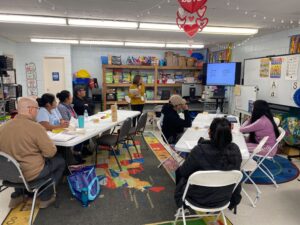
This week, we launched our Jobs for Life program with an inspiring open house, highlighting the life-changing opportunities available to individuals in our community. Through this free program, participants gain critical job skills, build confidence, and set themselves up for long-term success in the workforce.

At Georgia Center for Opportunity’s BETTER WORK Columbus initiative, we believe that investing in people is key to breaking the cycle of poverty and creating lasting change. Our partnership with Jobs for Life ensures that individuals not only receive job training but also the support and mentorship needed to thrive both personally and professionally.

In the news coverage from WTVM, you’ll see how this program is already creating a positive ripple effect in our community. From improving local employment rates to fostering a sense of belonging, Jobs for Life is transforming lives—and it’s just the beginning.

Watch the news coverage from WTVM 9 Columbus, GA.

teamwork, people, hands, business partner, corporate business, nonprofit business

Key Points

  • Our BETTER WORK program harnesses the transformative power of local partnerships to get more people hired and build prosperous, stable communities.

  • Four standout collaborators—Essendant, Neighborhood Cooperative Ministries, D.P. Jones Electrical, and Chattahoochee Valley Episcopal Ministries (CVEM)—are showing how business and nonprofit involvement can fuel economic opportunity and serve the holistic needs of those working to escape poverty.

  • Together, GCO and our partners are dedicated to more than building better work. We’re building environments where everyone has a chance to reach their full potential.

In the tapestry of a thriving community, threads of collaboration weave a narrative of hope and opportunity for those who need it most. The collective efforts of local organizations, community leaders, and neighbors form the foundation upon which individuals facing challenges can build a brighter future. 

In the pursuit of creating a more prosperous and stable community, the Georgia Center for Opportunity’s (GCO) BETTER WORK program has harnessed the transformative power of partnerships. Among these alliances, four standout collaborators—Essendant, Neighborhood Cooperative Ministries, D.P. Jones Electrical, and Chattahoochee Valley Episcopal Ministries (CVEM)—exemplify how synergy between businesses and nonprofits makes it possible for communities to experience greater transformation and well-being. 

Essendant: A Distributor with a Difference

Type of Business: Distinguished distribution company based in Suwanee, Georgia.

Partnership History: Has been an employer partner in GCO’s BETTER WORK Gwinnett (BWG) program since August 2022. 

Their Impact: Essendant’s involvement is not merely transactional—it represents a commitment to community growth and development. By actively participating in the BETTER WORK program, Essendant contributes to the creation of a more vibrant and economically stable community. 

  • Their commitment to the program is evident in their proactive approach, going above and beyond in reaching out and interviewing every candidate referred by GCO.
  • Their consistency in communication has been a cornerstone of their partnership. By keeping us updated on the progress of candidates, they ensure a transparent and collaborative process.
  • Three individuals referred by BWG have been employed at Essendant for over three months, highlighting the tangible impact of this partnership on local employment opportunities.

Neighborhood Cooperative Ministries: Nurturing Communities, Transforming Lives

Type of Business: Nonprofit organization in Norcross, Georgia.

Partnership History: Has been a community partner since the inception of GCO’s BETTER WORK program. 

Their Impact: NCM has stood as an unwavering partner, embodying values of compassion, faithfulness, and trustworthiness that align seamlessly with the BETTER WORK initiative’s people-centric approach. Their impact extends well beyond the professional realm, delving into the core of individual needs. 

  • Their comprehensive support system—encompassing financial aid, shelter, and food resources—plays a pivotal role in empowering candidates referred by the BETTER WORK program. 
  • NCM’s commitment to addressing the holistic needs of individuals creates an environment where securing employment becomes a stepping stone toward self-sufficiency.
  • Together, BETTER WORK and NCM orchestrate various initiatives, with NCM hosting job events that connect job seekers with potential employers. NCM’s clients benefit from the invaluable support provided by the BETTER WORK program, including job coaching, resume assistance, and essential career advice.

“Through these partnerships, GCO and our collaborators are doing so much more than building better work. We are tirelessly constructing a better future for all, fostering an environment where individuals can reach their full potential and proving that this approach is possible for any community seeking hope and opportunity.”

“Through these partnerships, GCO and our collaborators are doing so much more than building better work. We are tirelessly constructing a better future for all, fostering an environment where individuals can reach their full potential and proving that this approach is possible for any community seeking hope and opportunity.”

D.P. Jones Electrical: Illuminating Opportunities

Type of Business: Family-owned and operated business established in 1939. 

Partnership History: Recent addition to the employer partner network for BETTER WORK Columbus. 

Their Impact: D.P. Jones Electrical brings with them a legacy of customer satisfaction and an eagerness to give back to the community. 

  • Their commitment to offering opportunities is exemplified by the employment of a BETTER WORK candidate who was initially feeling defeated in his job search.

  • The collaborative efforts between the candidate, the BETTER WORK team, and D.P. Jones Electrical resulted in permanent full-time employment. Edward Russel, the newest member of the D.P. Jones’ team, expresses his appreciation for working in a company that values him and shares his family values.

  • The company’s commitment to on-the-job training provides individuals like Edward with the chance to learn a trade while supporting their families.

Chattahoochee Valley Episcopal Ministries (CVEM): Empowering Communities in Times of Need

Type of Business: A non-profit outreach ministry in Columbus, GA

Partnership History: Community partner with BETTER WORK Columbus

Their Impact: CVEM stands as a beacon of support for individuals facing great need or crisis. 

  • Collaborating with BETTER WORK Columbus, CVEM addresses concerns related to housing, medical expenses, household furnishings, education, and job-related expenses. 
  • Their flexibility and responsiveness empower individuals to succeed as they position themselves for better job opportunities and futures.

Partnerships Unlock the Life-Changing Power of Work

It’s through local partnerships that we are able to help more people achieve a better life through the power of work. Partners like Essendant, Neighborhood Cooperative Ministries, D.P. Jones Electrical, and Chattahoochee Valley Episcopal Ministries are a few of the shining examples that illustrate the positive outcomes that come from strategic alliances. 

Through these partnerships, GCO and our collaborators are doing so much more than building better work. We are tirelessly constructing a better future for all, fostering an environment where individuals can reach their full potential and proving that this approach is possible for any community seeking hope and opportunity. 

Learn More About Partnering with BETTER WORK

If you are connected to a business or nonprofit organization interested in collaborating with our local BETTER WORK chapters, go here to learn more and contact us:

Subscribe

* indicates required

Subscribe

* indicates required