Key Points

  • First graduating class of Jobs for Life and BETTER WORK Columbus partnership
  • Jobs for Life and BETTER WORK are joining forces to get help lift people out of poverty

On July 7th the first group 11 men and women graduated from the Better Work Jobs for Life class at the Asbury UMC training site. This course was the first of its kind in partnership between Jobs for Life and BETTER WORK Columbus.The goal was to give men and women a stronger foundation in life skills so they can go on to be reliable employees for local businesses.

“The Jobs for Life job-readiness training course helps men and women understand their dignity and God-given identity and gifts, develop character, and foster a supportive community that will equip them for work, life, and their overall goals. This method, combined with soft skills training, has proven to enable unemployed and underemployed men and women to find and keep meaningful employment.”

The Columbus community came together to support this group of students overcome their circumstances, and we are excited to see this partnership become a staple of the BETTER WORK program.

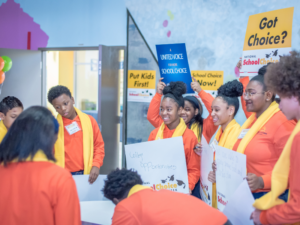
Jobs for Life BWC graduation

Jobs for Life BWC graduation

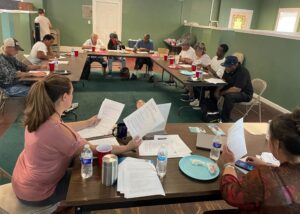
Jobs 4 Life Meeting in Columbus

A Partner For Life

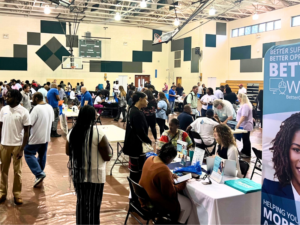
Several of the Chattahoochee Valley Poverty Reduction Coalition (CVPRC) member organizations attended the May 26th Jobs for Life class to share information on resources and talk with students about overcoming the roadblocks they face. Some of the potential roadblocks discussed included mental and emotional health, childcare challenges, and needed education and training. This Community Resource panel was able to help students understand the steps they must take to overcome these challenges and others.


Responding to the needs in a community is paramount to our success.

Learn how our community partners stepped up to support the needs in Columbus through area-businesses.  

Our Partners Matter

We would like to thank Candace Muncy (United Way-211), Dr. Asante Hilts (Columbus Health Department), and Jessica Neal (Goodwill) for attending as well as Jamie Thomas (Enrichment Services) and April Hopson (Columbus Technical College) for sending representatives on their behalf.

Our entire Jobs for Life team and students appreciate you!

Job for Life classes are successful because of our community partners and volunteers. If you are interested in learning more about these classes and getting involved, visit our website at https://betteropportunity.org/jobs-for-life/


A belief in working together is key


BETTER WORK Columbus is connected with groups and organizations across the Chattahoochee Valley. These groups include both the Chattahoochee Valley Poverty Reduction Coalition (CVPRC) and the Mayor’s Commission on Reentry. A belief in working together in the local community as the key to eliminating poverty in our city is the common thread binding these groups together.  More specifically, the CVPRC holds a shared vision to reduce the poverty rate in the Chattahoochee Valley by 50% over the next 10 years.

BETTER WORK Program Manager, Kristin Barker, plays a leadership role in both of these groups. As forthcoming chair of the Reentry Commission, she works to identify key people in our community and bring them together to address the needs and concerns that impact individuals who are justice-involved. This is necessary to further the mission of preventing recidivism by strengthening cooperation and collaboration between law enforcement agencies, corrections and supervision entities, resource agencies, social service and non-profit organizations, faith-based non-profit organizations, community members, and other private and public stakeholders. Embedded in the group’s purpose is a focus on finding key people in the community and bringing them together to address the needs and concerns that impact individuals who are justice-involved.


The Success Sequence provides an outline of how to reverse the cycle of poverty in our communities. GCO uses this as a framework for much of our work.

Local Connections and National Partnerships

It is these local connections and national partnerships like Jobs for Life that will allow Columbus to discover the high-impact strategies needed to support families in poverty and connect them with resources that will move them toward self-sufficiency.

Find more information about the Chattahoochee Valley Poverty Reduction Coalition and the Mayor’s Commission on Reentry online.

How Can You Measure Welfare Program Success?

Part 1

By Erik Randolph

If you want to know how well welfare programs work, ask welfare agency administrators how they measure success. This was suggested by Randy Hicks, President and CEO of the Georgia Center for Opportunity (GCO), years ago. Almost invariably these administrators will answer that they measure success by how many people they serve. When the total number of people they serve goes up, the programs are more successful. Or are they?

To the contrary, program participation does not measure success. Furthermore, the chances are that welfare agency administrators lack the metrics to tell us how successful the programs truly are.

Program participation can measure demand for the program, or it might indicate the number of people in need. In these cases, program participation is useful information. But does it actually measure success? 

The more important goal of welfare programs is to help people overcome their financial difficulties and escape poverty. This enables them to live more fulfilling lives. Public policy should not encourage them to languish on assistance for years on end but rather help them improve their circumstances until they no longer need assistance, or their reliance on assistance becomes lessened. Welfare agencies generally lack metrics to effectively measure this important goal.

Which revises our original question slightly: How can you measure success?

Dependency Metrics

One potential way to measure success is to use dependency metrics that evaluate the percent of the population who are dependent on major welfare programs. This is partially done at the federal level but not at all at the state level.

In 1994, Congress passed the Welfare Indicators Act. It focuses on food stamps, Temporary Assistance for Needy Families (TANF) cash grants, and Supplemental Security Income (SSI). Every year, the U.S. Secretary of Health and Human Services is required to file a report with Congress showing dependency on those three welfare programs.

The most recent report was released in 2018. The pie chart below comes from page eight of that report, showing for the year 2015 the percentages of the national population according to their proportion of their total income dependent on the value of food stamps, TANF cash grants, and SSI. The higher the proportion of an individual’s income that comes from these three assistance programs, the worse off the person probably is. For example, if the value of food stamps constitutes more than 50 percent of an individual’s income, that person cannot be well off financially. In comparison, when food stamps constitute 25 percent to 50 percent of an individual’s income, it means the person has more additional income and is better off than when food stamps comprise more than 50 percent  of total income. And having less than 25 percent of total income coming from food stamps is better than having 25 percent to 50 percent of total income on food stamps.

Georgia has the ability to generate dependency metrics through the Georgia Gateway, including TANF cash grants, food stamps, medical assistance, and two other programs. These are means-tested programs, meaning the Department of Human Services has not only participation numbers but also income information of the applicants and recipients. The Department could relatively easily have its I.T. crew write scripts to spit out reports periodically showing the number of individuals and families by dependency on their income on those programs captured through the Gateway. Coupled with Census data, the Department could produce periodic reports showing how dependency changes over time and further break down the data by demographic groups. 

Furthermore, because every individual has a unique identifier, the I.T. crew could produce additional scripts to follow people over time. This would allow for more sophisticated analytics showing the financial progress of people and families in the system. 

Dependency metrics are not perfect. They do not capture persons who would be eligible for the program but do not participate. However, the number of these individuals are regularly estimated and could be presented as additional information in the analysis. 

Ideally, it would be best if the dependency metrics captured all assistance programs. Currently, this is not possible.

Assistance Programs Breakdown

Exactly How Many Programs Do People Benefit From? 

Often people qualify for multiple assistance programs. Their children might be on Medicaid and receiving free school lunches. At the same time, the household may be receiving food stamps. Additionally, if the parent or parents work, they may be receiving the Earned Income Tax Credit (EITC) and Additional Child Tax Credit. We just listed five programs that welfare families typically receive. 

And there are more programs. If the family has young children under five, they could receive food packages from the Women, Infants, and Children (WIC) program. Additionally, the family may be receiving childcare assistance, Section 8 rental assistance, and/or energy assistance.

Now you might think that we have a dataset somewhere telling us the total number of welfare programs families are benefiting from. If you assumed that we do, you would be wrong. No such dataset exists.

The reason? First, the welfare system is disjointed. There is no single agency or dataset that can tell us the total number of programs people are on. Even Georgia’s award winning Gateway, which is one of the better integrated eligibility systems in the country, cannot tell you. While the Gateway can tell us about food stamps, Medicaid, WIC, TANF, and subsidized childcare services, it is missing the refundable tax credits, free school lunches breakfasts, Section 8 rental assistance, and other welfare programs not listed. 

Second, statistical sources do not include all welfare programs in their questionnaires and have other limitations, such as serious time lags. For example, the American Community Survey asks about food stamps, Medicaid, and Supplemental Security Income but practically none of the other programs, making a statistical inference for the complete picture impossible. 

The Survey of Income and Program Participation gets us closer, giving us childcare assistance, WIC, energy assistance, and public housing, among others. However, it is still missing the refundable tax credits, including the EITC which is one of the big three welfare programs. Worse, SIPP is structured for longitudinal studies that makes the survey totally impractical for monitoring program participation on a regular and timely basis.

Adopting Dependency Metrics in Georgia

Dependency metrics would improve our ability to measure success, and state leaders should consider implementing them in Georgia. 

Georgia would do a better job than the federal government with dependency metrics. The Gateway houses the data for critical programs, enabling Georgia to produce monthly estimates, more timely estimates, and for more programs. In contrast, the Feds apparently cannot meet its obligation in producing annual reports, provides only national data for only three programs, and there are significant time lags. The most recent Federal report came out on May 4, 2018, with 2015 and some 2016 data.

Once implemented at the state level, dependency metrics will improve over time. If and when further integration, consolidation, and streamlining of eligibility systems occur, as recommended by GCO, dependency metrics will become more complete and more useful.

However, they are not the sole answer. There is another way to measure success that would complement well dependency metrics. This will be the topic of my next blog.

In the meantime, do you have ideas on how we can measure success in welfare programs? We would love to hear them. Be sure to put them down in the comments below.

Erik Randolph is Director of Research at the Georgia Center for Opportunity. This blog reflects his opinion and not necessarily that of the Georgia Center for Opportunity.

DISINCENTIVES FOR WORK AND MARRIAGE IN GEORGIA’S WELFARE SYSTEM

Based on the most recent 2015 data, this report provides an in-depth look at the welfare cliffs across the state of Georgia. A computer model was created to demonstrate how welfare programs, alone or in combination with other programs, create multiple welfare cliffs for recipients that punish work. In addition to covering a dozen programs – more than any previous model – the tool used to produce the following report allows users to see how the welfare cliff affects individuals and families with very specific characteristics, including the age and sex of the parent, number of children, age of children, income, and other variables. Welfare reform conversations often lack a complete understanding of just how means-tested programs actually inflict harm on some of the neediest within our state’s communities.

DOWNLOAD WHITE PAPER

DOWNLOAD EXECUTIVE SUMMARY

VISIT WELFARECLIFF.ORG

All Georgians Deserve to Participate in The Economic Recovery

By Buzz Brockway

The Coronavirus pandemic has caused massive numbers of people to lose their jobs. Georgia’s official unemployment rate is 9.7%. However, as we reported last week , many others are not employed but do not appear in the common reported unemployment number. 


A top goal of policy makers, and indeed all Georgians, should be to see people return to work as quickly as possible. Work is the best path to financial independence and a flourishing life.  


As we endeavor to rebuild our economy, we must look to remove barriers people face in returning to work. One significant barrier many people face is a criminal record. For those with a criminal record who lost jobs due to the pandemic shutdown, finding work again could be difficult. For ex-offenders who didn’t have a job, the task of finding one just became even more difficult. Our research estimates that approximately 250,000 healthy working age men had no job prior to the pandemic. The reasons for their lack of employment vary, but for many, a criminal record is the barrier keeping them out of the job market.  


What can be done to address this significant problem? In recent years, Georgia has focused on prison reentry programs meant to assist folks as they transition back into society. This work is important and must continue. But for those already back in society, other assistance is needed.


With Senate Bill 288, the Georgia Legislature has the chance to aid ex-offenders looking for work. The bill would allow an ex-offender, who has served his or her time and stayed out of trouble for a period of time, the opportunity to have certain non-violent misdemeanors expunged from the record. This will allow for an easier transition back into the workforce for a segment of Georgia’s population, who have paid their debt to society and stayed on the straight and narrow.


The benefit to our state in passing this legislation comes in several ways: Ex-offenders with jobs are less likely to recidivate. People who don’t get in trouble again cost the taxpayers less money and actually join the ranks of taxpaying citizens.


Ex-offenders with jobs are able to support their families, reducing poverty and lifting up the communities in which they live. If we want to break the cycle of poverty in our state, we must provide a path out for families. A job is the first step on the path to self-sufficiency and a flourishing life. 


We are in the final week of the 2020 Georgia legislative session. There are many important issues being debated and policies being discussed to make our state better. At the top of the list should be providing a path forward for folks who need our help. SB 288 is an excellent step in the right direction.

To learn more about what Georgia Center for Opportunity is doing to help get Georgians back to work check out our Hiring Well, Doing Good initiative. 

What works and what doesn’t? That’s a basic but important question for community nonprofits to address. But more times than not, we tend to launch off hunches. We think we know what works, but we don’t know, with quantifiable data points to back it up.

At Breakthrough 2019, we were honored to hear from Heather Reynolds, who heads up Notre Dame’s Wilson Sheehan Lab for Economic Opportunities (LEO). LEO is dedicated to finding and replicating the best poverty-reducing nonprofits in America, with a specific focus on evidence-based practices. Watch the video for more.

Subscribe

* indicates required

Subscribe

* indicates required