Parental love helps children gain the emotional health, behavioral skills, and academic success that unlocks social mobility.

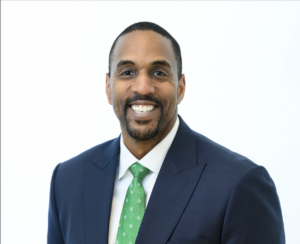
The Georgia Center for Opportunity (GCO) is honored to welcome Travis Thorne as the Vice President of Family. Travis will lead GCO’s Family Initiative and shape the future vision of its flagship program, Raising Highly Capable Kids (RHCK), which is an in-person, 10-week program designed to equip parents and caregivers with practical tools, honest conversations, and confidence to raise healthy, responsible, and caring kids.

Travis brings more than 20 years of experience in leadership, relationship management, and strategic problem-solving. Alongside his corporate career, he has spent many years serving in ministry, leading family and men’s small groups focused on strengthening households through practical guidance around money, marriage, and legacy. A Georgia native who grew up in Jonesboro, Travis combines professional expertise with a deep personal commitment to families across the state.

Travis was drawn to GCO because of its holistic approach to poverty and opportunity. “At GCO, we understand that poverty, especially generational poverty, is about more than income,” Travis shared. “It’s often about fractured relationships and a loss of hope. Strong families are where a sense of purpose, belonging, and connection begins.” That belief closely aligns with GCO’s mission to advance solutions that expand opportunity and help Georgia families build durable paths out of poverty.

GCO selected Travis to lead the Family Initiative because of his unique ability to bridge strategy and relationships. His experience building trusted partnerships in high-performance environments, combined with years of hands-on ministry and family engagement, positions him to lead family-centered work that is both relational and scalable.

“I’m thrilled to welcome Travis to our team to lead our work in strengthening families,” said Eric Cochling, GCO’s Chief Program Officer and General Counsel. “Travis brings a unique mix of professional experience, drive, and a passion for this work that I am confident will take our family-focused initiatives to the next level and allow us to have a much deeper impact in the communities we serve.”

In his role, Travis will focus on empowering parents as the primary leaders in their children’s lives and strengthening parent-child relationships to drive generational change. This includes enhancing and expanding RHCK. Unlike many parenting programs that focus only on parents, RHCK brings families together in cohorts that build social relationships, trust, and connection, especially in communities connected to Title I schools, which serve high numbers of low-income households.

Looking ahead, Travis envisions RHCK growing through strong partnerships with faith-based organizations, schools, and community leaders. “We listen, we learn, and we build alongside families,” he said. His vision is to see RHCK become a trusted, community-anchored model that meets families where they are and creates a lasting impact across generations.

With Travis’s leadership, GCO is excited to expand the reach and success of its Family Initiative.

Hear from Travis on the vision behind GCO’s Family Initiative:

Georgia news, in the news, current events, Georgia happenings, GA happenings

Josh Crawford in The Hill

Originally published January 20, 2026

With 2025 behind us, violent crime — especially murder — is likely down nationally once again. Although it will be months before we have official statistics, early indicators suggest a continuation of the trend that began in mid-2022 and has resulted in tens of thousands of fewer crime victims.

Americans are taking notice. For the second year in a row, respondents are reporting crime as a less serious problem. Less than half of Americans think crime is now rising.

All of this should be welcome news. And like most policy successes, where you sit politically likely informs what you believe about why it happened. Also like most policy achievements, there is disagreement at this point exactly what has contributed to the decline.

Yes, the Biden administration did spend hundreds of millions of dollars on “community violence intervention” programs. Police departments spent much more than that recruiting new officers. States passed laws strengthening sentences for violent offenders. Voters in big cities also began to reject progressive prosecutors, and police departments all over began to implement best practices focused on violent groups and repeat offenders.

What no one is claiming, however, is that the recent decline in murder and violence is the result of dramatic improvements in poverty, education, inequality, racial prejudice or any other so-called “root cause” of crime.

For the uninitiated, “root causes” refers to the set of social conditions that many far-left politicians, progressive activists, and sociology and criminology professors argue are the true drivers of criminal behavior. These argue that reducing crime would first require addressing issues such as poverty, inequality, and housing. They consider policing, prosecution, punishment, and incapacitation as stop-gap measures at best. Some will even argue that these actually contribute to crime by worsening social and economic problems.

By focusing on underlying social conditions rather than individual decision-making and free will, progressives try to divert focus away from individual accountability toward society more broadly. But as crime has dropped in recent years, the social conditions said to produce crime have been unchanged or gotten worse.

On the economic front — and contrary to popular belief — inequality has remained largely unchanged in recent years. A broader measure of poverty that accounts for government benefits and taxes shows that poverty has increased in recent years among working-age adults and children. (The rate is down for seniors, but that isn’t a group frequently committing violent or serious crime.)

Read full article here

Joshua Crawford is a public safety fellow with the Georgia Center for Opportunity.

Higher numbers of non-working adults are concentrated in Georgia communities struggling with poverty and distress.

In 96 of Georgia’s 159 counties, at least a quarter of prime-age (25-54) adults aren’t working, according to the Economic Innovation Group’s recently updated Distressed Communities Index (DCI)

The higher percentage of non-working adults in these counties surpasses the national rate of 20.9%. It also contributes to more Georgians living in distressed communities, where residents face challenges to accessing opportunities that make it possible to break out of poverty. While the numbers of non-working adults vary significantly throughout Georgia, they are a strong reminder that communities and lawmakers must continue to support and empower adults who have the ability to enter the workforce.

Workforce participation a key factor in community well-being

The number of adults not working is one of several statistics the DCI uses to determine where communities fall on the spectrum of well-being and economic opportunity. Other factors include the number of people without a high school diploma or equivalent, the housing vacancy rate, the median household income, and the share of the population below the poverty line. 

The latest DCI update shows that 16.8% of Georgians are living in distressed communities (approximately 1.8 million people), and another 18.3% live in “at risk” communities (approximately 2 million people). 

In particular, the statewide percentage of prime-age adults who don’t work is 28.1%, which is about 7% above the national rate. Some counties significantly exceed the state average. For example, in Stewart County, just south of Columbus, 63.4% of prime-age adults aren’t working. Morgan County, on the east side of Atlanta, has the lowest percentage of non-working adults at 15.3%. 

The numbers of non-working adults correlate with poverty rates in counties across Georgia. While the national share of the population living below the poverty line is 12.4%, Georgia’s overall rate is 13.5%. Stewart County, discussed above, has a poverty rate of 27.8%. In contrast, Morgan County’s poverty rate is just 7.4%.

Use the table below to see how many adults aren’t working in your community.

Number of non-working adults compared to the unemployment rate

It’s important to note that prime-age adults not working is a separate workforce issue from Georgia’s unemployment rate. The unemployment rate is the percentage of people in the labor force who are actively looking for work but aren’t currently employed. In contrast, non-working adults are people who aren’t employed and are not actively looking for work. 

In Georgia, disengagement from work tends to be a bigger issue further outside Atlanta. The map below illustrates that several of the counties surrounding Atlanta have lower percentages of non-working adults, and they typically have unemployment rates close to Georgia’s overall unemployment rate of 3.4%.

Benefits of work beyond the economic aspect

The DCI focuses primarily on economic well-being, showing how it improves as people enter the workforce. But our research has found that there are many other non-financial benefits of work, especially for communities struggling with long-term or generational poverty. 

Evidence shows that working provides a stronger sense of self-esteem, dignity, and purpose for employed people. 

Work also improves mental and physical health. Working adults often experience less anxiety, fewer symptoms of depression, a decreased risk of suicide, and lower mortality rates. Greater opportunities for upward mobility can enhance these positive effects.

The families of those who work are more stable as well, and the children of working adults tend to have stronger academic performance and future income for themselves. 

A thriving workforce also changes entire neighborhoods for the better. More adults working contributes to more positive engagement in the community overall, greater opportunities for job growth, and increases in services and resources. Employment has also been linked to reductions in crime and recidivism.

Helping Georgians experience the benefits of work

It’s crucial that both policymakers and communities throughout Georgia continue their steadfast efforts to encourage non-working adults to enter the workforce. Doing so will lift distressed communities and narrow the economic and social gaps that separate them from their more prosperous neighbors. 

As local organizations support and empower people who are considering work, they can also take the opportunity to help those individuals recognize how working can cause a ripple effect of rewarding changes, creating a more hopeful future and a greater quality of life for themselves, their families, and their communities.

Image Credit: Canva

An empty street and closed businesses illustrate the real-life impact of crime on poverty in a community.

Key Points

  • As Americans become more skeptical of the American Dream, an important issue to address is the link between poverty and violent crime. 
  • Research has found that violent crime negatively affects property values, employment, and outcomes for children. 
  • Providing a safe environment is a core government responsibility, and it’s essential for lowering fear, improving economic mobility, and building healthy communities. 

A recent Pew Research Center poll examined American attitudes about the attainability of the American dream. Overall, 53% of respondents believed the American dream was still possible. 

Responses were remarkably consistent across race and differed only slightly by party affiliation (56% for Republicans, 50% for Democrats). 

Age was the factor where more drastic differences of opinion started to emerge. The younger the cohort, the lower the percentage of respondents who felt the American dream was still possible. 

  • Age 65+: 68% believed the American dream was still possible. 
  • Age 50-64: 61% thought the American dream was still possible. 
  • Age 30-49: 43% felt the American dream was still possible. 
  • Age 18-29: Just 39% agreed the American dream was still possible.  

Among the youngest groups, a larger percentage—48% of 30 to 49-year-olds and 51% of 18 to 29-year-olds—thought the American dream was once possible but no longer was. 

The current attainability of the American dream is subject to much debate, not fleshed out here. One factor that deserves more attention is the role of public safety in shaping communities where people have opportunities for a better life for themselves and future generations.  

Of all the barriers to opportunity, violence is one of the most vicious because it can single-handedly upend all the building blocks of a flourishing life—family stability, access to quality education, and work opportunities. And a disproportionate amount of this suffering is borne by our poorest and most vulnerable communities. 

Nearly 50% of According to Pew Research polling, Americans think the American Dream is no possible.

The impact of crime on children

Future generations have a harder time getting ahead in life. 

It’s clear from the data that nearly half of children raised in the poorest households—the bottom 20% of incomes—end up in that bottom 20% as adults. A tremendous number of factors contribute to this cycle of poverty—from the flaws in government safety net programs to the affordability of housing to improving educational options and outcomes.

Then there’s the link between poverty and crime. One of the most visceral and heartbreaking things that impacts a child’s upward mobility is growing up in a community with a high rate of violence.

According to the Annie E. Casey Foundation, about 3.6 million kids live in communities their parents deem to be “unsafe.”

The level of violent crime in a county negatively affects the level of upward economic mobility among individuals raised in low-income families. Opportunities decline because high rates of violence reduce productivity among crime victims, depress economic activity, reduce home values, and drive out residents who can leave. 

In communities struggling with poverty, violent crime can lead to worse outcomes for kids.

According to the Annie E. Casey Foundation, about 3.6 million kids live in communities their parents deem to be “unsafe.”

In communities struggling with poverty, violent crime can lead to worse outcomes for kids.

According to the Annie E. Casey Foundation, about 3.6 million kids live in communities their parents deem to be “unsafe.”

The impact of crime on local economies

Communities become economically unhealthy. 

A relationship between poverty and crime also manifests itself in the effects that violence has on employment. Several studies have demonstrated that direct victimization is associated with more unemployment and less productivity at work. 

  • A study of violent trauma patients found a positive association between victimization and unemployment. 
  • Another study found that, following the homicide of a family member, employment went down 27% among surviving family members. 
  • In a sample of parents whose children had been murdered, more than 50% of the parents perceived themselves as nonproductive at their jobs in the four months after the murder.

High rates of violent crime don’t just impact victims. Rising crime has been negatively associated with business activity, resulting in downsizing and discouraging new businesses from entering the marketplace.

Neighborhoods then lose out on opportunities for jobs and affordable access to food, household items, and other essential goods and services. 

One large analysis looked at the impact of gun violence on the economic health of neighborhoods in six cities: Baton Rouge, LA; Minneapolis, MN; Oakland, CA; Rochester, NY; San Francisco, CA; and Washington, DC. The findings were remarkably consistent. An increase in gun violence in a census tract reduced the growth rate of new retail and service establishments by 4% in Minneapolis, Oakland, San Francisco, and Washington, DC. 

In Minneapolis, each additional gun homicide in a census tract in a given year was associated with 80 fewer jobs the next year; in Oakland, a gun homicide was associated with 10 fewer jobs the next year. 

Local business displays %22open%22 sign.

“Local and state governments must focus on reducing violent crime, not just as necessary to protect human life but also because doing so is a prerequisite to real economic opportunity in poor communities.”

Josh Crawford, GCO Director of Criminal Justice Initiatives

Local business displays %22open%22 sign.

“Local and state governments must focus on reducing violent crime, not just as necessary to protect human life but also because doing so is a prerequisite to real economic opportunity in poor communities.”

Josh Crawford, GCO Director of Criminal Justice Initiatives

The impact of crime on neighborhoods

Communities stop becoming places that people want to call home.

Studies have also found that increases in gun violence hurt property values.

  • In Minneapolis: Each additional gun homicide resulted in a $22,000 decrease in average home values in Minneapolis census tracts.
  • In Oakland: Each additional gun homicide resulted in a $24,621 decrease in Oakland census tracts.
  • In Los Angeles: A separate study found that increases in violent crime in a neighborhood in a given year yielded decreases in property values in that neighborhood the following year. 

And those who can leave communities with high rates of violence, do. One estimate found that, for every homicide, 70 residents move out of a neighborhood.

Finally, increased violent crime often, justifiably, leads to more incarceration. But communities with higher rates of incarcerated parent-aged men often have weaker social institutions and are more unstable. 

To have vibrant communities and flourishing lives, public safety must take priority.

Improving economic conditions and opportunities for any community, but especially low-income neighborhoods, is incredibly difficult without first reducing violence.

One of the most recent examples is the great crime decline of the 1990s, which dramatically improved the most desperate neighborhoods and improved life among their residents. 

It doesn’t have to be this way. Decades of policy innovation, evaluation, and replication have taught us how to make communities safer and break the interconnected cycles of poverty and crime.

The most effective methods include:

  • Focusing law enforcement efforts on criminal street gangs
  • Punishing violent recidivists appropriately
  • Reducing the presence of abandoned buildings in crime hot spots

People have a deep need to feel safe and secure in the places where they live, work, and go about their day-to-day lives. Providing a safe environment is government’s first responsibility to its people.

When it comes to public safety, making good policy choices changes lives—not only by reducing physical harm but also by transforming neighborhoods into places where the American Dream can still be found.

Visit our public safety resource page to learn more about policy solutions and see recommendations for specific cities. 

Subscribe

* indicates required

Subscribe

* indicates required