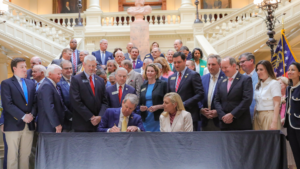
Georgia Governor Brian Kemp signs a bill into law.

Key Points

  • Georgia’s future is on the ballot in 2026 as voters elect a new governor to lead the state for the next four years. In the May 19th primary elections, Georgians picked candidates to represent each political party. They’ll choose the final winner in the general election on November 3.

  • The governor influences major issues that affect Georgians every day, like taxes, education, health care, work opportunities, and public safety.

  • Understanding the governor’s role can help voters cast their ballots for a candidate who can bring even more hope, well-being, and prosperity to people and communities across the state.

When Georgians vote for governor, they’re choosing more than a public figure. They’re electing the leader who sets the direction for everything from schools and public safety to taxes and the economy. 

While the governor can’t create laws like the legislature does, they shape daily life by deciding how the state will spend money, what bills get signed, and how certain public programs for families will operate. 

Quick Facts About Georgia’s Governor

  • Current Governor: Brian Kemp
  • Next Election Date: November 3, 2026, for the general election 
  • Term Length: Four years, with a maximum of two back-to-back terms
  • Minimum Age Requirement: 30 years old by Inauguration Day
  • Counties the Governor Serves: 159
  • State Budget the Governor Oversees: $36.6 billion

How Does the Governor Impact Everyday Lives in Georgia?

1. The governor can sign—or stop—new laws.

After a bill passes in Georgia’s House and Senate, it goes to the governor, who can sign it, veto it, or let it become law without a signature. 

If the governor vetoes a bill, Georgia’s legislators can override that action, but only with a two-thirds majority in both chambers. To avoid a veto, lawmakers usually aim to pass legislation that reflects the governor’s policy priorities.

In 2026, Georgia’s legislature passed bills that created pathways for kids to take advanced math classes in earlier grades and to improve their reading skills. The bills aligned with Governor Kemp’s goal of increasing opportunities for Georgia students, and he signed them into law right after the legislative session ended.

Georgia Governor Brian Kemp signs 2026 bills to support literacy, math education, and K-12 public schools.

On May 5, 2026, Governor Brian Kemp signed nine bills to support reading, math education, and K-12 schools in Georgia.
Photo Credit: Office of the Governor Photo Gallery

2. The governor helps decide where the money goes.

Every year, Georgia’s governor proposes a state budget that outlines how taxpayer dollars should be spent. Because the budget reflects the programs and services that will receive funding, it reveals the governor’s top priorities for the state. 

The legislature revises and passes the budget, but the governor still has a final influential role. Before signing the budget into law, the governor can use a line-item veto to remove parts of the budget they don’t agree with while leaving the rest as is. 

In May 2026, Governor Kemp signed House Bill 974, the state budget bill for the fiscal year starting July 1. The $36.6 billion budget directs most funding toward education, health care services, public safety, and economic growth—a clear signal of what the governor cares about. Before signing, Governor Kemp used his line-item veto authority, removing some expenses to keep the budget in balance after approving income tax cuts.

3. The governor chooses the leaders behind key family services.

Government policies aren’t implemented in one big speech or one dramatic vote. Instead, they’re carried out every day by state agencies, boards, and commissions.

The governor appoints many of the heads of those administrative offices. They oversee daily operations in workforce development, child and family services, public safety, licensing, education administration, and programs that help low-income Georgians.

The governor steers welfare (safety net) policies, for example, by appointing the members of the Board of Human Services. The members establish the state’s goals for welfare programs like the Supplemental Nutrition Assistance Program (SNAP).

4. The governor sets the policy agenda.

The governor has a powerful microphone: the annual “State of the State” address. At the beginning of the legislative session, the governor uses this speech to outline their priorities and encourage lawmakers to act on specific policies. 

And when the governor elevates an issue—whether it’s education, workforce development, public safety, or taxes—it usually moves quickly from a policy idea to serious legislative action. 

In his 2026 State of the State address, Governor Kemp proposed decreasing the state income tax to 4.99% to help Georgians keep more of what they earn. The legislature followed up by passing House Bill 463, which the governor signed into law.

5. The governor leads during emergencies.

The governor uses executive orders and emergency powers to quickly mobilize state resources when storms, wildfires, public safety threats, or other emergencies hit. 

In April 2026, Governor Kemp declared a state of emergency for 91 counties in response to South Georgia wildfires and empowered state agencies to help affected residents and their families.

FAQs: The Georgia Governor’s Race in 2026 and the Election Process

How Is Georgia’s Governor Elected?

Georgians elect their governor through a direct popular vote. Unlike presidential elections, there isn’t an electoral college that casts deciding votes.

During primary elections, voters pick final candidates from each political party. Contenders have to earn at least 50% of the votes in the primary to win, so run-off elections are possible. 

The same requirement applies in the general election. If no candidate earns more than half the votes, the top two competitors head to a run-off.

Who Can Run for Governor?

A candidate must:

  • Be at least 30 years old by the time they take office
  • Have lived in Georgia for at least six years before the election
  • Have been a U.S. citizen for at least 15 years

How Long Can a Governor Serve?

Georgia governors have four-year terms and can serve up to two back-to-back terms. Former governors can run again after sitting out for at least one term.

What Happens if a Governor Leaves Office Early?

The lieutenant governor is next in line for the job and serves until the next general election.

Which Political Parties Have Georgia’s Governors Belonged to Historically?

Georgians have elected Republican governors since 2003. Before then, Democratic governors had held the office continuously since 1872.

Timeline of political party affiliations of past Georgia governors from 1971 to 2026.

Source: Former Governors in Georgia, National Governors Association

What Issues Are Candidates Talking About in 2026?

The rising cost of living is one of the biggest concerns for Georgia families—and it’s become a major focus in the 2026 governor’s race. Key affordability issues include:

  • Income Taxes: Some candidates are proposing plans to further reduce or eliminate the state income tax so Georgians can keep more money in their own pockets. 
  • Property Taxes: As housing costs continue to rise, contenders are thinking about freezing property taxes or increasing exemptions to ease the burden on homeowners. 
  • Housing Shortages: Candidates are debating how much the state should get involved in local land-use regulations to spur construction of more homes, especially those at lower prices.
  • Health Care: Gubernatorial hopefuls are proposing options to address Georgians’ health care concerns, including expanding Medicaid and reducing the cost of health insurance.

Beyond affordability, candidates are focusing on several other issues affecting families and communities across Georgia:

Welfare Reform: Contenders are thinking about how to lead the state in making big changes to welfare programs, including: 

Education: To give Georgia’s children better pathways to academic success, candidates are debating on more school choice vouchers, increased public school funding, and new early childhood education options. 

Public Safety: Competitors are prioritizing safety and security for Georgia communities by looking at ways to tackle gang activity, reform the juvenile justice system, and reduce repeat offenses. 

Why Does Understanding the Governor’s Role Matter?

Candidates know that more needs to be done to break down the economic and social barriers so many people are facing, and they’re making plans to take action if elected. But policymakers aren’t the only ones responsible.

Understanding the governor’s vital role and what they’ll do to meet the daily needs of Georgia families and neighborhoods can help voters guide meaningful change. By casting their ballots, Georgians can bring even more promise and prosperity to the state—making it a place where everyone has the chance to achieve their full potential and thrive.

Additional Resources

2026 Polls: Georgia Governor
270 to Win

Keeping Vulnerable Americans on Track: One Door out of Poverty and into Opportunity
Alliance for Opportunity

What States Can Expect with the New SNAP Match: Options to Reduce State Error Rates
Alliance for Opportunity

Georgia Candidates for Governor Should Make Welfare Reform a Top Priority
Atlanta Journal-Constitution

Georgia Gubernatorial Election, 2026
Ballotpedia

Governor of Georgia
Ballotpedia

Lieutenant Governor of Georgia
Ballotpedia

Georgia 2026 Election: Here’s Who Will Be on the Ballot During May’s Governor, Senate Primaries
CBS News

Understanding Welfare Work Requirements: New Eligibility Rules for SNAP and Medicaid
Georgia Center for Opportunity

Organization of the Executive Branch
Georgia Public Broadcasting

What Does a Governor Do?
Georgia Public Broadcasting

Short Supply: How Many More Homes Does Georgia Need?
Georgia Public Policy Foundation

10 Races for Governor to Watch in 2026
NBC News

Governor’s Office
State of Georgia

Lieutenant Governor’s Office
State of Georgia

The Three Branches of Georgia’s State Government
State of Georgia

Image Credits: Canva; Governor’s Photographer, Georgia Office of the Governor

Shaneika Murphy, Raising Highly Capable Kids participant and facilitator

Key Points

  • Shaneika Murphy turned to the Raising Highly Capable Kids program as her sons were becoming teenagers. She wanted to make sure she supported them through all the changes middle school and high school would bring.
  • During the program, Shaneika also learned how crucial it is for parents and families to have a supportive community surrounding them.
  • After completing the Raising Highly Capable Kids workshop as a parent, Shaneika became a program facilitator, and she now supports other parents. Her sons volunteer with the program, too. Together, the Murphys are a shining example of how strong families build strong communities.

Shaneika Murphy felt nervous about the big transitions she was facing in 2024. Her two sons were starting middle school and high school—a new phase of life for everyone in the family. And Shaneika found herself asking, “How do we navigate this?”

Shaneika is a behavioral therapist, so she had worked with other children who struggle with challenges. But as a parent, she was anxious about how to help her teenage sons develop healthy behaviors and relationships. “Middle school, it’s a whole different thing,” she said. “Right when you think you’ve got the parenting skills down and everything—oh, we’re good, we’re communicating—and then boom, they’re in middle school.”

Shaneika started looking for opportunities to learn how to better connect and communicate with her children. Through a school newsletter, she found out about the Raising Highly Capable Kids (RHCK) program, a workshop offered by the Georgia Center for Opportunity in partnership with local organizations. RHCK is designed to give families the tools, confidence, and support to raise healthy, responsible, caring kids. 

Excited about the chance to enhance her parenting skills, Shaneika enrolled in the fall 2024 RHCK cohort offered by the Lamar County Family Connection Collaborative. She found the program so rewarding that she participated again in the spring of 2025.

The support Shaneika and her family received during the RHCK workshops is now rippling outward. Every member of the Murphy family is finding ways to help others thrive. And in doing so, they’re creating a sense of community that’s changing not only their lives, but also the lives of many others.

Empowering Children Through Family Support

The RHCK workshops gave Shaneika the tools she needed to bring stability to her family and to help her children feel supported and equipped to succeed. During the sessions, she learned about the 40 Developmental Assets, which were identified by the Search Institute. The assets are the essential qualities and experiences that enable kids to become well-rounded and resilient adults. 

The Developmental Assets that stood out to Shaneika the most involved the idea of support. Taking what she learned from the sessions, she made sure that her children felt loved and supported at home, where real transformation could begin. “When they’re feeling great, or when they’re not feeling great—there’s things that are bothering them or things that are on their mind—they need to have that safe space within their parents,” Shaneika said.

By helping her children feel safe and supported, Shaneika strengthened the most influential part of their lives—their family—and laid the groundwork for their future growth and development.

Shaneika makes sure to spend quality time with her husband, sons, and nephew—the family she guides and supports.

Shaneika makes sure to spend quality time with her husband, sons, and nephew—the family she guides and supports.

The support Shaneika and her family received during the RHCK workshops is now rippling outward. Every member of the Murphy family is finding ways to help others thrive. 

Discovering a Supportive Community for Parents

During the RHCK workshops, Shaneika also discovered the invaluable benefits of a meaningful and supportive community among fellow parents. The close relationships that formed during the sessions made a big impression on her. She described the RHCK program as an opportunity for “making community”—and “building a family if you don’t have one.” 

Shaneika and the other parents in the workshop formed deep connections with each other, sharing both their strengths and weaknesses. She felt supported on every level. “I had people that were pushing me to do better, pushing me to be greater and be more excellent, and in other areas besides parenting as well,” she explained. The bonds Shaneika formed with other parents during the workshops continue to uplift her even today.

Evolving from Learning to Leading

While Shaneika was participating in the RHCK workshop, one of the facilitators, Dr. Tonya Moore, noticed how Shaneika’s professional skills as a behavioral therapist helped her support other parents. “I observed Shaneika organically building rapport with the parents. . . . She also displayed an interest in bringing resources to parents,” Tonya explained. 

Drawing on Shaneika’s strengths, Tonya worked with her to develop Parent Café, a prayer and support group that connected parents during and after RHCK workshops. She also started thinking about how Shaneika could continue supporting workshop participants and the broader community by becoming an RHCK facilitator.

When Tonya approached Shaneika about the opportunity, Shaneika was hesitant at first. She didn’t feel very comfortable speaking in front of others. But Tonya gently pushed Shaneika out of her comfort zone, boosting her confidence and encouraging her to take on the new role.

And when Shaneika settled her nerves and became a facilitator in the fall of 2025, she realized she had a passion for it. “It’s one of the more purposeful things that I’ve done,” she reflected. “I look at it as an honor to be able to do that because, in some way, I may be able to help the next generation with something that I’ve said or something that I’ve helped a parent to understand or realize.” 

As a parent, Shaneika had gained so much from the support RHCK offered her, and now she could support the families in her community in return. She was also setting an example for her sons, showing them how to overcome fears and to serve their neighbors in need.

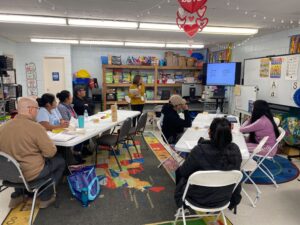
During an RHCK workshop, Shaneika led parents and caregivers in an activity that drove home the importance of teaching children to lean on others for support.

Shaneika serves as an RHCK facilitator in Lamar County, Georgia, where she helps other parents and caregivers find the tools and support they need to build stronger families and communities.

During an RHCK workshop, Shaneika led parents and caregivers in an activity that drove home the importance of teaching children to lean on others for support.

Receiving Support When Times Got Tough

Through her experiences as both an RHCK participant and a facilitator, Shaneika built a strong, supportive community for her family. And when she had a major surgery followed by a long recovery process, that community stepped in to help out. 

One of the RHCK facilitators created a meal train to help the Murphy family, and other facilitators and parents contributed financially and with their prayers. People also regularly stopped by to check on Shaneika’s husband and children, making sure they had everything they needed.

The support system Shaneika had developed was once again wrapping itself around her, and also showing her children the powerful impact a caring community can make.

Inspiring Children to Build Community

To continue supporting her boys as they grow into responsible, thoughtful young men, Shaneika is now helping them develop skills for positive social interactions and active community engagement. 

To serve others, Shaneika’s sons started volunteering with RHCK during the fall of 2025. They read to the younger children while their parents take part in the RHCK workshop. They also help out after each session, putting away supplies and making sure participants get to their cars safely. Volunteering has even sparked an interest in Shaneika’s oldest son in getting a job.

And RHCK participants and facilitators have noticed the good work Shaneika’s sons are doing. The praise the boys receive gives them an extra boost of confidence. “They hear it from me all the time. They hear it from their dad. They’re great. They’re going to be successful,” Shaneika shared. “But when you hear it from someone outside of your circle, it just kind of rings a little bit more.”

Through RHCK, Shaneika also learned about a class that paired young boys with mentors. She enrolled her children, and they’re now thriving in the program. Shaneika’s husband saw the impact of the class on his sons, and he became a mentor through the same program. 

As both parents and role models, Shaneika and her husband want their sons to understand the power of connecting with people so they can not only be supported but also offer support to others. “You want them to be contributing citizens to their community,” Shaneika emphasized.

Continuously Expanding the Circles of Support

Through Shaneika, the waves of support have steadily rolled outward. The RHCK program gave her the tools to support her family through the many ups and downs that middle school and high school can bring. She also built a supportive community to help them flourish. As a facilitator, Shaneika empowered other parents to create stability and community for their families. And now, her whole family is finding ways to serve others. In Shaneika’s words, “It’s just this effect that keeps on going.” 

Above all, the supportive relationships Shaneika has formed and nurtured continue to strengthen both her own family and others who need a community—and, as she described it, “a family away from family.”

Bring the Transformation of RHCK to Your Family and Community 

If you’re interested in getting the tools and support to bring more strength and stability to your family, please visit our Raising Highly Capable Kids page.

Media statement, in the news, Georgia news, ga news

PEACHTREE CORNERS, GA—The Georgia Center for Opportunity (GCO) offers its full support to the Stronger Workforce for America Act of 2026 and commends Congressman Tim Walberg, Chair of the House Committee on Education and Workforce, for introducing this significant legislation to reauthorize the Workforce Innovation and Opportunity Act.

GCO is a nonprofit, nonpartisan organization that focuses on ensuring access to quality education, fulfilling work, and healthy family lives through research, policy analysis, and community initiatives. We advance solutions that increase opportunity and give Georgia families a durable path out of poverty. We are also a founding member of the Alliance for Opportunity, a multi-state coalition focused on improving state-administered public assistance and workforce programs to help Americans achieve lasting opportunity and stability.

The Stronger Workforce for America Act aligns with our work and includes an invaluable option for state flexibility, the Make America Skilled Again Grants. These grants would allow 10 states to implement the One Door to Work model, which would empower them to integrate their safety net and workforce systems.

Utah has had this authority for nearly 30 years, after being grandfathered into the strategy. This has enabled Utah to provide its citizens with both support to meet their immediate needs and a clearer path into the workforce and toward self-sufficiency.

The results of Utah’s One Door policy are impressive. For example, the state has outpaced the national labor force participation (LFP) rate, or the number of working-age people employed or looking for a job, by an average of 5.3%. As of late 2025, Utah’s LFP rate was approximately 67.6%, one of the highest in the nation.

In contrast, Georgia’s LFP rate is 60.6%. Put another way, nearly 40% of Georgians, many of them prime-age men, who can work are choosing not to.

Eric Cochling, GCO’s Chief Program Officer and General Counsel, emphasized the detrimental impact of these statistics and the critical importance of work for a flourishing life:

“A good job offers more than just a paycheck. It provides purpose and stability and is one of the most durable ways to empower people to break the cycle of poverty.”

He also stressed the need for reform: “If we truly want to expand opportunity in Georgia and across the country, individual workforce and safety net programs must start functioning as a true system—one that’s designed to support human dignity and flourishing. The Stronger Workforce for America Act is a much-needed step in the right direction.”

Georgia policymakers are paying attention to the success of Utah’s integrated welfare and workforce system and are seeking opportunities like the Make America Skilled Again Grants to implement similar reforms that benefit both Georgians and the state economy.

As Buzz Brockway, GCO’s Vice President of Public Policy, said:

“The ability to link workforce and safety net systems is key to boosting Georgia’s current trajectory as a leader in economic opportunity. The Make America Skilled Again Grants included in the Stronger Workforce for America Act would give Georgia’s leaders a powerful way to strengthen families, expand the workforce, and set the state on a path to more rapid growth.”

Randy Hicks, GCO’s President and CEO, added:

“Every state deserves the ability to design an integrated system that enables people to thrive. Right now, every wasted hour navigating disconnected programs is an hour that could have been spent building a better future. This bill ensures that states can rethink the status quo and create pathways to opportunity for every citizen.”

Through the changes it proposes, the Stronger Workforce for America Act of 2026 is poised to make meaningful welfare and workforce reforms possible in Georgia, and GCO strongly urges its enactment.

###

Georgia Center for Opportunity (GCO) is independent, non-partisan, and solutions-focused. Our team is dedicated to creating durable paths out of poverty for families in Georgia and beyond. To achieve our mission, we research ways to help remove barriers to opportunity and promote our solutions to policymakers and the public so that public policy and civil society can effectively and innovatively strengthen family stability, economic mobility, and child opportunity in the communities where lives are lived. 

Send media inquiries to:

Rebecca PrimisGeorgia Center for Opportunity
RebeccaP@foropportunity.org 

The Georgia Early Literacy Act is a new bill to improve literacy rates and support stronger readers.

Key Points

  • The Georgia General Assembly has passed a bill that will lay the groundwork for improving literacy rates among the state’s students.
  • Major measures in the bill include requiring literacy coaches in schools, making kindergarten mandatory, assessing students’ reading skills more often, and expanding the use of curriculums based on the science of reading.
  • By becoming stronger readers, Georgia’s students will be more successful in school and better prepared for rewarding work, financial stability, and meaningful community engagement as adults.

The Georgia Early Literacy Act of 2026 (House Bill 1193) is poised to make a powerful impact on students across the state. Legislators drafted the bill to help increase literacy rates among young Georgians and prepare them for higher levels of learning and greater success in life. 

Georgia’s literacy statistics are undeniably troubling—62% of the state’s third graders aren’t reading proficiently. Georgia’s proficiency percentage is just slightly above the average reading level in the United States. The Nation’s Report Card, which tracks how well students across the country are reading in fourth grade, recently showed that 69% of American fourth graders aren’t reading proficiently. And proficiency is a key indicator of children’s progress and readiness for more advanced work.  

Third grade also marks a critical point in a student’s academic development. Between third and fourth grade, children should be transitioning from learning to read to using reading to learn. If students fall behind in reading during this crucial period, they can start to have a hard time in other school subjects, too. This struggle often takes a big toll on children as they grow up, and it can limit economic opportunities later on. 

But with support from organizations like the Georgia Center for Opportunity (GCO), state legislators are paving the way for children to overcome challenges with literacy. This will empower them to thrive in their academic development and build flourishing lives for themselves and their families in the future.

“GCO applauds the state’s General Assembly for passing the Georgia Early Literacy Act of 2026. This important legislation helps Georgia make sure that students read proficiently so they can excel in school and reach their full potential in life.”

Buzz Brockway, Vice President of Policy, Georgia Center for Opportunity

What Are the Core Requirements in This Bill?

Policymakers have included several key measures in the new literacy bill to help the youngest Georgians become skilled readers.

  • Literacy Coaches in Every School: All schools that serve students in kindergarten through third grade will be required to hire literacy coaches—educators with expertise in teaching reading. The coaches will support teachers through lesson planning, co-teaching, and mentoring.
  • Mandatory Kindergarten Enrollment: Students will be required to attend kindergarten before starting first grade (exemptions are possible if students pass the assessment described below). The bill will also encourage families to enroll their children in school or establish a home study program beginning at age 5. These measures should strengthen children’s foundational reading skills early on.
  • First Grade Readiness Assessments: Schools will test students before they start first grade to make sure they’re academically prepared. If a kindergartener isn’t reading on grade level, the school will design a plan to help them.

  • Expanded Use of Science of Reading Curriculums: Schools will continue to expand the use of materials grounded in the science of reading, a field of research that focuses on how students develop reading skills. Teachers will no longer be able to use the older three-cueing system, which encourages students to guess words.

Have Other States Passed Similar Laws?

Yes. Mississippi, in particular, has set the standard for effective literacy legislation. Recent reforms in that state include:

  • Placing literacy coaches in the lowest-performing schools to guide reading teachers 
  • Regularly screening students in grades K-3 for challenges with reading and creating plans to help children who are struggling
  • Requiring third graders to demonstrate reading proficiency before starting fourth grade
  • Training teachers to shift to an approach based on the science of reading

As a result of the strong focus on literacy, Mississippi’s fourth grade reading proficiency scores went from 49th place in the nation in 2013 to ninth place in 2024. Georgia and many other states have taken notice of this significant improvement and have modeled legislation after Mississippi’s laws.

When Will the New Requirements Take Effect?

Governor Brian Kemp is expected to sign the Georgia Early Literacy Act once the 2026 legislative session ends. After it becomes law:

  • Schools will likely have literacy coaches on staff by the 2028-2029 school year.
  • Mandatory kindergarten enrollment and enhanced readiness assessments will go into effect for the 2027-2028 school year.
  • Every K-3 classroom will use only state-approved materials aligned with the science of reading by July 1, 2027.

What Is the Science of Reading?

The science of reading is a field of research focused on how the brain learns to read and how to teach reading. It promotes proven practices that support students of all abilities. These practices involve several essential elements:

  • Phonemic Awareness: the ability to hear and identify individual sounds in spoken words
  • Phonics: the relationship between letters and the sounds they represent
  • Fluency: the ability to read texts smoothly, accurately, and with the right expression
  • Vocabulary: an understanding of what words mean and how to say and use them correctly
  • Comprehension: the ability to understand, interpret, and analyze texts

What’s the Difference Between Reading on Grade Level and Reading Proficiently?

People often use these two phrases interchangeably, but they actually mean different things.

  • Reading on Grade Level: A student who reads on grade level can figure out words and follow a basic plot, but they might still struggle to analyze more complex texts. This is the minimum expected skill level for a child in a specific grade.

  • Reading Proficiently: A proficient reader has a higher-level skill set, including the ability to analyze more challenging material and to think critically about it. Reading proficiently makes it easier for students to use reading for learning as they develop academically.

This difference is important for understanding literacy rates in Georgia. The state’s Department of Education reports that 65% of third grade students are reading at or above grade level, but the Georgia Council on Literacy has shown that only 38% of the state’s third grade students are reading proficiently

How Can Increasing Reading Proficiency Open Doors to Opportunity?

The state legislature passed the Georgia Early Literacy Act in March of 2026 with unanimous bipartisan support. The strong approval of the bill confirms that Georgia’s policymakers have made literacy a priority.

This attention to literacy will make a meaningful difference for many Georgians. Research has shown that children who aren’t proficient in reading by third grade are four times as likely to drop out of school before getting their high school diploma. And without that degree, access to higher levels of education, fulfilling jobs, and economic opportunities is more limited. For students who come from vulnerable families, struggles with reading can also make it harder to escape poverty.

Through the Literacy Act, Georgia legislators aim to remove barriers for children and encourage them to follow brighter paths to promising futures. By becoming stronger readers, Georgia’s students will be more successful in school. They’ll also learn to think more critically about the world around them. Their advanced skills will then lead young people toward more rewarding work and economic mobility as adults, and they’ll be able to positively impact their communities. The bill has the power to make all this possible, with literacy as the key that unlocks the door to these life-changing opportunities.

Additional Resources:

Literacy Bill, Cellphone Ban Among Education Bills Approved by Georgia House
Atlanta Journal-Constitution

With End of Session Near, Georgia Lawmakers Tackle Childhood Literacy
Atlanta Journal-Constitution

Assessing the Economic Gains of Eradicating Illiteracy Nationally and Regionally in the United States
Barbara Bush Foundation for Family Literacy

Your Home for GA Dyslexia Resources
Decoding Dyslexia GA

The State of Literacy in Georgia
Deloitte

Family Resources: Supporting Your Child’s Reading Development
Georgia Department of Education

The Incredible Importance of Teaching Children to Read
Georgia Municipal Association

Lawmakers Push Plan to Lift Georgia’s Lagging Literacy Rates
Georgia Recorder

Student Literacy Overhaul Poised for Georgia Governor’s Signature After Compromise
Georgia Recorder

How Education Impacts Chicago Poverty
Illinois Policy Institute

10 Ways to Support Your Child’s Literacy at Home
National Center on Improving Literacy

Unemployment Rates for People 25 Years and Older by Educational Attainment
U.S. Bureau of Labor Statistics

Georgia lawmakers have crafted bills that will expand opportunities for students to take advanced math classes and pursue meaningful careers.

Key Points

  • Both chambers of the Georgia General Assembly have drafted bills that will create opportunities for students to take advanced math classes earlier in their academic development.
  • Among other measures, the bills will require automatic enrollment for qualified students to make sure all children have equitable access to the advanced classes. This will help close racial, ethnic, gender, and socioeconomic achievement gaps among young Georgians.
  • Research shows that students who pass Algebra I by ninth grade are more likely to graduate from high school. They’re also more likely to succeed in college, accept meaningful jobs, and become financially stable.

Legislators in the Georgia General Assembly have drafted a pair of bills that are set to transform the way math is taught in the state. If the bills become law, they’ll open doors for students to receive a high-quality math education and ultimately shape the direction of their lives.
The Senate’s Quality Basic Education Act (SB 171) will require Georgia’s Board of Education to develop an advanced math pathway for children in grades 3-8. This compressed and accelerated math track will prepare students to take high school-level math classes like Algebra I in middle school and, if desired, to pursue careers in science, technology, engineering, and math (STEM). 

The House of Representatives’ Math Matters Act (HB 1030) will bring detailed updates to the way math is taught in Georgia schools, including the adoption of new math standards, increases in the amount of time spent on math during the school day, and new requirements for teacher certifications. It shares SB 171’s goal of preparing students to take advanced math classes and setting them up for greater success after graduation.

The bills are based in part on recommendations from the Georgia Center for Opportunity (GCO), with additional support from ExcelinEd and GeorgiaCAN. The opportunities they create will pave the way to fulfilling jobs, economic opportunity, and brighter futures for participating students, and especially for young African Americans, Latinos, and girls, who haven’t traditionally received significant STEM education.

“GCO has helped lead the charge in crafting these bills to bring more opportunity to all of Georgia’s students. A strong math education will empower young Georgians to reach their full potential and flourish in their careers and lives.”

Buzz Brockway, Vice President of Policy, Georgia Center for Opportunity

What Are the Key Elements of These Bills?

The two bills are similar in several ways. They differ just slightly in how they’ll require schools to prepare students for advanced math classes.

School Requirements

  • Per SB 171, all local school systems will offer an advanced math pathway in grades 6-8, and they’ll be able (but not required) to offer it as early as third grade.
  • Per HB 1030, schools will provide at least an hour of core math classes every day starting in grades 4 and 5.

Automatic Enrollment
School districts will automatically enroll students in advanced math courses if they meet the program’s qualifications. 

  • Parents or guardians will have the option to withdraw their child from the classes if they think the standard math track is a better fit for their child.
  • Parents of students who don’t qualify for the advanced math classes will still be able to enroll their child if the student’s score on the previous year’s math assessment is above a certain level.

Additional Assistance for Teachers 
The bills enable local school systems to provide extra training and resources to teachers so they can help students build positive mindsets around math and excel in the classes.

Supportive Student Services
The bills grant school systems the ability to offer tutoring or bridge programs to support students in the faster-paced courses.

Annual Reporting
Georgia’s Department of Education will publish annual reports on student demographics, enrollment, and test scores to make sure the advanced math curriculum is meeting its equity and achievement goals.

How Will Students Qualify for the Program?

Students who receive high scores on statewide end-of-grade math assessments will be eligible for the advanced classes during the following school year.

What Types of Classes Will Students Take as Part of the New Program?

Students on the advanced math track will be able to complete high school-level math classes—usually Algebra I—by the time they finish eighth grade. They’ll then be ready to tackle subjects like calculus in high school.

When Will the Advanced Math Courses Be Available?

The advanced classes should be available during the 2027-2028 school year.

What Impact Will Automatic Enrollment Have?

Automatic enrollment supports equitable access to the program by removing barriers like possible teacher bias, a student’s lack of confidence, or participation fees. In the past, obstacles like these have sometimes prevented qualified but traditionally underserved students from setting foot on advanced academic pathways.

Barriers to early educational opportunity are still being reflected in the composition of our nation’s workforce. For example, a recent report from the National Science Foundation revealed that the nation’s STEM workers were:

  • 62.9% white 
  • 14.8% Hispanic
  • 9.5% Asian American
  • 8.2% Black
  • 4.3% multi-racial 
  • 0.3% American Indian or Alaska Native

And just 18% of working women in the United States held a STEM job, per the report. 

Opening doors to all students and exposing them to challenging math coursework early in their academic development can help close racial, ethnic, gender, and socioeconomic achievement gaps and pave the way for young people’s future success and upward mobility. 

How Can Advanced Math Classes Build Bridges to Opportunity?

Research indicates that students who pass Algebra I by ninth grade are twice as likely to graduate from high school. They’re also more likely to succeed in college and then accept meaningful jobs in STEM fields, which are critical to the nation’s economic success. And outside of work, the essential skills math teaches—analytical, logical, and problem-solving skills—will empower young people to serve as engaged members of their communities.

The advanced math track will give young Georgians the chance to experience the sense of dignity and purpose that comes from rewarding work—both academic and professional. And for students who are part of vulnerable families, this opportunity sets the stage for them to break out of generational cycles of poverty and to achieve their full potential. Their success will then ripple out, transforming their future families, workplaces, and neighborhoods.

Additional Resources

Indicator: Successful Completion of Algebra I by 9th Grade
Education-to-Workforce Indicator Framework

Math Policy
ExcelinEd

From Gatekeeper to Gateway: Creating More Paths to Algebra I Success
National Math Improvement Project

The STEM Labor Force: Scientists, Engineers, and Skilled Technical Workers
National Science Foundation

Employment in STEM Occupations
U.S. Bureau of Labor Statistics

2024 Black Students and STEM Report
YouScience and Black Girls Do STEM

Image Credit: Canva

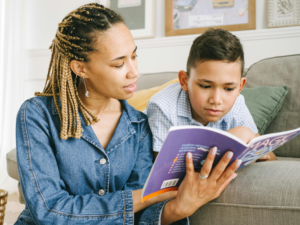
Parental love helps children gain the emotional health, behavioral skills, and academic success that unlocks social mobility.

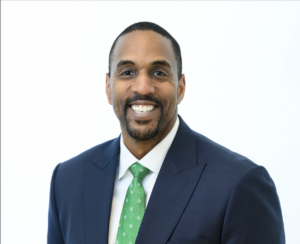
The Georgia Center for Opportunity (GCO) is honored to welcome Travis Thorne as the Vice President of Family. Travis will lead GCO’s Family Initiative and shape the future vision of its flagship program, Raising Highly Capable Kids (RHCK), which is an in-person, 10-week program designed to equip parents and caregivers with practical tools, honest conversations, and confidence to raise healthy, responsible, and caring kids.

Travis brings more than 20 years of experience in leadership, relationship management, and strategic problem-solving. Alongside his corporate career, he has spent many years serving in ministry, leading family and men’s small groups focused on strengthening households through practical guidance around money, marriage, and legacy. A Georgia native who grew up in Jonesboro, Travis combines professional expertise with a deep personal commitment to families across the state.

Travis was drawn to GCO because of its holistic approach to poverty and opportunity. “At GCO, we understand that poverty, especially generational poverty, is about more than income,” Travis shared. “It’s often about fractured relationships and a loss of hope. Strong families are where a sense of purpose, belonging, and connection begins.” That belief closely aligns with GCO’s mission to advance solutions that expand opportunity and help Georgia families build durable paths out of poverty.

GCO selected Travis to lead the Family Initiative because of his unique ability to bridge strategy and relationships. His experience building trusted partnerships in high-performance environments, combined with years of hands-on ministry and family engagement, positions him to lead family-centered work that is both relational and scalable.

“I’m thrilled to welcome Travis to our team to lead our work in strengthening families,” said Eric Cochling, GCO’s Chief Program Officer and General Counsel. “Travis brings a unique mix of professional experience, drive, and a passion for this work that I am confident will take our family-focused initiatives to the next level and allow us to have a much deeper impact in the communities we serve.”

In his role, Travis will focus on empowering parents as the primary leaders in their children’s lives and strengthening parent-child relationships to drive generational change. This includes enhancing and expanding RHCK. Unlike many parenting programs that focus only on parents, RHCK brings families together in cohorts that build social relationships, trust, and connection, especially in communities connected to Title I schools, which serve high numbers of low-income households.

Looking ahead, Travis envisions RHCK growing through strong partnerships with faith-based organizations, schools, and community leaders. “We listen, we learn, and we build alongside families,” he said. His vision is to see RHCK become a trusted, community-anchored model that meets families where they are and creates a lasting impact across generations.

With Travis’s leadership, GCO is excited to expand the reach and success of its Family Initiative.

Hear from Travis on the vision behind GCO’s Family Initiative:

Top 2026 issues for Georgia lawmakers and citizens include welfare, cost of living, education, and crime.

Key Points

  • In 2026, Georgia voters will elect key political leaders who will have the ability to remove barriers and open doors to better futures for the state’s residents. 
  • Top concerns for both lawmakers and citizens include welfare reform, the cost of living, educational opportunities, and public safety. 
  • Proposed policies and reforms will help lift many Georgians above the poverty line and provide clearer pathways to upward mobility and thriving communities.

Opportunities to drive progress and hope will greet Georgians in 2026. Critical issues will dominate the legislative agenda, and top governmental positions will be up for election.

The well-being of many Georgians, their families, and their communities is at stake as pressing concerns like welfare reform, the cost of living, educational opportunities, and public safety take center stage in political discussions. These issues involve significant challenges, but policymakers are working to find promising solutions that will enable people across the state to flourish.
Electing leaders to fill key political offices

Georgians will elect new officials for the state’s top posts in 2026. The primary election will take place on May 19, and the general election is scheduled for November 3.

The roles of both the governor and lieutenant governor will be on the ballot. Georgia’s current governor, Brian Kemp, isn’t eligible to run again because he’s reached his term limit, so several candidates are competing for the position, including Lieutenant Governor Burt Jones. 

Georgians will also vote on one of the state’s U.S. senatorial positions—Senator Jon Ossoff currently holds the post. All of Georgia’s seats in the U.S. House of Representatives will be up for election as well.

These political races are pivotal because the elected officials will have the power to remove barriers and open more doors to opportunity for the state’s residents.

Reforming Georgia’s public assistance programs and creating a pathway out of poverty

The candidates running for office will likely take positions on ways to reform government assistance (welfare or safety net) programs in Georgia. This should be a top priority because about 13.5% of the state’s population is currently living in poverty

One of the main concerns about the welfare system is that it isn’t helping to lift people above the poverty line or empowering them to become self-sufficient. Instead, the complexities and regulations in the system tend to trap people in long-term cycles of poverty that affect families for generations.

To make real change, Georgia’s top lawmakers need to focus on streamlining the state’s welfare system and integrating it with workforce development programs. This strategy, called the One Door model, connects recipients of government benefits with one caseworker who not only helps them meet their immediate needs but also provides resources to support them in finding a rewarding job.

In Georgia, around 28% of prime-age (25-54) adults aren’t working, and disengagement from work is one of the primary reasons people seek public assistance. Developing a One Door strategy in Georgia will help these individuals become self-sufficient and also enable them to experience the sense of dignity and purpose meaningful work provides.

Georgia’s political leaders can take steps toward implementing a One Door model by advocating for federal authorization to do so. At the state level, they can also establish a task force to explore ways to connect and improve Georgia’s public assistance and workforce programs.

A reform called the One Door model would allow Georgia to connect more welfare recipients to meaningful work and economic opportunity. 

Making life more affordable in Georgia

Many low- and middle-income families in Georgia are struggling to cover the basic costs of living, as prices for just about everything seem to be rising. The increasing costs add extra hardship to the numerous barriers that already impact people’s well-being. But Georgia’s policymakers have opportunities to make some things more affordable for the state’s residents.

  • Housing shortages and costs: At least 94 of Georgia’s 159 counties don’t have enough housing for their residents. The shortage is driving up prices and making affordable homes hard to come by. Builders want to construct more houses, but they face restrictive regulations regarding land use and infrastructure, including roads and water lines. Local policymakers can address the issue by allowing greater flexibility in lot sizes and housing types. Doing so will bring more affordable homes to the market, and that will reduce rent and mortgage payments and free up income to cover other necessities.

  • State income taxes: Georgia’s state income tax is set to drop to 4.99% in January 2027, but some lawmakers want to eliminate it completely. For many Georgians, every dollar matters, and doing away with the tax would allow them to keep more of their income in their own pockets. State leaders are considering eliminating corporate tax breaks to offset the potential loss in government revenue from income taxes. But it’s important to note that they could also raise the sales tax to recoup the state’s lost revenue. That could leave lower-income families worse off because essential goods would cost them more.

Creating an educational system that meets the needs of every child

In 2026, Georgia lawmakers will continue their efforts to develop an educational system that honors every child’s unique situation and needs.

Several education-related bills that carried over from 2025 will likely be up for consideration in the Georgia General Assembly.

  • Senate Bills 124 and 152: These bills will expand eligibility for Promise Scholarship accounts to students with a parent who’s an active-duty military service member stationed in Georgia and to biological or adopted children of foster parents. The bills will help support more families who want to consider alternative education options for their children

  • Senate Bill 171: This bill will require Georgia’s Board of Education to develop an advanced math pathway for students in grades 3-8. The program will prepare students to take higher-level math classes in middle school and ultimately to pursue careers in science, technology, engineering, and math (STEM). The opportunity will pave the way to brighter futures and upward mobility for participating students, and particularly for young African Americans, Hispanics, and girls who haven’t traditionally received significant STEM education.

  • House Bill 917: This bill will provide open enrollment processes for students who want to transfer between local school systems or from one school to another within a school system. This will enable students to attend the school that’s the right fit for them, regardless of where they live.

Charter school funding will also be on policymakers’ radar. In 2025, the Georgia Senate created the Study Committee on Funding for Charter School Capital Improvements. The committee was tasked with reviewing current funding processes for public schools, examining the differences in capital funding between charter and public schools, and analyzing the challenges charter schools face in getting funding. Georgia’s leaders will likely use the study’s findings to make sure charter schools have equal access to capital improvement funds so they can continue to offer alternate educational options for families. 

Prioritizing neighborhood safety and reducing crime

Public safety is a top concern for Georgians, and especially for those living in impoverished communities. High crime rates lead to losses in property value, community resources, business activity, and job opportunities—all making it increasingly difficult for people to escape poverty.

Among several public safety bills, Georgia lawmakers will likely consider two that were drafted during the 2025 session.

  • Cognitive behavioral therapy (CBT) for juveniles: The first bill will enable greater use of CBT with young people who get arrested, even those who are non-violent or have minor convictions. CBT teaches participants to look at the relationship between their thoughts, feelings, and behaviors and helps them respond to challenging situations more effectively. Studies show that CBT programs can reduce recidivism by an impactful 25%. They also set participants on a path toward healing and growth, which will, in turn, help their communities flourish.

  • Support for local law enforcement agencies: The second bill will create grants for local law enforcement agencies to assist them in solving more violent crimes. Local departments can use the funds to improve investigations, enhance the technology and data systems officers use, and support victims and families. The resources will also help authorities deter future crime and boost community safety and resiliency.

Taking action to transform lives and communities

Georgia’s policymakers know that more needs to be done to break down the social and economic barriers so many people are facing, and they’re taking action. But this responsibility doesn’t lie with government leaders alone.

Georgia residents should pay close attention to the issues lawmakers discuss, but also to the needs of their families and communities. They can then use what they learn, along with their voices and votes, to create real change. 

In doing so, Georgians will bring even greater promise and prosperity to the state—making it a place where everyone has the opportunity to achieve their full potential and thrive.

Additional resources

Alliance for Opportunity applauds introduction of the House “One Door to Work” Act
Alliance for Opportunity

How do we know the One Door model works?
Alliance for Opportunity

Georgia candidates for governor should make welfare reform a top priority
Atlanta Journal-Constitution

Georgia lawmakers explore plan to eliminate state income tax
CBS News

A better way to get welfare recipients back into the labor force
City Journal

How Georgia can fix its housing shortage
Dalton Daily Citizen

The Georgia Promise Scholarship (SB 233): questions and answers
Georgia Center for Opportunity

How many adults aren’t working in Georgia communities?
Georgia Center for Opportunity

National poverty rate fails to capture the problem of poverty concentration in Georgia and beyond
Georgia Center for Opportunity

The One Door model: a solution to improve economic opportunity for safety net participants
Georgia Center for Opportunity

Reducing crime in Atlanta
Georgia Center for Opportunity

What Georgia can learn from other states about fixing welfare
Georgia Center for Opportunity

Short supply: How many more homes does Georgia need?
Georgia Public Policy Foundation

The safety net “system” that isn’t
Governing

Unlocking opportunity – how Pelican Institute brought “One Door” to Louisiana
Pelican Institute for Public Policy

Image Credit: Canva

Subscribe

* indicates required

Subscribe

* indicates required