Key Points

  • When two lower-income workers marry and combine their earnings, the tax system can unintentionally cut their Earned Income Tax Credit by thousands of dollars overnight. Worries about this financial loss are keeping some couples from tying the knot.
  • Policies that discourage marriage can hurt both couples and their kids. A stable, two-parent home is one of the most powerful solutions for reducing poverty and strengthening families.
  • By adjusting the Earned Income Tax Credit’s benefits and eligibility limits for married couples, the government can make sure that saying “I do” opens the door to security and upward mobility for workers and their families.

If you ask many engaged couples what’s worrying them before the big day, you’ll probably hear about things like catering budgets, guest lists, or finding the right dress.

But for thousands of working-class people in Georgia and across the country, something else is causing their wedding anxiety: the financial benefits they might lose.

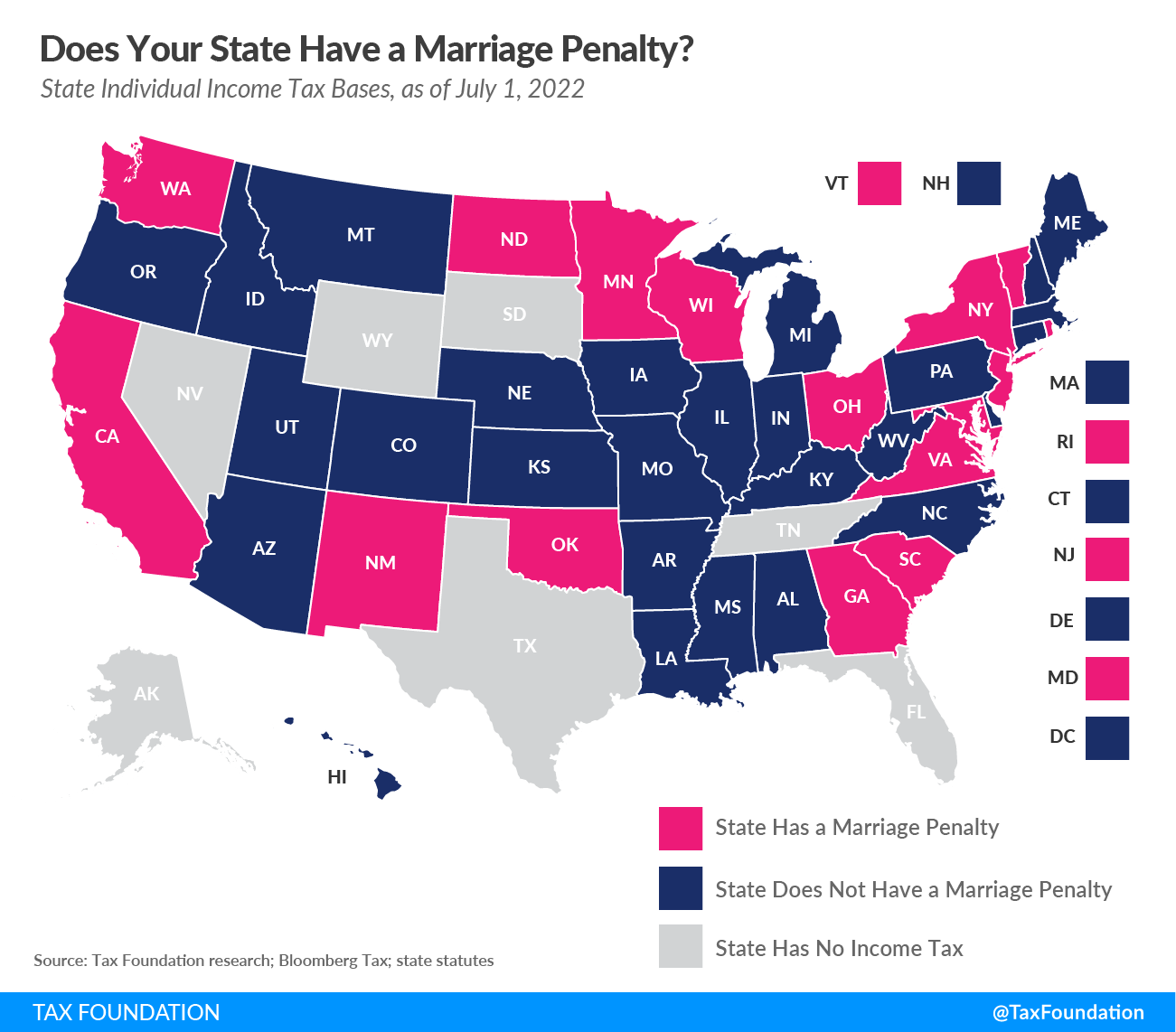
Because of rules in our tax system, walking down the aisle can sometimes lead to what’s called a “marriage penalty.” Instead of helping couples build a stable foundation, current policies often force a heartbreaking choice: commit to each other legally, or make ends meet.

The Cost of Combining Incomes

The Earned Income Tax Credit (EITC) is one of our country’s largest anti-poverty initiatives. The credit increases with every dollar workers make, up to a point, and then phases out as a household earns more.

But the EITC can also be a hidden poverty trap. When low-income people get married, the tax system unintentionally penalizes them for doing exactly what they should to escape poverty: working hard, combining resources, and building a stable home. 

Imagine two parents who want to marry each other. The woman makes $18,000 per year, and the man makes $30,000 per year.

As a single head of household tax filer with two kids, the woman qualifies for a much-needed $7,200 tax credit.

Her partner files single and doesn’t qualify for the EITC.

Together, unmarried, they use the $7,200 credit the woman gets at tax time to pay debts or cover expenses.

But if they marry, the tax system starts phasing out their credit based on their new $48,000 joint income, and it instantly drops to about $3,770.

The new spouses lose $3,430 overnight—almost a full month’s income—just because they made their relationship official. 

For some, this can be too much of a loss to risk.


The Life-Changing Power of Marriage and Family Stability

Marriage can lead to more happiness and satisfaction for couples—two incomes to cover the bills, a partner who shares the responsibilities, and the sense of well-being that comes from experiencing life with someone you love.

And kids who grow up in stable, two-parent homes are more likely to thrive in school, have better physical and mental health, and break cycles of generational poverty. 

But many low-income families aren’t getting to experience these benefits, and policies that discourage marriage—like the ones involving the EITC—are part of the reason why. 

Statistics confirm a decrease in marriages but also their importance for families.

  • Just 50% of American adults are currently married, down from 69% in 1970. The number is even lower for people with less education and those who don’t identify as White.
  • 63% of children live with two married parents. Again, that number drops for less-educated and non-White Americans.
  • When married parents are compared to single parents with the same level of education, the poverty rate for a married person is 75% lower.
  • Children raised by married parents are 82% less likely to live in poverty.

When it comes to Georgia:

  • 54% of women and 49% of men are unmarried.
  • 38% of children live in single-parent families.
  • 18% of children (461,000 kids) live in poverty—the fifth highest number in the country.
  • The state ranks 39th in the nation for overall child and family well-being.

Big cultural shifts have changed how many people think about marriage—and this plays a role in decisions not to marry. But the data shows that a stable, two-parent home still provides families with more financial security and opportunities for upward mobility. It’s also one of the most powerful solutions for lifting children out of poverty.


A Less Risky Path to “I Do”

A new study from the Georgia Center for Opportunity offers recommendations to make the EITC work better for low-income families. In particular, the federal government could adjust the maximum benefits and the eligibility limit for married couples. This would let new spouses combine their earnings without triggering an automatic loss of some or all of the credit. It would also remove a big barrier to building strong relationships and stable households.

Reforming the EITC won’t solve every challenge facing working-class families. But by restructuring the credit to reward partnership instead of penalizing it, the government can make sure that saying “I do” really is a celebration—a step toward a brighter future and a better quality of life for everyone in the family.


FAQs About the EITC

How can a low-income worker get the EITC?

People should apply through the Internal Revenue Service (IRS), which provides an EITC Assistant to help an applicant figure out if they qualify and how much their credit will be.

How does the EITC affect working-class families?

The EITC is designed to encourage low-wage workers to earn more—increasing with every dollar people make, up to a point, and then phasing out. But the income limit doesn’t double when people marry. As a result, a higher combined income pushes a couple into the EITC phase-out stage more quickly and reduces the credit they get compared to when they weren’t married.

Who does the EITC marriage penalty impact the most?

The penalty is highest when partners have children and earn similar low-level wages (each making around $15,000-$30,000).

Can a married couple file their taxes as “Married Filing Separately” to avoid the penalty?

The tax code won’t let couples claim the EITC if they choose “Married Filing Separately” as their tax status.

Does Georgia have its own state-level EITC?

Georgia doesn’t have an EITC, but it does offer a Low-Income Tax Credit for some residents.

Additional Resources

Parents and Children
Family Portrait
Family Bond
Happy Family
Love and Togetherness
Family Time
Family Happiness
Family Unity
Multi-Generational Family
Family Love
Smiling Family
Family Fun
Joyful Family
Family Connection
Family Memories
Family Gathering
Family Affection
Close-knit Family
Family Support
Family Values

Key Points

  • Utah’s economic success and high levels of happiness are attributed to the quantity of marriages and cohabiting married parents, leading to strong family structures and economic mobility.
  • The “Family Impact Perspective” proposed by Brad Wilcox offers guidelines to strengthen marriages, encourage desired parenthood, improve family affordability, and enhance family relationships in pursuit of economic success and well-being.
  • Georgia, facing economic challenges and family-related issues, can learn from Utah’s success and consider implementing similar policies and projects to foster a “Georgia Family Miracle” and improve economic mobility rates.

No matter how you spin it, Utah has enjoyed great success in recent years. The Beehive State tops national charts economically—with particular success in economic mobility— as well as scoring highly in happiness, evaluated through emotional health ratings. 

Sociologist Brad Wilcox attributes these achievements to the quantity of marriages in the state. In Utah, adults ages 18-55 are 10% more likely to be married than other Americans (55% versus the national average of 45%) and children are 7% more likely to grow up with cohabiting married parents than their peers in other states (82% versus the national average of 75%).

What’s more, Utah enjoys some of the greatest economic mobility in the country. And according to numerous economists, this is probably due to young people living in married families. Wilcox writes that the poor children in the Salt Lake area whose lot is improving “are much more likely to be raised in a two-parent family and to be surrounded by peers from two-parent families than poor kids in other metro areas.” 

Yet Utah’s economic success has also attracted many newcomers to the state, who have driven the marriage and fertility rates down, as Wilcox explains. Across the state’s counties, from Salt Lake City to rural areas to Utah County, which boasts some of the highest population and birth rate growth, immigration has inflated population counts and decreased fertility. While the state still leads the country in fertility and marriage, there are indeed “clouds on the horizon” as national cultural norms descend upon the state. 

The “Utah Family Miracle” might be seeing its last days. 


Where do we go from here?

In a recent report with the Sutherland Institute, Wilcox promotes a “Family Impact Perspective” through which all “states laws, regulations and initiatives” might be considered. He writes that this framework would assist in the pursuit of the following targets: 

  • Strengthen marriagemeasured in terms of both the rate and stability of marriage
  • Encourage couples to have the children they wish to have 
  • Make family life affordable for ordinary working families 
  • Enable husbands, wives, children, and especially parents to maximize their time with their families
  • Increase the quality of family relationships by increasing positive and reducing negative (e.g., domestic violence) interactions in families.

 This perspective is flexible to the needs of the state and offers guidelines and signs of success for legislators and the families that they serve.

Georgia, facing economic challenges and family-related issues, can learn from Utah’s success and consider implementing similar policies and projects to foster a “Georgia Family Miracle” and improve economic mobility rates.

Georgia, facing economic challenges and family-related issues, can learn from Utah’s success and consider implementing similar policies and projects to foster a “Georgia Family Miracle” and improve economic mobility rates.

Sutherland and Wilcox’s report culminates in five policy recommendations that solidify the Family Impact Perspective. Utah already enjoys ranking as the best state in the country for families, but even there these productive steps are under consideration.

  1. State reports should consider family structure when they track other socioeconomic factors.  
  2. The “Success Sequence” proposed by the Institute for Family Studies should be worked into public school curricula and premarital education.
  3. States should provide families with young children a monthly allowance to “empower parents in their capacity to make choices about how to best care for their children.”
  4. Address families’ cost of living, considering housing, schooling, and food as issues integral to family decisions.
  5. Create a state commission on men and boys, as men everywhere increasingly fall by the wayside. 

These ideas address the biggest issues facing families in a holistic, productive manner. Georgia would do well to consider implementing similar policies and undertaking such projects. 


What’s in it for Georgia? 

A Georgia Family Miracle. 

The state has much to gain by considering what it would take to improve economic mobility rates until they rival Utah’s. Currently, Georgia lags in 12th economically and 24th for fiscal stability, and the economic mobility rate has drawn critical attention for a decade. While many factors feed into economic mobility, leading Georgians ought to encourage study into the impact of family structure and costs of living on the prospects of the youngest citizens. 

Georgia’s immigration rates are much lower than Utah’s (-2.5%, whereas 8.4% of Utah’s population are immigrants). This means Georgia might enjoy greater cultural stability, which should not be taken for granted. Rather, Georgia’s leaders ought to double down in their service to the constituency’s families and help them build happier homes where they have better relationships.

By multiple measurements, marriage in Georgia is far from the worst in the country, but there is still much work to be done if Georgians are to have the families and futures that they want. The U.S. Centers for Disease Control and Prevention reports that, in 2021, Georgia’s marriage rate was only 60% of Utah’s (at rates of 5.5% and 9.1%, respectively). Demographers have reported for years that Georgia’s divorce rate is among the highest in the U.S., and a 2020 study by the Annie E. Casey Foundation and the Georgia Family Connection Partnership found that 33.5% of Georgia’s kids live in single-parent households—not accounting for cohabiting, unmarried parents.  

The easiest ways to increase familial connection include reducing tech use in the home, making family life more affordable with an allowance, and strengthening existing marriages through close review of couple’s needs, especially men struggling to be dependable citizens and fathers.

Talk To An Expert

About The Author

David Bass

Press Manager

David Bass is a journalist and communications professional with nearly two decades of experience in the world of PR, marketing, and publications.

year in review 2022

As 2022 comes to a close, let’s take a moment to share some of the many accomplishments the Georgia Center for Opportunity achieved with your help this year. Each of these wins contributes to our enduring legacy of helping fellow Georgians live a better life through the power of work, education, and family. 

While we’re proud of the year’s progress, we’re also incredibly grateful for your support. Let’s take a look at what we’ve done together.


Work

BETTER WORK is a core part of the GCO’s mission to help vulnerable populations gain the skills needed to thrive in a job and a career. In 2022, we made big strides forward in growing this program.

Our BETTER WORK chapters in Gwinnett County and Columbus experienced significant growth this year. Over 400 people applied to the programs, and we recruited 95 employer partners and 42 mentors. We also began offering on-site service at local cooperative ministries.

Dovetailing with our mission to help our neighbors thrive through work, we seek to reform the social safety-net system to ensure that it doesn’t punish people for working. A large part of this has been through our work on benefits cliffs, which unfairly punish people for moving up the economic ladder. On this front, we rolled 12 states into the program at BenefitsCliffs.org, which now covers one-third of the U.S. population. We also presented to national audiences on benefits cliffs: SNAP congressional testimony, the American Legislative Exchange Council, State Policy Network annual meeting, the Heritage Foundation, True Charity Summit, and the Kentucky legislature benefits cliffs joint committee.

We launched a project in Missouri and North Carolina to advance social safety-net reforms in those states. Additionally, we recruited a congressional sponsor to introduce a bill allowing all states to integrate workforce development into their welfare programs. Both BETTER WORK and our benefits cliffs work are making an impact on a national scale, and we anticipate building more momentum in the coming years.


Education

Expanding opportunity necessarily includes greater access to better education, which directly leads to better careers. During the 2022 session of the Georgia Legislature, the GCO team successfully advocated for a bill that expanded the tuition tax credit scholarship by $20 million dollars. The result: an additional 4,000+ students now have access to this important program. 

We also backed a bill that would have created Promise Scholarship Accounts, which would have offered families up to $6,000 a year for approved education expenses. Unfortunately, this bill was voted down in committee, but we are optimistic similar legislation will be passed in the upcoming 2023 session. To advocate for the bill, a GCO marketing campaign resulted in 7,573 calls to lawmakers in support of the bill and 1,050 messages across 21 districts.

“Each of these wins contributes to our enduring legacy of helping fellow Georgians live a better life through the power of work, education, and family.”

“Each of these wins contributes to our enduring legacy of helping fellow Georgians live a better life through the power of work, education, and family.”

Family

A great education and involvement in meaningful work are not sufficient. We also need healthy relationships in order to thrive. That’s why another part of GCO’s mission is to strengthen couples and families. On that front, we recruited more than 500 people to participate in relationship-enrichment training, and we offered the classes in seven public schools and seven nonprofit partner agencies. University of Georgia assessments continue to show our programs improve knowledge, attitudes, and behaviors — all best future predictors of improved relational health.


Looking Ahead to 2023

As 2023 approaches, we’re so excited for what the future holds. With another year comes new opportunities to help not only our fellow Georgians, but people across America to find better work, better education, and stronger family relationships. Again, we thank you for your generous support and look forward to what unfolds in the New Year.


We know that healthy relationships and successful family formation are crucial to walking the steps of the Success Sequence. Strong families help individuals and children flourish. And we know that time with children, especially in their early years, is crucial to establishing healthy lifelong attachments.

The tougher question is how to foster these things from a policy standpoint.

At Georgia Center for Opportunity (GCO), we’ve come to realize that paid family leave is an important part of the puzzle—especially for low-income and impoverished Georgians.

For these reasons and many more, GCO hosted a discussion at Georgia Tech in mid-January dedicated to exploring options for a paid family leave policy. 

Watch the video below for more.

There’s no doubt about it: Marriage is in crisis today, both in Georgia and across the United States. But even as we grieve declining marriage rates among young people—many of whom choose to cohabit rather than tie the knot—and spiking divorce rates among Baby Boomers, we’re reminded that we have so much to celebrate. And we have plenty of reasons to be optimistic about what the future holds.

Why? Because we know that healthy marriages are a cornerstone of our society. And they’ll always be. We know that married people tend to be happier, healthier, wealthier, and enjoy more stability in their lives. Those benefits also extend to kids, who perform better in school and have a far slimmer chance of being in poverty.

In the spirit of celebrating all that’s great about marriage, we’re thrilled to recognize National Marriage Week (February 7-14) leading up to Valentine’s Day. National Marriage Week seeks to foster collaboration around the country to “strengthen individual marriages, reduce the divorce rate, and build a culture that fosters strong marriages.”

One of our core goals here at Georgia Center for Opportunity (GCO) is to give couples the tools they need to not just survive, but thrive in their marriages. Empirical research clearly tells us that marriage is a crucial step toward achieving economic and relational stability. In fact, it’s one part of the three-part “success sequence”: Those who get a good education, work full-time, and marry before having children are nearly guaranteed a place in the middle class.

This National Marriage Week, if you’re looking for ways to strengthen your own relationship or help others strengthen theirs, here are several practical ways to get started:

  • Sign up for a “Build my Relationship” web conference: GCO’s Healthy Families Initiativeis now offering a new way to connect with licensed professionals via a series of live web conferences. You’ll have the opportunity to engage in conversation with our experts and gain insight into other resources and tools available to build your best relationship. Register Now.
  • Attend a “Prepping for Romance” workshop: A “best of the best” relationship training workshop. Prepping for Romance helps build communication skills and provides the tools to create a solid marriage foundation. Register Now.
  • Help a teen with our “How to Avoid Falling for a Jerk or Jerkette” workshop: Want to help your teens navigate the challenging waters of dating and relationships and build a strong foundation for marriage? This interactive workshop is designed specifically for high school students and teaches them how to effectively date with long-term, healthy relationships in mind. Register Now.

Gavel-and-Scales-300x225

When I tell people that part of my work involves heading up a project on prisoner reentry reform, I’m often met by puzzled looks. Given my organization’s other work – including fighting for education reform and school choice, encouraging stronger families, and combating human trafficking, etc. – many understandably wonder where prisoner reentry fits.

On the surface the answer is not necessarily obvious but, once I explain what motivates our work, the connection normally becomes clearer.

Over the last decade, part of our work involved efforts to strengthen families in the inner city through helping community leaders improve family life by offering workshops on relationship skills, conflict resolution, financial management, and similar topics to people in the community. The thinking – supported by the evidence and common sense – is that if you can improve relationships among family and community members, you can help improve many of the social problems people face. When you do this kind of work in the inner city, you quickly find that you can’t strengthen families there very successfully without also addressing the impact of incarceration, which too many inner-city families experience – especially in Georgia.

In 2009, the Pew Center on the States released a study showing that Georgia led the country with 1 in 13 adults under some form of correctional supervision. Nationally, the number is 1 in 31. The Georgia number includes some 56,000 prisoners and 160,000 probationers. Annually an average of 20,000 prisoners are released and, as our experience in inner-city Atlanta confirmed, most are not prepared to be successful outside the prison walls. Of those released nationally, nearly 65 percent will be re-arrested in three years and, in Georgia, about 30 percent will find themselves back in prison within that time.

That is why we launched our prisoner reentry working group in July after many months of research, dozens of interviews, and visits to four state prison facilities. Our nine working group members consist of individuals with considerable expertise in Georgia’s correctional system and a strong interest in improving outcomes for prisoners returning to the community. The working group will meet monthly over the next year to develop policy and service related recommendations on ways our state can improve prisoner reentry to reduce recidivism while improving positive outcomes for prisoners (like job attainment and retention, housing stability, and staying sober and drug-free, among others).

During our first meeting, the group quickly decided upon several broad areas of focus for their work over the next year. Those areas include

  • Employment: Looking at ways to remove barriers to and increase opportunities for prisoners to obtain and retain employment upon release
  • Reentry Courts: Exploring how the state might create courts that specialize in working with prisoners as they are reentering the community
  • Transitional Centers: Finding ways to increase the capacity of Georgia’s transitional centers to serve more people and looking at whether centers specialized to work with specific kinds of offenders could be more effective in reducing recidivism

While each of these topics is large, the working group is committed to zeroing in on very specific, common sense ways to improve each area that offer the greatest potential for measurable improvement.

In the coming weeks, we will be posting updates on the working group’s progress. Needless to say, we are encouraged by the work the group has done so far and by the level of commitment each person has shown in improving outcomes for reentering prisoners.

Subscribe

* indicates required

Subscribe

* indicates required