HomePostTopic: Educational technology

Educational technology

Key Points

  • Parental involvement in education yields significant benefits for both students and schools. 
  • Students with engaged parents tend to have better academic outcomes, attendance rates, and behavior in the classroom. 
  • Schools and communities can employ a few concrete strategies to facilitate parental involvement and empower students to succeed at school and in life.

    Raising and educating young people takes a group effort. Everyone—parents, grandparents, aunts, uncles, teachers, friends, clergy, coaches—plays an important role. Within this collaboration, parental involvement is especially powerful and yields numerous benefits for both children and schools. 

    Research consistently demonstrates that children with engaged parents tend to have higher academic performance, better attendance rates, improved behavior, and increased motivation to learn. Moreover, schools benefit from parental involvement by gaining valuable insights, fostering a supportive environment, and enhancing overall student outcomes. When our kids are successful and able to show up as their best selves, our entire communities benefit from future generations of healthy, responsible, caring adults who are well prepared for meaningful work, relationships, and community involvement. 

    As families prepare for a brand new school year, here are six ways that schools and communities can empower students and their parents and caregivers throughout the school year. 

    1. Build strong communication channels between parents, children, and schools. 

    Schools can employ various strategies, such as regular newsletters, parent-teacher conferences, class websites, and digital communication platforms to keep parents informed about their child’s progress, school activities, and opportunities for involvement. Encouraging two-way communication ensures that parents feel valued and heard, enabling them to participate in their child’s educational journey.

    2. Offer and promote parent education programs. 

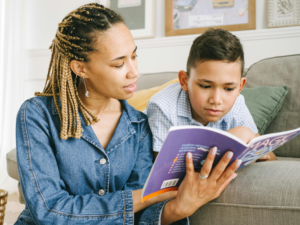
    Parent education programs and workshops play a vital role in equipping parents with the necessary skills and knowledge to support their children’s learning. Schools can organize workshops on topics like homework assistance, effective communication strategies, and understanding curriculum standards. By empowering parents with the right tools, they become better equipped to engage in their child’s education and make informed decisions.

    3. Encourage volunteering and participation. 

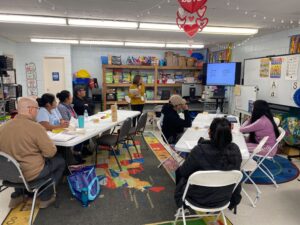
    Volunteering opportunities provide parents or other primary caregivers with hands-on involvement in their child’s school and community. Schools can offer various volunteering options, such as assisting in the classroom, organizing events, or participating in extracurricular activities.

    Volunteering strengthens the parent-child bond, and it helps parents understand the educational environment and feel a sense of belonging within the school community. 

    When our kids are successful, entire communities benefit from future generations of healthy, responsible, caring adults who are well prepared for meaningful work, relationships, and community involvement. 

    4. Create family engagement events. 

    Family engagement events serve as an excellent platform to bring parents, children, and educators together. These events can range from family fun days, cultural celebrations, or academic showcases. 

    By organizing inclusive and interactive events, schools can create an inviting atmosphere that encourages parents to participate and form connections with other families, thereby enhancing the sense of community.

    5. Leverage technology to give parents flexibility.  

    In today’s digital age, technology can bridge the gap between parents, children, and schools.  Online platforms and applications give parents easy access to information about their child’s progress, assignments, and upcoming events. Schools can use technology for virtual parent-teacher conferences, webinars, or online discussion forums, enabling greater flexibility and engagement for parents who may have time constraints.

    6. Partner with the community to enrich students’ educational experiences. 

    Collaborating with the wider community enriches the educational experience and broadens the opportunities available to students. Schools can engage local businesses, organizations, and professionals to offer mentorship programs, career guidance, or specialized workshops. Community partnerships foster real-world connections, expose children to diverse perspectives, and demonstrate the importance of community involvement.

    Additional Resources

    Want to learn more about how communities can support parents and foster the academic achievement and well-being of our youth? Check out these resources based on our Raising Highly Capable Kids parenting program:


    How Should I Prepare My Child for Virtual Schooling?


    By Jennifer K. Hale 


    “Supporting virtual teachers is just as important as supporting traditional classroom teachers and making the connection with the virtual teacher will be key to your student’s success.”

    Making the swap from brick-and-mortar schooling to a virtual setting might be a challenge for some families. In fact, it may seem daunting. But with a few simple tips and reminders, families can make virtual schooling feel as normal and natural to the family lifestyle as traditional school ever was.


    There is one crucial factor that makes a student successful in the virtual setting—an involved parent or learning coach. After years as an educator, the last seven of those at a virtual school, I know for certain that the students who adapt to virtual schooling, achieve high grades and test scores, and make advancements in their education are those who have a support system at home to help them and encourage them. This is true of a traditional brick-and-mortar school setting as well, but it is especially vital in the virtual setting. Because the teachers, faculty, and administration have physical barriers in the virtual setting, it is imperative that the student have someone in the home environment who can serve as their support system, advocate, and daily encouragement.


    Not only is this support system key for the student, it helps the teachers as well. Supporting virtual teachers is just as important as supporting traditional classroom teachers and making the connection with the virtual teacher will be key to your student’s success.


    One of the main things you can do as the new school year begins is remember to treat the virtual teacher with the same respect that you would a traditional classroom teacher. These are professionals, trained and certified in the exact same way as traditional classroom teachers. Most, if not all, have been traditional classroom teachers at some point in their careers. In fact, in many school districts, the virtual teachers will actually be the classroom teachers who are now moving to virtual platforms due to the pandemic. Be respectful of their knowledge, passion, and drive to see your student succeed.


    So what else can you, as a parent and learning coach, do to support your student’s virtual teachers?


    • Read all emails and communications. Pay attention to details, updates, deadlines, expectations, and requirements.


    • Set calendar reminders for yourself to help remind your student about important deadlines, etc.


    • Communicate with the teachers frequently. Don’t be afraid to send an email or pick up the phone to ask clarifying questions.


    • Learn the virtual platforms. This may seem overwhelming but learning at least enough to check your student’s gradebook and communicate with the teacher will go a long way. Parent training on this should be provided by your school district.


    • Check regularly to make sure your student is logging in and completing work on time.


    • Check your student’s gradebook weekly, at minimum.


    • Attend any online open houses, orientations, and/or parent conferences. Take the opportunity to get to know your student’s teacher.


    • If you want to show appreciation like you occasionally would in the traditional classroom, send the teacher a kind email, voice message, or even a gift card via email.

    The greatest thing you can do to support the virtual teacher is show patience. Parents feel uncertainty right now and have many questions. Teachers have these same feelings and questions. Some teachers face the same issues that you do—how to work while their own children are home and educating virtually, how to balance the work/family dynamic, and how to live day to day in a nation swirling with insecurity. Showing patience as we move forward together sets a wonderful example of resilience and bravery for our students.


    Teachers who are passionate about their profession will meet the challenges of educating virtually in a pandemic with courage and ingenuity. They will create engaging, exciting lessons for your student and will do everything in their power to form relationships with your child, exactly as they would in a traditional classroom.


    Take the time to reach out with any questions and concerns, but your encouragement is also appreciated. Let your student’s teacher know how much you appreciate their hard work and preparation for a challenging school year that will certainly turn out to be historic. Make a commitment now with your student and the teacher to work together to make the virtual education experience exciting, engaging, and an integral part of your child’s development.


    Virtual education was once a wonderful option for families, but in this pandemic has become a requirement for many who weren’t expecting it. We’re all learning together and a positive attitude will go farther than anything else. We teachers encourage you to take advantage of this time in our history to make memories with your child so that one day they will look back on this time not remembering what they “missed” by not being in a traditional classroom, but what they gained by having the opportunity to learn virtually. Certainly history will reflect that the option of virtual schooling provided a nation of students the education they needed in a time when caution was most important.


    Jennifer K. Hale is an Assistant Principal at Georgia Cyber Academy High School. She is passionate about student success through high quality teaching and best practices. Originally a history teacher, she is also passionate about helping students to become active, knowledgeable citizens of our nation.


    EVERY CHILD WITH ACCESS TO A QUALITY EDUCATION


    A quality education is key to a child’s future success. Academic achievement paves the way to a good job, self-sufficiency, and the earned success we all want for our children. To learn more about education options in Georgia click here

    Children excited as they leave school

    How Should I Prepare My Child for Virtual Schooling?


    By Jennifer K. Hale 

     
    It is a different world. Things are changing daily; numbers, statistics, and educated guesses are becoming the norm. It is in this climate that we are attempting to educate a nation of children in an unprecedented way—virtually.


    Many states have had virtual schools for some time now, but not many states have attempted virtual education through large school districts all at one time like we are seeing in our nation as we approach a new school year. Each district has different plans and expectations, but all have the same goal—to give your student the highest quality education and help them achieve academic success.


    As the school year begins, there are some things that your student’s virtual teacher will want you to know, prepare for, and pay attention to. In order for your child to be successful, give these points some careful consideration.

    “…all have the same goal—to give your student the highest quality education and help them achieve academic success.”

    • Virtual teachers are real teachers. In most schools, teachers have extensive training, certifications, and degrees in education and content. They continually attend professional development to hone their craft and they are professionals who are passionate about what they do.


    • Virtual teachers are still learning. Every day new technology is developed that can help engage your child in exciting lessons and teachers are constantly learning how to implement these tools into the classroom.


    • Please read all messages from the teacher carefully. Information is easy to come by if you commit to reading messages, emails, announcements, and communications from your student’s teachers, school, and school district.


    • Your child is expected to be in class. Just because the platform might be virtual does not mean that the schedule is flexible. Students need to stay on the schedule set out by the district, school, and teacher.


    • Teachers want your support! They need you to be engaged and aware of what’s going on in the virtual classroom so that you can be your student’s support from home.


    • Teachers want to communicate with you. They are available to answer your questions and address your concerns—just reach out!


    • Students need a calm learning environment free from distractions. When learning virtually, it’s very difficult for teachers to compete with the TV, cell phone, or other distraction at home. Please help keep those to a minimum during learning time.


    • Teachers don’t expect perfection—just engagement! Students who show up, try, and make an effort are those who will reflect the most success.


    • Virtual education can provide everything your student needs—if your student is willing to take advantage! Relationships can be built in a virtual setting just like in a traditional school and what’s more, your student can form relationships with students and peers they might never had have the chance to know otherwise!


    • If your student is struggling, please let the teacher know. Typically your teacher will already be aware, but please don’t hesitate to reach out for extra help, support, and guidance.


    • While there are certainly challenges that many families will have to address, don’t forget the advantages of virtual education:

     – Some flexibility in location for your student to learn

    –  More quality time at home making family memories

    –  Certified teachers who will be teaching your child, no matter if your student is at home    with you or in a childcare setting

    –  No parent has to create their own curriculum—it’s all provided by professionals

    –  Meeting new people in the virtual classroom they might not have the opportunity to meet otherwise

    –  Saving money on school clothes and supplies

    –  Exploring classes that might not be offered in a traditional school

    –  Learning new technologies via the virtual classroom

    Virtual education was once a wonderful option for families, but in this pandemic has become a requirement for many who weren’t expecting it. We’re all learning together and a positive attitude will go farther than anything else. We teachers encourage you to take advantage of this time in our history to make memories with your child so that one day they will look back on this time not remembering what they “missed” by not being in a traditional classroom, but what they gained by having the opportunity to learn virtually. Certainly history will reflect that the option of virtual schooling provided a nation of students the education they needed in a time when caution was most important.

     
    Jennifer K. Hale is an Assistant Principal at Georgia Cyber Academy High School. She is passionate about student success through high quality teaching and best practices. Originally a history teacher, she is also passionate about helping students to become active, knowledgeable citizens of our nation.


    EVERY CHILD WITH ACCESS TO A QUALITY EDUCATION


    A quality education is key to a child’s future success. Academic achievement paves the way to a good job, self-sufficiency, and the earned success we all want for our children. To learn more about education options in Georgia click here

    Children excited as they leave school

    How Should I Prepare My Child for Virtual Schooling?


    By Jennifer K. Hale 


    Many of us got a little taste of what virtual schooling could feel like back in the spring when the spread of Covid-19 forced nationwide school building closures and a shift to virtual education. At that time, our nation’s educators faced a mountain of challenges: lack of information, lack of understanding of virtual platforms and how to make them work for students, lack of preparation, and for many students, a lack of reliable internet or computer resources in the home. Parents faced a lack of education themselves while also confronting issues with childcare. The shift came without much warning and the unpreparedness teachers felt was not their fault. Many veteran virtual educators came together to develop resources to help new online teachers become successful.

    Students got a taste of virtual education in the spring as well, but as we prepare to return to school in the fall, the expectations of virtual education will be different and you should prepare your child for the changes and enhancements they will see in the virtual setting.

    The key to preparing our students to have a successful school year is in how you present the information. Your student will react to your attitude, so the more excitement and enthusiasm you show, the more likely your student is to feel the same way. Positivity is key when facing a new challenge. What a wonderful thing it is that we live in a time when virtual education is an option to keep our nation going during a pandemic!

    Here are some things that you and your student should know:

    • Teachers have received more virtual education training. At this point, brick and mortar school teachers have had and continue to receive training about virtual platforms and tools and how to use them.
    • Administrators have developed a detailed plan. Students and teachers have been virtually paired together with intention and scheduling has been taken into consideration.
    • Teachers are now aware of more resources to help build a strong virtual classroom and are adding new resources daily.
    • Platforms for live teaching have been purposefully obtained by school districts. Live sessions will be held on a schedule and with the purpose of live instruction.
    • Successful virtual schooling requires support from parents and learning coaches.

    So what should you do as a parent to help your student prepare?

    • Once you have your student’s schedule, go over it with your child. Make sure your child knows when to log into live sessions. Set alarms, write it out and post it somewhere close to the schoolwork space, etc. As a parent, you’ll also need to look at your own schedule, childcare plans, and create a calendar that supports your student. Keep in mind virtual schooling will require student attendance and participation daily.
    • Create a workspace at home with minimal distractions. Keep the TV off and the phone put away when students are working on schoolwork. This is absolutely vital for student engagement.
    • Get your student excited about live sessions! Remind them that they will be able to talk to their teacher and engage with their peers, similarly to how they would in a traditional classroom.
    • Communicate with teachers regularly. Read all emails from teachers and be aware of expectations, plans, and updates. This is key to your student’s success.
    • Discuss expectations with your child. Virtual schooling may be challenging for some—learning on the computer is certainly not what they are used to. Talk about why it’s important to pay attention to the teacher, complete work on time, participate in class, and treat virtual education just as seriously as they would if they were in the traditional classroom.
    • Create moments of rest and fun. During breaks from class, make sure your student is up and moving around, getting proper hydration and nourishment, and taking breaks from screen time.
    • Be realistic. We live in uncertain times and plans change from day to day. Give yourself and your student grace and praise for getting through each day and accomplishing daily tasks.

    Prepare your child for virtual education by encouraging them with positivity about the situation. Make the new schedule exciting. While you might not be shopping for back to school clothes or lunch boxes, make virtual schooling just as fun in other ways—new school supplies for home, allowing them to decorate their workspace and color their own calendar, etc. Allow your student to choose their “first day of school” outfit for their first day of live classes on camera and help them feel excited about the new way the nation is learning. Remind them they are not alone—millions of children across the country will be learning virtually this fall.

    We’re all in this together. Thanks to technology, our children can continue their education with qualified teachers uninterrupted. With gratitude we can take on a whole new view of our current situation and the outlook of our nation. While tomorrow may be unknown, the future is still bright for our students.

    Jennifer K. Hale is an Assistant Principal at Georgia Cyber Academy High School. She is passionate about student success through high quality teaching and best practices. Originally a history teacher, she is also passionate about helping students to become active, knowledgeable citizens of our nation.


    EVERY CHILD WITH ACCESS TO A QUALITY EDUCATION

    A quality education is key to a child’s future success. Academic achievement paves the way to a good job, self-sufficiency, and the earned success we all want for our children. To learn more about education options in Georgia click here

    Children excited as they leave school

    We’re all familiar with the phrase “uncertain times.” We find ourselves there as a nation, as parents, as people. We’re watching history actively develop in 2020 and we don’t know what the fast-approaching school year will bring. As the government puts out its recommendations for education and local school districts develop plans for re-opening schools, many families are trying to decide what to do. 


    Should I send my child back to their regular school? Should I choose the virtual option from my local school district? Should I enroll my student in a full-time virtual school outside of my school district? There are so many options!


    There is also much debate. Looking at social media for any amount of time will give you all the pros and cons of sending your child to school based on medical evidence, opinions and growing concerns of the unknown, so we won’t rehash that here. However, if your child or someone in your family is immune compromised, the virtual option is a fantastic choice to avoid exposure to germs. But for others, the choice isn’t so easy.


    I’ve been an educator since 2002 and have worked in a full virtual school for the past seven years. Virtual education is new but not “new.” We’ve been refining the craft for over a decade now in Georgia, so let’s address the question of “should I choose the virtual school option for my child?” from the considerations of what virtual schooling offers and what is required. Looking at it pragmatically might help you make your choice.


    First off, understand that virtual school doesn’t mean “homeschool.” Traditionally, homeschooling means that families choose their own curriculum, set their own schedules, and develop their own methods for learning. Virtual schooling provides accredited curriculum, certified, highly trained teachers, and expectations that mirror most public schools. This means that if your school district is offering a virtual option or you enroll your child in a public charter virtual school, you will have to meet all the same requirements as if your child was in a brick-and-mortar school, including attendance, adherence to school policies, and state testing requirements.


    What virtual schools can provide (among other things):

    • High quality teachers
    •  Access to all the classes your child needs to stay on track
    • Supportive staff including administrators and counselors
    • Some clubs and after school virtual activities
    • Occasional in-person activities for students (outside of pandemic times)


    What virtual schools cannot provide:

    • Access to free meals
    • Athletics or performing arts
    • Before or after school childcare
    • Daily in-person socialization


    If your child has special needs requirements or has an IEP, don’t write off the virtual school option. Public virtual schools will be able to meet those requirements and give your student the support they need. Also, many public virtual schools offer courses for gifted students, and at the secondary level, can provide AP courses and access to dual enrollment. 


    Here are a few things that are required for virtual students to be successful:

        • Access to reliable internet.
        • A computer or learning device (many schools will provide these).
        • A calm learning space away from as many distractions as possible.
        • A schedule for learning that can be maintained on weekdays (with few exceptions). Keep in mind that virtual schooling does not mean flexibility to decide when your student does their work. They will have a schedule to adhere to.
        • For you as the parent to be involved also as the learning coach.
        • Patience. While some virtual schools have been doing this for a while, not all virtual teachers will be veterans. Patience is key as we all learn how to live in these “uncertain times” while providing your child with a high-quality education.


    If you’re still struggling to decide what to do, research the virtual options in your area. Make sure you look for accredited schools with certified teachers. You are your child’s best advocate and the only one who can make the best choice for your student and your family. Contact your local school district or virtual school in your state with questions!


    Jennifer K. Hale is an Assistant Principal at Georgia Cyber Academy High School. She is passionate about student success through high quality teaching and best practices. Originally a history teacher, she is also passionate about helping students to become active, knowledgeable citizens of our nation.


    EVERY CHILD WITH ACCESS TO A QUALITY EDUCATION


    A quality education is key to a child’s future success. Academic achievement paves the way to a good job, self-sufficiency, and the earned success we all want for our children. To learn more about education options in Georgia click here

    Children excited as they leave school

    What will education look like in the coming months and years as Georgia continues to grapple with, and recovery from, the COVID-19 pandemic? Our state’s schools will reopen in August. But even then, education is likely to look much different. Virtual learning will be more popular than ever. Many parents will likely have their eyes opened to alternative education options available. And all of us will have a new appreciation for the vital role of teachers.

    One blind spot the COVID-19 pandemic has shown us is the weakness of an education system built for one approach and a single learning style. The traditional public school system is based on this one-size, fits all option. But even as many families have flocked to alternatives—through charter schools, private schools, and homeschooling—that cry for flexibility will only increase in the coming months and years.

    Our traditional school system offers a brick-and-mortar school that students come to for set classes and time periods during the day. Families will increasingly see that this archaic system no longer works in a 21st century education environment.

    Here is what will be necessary in the post-COVID-19 education landscape: 

    • Public schools will need to adapt to virtual learning and break down the technology barriers that unfairly inhibit low-income students from succeeding. 
    • Elected officials must begin putting the needs of individual students and their families ahead of protecting “the system,” whatever that may look like. A wide diversity of educational options is key here—ones that maximize the potential of all students.
    • Unfortunately, academic achievement gaps could widen as low-income students and those from rural areas struggle with the new technological demands. This makes it even more crucial that lawmakers prioritize ways to extend educational access and resources to all of Georgia’s students, not just those in wealthy zip codes and urban areas.
    • Our state must give all students greater educational choice by passing an Education Scholarship Account in Georgia, which empowers families who wish to choose a private school to do so.
    • We also must continue to support Georgia’s programs that expand educational access, including the Scholarship Tax Credit Program and Special Needs Scholarship Program.

    To be sure, many parents will still prefer the traditional approach offered by traditional public school districts. Georgia must continue to support a strong public school system. But many others will want expanded options, and lawmakers and the K-12 education infrastructure must adapt.

    Over the past year, Georgia Center for Opportunity has hosted a series of luncheons aimed at encouraging local educators and business leaders to think outside of the traditional education reform box. Past keynote speakers have shared ways educators can work within their schools to become “cage-busting” leaders, and how business professionals can form coalitions to support quality education.

    DSC_0044

    In this same vein, GCO recently had the pleasure to host Sajan George, the founder and CEO of Matchbook Learning. Sajan not only introduced the unique Matchbook blended-learning model, but he also shared ways his “turnaround” methodology can be applied to even the most underperforming schools in Georgia.

    What is different about Matchbook Learning?

    For students at a Matchbook school, grades are virtually irrelevant. Instead, the emphasis is placed on instructional levels of learning. Rather than go through curriculums associated with the grade they are in (i.e., 3rd grade), students begin lessons based on their skill level, which may be higher or lower than the actual grade they are in (e.g., they may be at a 1st or 4th grade level). Students advance from their individual starting points based on their ability to master a skill at a pace that is independent of other students’ progress in the classroom. This concept is commonly referred to as competency-based education.

    By using online learning platforms, Matchbook Learning has created a revolutionary learning system that does not just treat the symptoms of failing schools, but addresses the root cause of failure. Far too often schools focus on one-size-fits all instruction and traditional seat-time to improve student outcomes. However, what is truly needed is the ability to customize learning paths to meet students where they are. This system has already proven its ability to propel struggling students to new heights academically by not overwhelming them with instruction far beyond their ability and by allowing them to progress at their own pace.

    What is special about Matchbook Learning is that is does not just give struggling students the autonomy to work independently, it also frees up teachers to work with students on a more engaged level.  Through the online platform, teachers always know where their students are in their learning and can arrange their classes with ease to provide more help to students who need it.

    Matchbook has already scaled turnaround success in classrooms, schools, and school systems in places like Detroit, MI and Newark, NJ.

    DSC_0083

    Can the Matchbook model turnaround Georgia?

    To apply these turnaround methods in Georgia, Sajan noted that a more innovative vision of education is needed across the state. One possible starting point, however, could be Gov. Deal’s proposed recovery schools districts. Looking to the Matchbook Learning system as a best practice for these would-be state charter schools could provide the much needed guidance to transform low-performing schools into student-centered learning environments.

    Through collaboration with innovators such as Sajan George, Georgia Center for Opportunity continues to remove barriers to quality education by promoting solutions that have been proven to work. Considering models like that of Matchbook Learning are a much needed step in the right direction for giving Georgia a real chance to prosper.

    Breakthrough Norcross, after nearly two years of working toward establishing a collective impact project to improve educational outcomes for Norcross students, partnered with Beaver Ridge Elementary to offer a Robotics camp for their rising fourth and fifth graders. Students who are interested in the subject of Robotics were able to sign up for a weeklong day camp over the summer, and, as a  part of my summer internship with Georgia Center for Opportunity, I had the opportunity to check out what was going on at the Robotics Camp ­– dubbed Beaver Bots – last Thursday.

    Environmentally, the robotics room is a collection of the parts, programs, and challenges for the robots that would be the primary tool of the weeklong camp. Two teachers facilitate the camp for approximately 30 students, who all spend most of their time in the robotics room. The Mindstorms, as the machines are officially named, are designed by Lego with the capacity to carry out a series of complex tasks. Various challenge courses are then set up in order to test the robots and their human operator through a diverse array of task completion.beaver bots1

    The teachers lead each of the kids through the tasks at a very basic level that eventually handed over full reign of the robots and their programming to the kids. In fact, the teachers made it their mission to equip and not baby their students, and the kids loved it. The kids would cheer each other on through their successes and encourage each other through their missteps. Both boys and girls were learning to wrestle with the complex tasks assigned to them, and this development of perseverance – or grit as some call it – served as the crux for success in future tasks for the club.beaver bots

    One of the students was so excited about her experience there that she couldn’t help but exclaim how much she loved working with her friends and other students. She remarked that it wasn’t about winning or losing, although that was a component of the camp; but it was about trying your hardest and having fun with friends.

    Of course, there were winners and losers, but the winners encouraged the losers, and the losers cheered on the winners; and everyone was having fun. Furthermore, and most significantly, the kids were not criticizing each other for their initial shortcomings on the challenge field. In fact, they outright refused to submit to failure, consistently returning to  the drawing board until they found success.beaver bots2

    Kids are playing with robots, encouraging each other, and carving a pathway into higher learning. It sounds utopic and in some regards it really is. It’s the start of something great, albeit unfinished. It’s just one small part of a larger story that’s unfolding through Breakthrough Norcross, and I have a feeling that the best is yet to come.

    __________________________________________

    This blog was written by Patrick DeMartino.  Patrick is pursuing a B.S. in Psychology from the University of Georgia.  This is his second summer interning with GCO working to support our Solution Delivery work.

    Subscribe

    * indicates required

    Subscribe

    * indicates required