New GCO poll: 81% of parents support educational microgrants during COVID-19


By David Bass

The Georgia Center for Opportunity (GCO) today released the results of a parent opinion poll that found 81 percent of respondents in favor of using federal emergency relief funds to help parents cover some educational costs during the coronavirus pandemic.

The poll, taken of a random sample of 721 Georgia parents, also found that such microgrants would encourage parents to make alternative educational decisions for their children: 59 percent of respondents reported that a one-time microgrant of $1,000 would either prompt them to send their child to a different school or help out in their existing decision to do so.

Recently, a coalition of education reformers sent a letter to Gov. Brian Kemp urging him to use the remaining portion of the Governor’s Emergency Education Relief (GEER) Fund to directly support students through the challenges of virtual learning. Currently in Georgia, the governor’s office is the only entity in the state with the ability to provide families with this desperately needed help.

The poll results back up what we already know: Offering direct payment assistance to Georgia families is the best way to keep vulnerable students from falling further behind during this crisis. A one-size-fits-all approach to education never works. We must offer as many families as possible maximum flexibility in their education decisions this year. Empowering parents directly with funds puts them in the driver’s seat and cuts out bureaucratic obstacles. This step simply takes available additional federal funds and gives parents the most help, the fastest, right when they need it the most.

Megan and teacher at table

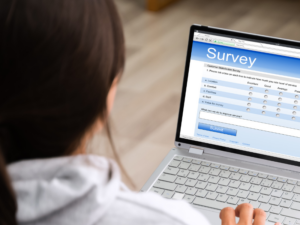
A Survey Of How The Average Georgia Family Is Navigating Education During The Pandemic

DOWNLOAD

These microgrants would help students like Hannah Foy, a 13-year-old with Down syndrome. Hannah has been isolated at home since March and is falling behind. “Putting education dollars directly into the hands of parents means that our children have a greater chance of not falling behind,” wrote Hannah’s mother, Elizabeth, in the Atlanta Journal-Constitution. “The funds will come nowhere close to meeting the needs of students like my daughter, but they will help to bridge the gap until schools can fully reopen again.

Other key findings from the poll include:

  • 57 percent said their children learned “far less” or “somewhat less” than they had when they were in their pre-shutdown school.
  • Only 12 percent of respondents said their school did “badly” or “very badly” during the coronavirus crisis. Thirty-three percent were neutral and 55 percent said their school did “well” or “very well.”
  • Only 18 percent of respondents thought that their schools did not provide enough resources to their children.
  • 33 percent thought that there was “much work” or “far more work than I imagined it would be” to teach their children because of the shutdown.
  • Only 6 percent are considering homeschooling their children when last year they were not home schooled.

Gov. Kemp signs bill into law expanding job opportunities for military spouses


By David Bass


With our state experiencing a 7.6% unemployment rate in June (the most recent numbers available), it’s clear that every Georgian needs all the help possible to find and maintain stable employment. That’s why the Georgia Center for Opportunity team was excited to see Gov. Brian Kemp sign a new bill into law (HB914) that knocks down a significant barrier to employment for new Georgia residents.


The new law provides a temporary occupational license to spouses of members of the armed services who move to Georgia. Georgia has the 5th largest number of military, civilian direct-hire, reserve, and national guard employees in the U.S. Spouses of these employees will now have a greater opportunity to obtain employment in the career of their choice.


“Particularly in the COVID-19 era, breaking down barriers to employment is more important than ever,” said Buzz Brockway, vice president of public policy at Georgia Center for Opportunity. “Restrictions on occupational licensing can be an enormous one of these barriers. It’s the least we can do for our men and women in uniform to ensure that their spouses have the ability to work in their area of expertise in our state.”


Gov. Kemp signs ‘second chance’ expungement bill into law for ex-offenders


By David Bass


For many Georgians, past criminal conviction can be the most significant hurdle to overcome in getting a job. On this front, there is good news: Gov. Brian Kemp recently signed a bill (SB288) into law that allows formerly incarcerated individuals to petition the court to have certain misdemeanor convictions erased from their record four years after the completion of their sentence. 


The new law excludes certain offenses, including sexual offenses and DUIs. In a crucial move, the law also creates incentives for employers to make “second chance” hires.


This new law allows for an easier transition back into the workforce for a segment of Georgia’s population that has paid its debt to society and stayed on the straight and narrow.


“This new law is monumental because it takes Georgia off the list of only a handful of states where a criminal offense stays on an ex-offender’s record perpetually,” said Buzz Brockway, vice president of policy at Georgia Center for Opportunity. “We know that unemployment is a key way to help ex-offenders not repeat their crimes. Particularly in the COVID-19 era, breaking down any barriers to employment that we can is always a huge win. We applaud Gov. Kemp and the Georgia Legislature for making this law a reality.”


Highlighting Legislation Passed in the 2020 Georgia Legislative Session

By Buzz Brockway

 Ordinarily, the Georgia Legislature would have wrapped up its 40-day legislative session by the end of March. But 2020 is no ordinary year. As the pandemic spread, the Legislature suspended its session in mid-March with no return date announced. Eventually, lawmakers reconvened with 11 legislative days left to address a plethora of issues.


Looming large was the fiscal year 2021 budget, and as you can imagine, the budget outlook was much different in June than in March. State revenues plunged due to the shutdown and budget writers scrambled to decide the best path forward. After tapping into the state’s rainy-day fund, lawmakers passed a budget with 10 percent  cuts, approximately $2.2 billion smaller than originally proposed. No state department was spared, but some departments—like education—received smaller cuts than other departments. 


Apart from the budget, perhaps the issue that garnered the most attention was a hate crimes bill, HB 426. The murder of Ahmuad Arbery in Brunswick, GA, as well as the deaths of George Floyd and Breonna Taylor at the hands of police, created a political situation where ignoring this issue was impossible. Georgia previously had a hate crimes law that was declared unconstitutional by the State Supreme Court. HB 426, now signed into law by Governor Kemp, provides sentence enhancements after a person has been convicted of certain crimes motivated by bias against defined groups of people.


Two pieces of legislation we at the Georgia Center of Opportunity actively supported passed both houses and await the Governor’s signature. SB 288 allows a person convicted of certain non-violent misdemeanors, who have kept a clean record for a specific length of time, to seek to have those records restricted. This will allow these folks to have a better chance of employment. Another bill meant to assist people obtaining a job is HB 914. This bill will provide a temporary occupational license to spouses of members of the armed forces who move to Georgia. Georgia has a large number of military installations, so many people will benefit from this bill.


Other legislation of interest includes HB 888, which seeks to prevent “surprise billing.” A “surprise bill” occurs when an out-of-network physician treats a patient. These bills can become quite large. It is hoped this legislation will prevent this situation from occurring again. 


More progress was made in the fight against human trafficking as HB 823 and SB 435 passed.  HB 823 would prevent a truckdriver convicted of human trafficking of ever holding a commercial driver’s license again in Georgia. SB 435, known as the “Debbie Vance Act,” would allow a person convicted of trafficking to have their conviction vacated if they can prove they were a victim of human trafficking. 


Foster parents will be allowed to arrange for short-term babysitting under HB 912, which awaits the Governor’s signature. 


Government transparency and accountability got a boost with the passage of HB 1037. This bill would require audits on production companies seeking to take advantage of Georgia’s film tax credit. An audit earlier in the year revealed oversite problems in this very large tax credit. Price transparency for non-emergency medical services is the subject of SB 303, which was sent to the Governor’s desk. Empowering patients with pricing information can help lower costs for shopping of these non-emergency services. 


Despite the strange nature of the 2020 Legislative Session, many things were accomplished. The Georgia Center for Opportunity will continue to work hard to advance legislation to increase educational opportunity, knock down barriers to employment, and strengthen families. We look forward to continuing this effort in the next legislative session. 


We are driven by a belief – supported by experience and research- that people from all walks of life are more likely to flourish if they have an access to quality eduction, fulfilling employment, and live within healthy families. See what policy issues we’re working on to break down barriers and create pathways for all Georgians to flourish. 

Visit our Policy Solutions Initiative

This week the Governor of Georgia announced that he would be rolling back some of the restrictions on businesses. While the “reopening” has drawn a lot of criticism, VP of Policy, Buzz Brockway discusses the details that many may have overlooked.

Watch Buzz’s weekly update:

PRESS RELEASE

Today, the Georgia Center for Opportunity (GCO) released the following recommendations for governments and schools to adopt to safely return to normal during the COVID-19 crisis. These recommendations come on the heels of President Trump’s announcement that states should begin reopening the economy at their own pace beginning May 1st. GCO will be releasing further recommendations in the near future.

1. Establish a Georgia Task Force on the Economy and Education

We encourage state leaders to put together a task force on reopening the economy. This task force will invite business leaders to submit industry-specific guidelines on how they will operate safely in a restrictive environment until the threat is over, such as when a vaccine is found. These business leaders will receive guidance from the U.S. Centers for Disease Control and Prevention and Georgia’s Commissioner of Public Health. Gov. Kemp can then use these guidelines to loosen restrictions in a safe manner. In addition, GCO recommends that the governor consider modifications to his shelter-in-place order to allow people to shop, a vital step for businesses to rebound successfully.

Second, we recommend another task force providing advice to families and school districts on facilitating remote learning. This task force should also create a plan and timetable for the safe return to brick-and-mortar schools in a restrictive environment. We also recommend that school systems develop a plan to ensure students are caught up on schoolwork they might have missed. Additionally, school systems should prepare for COVID-19 outbreaks during the 2020-2021 school year and be ready to return to remote learning when and if that occurs, including a plan to assist students with limited internet access and limited access to appropriate technology.


2. Tap Into Civil Society Resources

Now is the time for civil society to work with government to plan out the reopening of our economy. Workers are being hurt because of forced closures, and we must focus particularly on individuals in vulnerable sectors of our society who could be working now but are unable. Our small businesses are hurting, too. A recent survey by the U.S. Chamber of Commerce reported that one-in-four small businesses are on the brink of closure and half are considering a temporary shutdown.

In this environment, civil society is more important than ever through nonprofits, community organizations, and churches. We recommend the state of Georgia tap into these resources through coalitions such as GCO’s Hiring Well, Doing Good initiative that matches local businesses with workers.


3. Working with Neighboring States

We are seeing positive examples of other states forming regional coalitions to fight the coronavirus. The Georgia government should consider working with neighboring states. For example, the Port of Savannah is close to the South Carolina border, and many people work at the Port and live in the Palmetto State. It would make sense for these two state governments to coordinate reopening this area at the same time.

Quote from GCO President and CEO Randy Hicks

“We are in unprecedented times, and we recognize the suffering from those affected directly by the disease, but also by those impacted by the mass closure of our economy, schools, and way of life. The time has come to create actionable items for reopening Georgia. No recovery plan is without risk, but we must weigh the risk and rely on health and business professionals to do so. Now is the time for everyone to come together to explore solutions that protect our neighborhoods and respond to community needs.”

We learned this week that Gov. Kemp was extending the shelter-in-place mandate for all Georgians and that the election was being postponed. Buzz shares all of the changes happening in the state, as well as some good news.

Watch Buzz’s weekly update:

Some in Georgia are pushing for a full expansion of Medicaid. As the Georgia Center for Opportunity (GCO) team has outlined before, this step would do more harm than good for low-income Georgia families.

But there’s another narrative unfolding that tends to not get much attention: expanding Medicaid doesn’t solve the problem of uninsured middle-class families in the Peach State. Far from it, in fact.

    “Georgia lags most of the rest of the nation on health insurance”


    The un-affordability problem

    Proposals to expand Medicaid would extend the program to households earning 138 percent or less of the federal poverty limit ($35,535 for a family of four). As GCO scholar Erik Randolph writes in a new report (What Does an Ideal Solution to the Health Insurance Crisis Look Like?), nearly 60 percent of Georgians have incomes above that threshold.  

    So, what does that mean in plain language? Simply that even with tax credits available under the Affordable Care Act (ACA) that subsidize the cost of insurance, hundreds of thousands of Georgia families still consider the cost unaffordable. 

    The statistics on who is insured and uninsured in Georgia bear this out:

    • Nearly half (46 percent) of uninsured families of four have annual incomes between $35,535 and $103,000.

    Woman's hands with pills and money in black and whiteA newly released report from the consulting firm Deloitte found that Georgia lags most of the rest of the nation on health insurance:

    • Georgia’s uninsured rate is 14.8 percent, compared to 10.5 percent nationally.
    • Around 28.5 percent of the uninsured population is below the poverty line (478,000 people) compared to 19.6 percent nationally.
    • Minorities are particularly impacted: 33 percent of Hispanics and 15 percent of African-Americans are uninsured, compared to 12 percent of whites.

    While those near or at the poverty level are impacted by the current healthcare crisis, they’re not alone. Even the middle class can’t afford health insurance. Average prices for plans on the ACA exchanges have increased by around 70 percent since 2014. And in some Georgia counties, they’ve more than doubled.


    A new system is needed

    Earlier this year, Governor Brian Kemp and lawmakers in the General Assembly took the right step when they passed a bill authorizing healthcare waivers for Georgia. This is a crucial step toward full healthcare reforms that help the truly needy while lifting people out of poverty and encouraging healthy family formation. However, this is not a comprehensive solution because once families are lifted out of poverty, they still face the mounting costs of health insurance.

    The answer comes in the form of a market-based, consumer-directed health insurance system. Under GCO proposals, Medicaid in our state would be fundamentally changed and consolidated with other programs so that the most underserved can access the same health insurance as everyone else. As a result, no one gets trapped in the welfare system.

    These proposals also make health insurance affordable for the middle class, empower consumers to shop for the right plan, and solve the portability problem by no longer tying health insurance to employers.

    In the end, everyone will benefit—poor, middle-class, and rich—under these proposals that bring common sense and sanity back into the healthcare marketplace.

    Read more: A Real Solution for Health Insurance and Medical Assistance Reform

    Read more: What Does an Ideal Solution to the Health Insurance Crisis Look Like?


    Subscribe

    * indicates required

    Subscribe

    * indicates required