When a Love Story Meets the Tax Code
Key Points If you ask many engaged couples what’s worrying them before the big day, you’ll probably hear about things…
When Georgians vote for governor, they’re choosing more than a public figure. They’re electing the leader who sets the direction for everything from schools and public safety to taxes and the economy.
While the governor can’t create laws like the legislature does, they shape daily life by deciding how the state will spend money, what bills get signed, and how certain public programs for families will operate.
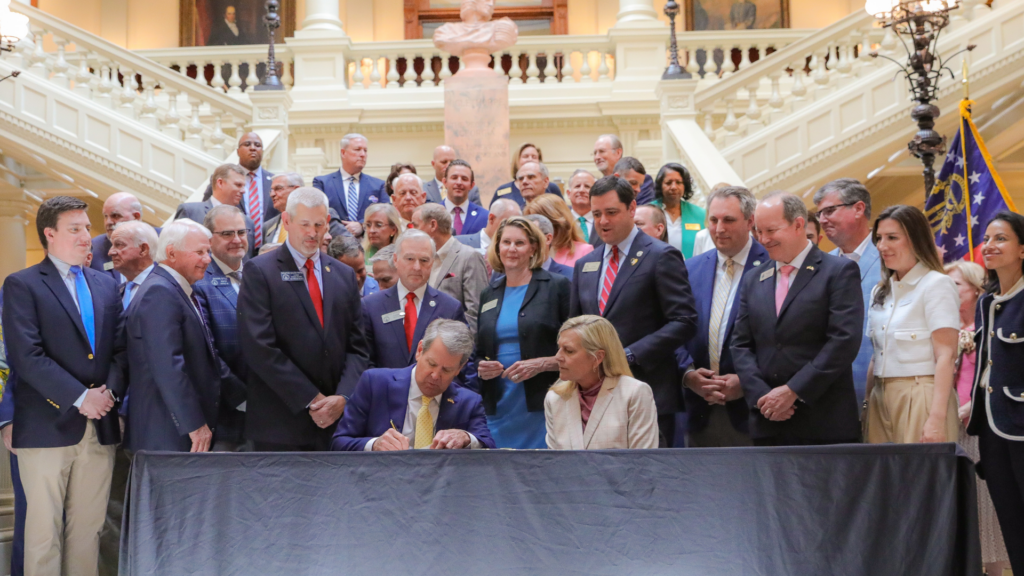
After a bill passes in Georgia’s House and Senate, it goes to the governor, who can sign it, veto it, or let it become law without a signature.
If the governor vetoes a bill, Georgia’s legislators can override that action, but only with a two-thirds majority in both chambers. To avoid a veto, lawmakers usually aim to pass legislation that reflects the governor’s policy priorities.
In 2026, Georgia’s legislature passed bills that created pathways for kids to take advanced math classes in earlier grades and to improve their reading skills. The bills aligned with Governor Kemp’s goal of increasing opportunities for Georgia students, and he signed them into law right after the legislative session ended.
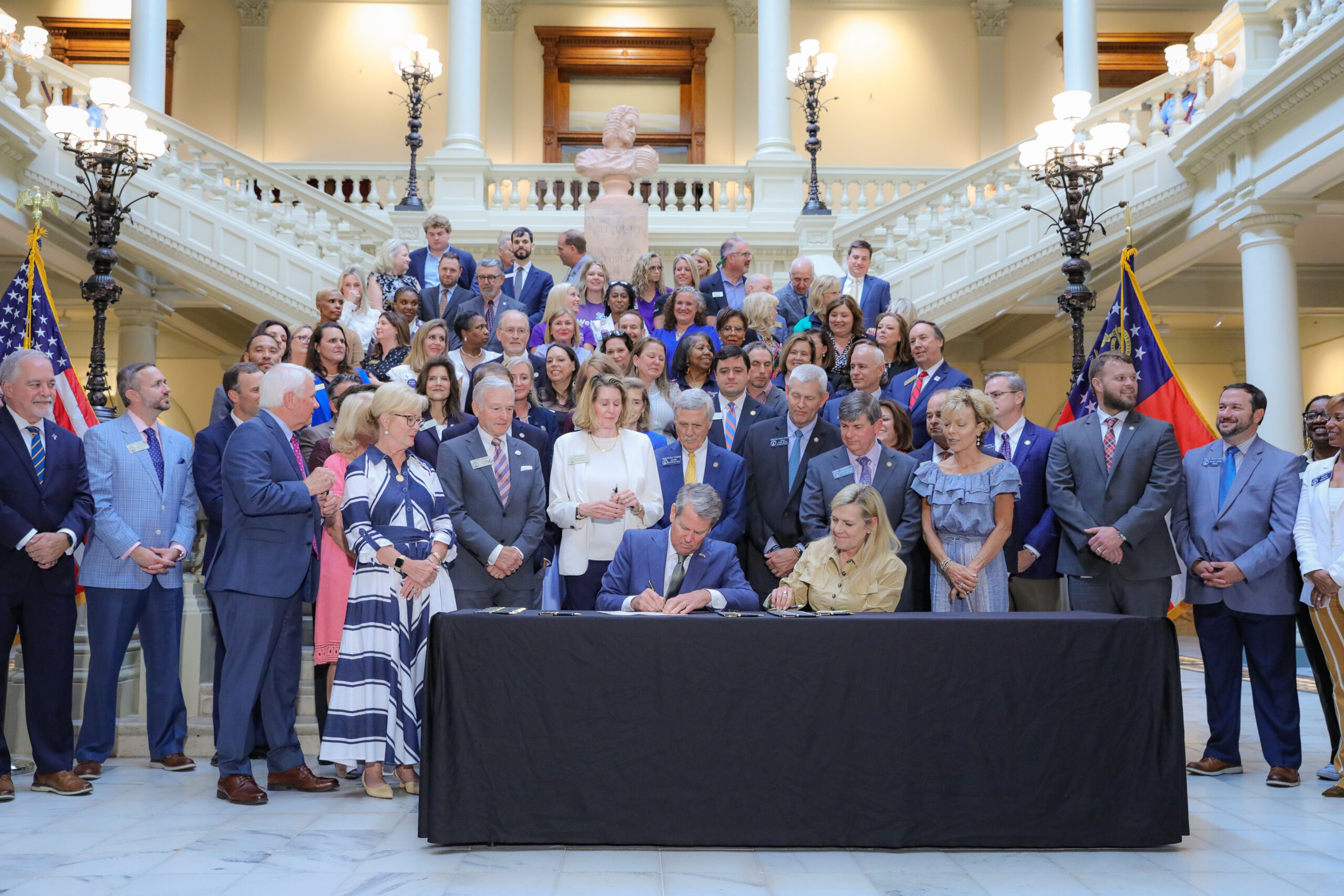
On May 5, 2026, Governor Brian Kemp signed nine bills to support reading, math education, and K-12 schools in Georgia.
Photo Credit: Office of the Governor Photo Gallery.
Every year, Georgia’s governor proposes a state budget that outlines how taxpayer dollars should be spent. Because the budget reflects the programs and services that will receive funding, it reveals the governor’s top priorities for the state.
The legislature revises and passes the budget, but the governor still has a final influential role. Before signing the budget into law, the governor can use a line-item veto to remove parts of the budget they don’t agree with while leaving the rest as is.
In May 2026, Governor Kemp signed House Bill 974, the state budget bill for the fiscal year starting July 1. The $36.6 billion budget directs most funding toward education, health care services, public safety, and economic growth—a clear signal of what the governor cares about. Before signing, Governor Kemp used his line-item veto authority, removing some expenses to keep the budget in balance after approving income tax cuts.
Government policies aren’t implemented in one big speech or one dramatic vote. Instead, they’re carried out every day by state agencies, boards, and commissions.
The governor appoints many of the heads of those administrative offices. They oversee daily operations in workforce development, child and family services, public safety, licensing, education administration, and programs that help low-income Georgians.
The governor steers welfare (safety net) policies, for example, by appointing the members of the Board of Human Services. The members establish the state’s goals for welfare programs like the Supplemental Nutrition Assistance Program (SNAP).
The governor has a powerful microphone: the annual “State of the State” address. At the beginning of the legislative session, the governor uses this speech to outline their priorities and encourage lawmakers to act on specific policies.
And when the governor elevates an issue—whether it’s education, workforce development, public safety, or taxes—it usually moves quickly from a policy idea to serious legislative action.
In his 2026 State of the State address, Governor Kemp proposed decreasing the state income tax to 4.99% to help Georgians keep more of what they earn. The legislature followed up by passing House Bill 463, which the governor signed into law.
The governor uses executive orders and emergency powers to quickly mobilize state resources when storms, wildfires, public safety threats, or other emergencies hit.
In April 2026, Governor Kemp declared a state of emergency for 91 counties in response to South Georgia wildfires and empowered state agencies to help affected residents and their families.
Georgians elect their governor through a direct popular vote. Unlike presidential elections, there isn’t an electoral college that casts deciding votes.
During primary elections, voters pick final candidates from each political party. Contenders have to earn at least 50% of the votes in the primary to win, so run-off elections are possible.
The same requirement applies in the general election. If no candidate earns more than half the votes, the top two competitors head to a run-off.
A candidate must:
Georgia governors have four-year terms and can serve up to two back-to-back terms. Former governors can run again after sitting out for at least one term.
The lieutenant governor is next in line for the job and serves until the next general election.
Georgians have elected Republican governors since 2003. Before then, Democratic governors had held the office continuously since 1872.
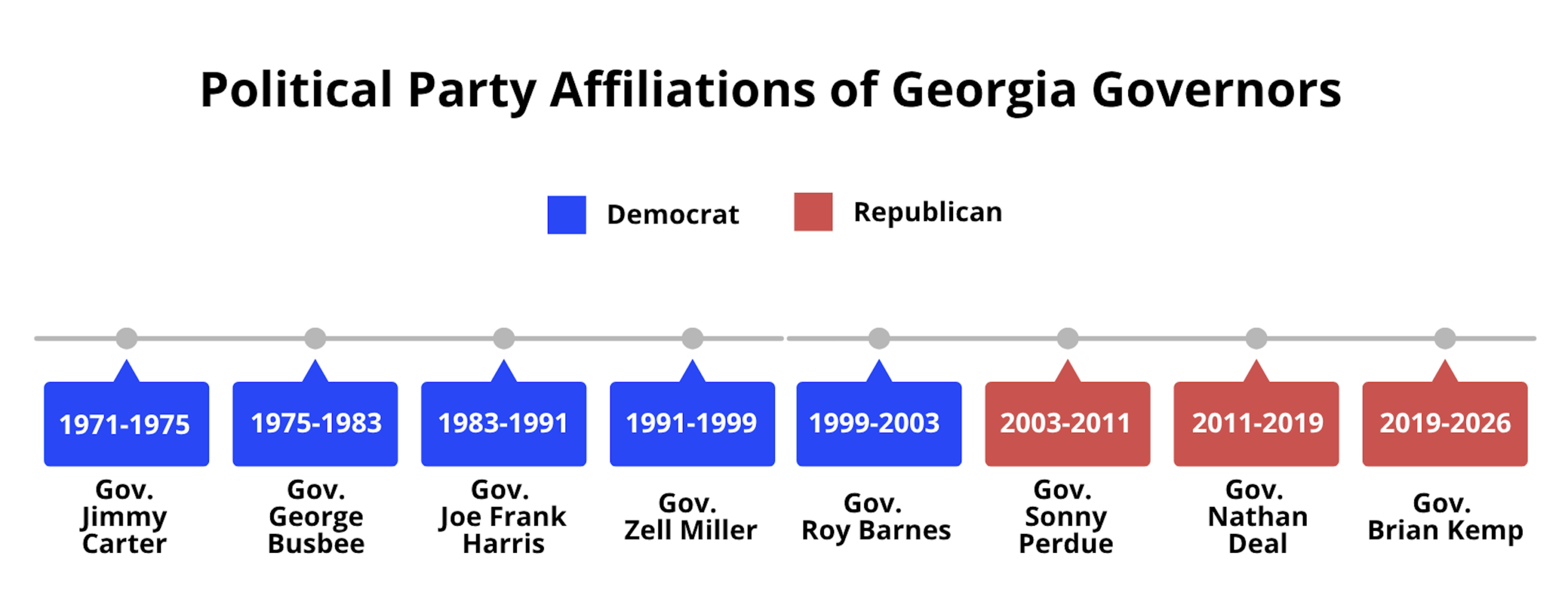
Source: Former Governors in Georgia, National Governors Association
The rising cost of living is one of the biggest concerns for Georgia families—and it’s become a major focus in the 2026 governor’s race. Key affordability issues include:
Beyond affordability, candidates are focusing on several other issues affecting families and communities across Georgia:
Welfare Reform: Contenders are thinking about how to lead the state in making big changes to welfare programs, including:
Education: To give Georgia’s children better pathways to academic success, candidates are debating on more school choice vouchers, increased public school funding, and new early childhood education options.
Public Safety: Competitors are prioritizing safety and security for Georgia communities by looking at ways to tackle gang activity, reform the juvenile justice system, and reduce repeat offenses.
Candidates know that more needs to be done to break down the economic and social barriers so many people are facing, and they’re making plans to take action if elected. But policymakers aren’t the only ones responsible.
Understanding the governor’s vital role and what they’ll do to meet the daily needs of Georgia families and neighborhoods can help voters guide meaningful change. By casting their ballots, Georgians can bring even more promise and prosperity to the state—making it a place where everyone has the chance to achieve their full potential and thrive.
2026 Polls: Georgia Governor
270 to Win
Keeping Vulnerable Americans on Track: One Door out of Poverty and into Opportunity
Alliance for Opportunity
What States Can Expect with the New SNAP Match: Options to Reduce State Error Rates
Alliance for Opportunity
Georgia Candidates for Governor Should Make Welfare Reform a Top Priority
Atlanta Journal-Constitution
Georgia Gubernatorial Election, 2026
Ballotpedia
Governor of Georgia
Ballotpedia
Lieutenant Governor of Georgia
Ballotpedia
Georgia 2026 Election: Here’s Who Will Be on the Ballot During May’s Governor, Senate Primaries
CBS News
Understanding Welfare Work Requirements: New Eligibility Rules for SNAP and Medicaid
Georgia Center for Opportunity
Organization of the Executive Branch
Georgia Public Broadcasting
What Does a Governor Do?
Georgia Public Broadcasting
Short Supply: How Many More Homes Does Georgia Need?
Georgia Public Policy Foundation
10 Races for Governor to Watch in 2026
NBC News
Governor’s Office
State of Georgia
Lieutenant Governor’s Office
State of Georgia
The Three Branches of Georgia’s State Government
State of Georgia
Image Credits: Canva; Governor’s Photographer, Georgia Office of the Governor