Media statement, in the news, Georgia news, ga news

PEACHTREE CORNERS, GA—The Georgia Center for Opportunity (GCO) offers its full support to the Stronger Workforce for America Act of 2026 and commends Congressman Tim Walberg, Chair of the House Committee on Education and Workforce, for introducing this significant legislation to reauthorize the Workforce Innovation and Opportunity Act.

GCO is a nonprofit, nonpartisan organization that focuses on ensuring access to quality education, fulfilling work, and healthy family lives through research, policy analysis, and community initiatives. We advance solutions that increase opportunity and give Georgia families a durable path out of poverty. We are also a founding member of the Alliance for Opportunity, a multi-state coalition focused on improving state-administered public assistance and workforce programs to help Americans achieve lasting opportunity and stability.

The Stronger Workforce for America Act aligns with our work and includes an invaluable option for state flexibility, the Make America Skilled Again Grants. These grants would allow 10 states to implement the One Door to Work model, which would empower them to integrate their safety net and workforce systems.

Utah has had this authority for nearly 30 years, after being grandfathered into the strategy. This has enabled Utah to provide its citizens with both support to meet their immediate needs and a clearer path into the workforce and toward self-sufficiency.

The results of Utah’s One Door policy are impressive. For example, the state has outpaced the national labor force participation (LFP) rate, or the number of working-age people employed or looking for a job, by an average of 5.3%. As of late 2025, Utah’s LFP rate was approximately 67.6%, one of the highest in the nation.

In contrast, Georgia’s LFP rate is 60.6%. Put another way, nearly 40% of Georgians, many of them prime-age men, who can work are choosing not to.

Eric Cochling, GCO’s Chief Program Officer and General Counsel, emphasized the detrimental impact of these statistics and the critical importance of work for a flourishing life:

“A good job offers more than just a paycheck. It provides purpose and stability and is one of the most durable ways to empower people to break the cycle of poverty.”

He also stressed the need for reform: “If we truly want to expand opportunity in Georgia and across the country, individual workforce and safety net programs must start functioning as a true system—one that’s designed to support human dignity and flourishing. The Stronger Workforce for America Act is a much-needed step in the right direction.”

Georgia policymakers are paying attention to the success of Utah’s integrated welfare and workforce system and are seeking opportunities like the Make America Skilled Again Grants to implement similar reforms that benefit both Georgians and the state economy.

As Buzz Brockway, GCO’s Vice President of Public Policy, said:

“The ability to link workforce and safety net systems is key to boosting Georgia’s current trajectory as a leader in economic opportunity. The Make America Skilled Again Grants included in the Stronger Workforce for America Act would give Georgia’s leaders a powerful way to strengthen families, expand the workforce, and set the state on a path to more rapid growth.”

Randy Hicks, GCO’s President and CEO, added:

“Every state deserves the ability to design an integrated system that enables people to thrive. Right now, every wasted hour navigating disconnected programs is an hour that could have been spent building a better future. This bill ensures that states can rethink the status quo and create pathways to opportunity for every citizen.”

Through the changes it proposes, the Stronger Workforce for America Act of 2026 is poised to make meaningful welfare and workforce reforms possible in Georgia, and GCO strongly urges its enactment.

###

Georgia Center for Opportunity (GCO) is independent, non-partisan, and solutions-focused. Our team is dedicated to creating durable paths out of poverty for families in Georgia and beyond. To achieve our mission, we research ways to help remove barriers to opportunity and promote our solutions to policymakers and the public so that public policy and civil society can effectively and innovatively strengthen family stability, economic mobility, and child opportunity in the communities where lives are lived. 

Send media inquiries to:

Rebecca PrimisGeorgia Center for Opportunity
RebeccaP@foropportunity.org 

Top 2026 issues for Georgia lawmakers and citizens include welfare, cost of living, education, and crime.

Key Points

  • In 2026, Georgia voters will elect key political leaders who will have the ability to remove barriers and open doors to better futures for the state’s residents. 
  • Top concerns for both lawmakers and citizens include welfare reform, the cost of living, educational opportunities, and public safety. 
  • Proposed policies and reforms will help lift many Georgians above the poverty line and provide clearer pathways to upward mobility and thriving communities.

Opportunities to drive progress and hope will greet Georgians in 2026. Critical issues will dominate the legislative agenda, and top governmental positions will be up for election.

The well-being of many Georgians, their families, and their communities is at stake as pressing concerns like welfare reform, the cost of living, educational opportunities, and public safety take center stage in political discussions. These issues involve significant challenges, but policymakers are working to find promising solutions that will enable people across the state to flourish.
Electing leaders to fill key political offices

Georgians will elect new officials for the state’s top posts in 2026. The primary election will take place on May 19, and the general election is scheduled for November 3.

The roles of both the governor and lieutenant governor will be on the ballot. Georgia’s current governor, Brian Kemp, isn’t eligible to run again because he’s reached his term limit, so several candidates are competing for the position, including Lieutenant Governor Burt Jones. 

Georgians will also vote on one of the state’s U.S. senatorial positions—Senator Jon Ossoff currently holds the post. All of Georgia’s seats in the U.S. House of Representatives will be up for election as well.

These political races are pivotal because the elected officials will have the power to remove barriers and open more doors to opportunity for the state’s residents.

Reforming Georgia’s public assistance programs and creating a pathway out of poverty

The candidates running for office will likely take positions on ways to reform government assistance (welfare or safety net) programs in Georgia. This should be a top priority because about 13.5% of the state’s population is currently living in poverty

One of the main concerns about the welfare system is that it isn’t helping to lift people above the poverty line or empowering them to become self-sufficient. Instead, the complexities and regulations in the system tend to trap people in long-term cycles of poverty that affect families for generations.

To make real change, Georgia’s top lawmakers need to focus on streamlining the state’s welfare system and integrating it with workforce development programs. This strategy, called the One Door model, connects recipients of government benefits with one caseworker who not only helps them meet their immediate needs but also provides resources to support them in finding a rewarding job.

In Georgia, around 28% of prime-age (25-54) adults aren’t working, and disengagement from work is one of the primary reasons people seek public assistance. Developing a One Door strategy in Georgia will help these individuals become self-sufficient and also enable them to experience the sense of dignity and purpose meaningful work provides.

Georgia’s political leaders can take steps toward implementing a One Door model by advocating for federal authorization to do so. At the state level, they can also establish a task force to explore ways to connect and improve Georgia’s public assistance and workforce programs.

A reform called the One Door model would allow Georgia to connect more welfare recipients to meaningful work and economic opportunity. 

Making life more affordable in Georgia

Many low- and middle-income families in Georgia are struggling to cover the basic costs of living, as prices for just about everything seem to be rising. The increasing costs add extra hardship to the numerous barriers that already impact people’s well-being. But Georgia’s policymakers have opportunities to make some things more affordable for the state’s residents.

  • Housing shortages and costs: At least 94 of Georgia’s 159 counties don’t have enough housing for their residents. The shortage is driving up prices and making affordable homes hard to come by. Builders want to construct more houses, but they face restrictive regulations regarding land use and infrastructure, including roads and water lines. Local policymakers can address the issue by allowing greater flexibility in lot sizes and housing types. Doing so will bring more affordable homes to the market, and that will reduce rent and mortgage payments and free up income to cover other necessities.

  • State income taxes: Georgia’s state income tax is set to drop to 4.99% in January 2027, but some lawmakers want to eliminate it completely. For many Georgians, every dollar matters, and doing away with the tax would allow them to keep more of their income in their own pockets. State leaders are considering eliminating corporate tax breaks to offset the potential loss in government revenue from income taxes. But it’s important to note that they could also raise the sales tax to recoup the state’s lost revenue. That could leave lower-income families worse off because essential goods would cost them more.

Creating an educational system that meets the needs of every child

In 2026, Georgia lawmakers will continue their efforts to develop an educational system that honors every child’s unique situation and needs.

Several education-related bills that carried over from 2025 will likely be up for consideration in the Georgia General Assembly.

  • Senate Bills 124 and 152: These bills will expand eligibility for Promise Scholarship accounts to students with a parent who’s an active-duty military service member stationed in Georgia and to biological or adopted children of foster parents. The bills will help support more families who want to consider alternative education options for their children

  • Senate Bill 171: This bill will require Georgia’s Board of Education to develop an advanced math pathway for students in grades 3-8. The program will prepare students to take higher-level math classes in middle school and ultimately to pursue careers in science, technology, engineering, and math (STEM). The opportunity will pave the way to brighter futures and upward mobility for participating students, and particularly for young African Americans, Hispanics, and girls who haven’t traditionally received significant STEM education.

  • House Bill 917: This bill will provide open enrollment processes for students who want to transfer between local school systems or from one school to another within a school system. This will enable students to attend the school that’s the right fit for them, regardless of where they live.

Charter school funding will also be on policymakers’ radar. In 2025, the Georgia Senate created the Study Committee on Funding for Charter School Capital Improvements. The committee was tasked with reviewing current funding processes for public schools, examining the differences in capital funding between charter and public schools, and analyzing the challenges charter schools face in getting funding. Georgia’s leaders will likely use the study’s findings to make sure charter schools have equal access to capital improvement funds so they can continue to offer alternate educational options for families. 

Prioritizing neighborhood safety and reducing crime

Public safety is a top concern for Georgians, and especially for those living in impoverished communities. High crime rates lead to losses in property value, community resources, business activity, and job opportunities—all making it increasingly difficult for people to escape poverty.

Among several public safety bills, Georgia lawmakers will likely consider two that were drafted during the 2025 session.

  • Cognitive behavioral therapy (CBT) for juveniles: The first bill will enable greater use of CBT with young people who get arrested, even those who are non-violent or have minor convictions. CBT teaches participants to look at the relationship between their thoughts, feelings, and behaviors and helps them respond to challenging situations more effectively. Studies show that CBT programs can reduce recidivism by an impactful 25%. They also set participants on a path toward healing and growth, which will, in turn, help their communities flourish.

  • Support for local law enforcement agencies: The second bill will create grants for local law enforcement agencies to assist them in solving more violent crimes. Local departments can use the funds to improve investigations, enhance the technology and data systems officers use, and support victims and families. The resources will also help authorities deter future crime and boost community safety and resiliency.

Taking action to transform lives and communities

Georgia’s policymakers know that more needs to be done to break down the social and economic barriers so many people are facing, and they’re taking action. But this responsibility doesn’t lie with government leaders alone.

Georgia residents should pay close attention to the issues lawmakers discuss, but also to the needs of their families and communities. They can then use what they learn, along with their voices and votes, to create real change. 

In doing so, Georgians will bring even greater promise and prosperity to the state—making it a place where everyone has the opportunity to achieve their full potential and thrive.

Additional resources

Alliance for Opportunity applauds introduction of the House “One Door to Work” Act
Alliance for Opportunity

How do we know the One Door model works?
Alliance for Opportunity

Georgia candidates for governor should make welfare reform a top priority
Atlanta Journal-Constitution

Georgia lawmakers explore plan to eliminate state income tax
CBS News

A better way to get welfare recipients back into the labor force
City Journal

How Georgia can fix its housing shortage
Dalton Daily Citizen

The Georgia Promise Scholarship (SB 233): questions and answers
Georgia Center for Opportunity

How many adults aren’t working in Georgia communities?
Georgia Center for Opportunity

National poverty rate fails to capture the problem of poverty concentration in Georgia and beyond
Georgia Center for Opportunity

The One Door model: a solution to improve economic opportunity for safety net participants
Georgia Center for Opportunity

Reducing crime in Atlanta
Georgia Center for Opportunity

What Georgia can learn from other states about fixing welfare
Georgia Center for Opportunity

Short supply: How many more homes does Georgia need?
Georgia Public Policy Foundation

The safety net “system” that isn’t
Governing

Unlocking opportunity – how Pelican Institute brought “One Door” to Louisiana
Pelican Institute for Public Policy

Image Credit: Canva

Parental love helps children gain the emotional health, behavioral skills, and academic success that unlocks social mobility.

The Georgia Center for Opportunity (GCO) is pleased to welcome two new team members, Mariah Thomas and Angelique Valentine. They will be program specialists for our BETTER WORK initiative.

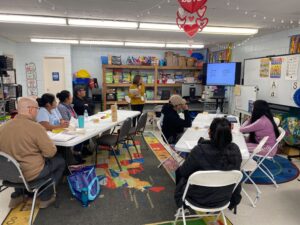
BETTER WORK empowers communities to be the first line of assistance for local residents experiencing poverty and unemployment. The initiative brings together employers, nonprofits, and local organizations, creating a community support system that prepares people for work and helps them connect with local job opportunities.

BETTER WORK goes far beyond helping people to provide for their families financially. It encourages individuals to recognize their full potential and reconnect with work as a key source of dignity, purpose, and belonging in their lives.

In their roles, Mariah and Angelique are the first point of contact for BETTER WORK clients—many of whom have experienced significant bias and struggle to trust others. Because of this, Mariah and Angelique prioritize clear communication; consistent follow-through; transparency; and a strong, supportive presence.

Mariah and Angelique guide new clients through the BETTER WORK program, lead interview training to boost confidence, and manage volunteer support. One of the most impactful parts of their roles is meeting with clients one-on-one for career assessments, resume help, and mock interviews. Through these responsibilities, Mariah and Angelique are helping people take meaningful steps toward a better future. 

“Together, Mariah’s and Angelique’s combined strengths will make them highly effective in supporting our clients with their job search needs. They draw on their unique life experiences to empathize deeply with clients and understand the challenges they face while seeking employment,” said Kristin Barker, Vice President of Workforce Solutions at GCO. “We can anticipate more successful interviews and new hires, as clients feel genuinely heard and receive training that aligns more closely with employers’ needs.”

Mariah and Angelique each bring personal experiences and professional passion that make their positions at GCO especially meaningful to them.  As a former human resources specialist for the city of Columbus, Georgia, Mariah has a firsthand understanding of people who aren’t typically given another chance after facing life’s twists and turns.

“Every person on this earth deserves a second chance, regardless of their background and circumstances,” said Mariah. “The GCO team strives to understand the needs of our community and works to find creative and practical solutions to correct the unfortunate realities that exist.”

Angelique has a unique perspective as a former participant in BETTER WORK’s Jobs for Life class, which helps students learn job skills, build positive mindsets around work, and form community relationships. During the class, Angelique discovered GCO’s commitment to the community and those who simply need a chance. In her new role, Angelique now has the opportunity to connect with people who feel misunderstood and yearn to make a difference.

“GCO is focused on the deeper issues. By addressing things like employment, education, and family support, they help create real, lasting change. It strengthens families, neighborhoods, and even future generations,” said Angelique.

Learn more about how we’re expanding opportunities for work in Georgia communities:

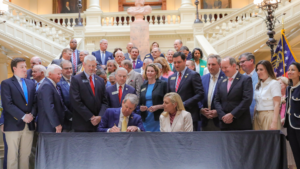
Georgia lawmakers passed bills affecting schooling, work, and family opportunities in 2025.

Georgia lawmakers wrapped up the 2025 legislative session with some big decisions that affect our state’s families, students, and workers.

Several new laws were passed to improve education, job opportunities, and access to childcare — while a few important changes didn’t quite make it through.

“The 2025 session included some key victories to improve public school classrooms, expand school choice options, and improve workforce opportunities,” said Buzz Brockway, vice president of policy for GCO. “While there were some disappointments on bills that didn’t make it across the finish line, we are pleased with the progress lawmakers made this year in promoting an agenda to allow all Georgians to flourish.”

What Passed: New Georgia Laws in 2025

These bills passed out of both the House of Representatives and the Senate and are headed to the governor for signing. 

House Bill 340: Less phone distraction, more student engagement

K-8 classrooms now face stricter limits on student cell phone use during school hours. The goal of this policy is to cut down on distractions and help kids stay engaged in the classroom.

Senate Bill 82: More support for charter schools

With this legislation, local boards of education must reconsider denied charter petitions and provide detailed explanations for their decisions. To incentivize approvals, schools receiving charters are eligible for grants of $250,000 a year for three years to help them get started.

House Bill 307 and Senate Bill 93: Helping kids read better

Two bills aimed to boost reading skills among Georgia students. HB 307 updates dyslexia screening and interventions and improves statewide coordination to help at-risk students earlier. SB 93 makes sure future teachers are trained in proven methods to teach reading. State-approved educator preparation programs must align their core curricula with the science of reading—a move that aims to enhance literacy instruction by prioritizing evidence-based methods.

House Bill 136: Bigger tax break for child care

Families can now get a larger credit on their state taxes (up to 40% of the federal tax credit) for expenses related to child and dependent care. By allowing Georgia families to subtract more child care expenses from their annual taxes, this measure eases the financial burden on working families across the states.

House Bill 579: Simplifying licensing for businesses and trades

HB 579 makes it simpler and faster to get professional, business, or trade licenses in Georgia, reducing paperwork, red tape, and other barriers getting in the way of people looking for steady work.

Senate Bill 63: Free college prep tests for homeschoolers

SB 63 mandates that homeschool students in Georgia must have free access to take AP, SAT, and PSAT exams at their local public schools. Improving access to testing for  all students helps level the playing field for college readiness.

​​What Didn’t Pass (But Could Still Come Back) 

Despite these successes, some significant bills were left on the table when the legislative session abruptly adjourned early.

Senate Bill 207: Second chance for job-seekers with a criminal record 

This measure would have helped people with past criminal records get job licenses more easily.  A simpler, fairer process gives returning citizens better opportunities to rejoin  the workforce and build stable livelihoods and futures. However, due to legislative discord, the bill didn’t get a final vote. 

House Resolution 884: Making Georgia’s welfare programs work better 

This proposal sought to create a task force to streamline safety net and workforce development systems in Georgia. It was shelved due to disagreements, but it’s on the radar for next year’s session. Connecting welfare and workforce programs should be an immediate priority because it’s one of Georgia’s best opportunities to remove barriers to work and upward mobility for more people. 

Image Credit: Canva

Subscribe

* indicates required

Subscribe

* indicates required