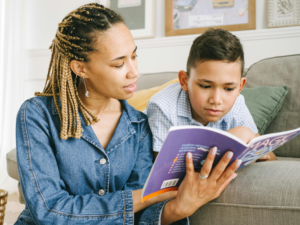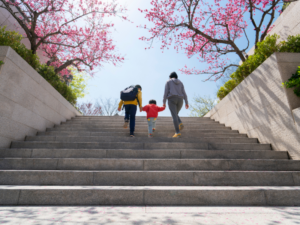
Mother walking students to a local public school.

Key Points

  • Public school transfers are an education option that allows parents to move their child to a public school they’re not zoned for (as long as the school has space). 
  • Georgia currently allows public school transfers within a student’s district but not outside of it. 
  • Parents must apply for a public school transfer. Scroll down to find out how to check with your local school district for availability and application deadlines.

Public school transfers explained

Public school transfers, also referred to as open enrollment for public schools, allow parents to move their student to a different public school than the one they’re zoned for. 

This is a great option for states to provide because it increases flexibility within the public school system—something parents increasingly want. The majority of Georgia students (84%) attend public school, so transfers empower more parents to choose the public school environment that’s right for their child.

Public school transfers available in Georgia

  • Allowed: Transfers within assigned school districts. Georgia offers restricted public school transfers. Families can send their child to any school within their assigned local district as long as that school has space and has been operating for at least four years. This option is known as an “intra-district transfer.” 

  • Not yet allowed: Transfers outside of assigned school districts. Another type of public school transfer, called an “inter-district transfer,” permits students to switch to a public school outside of the district they’re zoned for. This option isn’t allowed in Georgia yet. Georgia lawmakers would need to pass a bill to make it available to families.

How Georgia’s public school transfers work

Parents must contact their local school system to see which schools will accept transfers and for which grades. The Georgia Department of Education provides a database of public school contact information

Each school system is required to notify parents by July 1 about which schools have space, and many systems post this information on their websites before that date. Most districts only allow transfers at the beginning of the school year, but all can choose to accept students throughout the year. 

Parents must then apply for a transfer through their district’s website, at the district office, or at the local school. If more students apply than space is available, some school systems will make decisions on a first-come, first-served basis. Others will hold a random lottery.

Eligibility requirements

  • A student must be enrolled in a public school in Georgia. 

School options

  • Transfers open up access to other public schools within a student’s school district. 
  • Transfers don’t apply to public schools outside a student’s assigned district. They also don’t apply to non-public schools. 
  • A student who transfers to another public school may continue to attend that school until they’ve completed all grades at the school.

Cost to families

  • School systems can’t charge tuition for students transferring within their district. 
  • Transportation is the parents’ or guardians’ responsibility. 

Five application guidelines to follow:

1. Contact your local school system to see which schools accept transfers and in which grades.

2. Check your school system’s website by July 1. Each system is required to notify parents annually about which schools have space available. State law requires school systems to post this information by July 1, but it’s often available earlier, so consider checking the website as early as April or May.

3. Access the transfer application on your district’s website, at the district office, or at your local school and complete the application (note: some school systems require parents to do this in person at the district office).

4. Application periods can be as short as one to two weeks. For many districts, this application window opens in June or July. In other areas, it can open as early as January. Get in touch with your district or check its website early and often so you don’t miss any deadlines.

5. The school system will notify parents about whether their transfer request was accepted or denied. If more students apply than space is available, school systems will make decisions on a first-come, first-served basis or through a random lottery. 

How Georgia can expand public school options 

Georgia lawmakers could expand opportunities in the public school system by removing all restrictions on open enrollment and allowing both inter-district and intra-district transfers. 

Parents with children in schools across the country are widely in favor of reforms like this. Polling from June 2025 by EdChoice-Morning Consult showed that 78% of parents nationwide—regardless of their political affiliation—support open enrollment.

To set up a successful transfer program, Georgia could look to many other states’ examples. In 2025, the Reason Foundation reported that policymakers in 24 states introduced at least 54 bills that focused on open enrollment, providing more evidence of the strong interest in these policies.

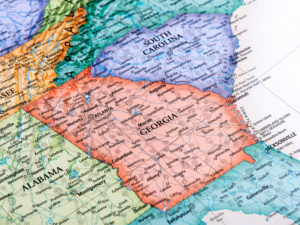
Of Georgia’s neighbors, Florida offers the broadest transfer opportunities to students and their families. The state passed a law in 2016 allowing state-wide open enrollment and required all districts to participate. Through the program, students can transfer from the school they’re zoned for to any public school that has space in their grade level. These transfers allow Florida students to attend the school that’s the best fit for them. They also enable parents to send their children to schools near their jobs, which helps lift barriers to rewarding work.

South Carolina followed suit in 2025 when it passed a bill requiring school districts to implement an inter-district transfer policy once the state’s Department of Education issues guidelines. Intra-district transfers have already been allowed there for some time.

The open enrollment policies in other nearby states vary:

  • Tennessee: The state currently allows intra-district transfers.
  • Alabama: Open enrollment is limited and voluntary for school districts. 
  • North Carolina: There is no statewide policy on open enrollment.

To better position Georgia as a leader in education choice, state lawmakers are paying attention to advances in open enrollment like those in Florida and South Carolina.

In Georgia’s 2026 legislative session, the House of Representatives is considering a bill (HB 917) that would significantly expand current intra-district transfer options and also provide inter-district transfer options for Georgia students. 

If the bill becomes law, the state will be able to provide families with more educational opportunities and, ultimately, an educational system that better serves every child’s unique situation and needs.

Man sitting with his hands folded

Key Points

  • Indiana passed a scholarship program that will allow any family below 400% of the amount required to qualify for the federal free and reduced-price lunch program to access education scholarships.
  • South Carolina expanded their scholarship program with similar guidelines to those in Indiana.
  • Georgia failed to pass a transformative education scholarship program that would have positively impacted the lowest performing communities in the state.

The year isn’t even halfway over, and six states have already enacted laws that create universal educational access for all students in 2023.

In total, Iowa, Utah, Arkansas, Florida, and now South Carolina and Indiana have enacted either universal—or nearly universal—educational opportunity this year. That’s on top of Arizona and West Virginia, which did so in 2021 or 2022.

Each state has its own version of a scholarship or educational savings account that the state funds for children’s needs outside of traditional public school. For example, these types of accounts send a portion of each student’s public school dollars to allow the child to attend a private school of their family’s choice. In some cases, families who choose to homeschool their children can use the funds for educational expenses.


Indiana

Indiana is the most recent state to join that list. That state’s scholarship program will now be available to any family below 400% of the amount required to qualify for the federal free and reduced-price lunch program. That translates to a salary of around $222,000 a year for a family of four. 

Previously, requirements were in place that further limited the program, such as it only being open to families with students previously enrolled in a public school or to children in the foster care system. Under the new law, only an estimated 3.5% of Indiana’s families won’t qualify for this option.


The Georgia Center for Opportunity led a state-wide campaign to educate parents and legislators on the positive impact that choice brings to public education.

The Georgia Center for Opportunity led a state-wide campaign to educate parents and legislators on the positive impact that choice brings to public education.

South Carolina

Meanwhile, South Carolina governor Henry McMaster recently signed a bill into law that eventually expands that state’s scholarship program to families at or below 200% of F&R priced lunch as well. The program is more limited in scope than Indiana’s. It will only be available to 5,000 students the first year, 10,000 the second year, and 15,000 students the third year.

South Carolina’s program allows for the establishment of Educational Scholarship Trust Funds. Funds deposited in these accounts can be used not only for expanded school choice, but may also be used for special needs therapies, such as physical therapy, speech therapy, and occupational therapy. Tutors and transportation may also be included for families caring for special needs students. 

So, what happened in Georgia?

If the Georgia Legislative Session had passed Senate Bill 233, also known as the Georgia Promise Scholarship Act, it would have put $6,500 per student back into parents’ pockets so they could fund the best educational approaches for their children. The funds would have been eligible for use as private school tuition and public school alternatives, such as homeschooling. 

According to the Georgia Department of Education, families who qualified would have had students enrolled into the lower 25% of schools in Georgia. This amounted to roughly 400,000 students. 

SB 233 was a strong bill, passing the Senate with unanimous Republican support and going on to the House. Despite receiving no support from Senate Democrats, it’s excellent news that the bill made it so far through legislative proceedings. 

The House vote proved to be tougher, with bipartisan representatives voting against it. Rep. Mesha Mainor of Atlanta was the lone Democrat in the House to vote in favor. On its final day of session, SB 233 was only six votes short of the 91 it needed to pass. 

The good news is that the Georgia Promise Scholarship Act is eligible for reconsideration during the 2024 legislative session. 

Looking to what’s next

Public schools are not the problem. We love and support public schools—they will remain the right and best choice for the vast majority of Georgia families. But we can love, support, and move public schools forward while expanding education into new areas.

Public education is a foundational and vital part of the success of American society, but an increasing number of families are looking toward alternatives—and their choices are just as valid. We must work to deliver quality education to all students, which means finding ways to support families who take a different schooling path. While many will access their education through public schools, not all kids are a perfect fit for that system, and they cannot be left behind.

Black History Month School Choice

Key Points

  • Access to quality education is a top conversation in Georgia and many other states and has been for decades.
  • Stories of black educators offer inspiration for continuing to pursue better education opportunities for every kid. 
  • The examples set by African American educators remind us how critical education is for supporting kids’ mental health, preparing them for jobs, and helping them become active citizens in their communities.

No matter what chapter of history you look at, education is often one of the top issues that states and communities have wrestled with. Even today, Georgia is grappling with the reality that thousands of kids are stuck in underperforming schools, and change is needed if we are going to give them a chance to thrive. 

As we celebrate Black History Month this February, it’s a perfect time to look to the African American community for inspiration on the issue of education. Having suffered obstacles ranging from zero education access to segregation and racism in schools, numerous African Americans throughout our country’s history know firsthand the struggle—and the gift—that education can be. Many have dedicated themselves to the cause of education, driven by a shared passion and vision for giving every kid a quality education, regardless of their race or circumstance of their birth. 

Let’s meet a few of these leaders who dedicated their lives to fighting for more educational freedom and opportunity.   

  1. Charlotte Forten Grimké (1837-1914)

Charlotte Forten Grimké grew up in Philadelphia in a family well-known for its activism against slavery. In her early school years, she was taught at home by tutors. Because Philadelphia’s school system was segregated, Charlotte’s parents sent her to Salem, Massachusetts, where she could attend a more progressive school that accepted Black students. As an adult, Charlotte paid the opportunity of education forward. She attended teacher training school, and during the Civil War, she was the first Black teacher to work at the Penn School in South Carolina, a school established to teach African-American children both while they were enslaved and after they were freed. After the war, Charlotte worked for the Freedmen’s Union Commission and the U.S. Treasury Department to help recruit and train more African-American teachers. 


May those whose holy task it is,

To guide impulsive youth,

Fail not to cherish in their souls

A reverence for truth;

For teachings which the lips impart

Must have their source within the heart.

– From The Journal of Charlotte Forten, 1853

    1. Fanny Jackson Coppin (1837-1913)

    Fanny Jackson Coppin was born into slavery and was not freed until age 12. For the rest of her young adult years, she worked as a servant for author George Henry Calvert in Newport, Rhode Island. Fanny yearned for education, so she used her earnings to employ a tutor for about three hours a week. Thanks to her academic diligence and financial help from an aunt and the local African Methodist Church, Fanny entered Oberlin College, Ohio, which was the first college in the United States to enroll both black and female students. 

    It was at Oberlin College that Fanny embarked on her career as an educator—a vocation that would create learning opportunities for thousands of African Americans. While a student at Oberlin, she taught a free night class for African Americans in reading and writing. The College also appointed her to teach classes at their preparatory division, the Oberlin Academy, making Fanny the first black teacher among the Academy’s faculty. After graduating with her bachelor’s degree in 1865, becoming one of only three African American women to do so, she accepted a position at Philadelphia’s Institute for Colored Youth. Over the course of her career, Fanny would become the first African American woman to serve as a school principal and to fill the role of superintendent of a United States school district. 


    “I feel sometimes like a person to whom in childhood was entrusted some sacred flame…This is the desire to see my race lifted out of the mire of ignorance, weakness and degradation; no longer to sit in obscure corners and devour the scraps of knowledge which his superiors flung at him. I want to see him crowned with strength and dignity; adorned with the enduring grace of intellectual attainments.” – Fanny Jackson Coppin, writing to Frederick Douglass in 1876

    1. Inez Beverly Prosser (1895-1934)

    Inez Beverly Prosser was born into a family that highly valued education. Opportunities were scarce for African American kids during Inez’s childhood, and her family moved often in search of the best education available for Inez and her 10 siblings. Inez’s schooling led her to earn a teaching certificate, a bachelor’s degree, and a master’s degree in educational psychology. 

    Inez had a deep passion for education and believed in its power to change lives. She held various roles as a teacher and assistant principal in segregated schools, but her interest in psychology set her apart from other educators. She devoted herself to understanding and improving the educational and psychological development of African American students. In 1933, she became one of the first black women to earn a PhD in psychology. Her research undertook a pioneering and bold examination of segregation’s impact on black students’ social, psychological, and educational development. Findings and arguments from her dissertation were cited in the larger debate about school segregation, carving out a legacy for Inez as one of the leading advocates for the educational and mental health of African American kids.  


    “I am interested in that type of research which will lead to better teaching in elementary and high schools.” – Inez Beverly Prosser

    “Many have dedicated themselves to the cause of education, driven by a shared passion and vision for giving every kid a quality education, regardless of their race or circumstance of their birth.”

    “Many have dedicated themselves to the cause of education, driven by a shared passion and vision for giving every kid a quality education, regardless of their race or circumstance of their birth.”

    1. Kelly Miller (1863-1939) 

    From his early school days, Kelly Miller showed a talent for math. After an impressive academic career spanning the study of math, sociology, Latin, and Greek, Kelly received a bachelor’s degree from Howard University. He became the first black man to be accepted into Johns Hopkins University for post-graduate work in mathematics, physics, and astronomy. 

    However, Kelly was forced to leave Johns Hopkins when the school increased its fees, and he returned to Howard University where he took a teaching job and continued his own education, earning advanced degrees in math and law. In 1907, Kelly became the dean of the College of Arts and Sciences at Howard. His passion for education motivated him to modernize the College’s curriculum and to tour states across the South in recruitment of new students. Under his leadership, enrollment tripled, and curriculum improved. 

    “The instruction which you have received here, and upon which your diplomas set a seal, will be of value to you only in so far as you digest and assimilate it, and wisely adapt it to the tasks which lie before you.” — Kelly Miller

    1. Nannie Helen Burroughs (1879-1961)

    Nannie Helen Burroughs was born in Virginia, and after her father’s death, she moved to Washington, D.C., with her mother where she completed high school and graduated with honors. While Nannie’s career began with roles in secretarial and bookkeeping work, education would eventually become her focus. 

    Her mark in education was a unique one: Nannie wanted to help poor, working African American women. She believed that these women should have opportunities to learn skills beyond domestic work, so in 1909, she founded the National Training School for Women and Girls in partnership with the National Baptist Convention and through the support of small donations from the black community. The school provided job training and academic instruction to young black women, giving them the option to enter the workforce and pursue careers. The school was one of the first of its kind in the early 20th century, and Nannie served as its president until her death in 1961. 


    “To struggle and battle and overcome and absolutely defeat every force designed against us is the only way to achieve.” — Nannie Helen Burroughs

    1. Esau Jenkins (1910-1972) 

    Esau Jenkins was a shining example of how community members can contribute to improving education for underserved kids. Having grown up in the era of segregation, Esau knew what it was like not to have access to educational opportunities. If he had anything to do with it, the kids in his South Carolina community would not have to suffer the same injustice. 

    So, Esau and his wife used part of their income to buy a bus to transport their own kids and fellow children on South Carolina’s Sea Islands to schools in Charleston. Esau also used his bus to help adult workers get to their jobs. During these rides, he and his wife would teach the workers about the U.S. Constitution and other information that was required to pass literacy exams and become a registered voter. This experience showed Esau that a better approach to adult education was desperately needed, and he founded the first Citizenship School on Johns Island to provide more structured education for adults, including instruction in basic literacy and politics. Thanks to his efforts, thousands of African Americans became registered voters. 

    Even while supporting adult education, Esau’s motivation to help kids did not falter. In 1951, Esau played a key role in establishing Haut Gap School on Johns Island so that the youth in that community would have a quality education option. Today, Haut Gap is a middle school that functions as a magnet school—a type of public school option that specializes in certain curriculum areas, such as STEM (Science, Technology, Engineering, and Math), the arts, or vocational training.


    “It takes a pretty large person to love. Any small person can hate.” – Esau Jenkins


    1. Septima Poinsette Clark (1898-1987) 

    Septima Poinsette Clark’s legacy was that of a community teacher. Septima grew up in Charleston, South Carolina—a place where the lines of segregation and class were strictly and harshly drawn, especially when it came to education. Septima was a bright student. After sixth grade, she tested directly into ninth grade at the Avery Institute and graduated from high school in 1916. Financial constraints prevented her from attending college, but even without a degree, she passed the state examination that allowed her to teach. 

    Charleston did not allow African Americans to teach in its public schools, so Septima took a teaching job in the rural community of Johns Island just outside of Charleston. Throughout her 40 years as an educator, Septima had various jobs where she would teach children during the day. At night, on her own time, she would teach African American adults how to read and write and, in the process, she developed several innovative methods to help them pick up these skills more quickly. Septima believed that literacy and citizenship went hand-in-hand, so as she taught basic literacy skills, she also helped adults learn about their rights and become informed, registered voters. Through her work, she became an influential civil rights leader and activist, known as “The Mother of the Movement” by Dr. Martin Luther King, Jr., and many others. 


    “What we are working for is an educational program that has become a resource and rallying point for scores of brave southerners who are leading the fight for justice and better race relations in these crucial days.”

    COVID-19 Makes the Case for

    Educational Flexibility Even Stronger

    By Benjamin Scafidi 

    With respect to school openings during this COVID-19 pandemic, a public health professor recently observed, “There are no ideal solutions here. No matter what schools do, they won’t make everyone happy.” Of course, that is true in the monolithic K-12 education system we have now.  But we can move away from a monolithic system. We can move to a system that empowers parents with more choices.

    Calls for giving families choice in K-12 education go back to Thomas Paine in the Rights of Man, John Stuart Mill in On Liberty, and—the modern father of choice in education—Milton Friedman. Instead of giving government exclusive control over taxpayer funds for the education of youth, Paine, Mill, and Friedman suggested that taxpayer funds should go directly to families of school-aged children—where families would decide where their children are educated. The core issue is this: Who decides how taxpayer funds for education are spent—the government, as is largely the case now, or families?


    Many reasons to support expanded educational opportunity

    There are so many reasons to give families more choice in K-12 education. The balance of the extensive empirical research finds that choice programs have improved student achievement and educational attainment for students who exercise choice and improved outcomes for students who remain in public schools. Further, private schools appear to do a better job of providing students with important civic virtues like tolerance and volunteerism, and private school choice programs have promoted integration. And choice programs, including Georgia’s tax credit scholarship program, have been designed to save taxpayers money

    Giving parents control over where their children are educated allows them to choose school and non-school offerings that are tailored to their children’s interests and needs. Under such a choice system, prospective schools and other education providers are incentivized to provide customized educational and social environments that meet the interests and needs of students and their families. And the evidence—including evidence here in Georgia—suggests that families that exercise choice are overwhelmingly much happier with the services in their students new schools of choice. 

    In this era of COVID-19, there are now additional reasons to support educational opportunity—families have different health risk tolerances; families, students, and teachers have different underlying health conditions; and families have different health preferences. Public school districts going fully online do not permit families to sort their children into schools (and teachers to sort into schools) based on their varying health preferences. When entire public school districts go entirely online, they are providing what many families desire, but they are not providing what many other families want or need. 

    As an example, a family with (a) one parent who can stay at home or work part-time from home; (b) a family member with an underlying health condition; and (c) older children may be delighted that their public school is fully online.

    However, other families may not be happy with fully online schools. A family with one parent who works full-time outside the home; (b) young children; and (c) no underlying health concerns may desire five-day, full-day, face-to-face schooling with safety precautions. Online schooling may force some parents to quit their jobs. Of course, families of children with special needs may be subject to the most hardships with online schooling.

    It is impossible for a one-size-fits-all approach to health concerns to meet the needs of all families. Meeting the diverse educational and social needs and interests of children—and now the differing health needs of students and their families in this era of COVID-19—is only possible in a choice system. 


    What can states do to provide more educational choice to families? 

    First, to the extent permitted by federal law, states should use existing and forthcoming federal education funds to offer families choice. South Carolina and Oklahoma are using federal CARES funding to provide scholarships for school-aged children. South Carolina is providing scholarships to defray private school tuition costs up to $6,500 for 5,000 students from low- and middle-income families, where $6,500 is just over half of what taxpayers spend to educate students in their public schools. 

    Second, states should create new choice programs or expand existing ones.

    The track record of existing education choice programs in the United States is strong. COVID-19 only makes the case for choice stronger. Hopefully, policymakers will rise to the occasion and give students and families an educational lifeline during these challenging times. 


    BenJamin Scafidi
    BenJamin Scafidi

    Benjamin Scafidi is the director of the Education Economics Center at Kennesaw State University and a Friedman Fellow at EdChoice.

    EVERY CHILD WITH ACCESS TO A QUALITY EDUCATION


    A quality education is key to a child’s future success. Academic achievement paves the way to a good job, self-sufficiency, and the earned success we all want for our children. To learn more about education options in Georgia click here

    Children excited as they leave school

    PRESS RELEASE

    Today, the Georgia Center for Opportunity (GCO) released the following recommendations for governments and schools to adopt to safely return to normal during the COVID-19 crisis. These recommendations come on the heels of President Trump’s announcement that states should begin reopening the economy at their own pace beginning May 1st. GCO will be releasing further recommendations in the near future.

    1. Establish a Georgia Task Force on the Economy and Education

    We encourage state leaders to put together a task force on reopening the economy. This task force will invite business leaders to submit industry-specific guidelines on how they will operate safely in a restrictive environment until the threat is over, such as when a vaccine is found. These business leaders will receive guidance from the U.S. Centers for Disease Control and Prevention and Georgia’s Commissioner of Public Health. Gov. Kemp can then use these guidelines to loosen restrictions in a safe manner. In addition, GCO recommends that the governor consider modifications to his shelter-in-place order to allow people to shop, a vital step for businesses to rebound successfully.

    Second, we recommend another task force providing advice to families and school districts on facilitating remote learning. This task force should also create a plan and timetable for the safe return to brick-and-mortar schools in a restrictive environment. We also recommend that school systems develop a plan to ensure students are caught up on schoolwork they might have missed. Additionally, school systems should prepare for COVID-19 outbreaks during the 2020-2021 school year and be ready to return to remote learning when and if that occurs, including a plan to assist students with limited internet access and limited access to appropriate technology.


    2. Tap Into Civil Society Resources

    Now is the time for civil society to work with government to plan out the reopening of our economy. Workers are being hurt because of forced closures, and we must focus particularly on individuals in vulnerable sectors of our society who could be working now but are unable. Our small businesses are hurting, too. A recent survey by the U.S. Chamber of Commerce reported that one-in-four small businesses are on the brink of closure and half are considering a temporary shutdown.

    In this environment, civil society is more important than ever through nonprofits, community organizations, and churches. We recommend the state of Georgia tap into these resources through coalitions such as GCO’s Hiring Well, Doing Good initiative that matches local businesses with workers.


    3. Working with Neighboring States

    We are seeing positive examples of other states forming regional coalitions to fight the coronavirus. The Georgia government should consider working with neighboring states. For example, the Port of Savannah is close to the South Carolina border, and many people work at the Port and live in the Palmetto State. It would make sense for these two state governments to coordinate reopening this area at the same time.

    Quote from GCO President and CEO Randy Hicks

    “We are in unprecedented times, and we recognize the suffering from those affected directly by the disease, but also by those impacted by the mass closure of our economy, schools, and way of life. The time has come to create actionable items for reopening Georgia. No recovery plan is without risk, but we must weigh the risk and rely on health and business professionals to do so. Now is the time for everyone to come together to explore solutions that protect our neighborhoods and respond to community needs.”

    Six years ago, supporters of the national Common Core academic standards thought they had the formula to measure student success. Under the Common Core, states would agree to teach the same material in the same sequence to all students. The ensuing tests would measure all students according to the same material. We would track the results and compare student achievement across the country.

    If only teaching children was so simple.

    As centrally-planned policies are prone to do, the Common Core unraveled. South Carolina and Oklahoma left the standards citing, among other things, “federal intrusion” and vowed to replace the standards with better content. A group of states that agreed to offer the same test to students lost half of its state members by 2015. Three months ago, New Jersey had to postpone all student testing in grades 3-11 because the Pearson Education’s testing software malfunctioned.

    Then came the Gates Foundation’s admission earlier this year that the Common Core isn’t ready and the “foundation underestimated the level of resources and support required.” The foundation’s mea culpa is significant because of the organization’s commitment to national standards and the associated financial support.

    Despite this morass, some in Georgia still claim that alternatives to national standards and testing will cause more problems than pressing ahead with the Common Core. Most parents would agree that “whether they come from a civilian or military family, all children deserve to be held to high, consistent academic expectations that fully prepare them to succeed after high school.”

    Yet there are other—and better—ways to do this than national standards.

    In 2015, the U.S. Department of Education approved New Hampshire’s pilot project to administer the Common Core tests in fewer grades and use the SAT for high schoolers. Students will have ongoing projects during the school year to measure learning. Education leaders in states like Indiana are considering this alternative.

    Arizona Gov. Doug Ducey signed HB 2544 this year, which allows public schools to choose from a “menu” of tests to measure student progress. Rep. Paul Boyer, chair of the House Education Committee, and Sen. Sylvia Allen, chair of the Senate Education Committee, led the legislative effort.

    Schools should be allowed to choose from existing national norm-referenced achievement tests like the Stanford series of tests or the Iowa Test of Basic Skills. This way, schools could use a test that aligns with what they already teach—not curriculum imposed from somewhere else—and, because the tests are nationally normed, the scores could be compared across schools.

    Critically, district and charter schools would have the same autonomy to choose what and how to teach while still measuring achievement in a comparable way across localities. The Common Core didn’t deliver, so Georgia lawmakers should be looking for solutions like those in Arizona and New Hampshire.

    Subscribe

    * indicates required

    Subscribe

    * indicates required