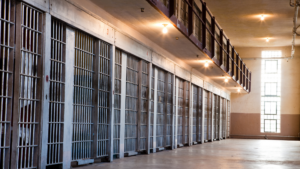
Georgia prison spending has increased, even as prison populations have declined.

Key Points

  • The nation’s prison population has declined in many states, including in Georgia, but a new report shows that prison reforms to decrease the number of inmates haven’t translated into meaningful taxpayer savings.
  • Departments of Corrections budgets are actually increasing throughout the country, but prison costs still account for no more than about 5% of most states’ total budgets.
  • Instead of focusing on state prison budgets and costs per inmate, policymakers need to consider the total cost of crime—both monetary and social—that a community pays and how to reduce it.

Prison reform debates often focus on reducing prison populations to save taxpayers money. But is that actually possible?

In a new report for the Manhattan Institute, Joshua Crawford, a Public Safety Fellow at the Georgia Center for Opportunity (GCO), argues that marginally decreasing prison populations doesn’t yield the taxpayer savings policymakers have long touted. Crawford also shows that continuing to focus mainly on cost savings instead of on other measures to reduce crime and recidivism may lead to unintended fiscal and social consequences for states, including Georgia.

To understand this argument, it’s essential to first understand the landscape of state prison populations and the associated costs of incarcerating an individual.

Understanding prison populations and associated costs

State prison populations decreased by 24% overall between 2010 and 2023, with 43 out of 50 states experiencing a decline. But despite those significant decreases, Departments of Corrections budgets haven’t followed suit. 

In fact, Crawford’s report shows there is little to no relationship between changes in prison populations and changes in corrections spending. 

Departments of Corrections budgets are actually increasing, but corrections costs still account for no more than about 5% of most states’ total budgets. 

Nevertheless, many policymakers and advocates continue to argue that cutting prison populations will save money. So where is the disconnect between the numbers and the messaging? 

Most often, the total cost per inmate per year is calculated by dividing the total costs of the prison system by the number of incarcerated people, but this is a misleading figure. Many of the more costly parts of a Department of Corrections budget (e.g., staff salaries, utility bills) are long-run or fixed costs that don’t vary with marginal changes in a prison’s population. To get a more accurate estimate of possible savings, it’s more important to consider short-run costs, like food and toiletries, which can vary immediately with a change in a prison’s population.

Interpreting the numbers for Georgia prisons

Georgia is one of the 43 states that, on average, saw a decrease in their prison populations between 2010 and 2023. The state experienced an 11.7% decrease in the number of inmates during that time. 

Georgia falls in line with overall national trends year over year. The figure below illustrates the decrease in both Georgia’s and the nation’s number of incarcerated people. The biggest departure was in 2019, when Georgia seemingly had a sharp increase, but that increase was actually minimal at just 2.2%.

And like most states in recent years, Georgia saw a rebound in the number of inmates after the COVID-19 pandemic, when more people were released to help alleviate stress on prison systems.

Georgia's prison population decreased between 2010 and 2023, in line with national trends.

Black Line = National Trend, Blue Line = Georgia Trend

The data for Georgia also reinforces the lack of a relationship between the change in the number of inmates and the change in corrections spending. The table below reveals that even though Georgia’s prison population decreased from 2010 to 2023, corrections spending increased 23.6% during that time.

Georgia's prison population decreased from 2010 to 2023, but prison spending went up during that time.

Data from 2019 further reinforces this absence of a relationship. During that year, Georgia saw a very slight increase of 1,169 people in its prison population, but the state spent $21,430 less on corrections that year compared to 2018.

A better focus for Georgia policymakers

Instead of focusing on state prison budgets and costs per inmate, policymakers need to consider the total cost of crime—both monetary and social—that a community pays and how to reduce it. 

Crime itself costs our nation anywhere from $2.6 trillion to $5.76 trillion each year, with violent crime accounting for 85% of those costs. A single homicide can cost upwards of $9 million in government resources and lost potential earnings of victims. This doesn’t account for the financial burdens it can put on families and communities. 

In addition to the monetary cost of crime, communities pay a significant social price—and none more so than high-crime, impoverished areas. Effective public safety measures are foundational to upward mobility. Without them, these communities will continue to see the loss of businesses, local resources, and community connections that help people flourish.

With this in mind, policymakers and advocates should refocus criminal justice efforts toward reforms proven to reduce crime and recidivism. Improvements on both of these fronts generate cost savings of their own, in addition to saving lives and lowering fear of personal harm.

Best practice criminal justice reforms fall into eight solution categories that could spark meaningful change:

  • Addressing community disrepair
  • Investing in a well-trained police force
  • Building trust by protecting victims
  • Addressing gang violence
  • Addressing the low number of homicide detectives and low clearance rates
  • Ensuring appropriate sentencing
  • Implementing cognitive behavioral therapy for juvenile offenders
  • Evaluating and updating re-entry programs

In Georgia, policymakers and advocates should consider these specific efforts to reduce crime and recidivism:

  • Implementing reforms to help law enforcement close non-fatal shooting cases (e.g., the Firearm Assault Shoot Team in Denver, Colorado)
  • Broadening cognitive behavioral therapy offerings for juvenile offenders, which has shown promising results in juvenile recidivism rates
  • Prioritizing data collection and evaluation to help guide future programs and reforms
  • Helping communities through a holistic approach that includes job training and opportunities, affordable housing, and family programs

In addition to the above policy suggestions, GCO has prepared in-depth reports focusing on reducing crime in two major Georgia cities—Atlanta and Columbus.

As Crawford says of potential criminal justice reforms in Georgia, “lawmakers should focus conversations about criminal justice where they belong: on protecting the public and creating a fair and just system that values the lives, liberty, and property of Georgia families.” In doing so, policymakers can transform entire communities by making them safer for the people who live there.

Image Credit: Canva

Kentucky lawmakers passed HB 136, which updates crime data collection to strengthen the criminal justice system.

The Kentucky General Assembly has passed a law (House Bill 136) that improves the data collection and transparency practices of the state’s criminal justice system. 

The bill, crafted with research and expertise from the Georgia Center for Opportunity, addresses the state’s lack of comprehensive data on sentencing, parole, and recidivism. Because of these gaps, policymakers have relied on incomplete data and anecdotal evidence to make serious decisions—ones that are often life-and-death.

The criminal justice system is the primary way government protects families and communities. It’s also the point of intersection between government and citizens when an individual breaks the law and decisions must be made about the future of their liberty and life. 

With such high stakes, nothing should be more important and deserving of respect than the criminal justice system and its ability to make informed, just decisions. That’s where HB 136 comes in.

HB 136 equips lawmakers to assess the criminal justice system based on evidence, not anecdotes

The bill requires the state’s Department of Corrections to provide the Kentucky General Assembly with comprehensive data on sentence lengths, parole outcomes, recidivism rates, and demographic data. 

  • Length of stay for first-time offenders: Data on the number of inmates released, average sentence lengths, time served, and parole release rates must all be made available under the bill.
  • Parolee data and supervision outcomes: This includes demographic information—including race, gender, age, and parental status—plus education levels, gang affiliation, and engagement in rehabilitation programs.
  • Supervision activities: Drug test results, employment outcomes, housing stability, and program compliance would all be made available.
  • Recidivism and criminal history trends: Under the measure, the state government would track repeat offenses to evaluate the effectiveness of parole or probation programs.

With this information, elected leaders can make better decisions, improve transparency and accountability in the system, and direct resources to the most successful rehabilitation and reentry programs. 

These changes would bolster the downward trend in crime that Kentucky is already seeing this year, thanks in part to implementation of other GCO recommendations in the 2024 Safer Kentucky Act. In Louisville alone, homicides are down 30%, non-fatal shootings have dropped by 40%, and carjackings have plummeted by 43%.

HB 136 turns data into a fairer system and safer communities

With these changes in place, Kentucky communities will have the benefits of enhanced public safety, a fairer system, and improved use of taxpayer dollars.

  • Reduced recidivism: Access to detailed data on reoffending rates and parole violations allows Kentucky to invest in programs that truly help individuals reintegrate into society, reducing the likelihood of repeat offenses.
  • Fairer sentencing practices: Analyzing trends in sentencing and parole provides lawmakers with the tools to ensure that policies are applied consistently and equitably—and criminals are appropriately held accountable for their crimes.


  • Improved public safety: By identifying practices that reduce recidivism and improve parole outcomes, policymakers can enhance community safety and stability.


  • Better allocation of funding: Tracking incarceration and parole data helps Kentucky allocate resources effectively, ensuring that correctional facilities and rehabilitation programs are adequately funded without unnecessary overspending.


  • Lower racial and gender disparities: Detailed demographic data illuminates any potential disparities in sentencing or parole practices, enabling targeted reforms to promote equity within the justice system. 

While these data practices are new to Kentucky, they are common in other states. Georgia, Tennessee, Florida, and even California have implemented similar data-driven approaches and seen positive results. Now Kentucky can join these states as a leader in transforming data into insights that empower lawmakers to shape a better criminal justice system. 

Watch GCO’s Testimony on HB 136

Key Points

  • A new job licensing measure in Georgia, Senate Bill 207, was introduced in the 2025 Legislative Session to open career pathways for formerly incarcerated individuals. 
  • SB 207 focuses on simplifying and streamlining the application process for job licenses, creating a clearer and fairer system for returning citizens.
  • If passed, the bill could  expand access to steady jobs in industries like healthcare, education, real estate, and trade occupations. 

For returning citizens, stable employment can mean so much more than financial stability. It can be a powerful source of renewed purpose and belonging within their communities. In fact, research has shown that if returning citizens can keep a job for six months or more, their likelihood of ending up back in prison drops dramatically. It also improves the odds that returning citizens will reconnect with loved ones, especially their children, another step toward preventing recidivism.

That’s where Senate Bill 207 enters the picture. Introduced in Georgia’s 2025 legislative session and sponsored by Sen. Brian Strickland, the measure would create clearer guidelines for individuals with criminal records, making it easier to obtain job licenses in various industries.

The bill applies to a variety of occupations in various fields, including education, healthcare, insurance, real estate, trade occupations, and first responders.

The Georgia Chamber of Commerce has backed SB 207, praising the bill for how it “standardizes the process for reviewing applicants with criminal records, narrows the types of offenses licensing boards can consider, and updates first-offender treatment provisions—all while maintaining important public safety protections.”

SB 207 didn’t get the final vote it needed to pass in 2025, but lawmakers can pick it up again in 2026. 

SCALE THIS CONTENT To properly fit into the middle of this box but adjusting the spacing in DIVI.

Insert the same content here to work on mobile and tablet.

Key job licensing improvements in SB 207 

1. Creates a simpler process for evaluating licenses applications.

SB 207 introduces a preclearance process to streamline the evaluation of licensing applicants with criminal records. Under this process, licensing authorities must present clear evidence when rejecting applicants based on criminal convictions. The measure also mandates hearings before applicants are denied licenses due to their criminal backgrounds, setting specific criteria to guide these decisions and prioritize due process. These structures help ensure licensing boards operate with greater transparency and fairness. 

2. Shores up the predetermination process to increase fairness.

The bill creates a predetermination process that allows individuals to petition licensing boards for an early evaluation of their eligibility based on their criminal history, even before completing the necessary qualifications. Licensing boards are required to provide detailed justifications for any adverse outcomes, offering applicants the chance to appeal or present additional evidence. The changes help ground decisions in merit rather than prejudice.

3. Recognizes the hard work returning citizens have put in toward rehabilitation. 

The bill requires licensing boards to carefully evaluate the nature and seriousness of past offenses, the length of time since the incident, and the individual’s age at the time of the crime. They must also review evidence of rehabilitation, including educational achievements, work history, and community involvement. This holistic approach gives more consideration to the applicant’s growth and emphasizes their present ability to contribute to the workforce, allowing them to overcome past mistakes. 

4. Places limitations on criminal records to create more neutrality.

Finally, the bill imposes limitations on the types of criminal records that can influence licensing decisions. Sealed, pardoned, or older minor convictions are generally excluded from consideration, helping applicants avoid unnecessary penalties for issues long resolved. It also curtails the use of subjective standards, such as assessing “good moral character,” which can perpetuate bias and inconsistencies.

Georgia needs licensing reform to reduce barriers to employment

While occupational licensing serves an important purpose in certain industries, it often becomes an unnecessary barrier for individuals eager to pursue meaningful careers. These barriers hit low-income workers the hardest. Licensing fees, mandatory coursework, and unpaid apprenticeships can be insurmountable for those struggling to make ends meet or to overcome difficult circumstances, past or present. For example, someone trying to enter a trade like plumbing or electrical work might face costs of thousands of dollars before they can begin earning.

Job licensing reforms offer a way to expand job opportunities and restore people’s hope for better future. With SB 207, Georgia lawmakers have a chance to build on their recent history of reforming occupational licensure to benefit Georgians and strengthen our workforce.

An empty street and closed businesses illustrate the real-life impact of crime on poverty in a community.

Key Points

  • As Americans become more skeptical of the American Dream, an important issue to address is the link between poverty and violent crime. 
  • Research has found that violent crime negatively affects property values, employment, and outcomes for children. 
  • Providing a safe environment is a core government responsibility, and it’s essential for lowering fear, improving economic mobility, and building healthy communities. 

A recent Pew Research Center poll examined American attitudes about the attainability of the American dream. Overall, 53% of respondents believed the American dream was still possible. 

Responses were remarkably consistent across race and differed only slightly by party affiliation (56% for Republicans, 50% for Democrats). 

Age was the factor where more drastic differences of opinion started to emerge. The younger the cohort, the lower the percentage of respondents who felt the American dream was still possible. 

  • Age 65+: 68% believed the American dream was still possible. 
  • Age 50-64: 61% thought the American dream was still possible. 
  • Age 30-49: 43% felt the American dream was still possible. 
  • Age 18-29: Just 39% agreed the American dream was still possible.  

Among the youngest groups, a larger percentage—48% of 30 to 49-year-olds and 51% of 18 to 29-year-olds—thought the American dream was once possible but no longer was. 

The current attainability of the American dream is subject to much debate, not fleshed out here. One factor that deserves more attention is the role of public safety in shaping communities where people have opportunities for a better life for themselves and future generations.  

Of all the barriers to opportunity, violence is one of the most vicious because it can single-handedly upend all the building blocks of a flourishing life—family stability, access to quality education, and work opportunities. And a disproportionate amount of this suffering is borne by our poorest and most vulnerable communities. 

Nearly 50% of According to Pew Research polling, Americans think the American Dream is no possible.

The impact of crime on children

Future generations have a harder time getting ahead in life. 

It’s clear from the data that nearly half of children raised in the poorest households—the bottom 20% of incomes—end up in that bottom 20% as adults. A tremendous number of factors contribute to this cycle of poverty—from the flaws in government safety net programs to the affordability of housing to improving educational options and outcomes.

Then there’s the link between poverty and crime. One of the most visceral and heartbreaking things that impacts a child’s upward mobility is growing up in a community with a high rate of violence.

According to the Annie E. Casey Foundation, about 3.6 million kids live in communities their parents deem to be “unsafe.”

The level of violent crime in a county negatively affects the level of upward economic mobility among individuals raised in low-income families. Opportunities decline because high rates of violence reduce productivity among crime victims, depress economic activity, reduce home values, and drive out residents who can leave. 

In communities struggling with poverty, violent crime can lead to worse outcomes for kids.

According to the Annie E. Casey Foundation, about 3.6 million kids live in communities their parents deem to be “unsafe.”

In communities struggling with poverty, violent crime can lead to worse outcomes for kids.

According to the Annie E. Casey Foundation, about 3.6 million kids live in communities their parents deem to be “unsafe.”

The impact of crime on local economies

Communities become economically unhealthy. 

A relationship between poverty and crime also manifests itself in the effects that violence has on employment. Several studies have demonstrated that direct victimization is associated with more unemployment and less productivity at work. 

  • A study of violent trauma patients found a positive association between victimization and unemployment. 
  • Another study found that, following the homicide of a family member, employment went down 27% among surviving family members. 
  • In a sample of parents whose children had been murdered, more than 50% of the parents perceived themselves as nonproductive at their jobs in the four months after the murder.

High rates of violent crime don’t just impact victims. Rising crime has been negatively associated with business activity, resulting in downsizing and discouraging new businesses from entering the marketplace.

Neighborhoods then lose out on opportunities for jobs and affordable access to food, household items, and other essential goods and services. 

One large analysis looked at the impact of gun violence on the economic health of neighborhoods in six cities: Baton Rouge, LA; Minneapolis, MN; Oakland, CA; Rochester, NY; San Francisco, CA; and Washington, DC. The findings were remarkably consistent. An increase in gun violence in a census tract reduced the growth rate of new retail and service establishments by 4% in Minneapolis, Oakland, San Francisco, and Washington, DC. 

In Minneapolis, each additional gun homicide in a census tract in a given year was associated with 80 fewer jobs the next year; in Oakland, a gun homicide was associated with 10 fewer jobs the next year. 

Local business displays %22open%22 sign.

“Local and state governments must focus on reducing violent crime, not just as necessary to protect human life but also because doing so is a prerequisite to real economic opportunity in poor communities.”

Josh Crawford, GCO Director of Criminal Justice Initiatives

Local business displays %22open%22 sign.

“Local and state governments must focus on reducing violent crime, not just as necessary to protect human life but also because doing so is a prerequisite to real economic opportunity in poor communities.”

Josh Crawford, GCO Director of Criminal Justice Initiatives

The impact of crime on neighborhoods

Communities stop becoming places that people want to call home.

Studies have also found that increases in gun violence hurt property values.

  • In Minneapolis: Each additional gun homicide resulted in a $22,000 decrease in average home values in Minneapolis census tracts.
  • In Oakland: Each additional gun homicide resulted in a $24,621 decrease in Oakland census tracts.
  • In Los Angeles: A separate study found that increases in violent crime in a neighborhood in a given year yielded decreases in property values in that neighborhood the following year. 

And those who can leave communities with high rates of violence, do. One estimate found that, for every homicide, 70 residents move out of a neighborhood.

Finally, increased violent crime often, justifiably, leads to more incarceration. But communities with higher rates of incarcerated parent-aged men often have weaker social institutions and are more unstable. 

To have vibrant communities and flourishing lives, public safety must take priority.

Improving economic conditions and opportunities for any community, but especially low-income neighborhoods, is incredibly difficult without first reducing violence.

One of the most recent examples is the great crime decline of the 1990s, which dramatically improved the most desperate neighborhoods and improved life among their residents. 

It doesn’t have to be this way. Decades of policy innovation, evaluation, and replication have taught us how to make communities safer and break the interconnected cycles of poverty and crime.

The most effective methods include:

  • Focusing law enforcement efforts on criminal street gangs
  • Punishing violent recidivists appropriately
  • Reducing the presence of abandoned buildings in crime hot spots

People have a deep need to feel safe and secure in the places where they live, work, and go about their day-to-day lives. Providing a safe environment is government’s first responsibility to its people.

When it comes to public safety, making good policy choices changes lives—not only by reducing physical harm but also by transforming neighborhoods into places where the American Dream can still be found.

Visit our public safety resource page to learn more about policy solutions and see recommendations for specific cities. 

The Safer Kentucky Act focuses on lowering crime and fear in Louisville, as well as other vulnerable neighborhoods across Kentucky.

Key Points

  • The Safer Kentucky Act (House Bill 5) is a package of crime-related bills passed by the Kentucky Legislature in 2024. The legislation includes six GCO-recommended solutions for restoring community safety. 
  • The bill lowers crime by addressing gang-related violence, updating carjacking laws, facilitating successful reentry programs, and more. 
  • The Safer Kentucky Act is good news for impoverished communities and at-risk populations, which tend to bear the brunt of increasing violence. These public safety reforms will give communities hope and solutions to break cycles of violence and poverty and have better opportunities close to home.

Kentucky is home to one of the most challenging public safety environments in the country. Even so, the state has made positive changes, thanks to crime reduction policies that have increased police funding and established much-needed programs. Louisville, for example, finished 2023 with a 4% reduction in fatal shootings and an 8% reduction in nonfatal shootings. These were the lowest totals in both categories in four years. 

But more needs to be done to ensure residents are free to move about their neighborhoods without fear of personal harm. The urgency has increased, given that homicides in Louisville exploded again in March 2024.

A new law, passed by the Kentucky Legislature in 2024, offers hope for lowering violence and fear in Louisville and across the state. The Safer Kentucky Act (House Bill 5) includes six policy reforms, drawing from GCO’s public safety research, that will restore safety and better opportunities to Kentucky communities. 

What is the Safer Kentucky Act? 

The Safer Kentucky Act is an omnibus crime bill, which is a type of legislation that combines several proposed policy reforms into a single bill. In the case of the Safer Kentucky Act, all the individual provisions touch on some aspect of public safety. 

Proposed reforms cover everything from homelessness to repeat violent offenders. Among these reforms are a handful of changes directly focused on reducing crime and relieving communities of the fear and loss associated with increasing violence.

Higher violent crime rates rob communities of precious lives and lower the quality of life in the most vulnerable neighborhoods. 

Higher violent crime rates rob communities of precious lives and lower the quality of life in the most vulnerable neighborhoods. 

Six Ways the Safer Kentucky Act Addresses Crime

Establishes strategies to lower gang-related violence

Group Violence Intervention (GVI), also known as focused deterrence, is a gang violence reduction strategy, and when implemented properly, it can have substantial impact. 

  • GVI uses an approach known as “call-ins.” Call-ins bring in groups of active gang members to deliver simultaneous messages of enforcement, resources for gang members to better their lives, and community moral voices expressing the unacceptability of the violence.
  • Louisville, KY, has operated a GVI program for a few years, but an interpretation of state law prevents probationers and parolees in gangs from being compelled to attend call-ins. Despite GVI strategies existing across the country, Kentucky is the only state with this participation issue. House Bill 5 clarifies state law to allow this kind of program participation.

Updates state law to discourage carjackings

Kentucky has no state law specifically addressing carjacking. When someone commits a carjacking in Kentucky, they face one of two consequences. They may be transferred to federal court and charged with the federal crime of carjacking. Or they could be charged in state court with a combination of assault and robbery. 

  • The absence of a state carjacking law leads to insufficient punishment for too many carjackers. It also makes tracking and data collection around carjacking more difficult. 
  • The data that is available suggests carjackings have risen significantly since 2020.
  • Passing the Safer Kentucky Act would, for the first time, create a state-level carjacking statute that enables communities to appropriately deal with and discourage carjackings.

Improves parent and guardian involvement in juvenile proceedings 

Building on the parental accountability measures in House Bill 3 (passed in 2023), the Safer Kentucky Act contains a provision that would require one parent or guardian to attend proceedings involving their children or child in their custody. 

By requiring parents to at least be present at their children’s hearings, the idea is that they may be more involved and invested in the child’s success. While there are few good answers in this area, these parent-focused participatory measures can help make a difference on the margins.

Adds life in prison for repeat violent offenders

KRS 532 is Kentucky’s most narrow violent offender statute. It includes what most people would consider the worst of the worst offenses—murder, manslaughter, serious assaults, rapes, robbery, burglary, and so on. 

The Safer Kentucky Act establishes a new “three strikes law” for violations of KRS 532. Conviction of a third offense would result in life imprisonment. 

This measure would ensure that the most violent repeat offenders are appropriately punished. Several studies have found that these types of laws reduce crime, so this change will likely help Kentucky lower crime in the future.

Brings witness intimidation laws into the 21st century 

House Bill 5 would amend Kentucky’s current statute related to intimidating a participant in the legal process. It expands the statute to include harassing communications (as defined in KRS 525.080), making it easier to prosecute and punish anyone who uses electronic mediums like social media to attempt to intimidate and dissuade witnesses in criminal cases.

Makes sure re-entry works

Our criminal justice system has several purposes, but one of the most important is helping convicts rejoin civil society once they’ve completed their sentences. 

Kentucky operates several re-entry programs based on best practices around the country. But do these programs actually reduce re-arrest, re-convictions, and re-incarceration? Right now, we don’t know. 

The Safer Kentucky Act would require regular evaluations of re-entry programs—a practice that would ensure effective programs get the support they deserve. It would also reallocate funding away from programs that aren’t reducing recidivism and put it toward new, innovative approaches.

Who would the Safer Kentucky Act help? 

Low-Income Families and Communities

The effects of crime disproportionately concentrate in our poorest and most vulnerable communities, keeping them locked in cycles of violence, poverty, and despair. The Safer Kentucky Act is a key step to restoring community safety. When public safety thrives, neighborhoods become homes for the education options, work opportunities, and healthy relationships that lift people out of poverty. 

At-Risk Youth and Juvenile Offenders

We know that parental involvement makes a difference in how children’s lives turn out. The Safer Kentucky Act gives juvenile offenders the opportunity to benefit from their parents’ presence as they navigate the criminal justice system and paths for rehabilitation. 

Former Inmates 

Former prisoners who are re-entering society have the best chance for a fresh start when states invest in reentry programs that have a track record of success. The Safer Kentucky Act will improve the support that ex-offenders receive through the criminal justice system. Ultimately, this empowers them to build stable, meaningful, and independent lives after serving their sentences. 

Law Enforcement 

The Safer Kentucky Act would give local law enforcement better methods to deal with small populations who tend to be responsible for the majority of crime. The bill also improves the justice system’s ability to help non-violent offenders and ex-offenders get back on a healthy, stable path. 

Additional Resources

GCO’s Public Safety Resource Page

As Juvenile Crime Skyrockets to Record Levels, States Seek to Crack Down (Daily Caller)

Getting serious about teen violence in Washington, D.C.: Louisville, Kentucky, provides a solution (The Washington Times)

New crime dashboard will report ‘real-time gun violence’ to expand transparency in Louisville (Wave)

How to Turn Back the Tide of Violent Crime (Washington Examiner)

Murder Is Actually Going Down—Wherever They’re Paying Cops More and Targeting Gangs (Newsweek)

Victims Matter (Josh Crawford on The Blue View Podcast)

crime rate, crime scene, Atlanta homicides, Atlanta news, Atlanta crime rates, crime on the rise

Key Points

  • The Georgia Center for Opportunity is releasing a new report on rising violent crime in Atlanta and ways to address it.
  • Most crimes tend to cluster in compact, high-density regions controlled by violent gangs.
  • Foster trust between community members and law enforcement and social services, with a specific focus on safeguarding the rights of victims.

The Georgia Center for Opportunity is announcing a new report on violent crime in Atlanta, which highlights the city’s recent spike in violent crime and how to mitigate it. 

Josh Crawford, Director of Criminal Justice Initiatives at GCO, developed the report, along with recommendations for reducing violent crime in Atlanta.  

“The brief and its recommendations are designed to create a base level of what order and public safety should look like across the board,” Crawford says. “It’s imperative that we have an intentional conversation about the state of crime in Atlanta now, and how we can improve that for the future.” 

According to Crawford’s report, criminal activity reduces opportunities in both small communities and metropolitan areas, destabilizing them in the process. In addition, crime devalues both businesses and individuals in those areas. 

Although there have been positive steps toward improvement in Atlanta during recent years, there’s still work to be done. Some of those measures still need to be implemented, while other solutions need to be developed. In his report, Crawford shares a number of recommendations.

A Dramatic Spike in Violent Crime

Since 2018, the rates of violent crime and homicide have increased dramatically in Atlanta. The largest spike occurred during 2020 and was a reflection of the broader trend nationwide. Between 2009 and 2017, homicides in Atlanta tended to average 90 or fewer, with a few exceptions in 2008 (105) and 2016 (113).

Since the rise in violent crime began in 2018, Atlanta has not experienced a year with fewer than 80 murders, with an additional 217 people murdered over the previous decade’s average. 

On top of the rising crime, many convicted violent criminals in Georgia aren’t serving out their full sentences. As a result, they’re being released back onto the streets long before their sentences end. For example: 

  • Attempted murder convicts released during 2022 had only served 7.91 years of their sentences on average, or 35.78% of the time they were meant to serve
  • That same year, aggravated assault convicts had only served 4.03 years on average, or 29.57% of their sentences
  • Felons convicted of unlawful possession of a firearm had served only 2.83 years on average, or 27.29% of their full sentences

To make matters worse, a dip in law enforcement personnel has coincided with the rise in crime.

Pinpointing High-Crime Areas in and Around Atlanta

Crawford says that the majority of crime tends to be concentrated in small, dense areas controlled by violent gangs. 

“We have to focus our efforts on gang-controlled areas across the city,” he says. “By doing that, we’ll start to see significant gains. It’s a more effective approach than trying to broaden our reach.” 

Once law enforcement has pinpointed high-crime areas, Crawford says they can then implement a series of strategies he calls “focused deterrence.” In other words, incidences of violent crime–such as homicides and shootings–would theoretically be reduced. This result is possible through concentrated social service and law enforcement activities in these gang-controlled sectors. 

Using the combined, competent approach of law enforcement and social services would enable individual criminals to undergo rehabilitation. These measures would emphasize getting to the root of the problem, and helping each person to make the necessary changes to his or her life. 

“We believe it’s not possible to truly help reduce crime without directly addressing the person or problem where it originates,” Crawford says. 

Atlanta Homcide Stats

 “It’s imperative that we have an intentional conversation about the state of crime in Atlanta now, and how we can improve that for the future.”

– Josh Crawford, Director of Criminal Justice Initiatives at GCO


Atlanta Homcide Stats

“It’s imperative that we have an intentional conversation about the state of crime in Atlanta now, and how we can improve that for the future.”

– Josh Crawford, Director of Criminal Justice Initiatives at GCO

More Recommendations for Improving Community Safety 

In addition to narrowing the focus to areas of high gang activity and addressing individuals wherever possible, there are also things that can be done to improve community safety in those areas. Here are some of the steps Crawford recommends. 

  • Address disrepair in Atlanta’s communities by expanding cleanup efforts, tearing down or renovating abandoned buildings, and installing adequate street lighting
  • Build trust between community residents and law enforcement and social services, particularly through protecting the rights of victims
  • Remove egregious offenders from communities by implementing gang-enhancement provisions such as SB44 (2023) that keep these individuals incarcerated
  • Improve and require pre-entry cognitive behavioral therapy services for all juvenile offenders, no matter how non-violent their offenses
  • Reevaluate reentry programs through an external third party, examining the impact on revocation, rearrest, and reconviction 

Through this strategic, multi-layered approach, Crawford estimates that it would be possible to reduce Atlanta’s caseload to no more than six homicides each year. 

Schedule An Interview

Key Point

  • Those reentering society need a plan for gaining stable employment after serving time. 
  • Local businesses will hire and support those reentering society.
  • There are tools, resources, and support available to former inmates.

At the beginning of the summer, Prison Fellowship hosted an inspiring event at the Whitworth Women’s Facility in Hartwell, Georgia.

This event was significant for inmates because many of them will soon be integrating back into society, which can also be referred to as “reentry.” This process can be tough because there are many challenges, like finding a good job. Assisting former inmates in swiftly obtaining reliable employment is crucial as it plays a pivotal role in reducing recidivism rates, or keeping people from going back to prison.

 Tony Kitchens, a board member of GCO and a representative of Prison Fellowship, along with Luisa Beeco, BETTER WORK Gwinnett’s program manager, participated in a panel discussion focusing on the options available to women after serving time and the significance of stable employment in their journey towards successful re-entry. With around 150 engaged participants, including former inmates, the event aimed to provide hope, support, and resources for these women as they prepared for their transition back into society.

Incarcerated women are eager for job opportunities and self-sufficiency:

The importance of supporting incarcerated individuals and helping them integrate back into society has become a pressing concern in recent years. The panel of speakers featured former inmates, our GCO team, and representatives from The Georgia Justice Project. Luisa highlighted the need for a plan to secure stable employment as a stepping stone towards a better life after incarceration. One of the most remarkable aspects of the discussion was the unexpected level of engagement displayed by the incarcerated women, who were eager to learn about their job opportunities and how to achieve self-sustenance. With local community leaders showing support for their ambitions, the women left the discussion with a renewed sense of hope and determination for a brighter future.

“The women actively participated by asking thought-provoking questions to the panelists for a substantial period of time,” stated Luisa. “This eagerness to learn and seek guidance demonstrated their genuine desire to better themselves and seize the opportunities that awaited them upon release.”


Stable jobs after prison are key to women finding purpose and success:

One of the recurring themes throughout the discussion was the critical role of stable employment in the re-entry process. Our team highlighted the benefits of having a job after release, such as financial stability, personal growth, and a sense of purpose. The panelists emphasized the importance of using their time in prison wisely to acquire necessary skills and qualifications, ensuring they are well-prepared to enter the job market upon release.

“This eagerness to learn and seek guidance demonstrated their genuine desire to better themselves and seize the opportunities that awaited them upon release.”


“This eagerness to learn and seek guidance demonstrated their genuine desire to better themselves and seize the opportunities that awaited them upon release.”


Hope and resources for incarcerated women returning to society:

GCO provided a comprehensive list of available support networks, job training programs, and organizations dedicated to helping formerly incarcerated individuals transition back into society.

The event held at the Whitworth Women’s Facility was an inspiring testament to the power of hope, support, and education in the lives of incarcerated women. By engaging with panelists, seeking guidance, and embracing the importance of stable employment, these women showcased their determination to rebuild their lives and contribute positively to their communities. The collaboration between Prison Fellowship, Tony Kitchens, GCO, and the dedicated individuals within the correctional facility exemplifies the transformative potential of collective efforts in enabling successful re-entry and giving these women the tools they need to thrive.


Subscribe

* indicates required

Subscribe

* indicates required