GCO’s Vice President of Public Policy, Buzz Brockway is joined by GCO’s Jamie Lord to discuss the ways education will be impacted in the coming years. The state of Georgia faces new struggles both financially and with renewed expectations of what education is.

How and will the state meet the need of public education in the coming year? 

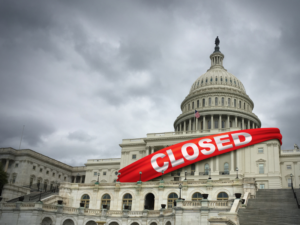
This week we are celebrating Teacher Appreciation Week across the U.S. A lot of parents today find themselves in the unexpected role of teacher. In fact, we’re in the middle of the biggest virtual learning experiment in American history. It was recently announced that Georgia schools would be closed through the remaining school year, meaning school classrooms won’t open again until August 10. Experts are warning that mass school closures threaten kids’ academic social lives, not to mention their psychological well-being.

To cope, school districts are moving to virtual learning. But many schools are ill-equipped for this sudden and dramatic shift. One analysis of 82 school districts found that “most districts are still not providing any instruction.”


It’s time for education to look different

Our current school system was designed for the Industrial Age. As Kerry McDonald of the Foundation for Economic Education writes, “As factories replaced farm work and production moved swiftly outside of homes and into the larger marketplace, 19th century American schooling mirrored the factories that most students would ultimately join. The trouble is that we have left the Industrial era for the Imagination Age, but our mass education system remains fully entrenched in factory-style schooling.” 

To expand virtual learning, we will need to:

  • Help students develop digital literacy skills
  • Better train teachers to implement lessons in a digital environment


Equity concerns

One of the biggest reasons why more public schools haven’t moved to online learning is equity concerns. As National Public Radio reports, “Just over half of the nation’s public school children are from families considered low-income, and an estimated 12 million lack broadband Internet access at home.”  The National Center for Education Statistics reports that about one-quarter of students below the poverty line have no access to the Internet or, at best, dial-up access only.

Aside from income, geography is another factor, with students in more rural areas having less access to Internet services. What’s more, poorer school districts might not be able to offer take-home technology to students in the form of iPads and laptops.

There are a number of steps Georgia school districts may take to address the disparity right now. Much of it has to do with the proper allocation of educational resources: What about buying a tablet device or laptop for every student in Georgia? Ensuring that every home has broadband access? These are only a few of the strategies that Georgia could implement.


The age of virtual learning

Imagine this: Fall 2020 rolls around and coronavirus is still running rampant. Schools are still closed. Will we delay education for these kids indefinitely? The answer is obviously no. That means we need to begin looking at education differently: Through a technology-focused lens that centers on individualized ways to educate students.

Looking to the future, Georgia needs a renewed focus on the virtual classroom after the crisis abates. Even before the COVID-19 pandemic, virtual learning was well on the rise and the wave of the future. What would the current crisis look like had we focused more heavily on expanding access to virtual learning?

The truth of the matter is that virtual learning options are abundant and growing. Khan Academy is a free resource bank of online courses, lessons, and practice tools. Duolingo is a free way for kids to learn a foreign language. The Smithsonian has an online hub of digital resources from across its museums, research centers, libraries, archives, and more.

To be clear, virtual learning can and should grow, but it’s not the right fit for everyone. The goal should be to create an education infrastructure focused on the needs of individual students. For some families, that will be brick-and-mortar schools. For others, a virtual learning environment. And for still others, the key to success will be blended learning, combining virtual learning with traditional classroom time.

What the coronavirus pandemic has shown us, however, is that we are still woefully behind on creating a truly effective virtual learning environment.

This op-ed was originally published in the Savannah Morning News on March 26th. Check out the original post here.  

By Randy Hicks

Once again, it’s an election year. And as in the past, we’ll probably hear a lot of talk about the state of education in Georgia. But what does it really mean to have an excellent education for K-12 students? What constitutes real education reform that will prepare Georgia’s children for the jobs of the future and bring the benefits of competition to education?

Most basically, it’s a mistake to measure the quality of education by the amount spent on education. Instead, the quality of education must be measured by results. And that starts with two goals: First, finding the right school setting for each child. Two, ensuring that parents can take advantage of choice and place their child in that setting.

Every child is different. That’s why families should have a variety of educational options for their child. The goal of real education reform—of enhancing choice in education—is to ensure that families have high-quality options. Of course, this includes traditional public schools, but it also includes public charter schools (where Georgia’s programs are growing in popularity); private schools (including for children with special needs and those who benefit from the Georgia Tax Credit Scholarship program); online education, homeschooling, and hybrid education options. Parents can then select the option or options that help their child learn and grow the best.

Fortunately, Georgians already favor choice in education. Now, as the campaign season is intensifying, the Legislature can prove their dedication to our kids by taking real steps towards education reform this year. For instance, lawmakers can raise the arbitrary cap on the tax credit scholarship program, as two bills propose to do. More parents want these scholarships, and more people want to give to make them a reality for Georgia’s children. The Legislature shouldn’t stand in the way. Special needs children, children with disabilities, and others can benefit from expanded scholarship programs based on choice.

As the legislative session winds down and the campaign season begins, I hope that voters will take the time to inform themselves on education issues and ask the candidates where they stand and why, rather than simply being satisfied with proposals for higher spending for public K-12 schools. A vibrant education system in Georgia will include high-performing public schools all across the state, but it will include independent schools as well. Each sector should be committed to excellence, and parents should have the option of choosing the educational settings that are right for their child.

Seven years ago, Gov. Nathan Deal called on Georgians to “be frugal and wise. Let us restore the confidence of our citizens in a government that is limited and efficient.” His words ring true with a spirit of promoting true education reform which contributes to both of the Governor’s goals – frugality and efficiency. Public education, too, will benefit from the competition that true choice brings, and the results will benefit both Georgia’s children and Georgia’s taxpayers. The competition that comes from true choice for parents will improve all schools, making education in Georgia not only more frugal and efficient but also much more effective.

And that is the point of true education reform: more choice, and better schools, for everyone. Let’s keep that in mind and keep education reform a priority in this political year.

As the saying goes, you get what you pay for. Unless you’re a taxpayer, in which case you will get less than you wanted from Washington even though they used your money.

President Obama has left office, and the results of the ideas issued under his watch are coming in. Education research demonstrates we didn’t always get a bargain. A new study finds that a multi-billion-dollar federal grant program that incentivized district schools to change their operations neither changed such operations nor resulted in student achievement.

From 2009 to 2016, the U.S. Department of Education awarded School Improvement Grants (SIG). Each year, the agency divided approximately $500 million between states as part of Obama’s stimulus package to help ease schools out of the financial crisis that started in 2007. Georgia schools received approximately $16 million per year from 2014-16.

Schools could fire the principal, replace half of the teachers, and change instructional strategies like adding instructional time to the school day (part of what are called the “transformation” and “turnaround” methods); convert to a charter school; or close the school and send students to better-performing schools.

The result? SIG had no effect—none—on student achievement, graduation rates, or college enrollment.

Note this key detail: Researchers studied 1,200 participating schools and found that the transformation/turnaround methods were by far the most popular choices for schools. Just 33 schools converted to a charter school and 16 closed and allowed students to attend higher performing schools (3 percent and 1 percent of 1,253 schools, respectively). Thus, more money and grant applications promising to teach differently did not result in drastic changes.

Remarkably, researchers had already documented that some of the strategies SIG incentivized in the transformation/turnaround approaches were not supported by rigorous evidence: “Previous literature provides mixed evidence on the effectiveness of some of these practices at raising student achievement.” Yet Washington still spent some $7 billion over nearly a decade encouraging these activities.

Meanwhile, approximately 2,000 new charter schools opened without this federal slush fund from 2009 to 2016. Today, more than 6,000 charter schools operate nationwide. Charter schools are different state-to-state, but in some areas where all public school results disappoint, like Detroit, Michigan, charter schools are outperforming district schools. Those opposing President Donald Trump’s nominee for U.S. Department of Education Secretary, Betsy DeVos, have cited Detroit’s low scores and DeVos’s support of parental choice in Michigan as evidence that she is not qualified for the post.

But multiple studies demonstrate that Detroit charter school students are outperforming their peers in traditional schools. DeVos’s skeptics are free to scrutinize her policy positions, but opponents lose credibility when they misrepresent data.

Likewise, in Arizona, charter schools outperform district schools in terms of eventual college graduates. Charter schools account for 14 percent of Arizona’s total public school population, yet charter schools make up for 5 of the top 10 public schools in the state for students finishing college in 4 years.

Arizona charter schools—like nearly all charter schools in the U.S.—are producing these results despite being funded with less money per student than district public schools. Georgia charter schools are funded at approximately $3,000 less per student than district schools, and low-income 8th grade charter students are outperforming their peers in a national comparison. Now there’s a bargain.

Again, more SIG schools opted not to convert to a charter school with their grant money, choosing more administrative changes instead. And researchers did not find better student outcomes.

Let’s hope policymakers learned a lesson from a failed experiment relying on more taxpayer money for public schools. Lawmakers should commit to giving parents and children more quality educational choices over the next four years. Families will get a better deal when they can choose how and where their children learn.

 Georgia Flag

Attempts at reforming the public education system in Georgia are not new. Even just looking over the last 20 years, numerous reform efforts have been introduced as a means to improve educational outcomes among the state’s youth. Some of these ideas have had a better effect than others, yet as a whole they have not achieved the level of progress Georgia has hoped for. While modest gains have been made in the National Assessment of Educational Progress (NAEP)  scores for eighth grade students and the graduation rate for high school students has risen since 2002, Georgia still has a grade of C-Minus overall and one of the lowest graduation rates in the country.

Below is a list of reforms that Georgia has tried since the introduction of the Hope Scholarship and the charter school law that was passed in 1993. Comparing these reforms to the two graphs that follow demonstrates that achievement among Georgia’s eighth grade and high school students has been relatively stagnant compared to the amount of money spent to improve education over the last two decades.

Past Reforms

1993 – HOPE Scholarship created and funded by lottery. Charter school law passed; only public schools can convert to charters; commissioned by local and state board.

2000 – A+ Education Act mandates end-of-course assessments and Criterion-Referenced Competency Test (CRCT) in core subjects.

2001 – No Child Left Behind and Title I grants public schools with high percentages of students receiving free or reduced lunch additional federal funding.

2005 – Georgia Performance Standards implemented as a result of Quality Core Curriculum (QCC) reform to align with national standards.

2008 – HB 881 creates the Georgia Charter Schools Commission. Qualified Education Expense (QEE) Tax Credit Bill passed (HB 1183).

2009 – American Recovery Reinvestment Act; Georgia received almost $2 billion dollars to invest in education. HB555 requires local schools systems to grant charters within the district access to unoccupied buildings at no cost.

2010 – As a result of Common Core State Standards initiative, Georgia adopts new content standards in language arts, math, science, and social studies.

2011 – HB881 Georgia Charter Commission declared unconstitutional; 16 charters, 15,000 students impacted. QEE Tax Credit Bill amended (HB 325) creating student scholarship organizations (SSOs); individual and corporate taxpayers can contribute to SSOs in exchange for a state tax credit.

2012 – Amendment One passes and Georgia Charter Commission is reinstated. College and Career Performance Readiness Index (CCPRI) conducted “study year” of public schools’ performance.

2013 – Tax Credit Bill amended (HB283); cap increased to $58 million. Career Clusters curriculum implemented in schools.

2014 – Students are to take Georgia Milestones instead of CRCT and EOCT. Charter schools reach a total of 315.

  • 77 start-ups
  • 31 conversions
  • 207 charter system schools
  • 16 charter systems
  • 13 state commissioned specialty schools
  • 13.5% of total student population


Total Spending vs. NAEP Scores

Total Spending vs. NAEP Scores


Total Spending vs. High School Graduation Rate

Total Spending vs. H.S. Graduation Rate


It seems that Georgia will have to do something different than what has been attempted thus far if we want to experience real gains in educational outcomes among K-12 students – something different than pumping more money into the current system, aligning state curriculum to national standards, or allowing only a limited number of parents and students school choice. We need greater options that ensure tax dollars are well spent and students’ educational needs are met. Only then will be begin to see a more dramatic increase in the number of high school graduates who are ready for college, career, and life.


Subscribe

* indicates required

Subscribe

* indicates required