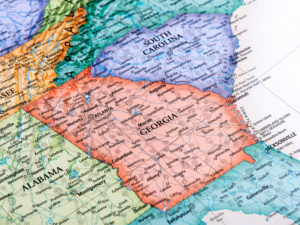
The Georgia Promise Scholarship school list is now available. Families zoned for one of 512 elementary, middle, and high schools across Georgia will eligible to apply for the new Promise Scholarship program.
Starting in the 2025-2026 school year, the Georgia Promise Scholarship will give families up to $6,500 per student to choose the learning environment that’s best for their child.
Families can apply for the Georgia Promise Scholarship between March 1 and April 15, 2025. Sign up here for application tips and updates.
There’s exciting news for Georgia families and students:
This program offers students a chance to access education opportunities best suited to their needs. The funds can be used for private school tuition, homeschooling expenses, tutoring, or other approved education expenses. The total amount of scholarships is capped at $141 million for the upcoming school year. That amount is estimated to cover around 22,000 students.
The first application period is now open and will run through April 15, 2025. Families can learn more at mygeorgiapromise.org.
If your student is zoned for a school on the Georgia Promise Scholarship School List, your family meets the attendance zone requirement to apply.
Does your family quality for the Georgia Promise Scholarship?
Parents can quickly determine their child’s eligibility by taking a 45-second quiz available on the GESA website.
Eligibility criteria:
To apply, students must meet the following requirements:
Be zoned for at least one of the 512 eligible public schools.
Have been enrolled in a Georgia public school for two consecutive semesters, or is a rising kindergarten student.
Parents must have lived in Georgia for at least one year, with exceptions for active-duty military families.
The program prioritizes lower-income Georgia families. If applications exceed available slots, priority goes to families with household incomes below 400% of the Federal Poverty Level (roughly $120,000 for a family of four).
Are Promise Scholarships a stable option for the future?
Promise Scholarships are off to a strong start. Governor Brian Kemp has allocated full funding for the program in his new proposed budget, which is pending approval by the state legislature. A bill has also been introduced, sponsored by Sen. Greg Dolezal, that would broaden eligibility for Promise Scholarships, including provisions for foster families.
Opportunities like the Promise Scholarship give families a brighter future
The creation of Promise Scholarships has been a crucial step forward for Georgia families. Education is the foundation for a thriving life. For families feeling limited by their current school options, Promise Scholarships provide the hope of access to a better fit for their child’s unique needs. Whether it’s finding the right private school, funding homeschooling expenses, or other learning resources, this program empowers parents to make the best decision possible for their children.
Key Points
Students from hundreds of public schools across Georgia can now apply for up to $6,500 per year to cover approved educational expenses, including private school tuition, tutoring, and more.
The program is available to students in the bottom 25% of Georgia’s public schools, enrolled during the previous two semesters or entering kindergarten, with lower-income families favored first.
Starting in the 2025-2026 school year, thousands of families now have greater access to flexible education options through the new Promise Scholarship.
Education is a vital pathway to opportunity, and every child deserves the chance to succeed. Unfortunately, many Georgia students remain stuck in underperforming schools without access to better alternatives. The Promise Scholarship aims to change that by expanding access to diverse, high-quality education opportunities.
What are Promise Scholarships?
The Georgia Promise Scholarship is a state-funded initiative designed to give families more control over their children’s education. Through this program, qualifying students will receive up to $6,500 annually* to cover a range of education-related expenses. Unlike traditional vouchers, which are limited to school tuition, Promise Scholarships provide greater flexibility. Funds can be used for approved expenses such as:
Private school tuition and fees
Tutoring services
Textbooks and curriculum
Education therapies
Education-related technology
Transportation costs
With this comprehensive approach, Promise Scholarships aim to help families create a personalized education path that meets their unique needs.
Who can apply?
Promise Scholarships are targeted to empower families with the fewest resources and the greatest need. There are specific eligibility criteria to qualify for the program, including:
Enrolled in eligible public schools: Students must be attending one of the bottom 25% of Georgia’s public schools (as ranked by the Governor’s Office of Student Achievement) during the 2025-2026 school year or be entering kindergarten.
Residency requirement: Parents must have lived in Georgia for at least one year, with exceptions for active-duty military personnel.
Income priority: If the number of applicants exceeds available funding, families with household incomes below 400% of the Federal Poverty Level (around $130,000 for a family of four) will be prioritized.
Funding is available for up to 20,000 students, creating access to resources and opportunities they wouldn’t otherwise have.
Key dates to remember
Student applications will open four times in 2026:
March 1— March 31, 2026
May 1—May 31, 2026
August 1—August 31, 2026
November 1—November 30, 2026
Families are encouraged to start preparing now by gathering necessary documentation and confirming eligibility to apply as soon as possible.
What can parents do now?
Parents can take steps today to prepare for the Promise Scholarship application windows. Here’s how you can get started:
Check for eligibility: Ensure your child qualifies by reviewing the criteria. This includes confirming their enrollment in a qualifying school or kindergarten for the 2025-2026 school year. See eligibility details here.
Prepare documentation: Gather residency proof and any other information that may be required for the application.
Start exploring education options: While the list of eligible schools hasn’t been released yet, it’s a good idea to consider the types of educational settings or services that could best meet your child’s needs. A list of participating private schools is available here.
Learn more about education choices: For additional guidance, consult the Parents’ Guide to Education in Georgia to better understand the options available to you and your family.
PEACHTREE CORNERS, GA—Today, the Georgia Center for Opportunity (GCO) applauded Gov. Brian Kemp and the Georgia legislature for ushering into law the Promise Scholarships bill that will bring much-needed relief to the over half-a-million low- and middle-income kids stuck in low-performing schools.
“We are thankful to Gov. Kemp and the many House and Senate lawmakers who recognized the urgency of the moment and advanced a bill to provide much-needed opportunity to bolster academic options,” said Buzz Brockway, GCO’s vice president of public policy. “Passing Promise Scholarships is a momentous milestone for tens of thousands of Georgia kids struggling in a system that doesn’t work for them. It recognizes that Georgia is a diverse state with a diverse set of needs for education. After years of work, this bill is a positive step toward shaping an education system that honors every child’s unique situation and prevents a lack of quality education from locking children and communities into poverty.”
Senate Bill 233 will make students from the lowest performing 25% of public schools eligible to receive $6,500 a year set aside in an account. Parents can then use the funds to cover approved educational expenses, including private school tuition, books, uniforms, and even transportation.
SB 233 also gives first priority to students from families below 400% of the federal poverty level — around $120,000 a year for a family of four. Students above that threshold will be allowed to participate if funds are left over after the lower-income students are served.
Promise Scholarships will serve an estimated 21,500 kids when the program goes live for the 2025-2026 school year.
Georgia now joins a growing list of states offering educational options for all students. In the Southeast, Alabama, Florida, and North Carolina have recently enacted universal Education Savings Account programs, while South Carolina is in the process of creating a universal program in the coming years.
“The urgency to create an education lifeline for kids can’t be overstated. Education is a basic need. Lack of access to quality options is a major cause of many of the ills in our society, including putting a cap on upward mobility. A lack of quality education locks children into poverty and prevents communities from thriving,” said Brockway.
Although GCO praised passage of Promise Scholarships, Randy Hicks, GCO’s president and CEO, cautioned that the bill is just a first step.
“Unfortunately, the final compromise bill was watered down in a number of ways that will limit its reach,” said Hicks. “Funding for Promise Scholarships is capped to 1% of public school funding and there is a 10-year sunset on the entire program. It’s a positive step that over 20,000 students will be eligible for educational freedom, that number is a drop in the bucket compared to the need. We will continue building on this foundation for the future so that all of Georgia’s schoolchildren have options.”
###
Georgia Center for Opportunity (GCO) is independent, non-partisan, and solutions-focused. Our team is dedicated to creating opportunities for a quality education, fulfilling work, and a healthy family life for all Georgians. To achieve our mission, we research ways to help remove barriers to opportunity in each of these pathways, promote our solutions to policymakers and the public, and help effective and innovative social enterprises deliver results in their communities.
Georgia lawmakers and Gov. Kemp have officially passed Senate Bill 233, which creates a new education option called the Georgia Promise Scholarship program.
Promise Scholarships will help students in low-performing public schools. Eligible students can receive $6,500 scholarships to access different education options that match their needs.
The program is a positive first step toward an education system that works for every Georgia kid. To make an even bigger difference, lawmakers should work toward opening up the program to all Georgia students.
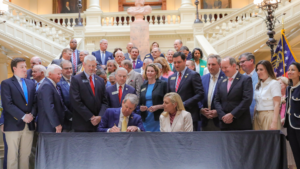
On April 23, 2024, Governor Brian Kemp signed SB 233, the Georgia Promise Scholarship Act, into law. This education savings account program—the first of its kind in Georgia—will give parents access to $6,500 state-funded scholarships that they can use to afford the education option best suited to their child’s needs.
The Promise Scholarship Program empowers parents to give their kids quality education and brighter futures
Promise Scholarships will be state-administered, state-funded accounts that give parents $6,500 per year and per student to use for approved education expenses. The program will be available beginning in the 2025-2026 school year.
Parents can use these scholarships for a variety of education costs, including:
Tuition and fees for private schools, online classes, college courses, and vocational programs
Tutoring services
Curriculum and textbooks
Educational therapies
Technology, including adaptive or assistive technologies for students with special needs
Transportation costs
Because of this flexibility, Promise Scholarships allow parents to consider a wide range of options—from homeschooling to private schools to other unique combinations of education services.
“The best gift we can give our next generation is a quality education that opens the doors for new opportunities.” — Randy Hicks, GCO President & CEO
Promise Scholarship eligibility focuses on low- and middle-income students
SB 233 limits Promise Scholarship access to students enrolled in the bottom 25% of Georgia’s public schools, as ranked by the Governor’s Office of Student Achievement.
First priority will also be given to students from families below 400% of the federal poverty level—around $120,000 a year for a family of four. Students above that threshold will be allowed to participate if funds are left over after the lower-income students are served.
These parameters—plus the funding cap that SB 233 puts on the program—means that Promise Scholarships will serve an estimated 21,000-22,000 kids out of half a million that are stuck in low-performing public schools.
The Georgia Promise Scholarship is an important step for updating our education system
SB 233 is a good step toward giving Georgia families access to high-quality, diverse education options. With more education options, students will have even better opportunities to get an education that’s tailored to their needs and sets them up for success in today’s fast-changing world. But if Georgia is serious about investing in our communities, we must keep working to close the education opportunity gap for all of Georgia’s kids.
By passing SB 233, Georgia is catching up to neighboring states like Alabama, Florida, North Carolina that have already adopted education savings account programs.
While Georgia is starting out with narrow student eligibility, these other states are opting for universal ESA programs, opening access to all students. Georgia will need to be open to this model if we want to give our own students the best possible academic outcomes and opportunities for a flourishing life.
Thank you to Gov. Kemp and the lawmakers who recognized the urgency of the moment and passed Promise Scholarships to strengthen the key building block of education for thousands of kids across the state. It’s a momentous step toward a system where every child has access to quality education and a good life, regardless of income, race, zip code, or other life circumstances.
On March 14, 2024, the Georgia House voted 91-82 to pass Promise Scholarships (Senate Bill 233: The Georgia Promise Scholarship Act). The bill was confirmed in the Senate and signed into law on April 23, 2024.
SB 233 will create a much-needed education option for students zoned for a school ranked in the bottom 25% of public schools.
The Georgia House added parameters to the bill that reduce accessibility and set the bill to expire after 10 years. These issues will need to be addressed moving forward so that every child can have better opportunities to access quality education in Georgia.
On March 14, 2024, the Georgia House voted 91-82 to pass Promise Scholarships (Senate Bill 233: The Georgia Promise Scholarship Act). This bill is an important first step in extending an education lifeline to low- and middle-income kids in under-performing schools. While there is still much more to do as we press toward universal school access, we are thankful to the many House lawmakers who put the needs of kids above politics to advance this measure.
What’s in the Promise Scholarship Bill?
With these Promise Scholarships, students in the lowest performing 25% of public schools will be eligible to have $6,500 a year set aside in an account. These are the funds the state would have spent for their public school education. Under this bill, parents can direct the funds to cover approved educational expenses, including private school tuition, books, uniforms, and even transportation.
SB 233 also gives first priority to students from families below 400% of the federal poverty level—around $120,000 a year for a family of four. Students above that threshold will be allowed to participate if funds are left over after lower-income students are served.
To give public schools time to plan and adjust, public school districts will still receive state funding for a period of two years to cover any students leaving to participate in the program.
“Our job is not decide for every family but to support them in making the best choice for their child.” — Gov. Brian Kemp, 2024 State of the State Address
Limits to Promise Scholarships
While we are thankful that the bill moved forward in the 2024 legislative session, the version of SB 233 passed by the House is watered down in significant ways:
It restricts eligibility and access: The bill caps the amount of revenue available to fund Promise Scholarships to not exceed 1% of public school funding. Even if parent demand maxes out the program, this amount only covers an estimated 21,000-22,000 kids. That’s 0.012% of Georgia’s public school student population, and only a fraction of the 500,000+ kids that are stuck in the bottom 25% of public schools.
It applies expiration dates: Unless a future legislative body evaluates the program and chooses to extend it, the Georgia Promise Scholarship program will expire in 10 years. In that decade, lawmakers will still have to vote annually to fund the program. These measures add a layer of uncertainty that makes it difficult to secure a future of success and opportunity for our kids.
Curious how your representative voted on SB 233? Georgia’s General Assembly puts the voting records online. Go to the legislature’s website to see the breakdown of support among state representatives.
Student success is at the heart of Promise Scholarships
The passage of SB 233 can’t come soon enough. Georgia is now surrounded by states that are aggressively and urgently addressing the needs of the future generations by adopting education savings accounts, or ESAs, that are open to all students. Alabama, Florida, and North Carolina have recently enacted universal programs, while South Carolina is in the process of creating a universal program in the coming years.
Every semester, our K-12 students have academic milestones they are supposed to hit. And we know that when they don’t achieve these goals, they are more likely to fall further and further behind their peers, putting themselves and their futures at risk.
SB 233 provides immediate help by making Promise Scholarships available beginning with the school year in 2025.
Education is a building block of a flourishing life. Without access to quality education in Georgia, our kids and our communities will continue down a path where success and opportunity are not open to everyone in the state. An increasing number of families are looking for alternatives, and we must work to provide opportunities that meets the needs of all students, not just a few.
On March 29, 2023, Georgia Promise Scholarships (Senate Bill 233) failed by only a few votes in the House of Representatives. These leaders had another chance to vote on the bill in 2024.
SB 233 creates a much-needed education option for students zoned for a school ranked in the bottom 25% of Georgia publis schools. Of the 16 Republicans who voted against Promise Scholarships in 2023, 13 have schools in the bottom 25%.
More research is showing that more education choice helps public schools and translates to better academic achievement, especially for low-income students.
On March 29, 2023, the Georgia Promise Scholarship Act (Senate Bill 233) failed by a vote of 85-89 in the House of Representatives, despite passing the Georgia Senate on March 6, 2023.
At the time, that was the furthest that an education savings account bill had advanced in the Georgia Legislature. Despite having support from Governor Brian Kemp, Lt. Governor Burt Jones, and Speaker Jon Burns, the bill still came up six votes short of passage in the House.
Georgia needs Promise Scholarships to build its future workforce and prosperity
In late 2023, Governor Brian Kemp announced a new program called Georgia Match. Georgia Match seeks to connect every high school senior with a post-secondary education path that meets each student’s needs. The program brings unprecedented cooperation between the Georgia Department of Education, The Technical College System of Georgia, and the University System of Georgia. It’s not an exaggeration to say this program can potentially transform Georgia’s educational system and workforce.
SB 233 would allow students zoned for a school ranked in the bottom 25% for two consecutive years, according to Georgia’s College and Career Readiness Performance Index (CCRPI), to use a Promise Scholarship.
Promise Scholarships would allow these families to access education options that they might not otherwise be able to afford or use. The scholarship could be applied to private school tuition, homeschooling materials, or other educational expenses defined in the bill.
The state would put the scholarship amount ($6,500) in a parent-directed account controlled by the state of Georgia for these purposes.
Based on CCRPI scores, which were last calculated in 2018-2019, 298 schools currently fall into the bottom 25% criteria. These schools are located all across Georgia, but mostly in areas of high poverty.
It’s important to note that limiting the Promise Scholarship to only the bottom 25% of schools doesn’t cover all the schools in Georgia that receive D or F grades in CCRPI.
To see Georgia Match fulfill its potential, K-12 students must be prepared to succeed in the post-secondary education path they choose—especially those students eligible for a Promise Scholarship and those who deserve better economic and social opportunities to escape poverty.
“Our job is not decide for every family but to support them in making the best choice for their child.” — Gov. Brian Kemp, 2024 State of the State Address
[16 Republican legislators opposed Promise Scholarships in 2023. Here’s why they should have changed their vote.
Over the past 10 years, Republican governors and legislators have passed and tried to implement reforms meant to improve Georgia’s lowest-performing public schools. From the failed Opportunity School District constitutional amendment to the all-but-gutted Chief Turnaround Officer legislation, efforts for transformational reform within the traditional public school system have been stifled.
Many of the schools in question also receive intensive assistance from the Department of Education (DOE) via the Comprehensive Support and Improvement (CSI) and Targeted Support and Improvement (TSI) programs. These programs require schools to develop improvement plans in close collaboration with DOE officials.
While these programs have helped, there’s an important detail that voters and parents should know about. Several of these schools in the bottom 25% of CCRPI performance today were schools that qualified for the Opportunity School District program back in 2015.
In other words, these schools are still among our state’s lowest-performing schools after eight years of intensive assistance. Should we continue to tell parents to wait for another program? If your children or grandchildren were zoned for these schools, would you tell them to wait?
For several legislators, including 16 Republican Representatives, the answer has been “yes.”
Of the 16 Republican legislators who voted against SB 233 in 2023, 13 have public schools in their districts that are in the bottom 25%. Yet all 16 of these districts have private schools ready to accept more students. In addition, Georgia has a robust homeschooling community in all corners of the state, as well as a burgeoning microschool movement. Promise Scholarship recipients can access these options no matter where they live.
Georgia’s Promise Scholarship Explained Find out what the program is, how it works, and which students will be eligible.
To meet Georgia’s diverse student needs, the answer is to expand parental options.
If we truly want Governor Kemp’s Georgia Match program to succeed, parents need more options. If we truly want all of Georgia’s students to obtain a quality education and pursue post-secondary education that prepares them for a meaningful career and a stable life, parents need more options. If we want Georgia’s economy to continue to thrive and attract new industries to our state, parents need more options.
Expanding parental options will lift our entire educational system. To see this in action, all we need to do is look south. A November 2023 study of Florida’s educational landscape found that as school choice programs matured, the positive effects were felt across the board, including within the public schools:
“We find that as public schools are more exposed to private school choice, their students experience increasing benefits as the program matures. In particular, higher levels of private school choice exposure are associated with lower rates of suspensions and absences, and with higher standardized test scores in reading and math.”
The students showing the most gains? Students with low–socioeconomic status (SES).
Far from harming public schools, school choice actually improves public schools. Georgia’s students deserve to have this opportunity as well.
With SB 233, Georgia legislators had an incredible chance to set Georgia students on a path toward academic success and a bright future. Thankfully, SB 233 and Georgia’s kids received the support needed from lawmakers, and the Georgia Promise Scholarship passed in April 2024. The progam will become available for Georgia parents and students in Fall 2025.
Indiana passed a scholarship program that will allow any family below 400% of the amount required to qualify for the federal free and reduced-price lunch program to access education scholarships.
South Carolina expanded their scholarship program with similar guidelines to those in Indiana.
Georgia failed to pass a transformative education scholarship program that would have positively impacted the lowest performing communities in the state.
The year isn’t even halfway over, and six states have already enacted laws that create universal educational access for all students in 2023.
In total, Iowa, Utah, Arkansas, Florida, and now South Carolina and Indiana have enacted either universal—or nearly universal—educational opportunity this year. That’s on top of Arizona and West Virginia, which did so in 2021 or 2022.
Each state has its own version of a scholarship or educational savings account that the state funds for children’s needs outside of traditional public school. For example, these types of accounts send a portion of each student’s public school dollars to allow the child to attend a private school of their family’s choice. In some cases, families who choose to homeschool their children can use the funds for educational expenses.
Indiana
Indiana is the most recent state to join that list. That state’s scholarship program will now be available to any family below 400% of the amount required to qualify for the federal free and reduced-price lunch program. That translates to a salary of around $222,000 a year for a family of four.
Previously, requirements were in place that further limited the program, such as it only being open to families with students previously enrolled in a public school or to children in the foster care system. Under the new law, only an estimated 3.5% of Indiana’s families won’t qualify for this option.
The Georgia Center for Opportunity led a state-wide campaign to educate parents and legislators on the positive impact that choice brings to public education.
South Carolina
Meanwhile, South Carolina governor Henry McMaster recently signed a bill into law that eventually expands that state’s scholarship program to families at or below 200% of F&R priced lunch as well. The program is more limited in scope than Indiana’s. It will only be available to 5,000 students the first year, 10,000 the second year, and 15,000 students the third year.
South Carolina’s program allows for the establishment of Educational Scholarship Trust Funds. Funds deposited in these accounts can be used not only for expanded school choice, but may also be used for special needs therapies, such as physical therapy, speech therapy, and occupational therapy. Tutors and transportation may also be included for families caring for special needs students.
So, what happened in Georgia?
If the Georgia Legislative Session had passed Senate Bill 233, also known as theGeorgia Promise Scholarship Act, it would have put $6,500 per student back into parents’ pockets so they could fund the best educational approaches for their children. The funds would have been eligible for use as private school tuition and public school alternatives, such as homeschooling.
According to the Georgia Department of Education,families who qualified would have had students enrolled into the lower 25% of schools in Georgia. This amounted to roughly 400,000 students.
SB 233 was a strong bill, passing the Senate with unanimous Republican support and going on to the House. Despite receiving no support from Senate Democrats, it’s excellent news that the bill made it so far through legislative proceedings.
The House vote proved to be tougher, with bipartisan representatives voting against it. Rep. Mesha Mainor of Atlanta was the lone Democrat in the House to vote in favor. On its final day of session, SB 233 was only six votes short of the 91 it needed to pass.
The good news is that the Georgia Promise Scholarship Act is eligible for reconsideration during the 2024 legislative session.
Looking to what’s next
Public schools are not the problem. We love and support public schools—they will remain the right and best choice for the vast majority of Georgia families. But we can love, support, and move public schools forward while expanding education into new areas.
Public education is a foundational and vital part of the success of American society, but an increasing number of families are looking toward alternatives—and their choices are just as valid. We must work to deliver quality education to all students, which means finding ways to support families who take a different schooling path. While many will access their education through public schools, not all kids are a perfect fit for that system, and they cannot be left behind.
Key Points
Georgia lawmakers are considering an increase to the cap on Georgia’s Tax Credit Scholarship program.
The communities’ positive response to the scholarship opportunity has created demand above and beyond what the program can currently handle.
Raising the cap on Georgia’s Tax Credit Scholarship program would allow the program to serve more families who otherwise may not be able to afford private school as an education option.
In 2024, Georgia legislators are considering an expansion to Georgia’s Tax Credit Scholarship program. Through this program, businesses and individuals can donate toward private school scholarships for K-12 students enrolled in public schools. In return, they receive a dollar-for-dollar state income tax credit.
In 2022, the state Legislature raised the program cap by $20 million, bringing it up to $120 million from $100 million. But that increase hasn’t proven large enough to keep up with communities’ positive response. Lawmakers are now looking at a proposed 2024 bill that would raise the total program cap to $200 million, and expand the number of students the program can serve.
“It’s clear that demand for the program is strong. The existing $120 million cap was met on the very first day of applications in 2023,” noted Buzz Brockway, Vice President of Public Policy at the Georgia Center for Opportunity. “Georgia families are demanding more options, and lawmakers would be wise to take notice.”
Here are a few reasons why raising the cap on Georgia’s tax credit scholarship program would help students, parents, and the state’s overall education system:
1. The Georgia Tax Credit Scholarship program makes private school access more equitable.
Private schools are often an education option available to families who can afford them. Through Georgia’s Tax Credit Scholarship, lower and middle-income families can get financial support to access private schools as a viable option when the local public school isn’t the best fit for their child.
But what about families in rural areas? According to a 2017 national study by The Brookings Institute, 69% of families living in rural areas have a private school within 10 miles. Increasing the program cap for Georgia’s tax credit scholarships would help rural Georgia families in this situation. For those that aren’t, there’s still a benefit: Growing the tax credit scholarship program is a way to encourage more private schools to launch and fill education gaps in areas where options are fewer and farther between.
2. Raising the program cap makes it possible to serve more kids.
Currently 500,000 Georgia students are in schools that are underperforming or simply aren’t meeting their specific needs. Increasing the program cap means more families could enjoy the flexibility to consider one of Georgia’s 824 private schools when seeking out a school that matches their kid’s learning style, their personal values, or other preferences. In 2021, 17,440 scholarships were awarded to eligible students. Imagine how many more kids we could help if Georgia’s tax credit scholarship program expanded to $200 million.
3. Expanding our tax credit scholarship program would bring Georgia up-to-date with other states.
Florida, Oklahoma, Pennsylvania, Arizona, Iowa, and Nevada have all taken note of the growing popularity of tax credit scholarships and have responded by increasing caps on their various programs. Whether it’s tax credit scholarships or other options like Education Savings Accounts, the momentum to embrace more education choice programs is building across many states, raising the question of whether Georgia will keep up.
With Georgia’s Tax Credit Scholarship, kids in Atlanta’s crime-ridden neighborhoods have found a safe place to go to school, allowing them to improve academically and pursue their dreams.
4. It’s one option to relieve parents’ frustration with one-size-fits-all education options.
A recent poll of 5,000 parents, conducted by the Harris Poll, revealed that 20% of parents switched schools for their kids during the pandemic. The pandemic itself is a tired topic, but the trend it introduced in education isn’t: Over the last two years, parents’ desire for more education options has skyrocketed as many of them realize that traditional public schools don’t work for every kid.
By investing in educational choice programs, we can guarantee families access to a variety of stellar learning experiences that help their children reach great heights—academically, socially, vocationally…the list goes on. Georgia’s tax credit scholarship program makes private schools one of these meaningful options, regardless of where families live or how much they earn.
5. Increasing education tax credits gets more businesses and individuals involved in our kids’ futures.
A quality education, tailored to a student’s unique needs, prepares kids for the workplace, for community involvement, and for life. That’s why education is more than a parental concern—it should be a community priority. We all benefit when kids have access to the education option that will help them become healthy, successful citizens, employees, relatives, and friends as they grow up. Georgia’s Tax Credit Scholarship gives our communities—both businesses and taxpayers—a way to directly invest in K-12 education and ensure bright futures for our students. By raising the program cap, we can expand the investment opportunities available to current donors and to new businesses and individuals who want to get involved.
Related Reading: Georgia School Choice In the News
With respect to school openings during this COVID-19 pandemic, a public health professor recently observed, “There are no ideal solutions here. No matter what schools do, they won’t make everyone happy.” Of course, that is true in the monolithic K-12 education system we have now. But we can move away from a monolithic system. We can move to a system that empowers parents with more choices.
Calls for giving families choice in K-12 education go back to Thomas Paine in the Rights of Man, John Stuart Mill in On Liberty, and—the modern father of choice in education—Milton Friedman. Instead of giving government exclusive control over taxpayer funds for the education of youth, Paine, Mill, and Friedman suggested that taxpayer funds should go directly to families of school-aged children—where families would decide where their children are educated. The core issue is this: Who decides how taxpayer funds for education are spent—the government, as is largely the case now, or families?
Many reasons to support expanded educational opportunity
Giving parents control over where their children are educated allows them to choose school and non-school offerings that are tailored to their children’s interests and needs. Under such a choice system, prospective schools and other education providers are incentivized to provide customized educational and social environments that meet the interests and needs of students and their families. And the evidence—including evidence here in Georgia—suggests that families that exercise choice are overwhelmingly much happier with the services in their students new schools of choice.
In this era of COVID-19, there are now additional reasons to support educational opportunity—families have different health risk tolerances; families, students, and teachers have different underlying health conditions; and families have different health preferences. Public school districts going fully online do not permit families to sort their children into schools (and teachers to sort into schools) based on their varying health preferences. When entire public school districts go entirely online, they are providing what many families desire, but they are not providing what many other families want or need.
As an example, a family with (a) one parent who can stay at home or work part-time from home; (b) a family member with an underlying health condition; and (c) older children may be delighted that their public school is fully online.
However, other families may not be happy with fully online schools. A family with one parent who works full-time outside the home; (b) young children; and (c) no underlying health concerns may desire five-day, full-day, face-to-face schooling with safety precautions. Online schooling may force some parents to quit their jobs. Of course, families of children with special needs may be subject to the most hardships with online schooling.
It is impossible for a one-size-fits-all approach to health concerns to meet the needs of all families. Meeting the diverse educational and social needs and interests of children—and now the differing health needs of students and their families in this era of COVID-19—is only possible in a choice system.
What can states do to provide more educational choice to families?
First, to the extent permitted by federal law, states should use existing and forthcoming federal education funds to offer families choice. South Carolina and Oklahoma are using federal CARES funding to provide scholarships for school-aged children. South Carolina is providing scholarships to defray private school tuition costs up to $6,500 for 5,000 students from low- and middle-income families, where $6,500 is just over half of what taxpayers spend to educate students in their public schools.
The track record of existing education choice programs in the United States is strong. COVID-19 only makes the case for choice stronger. Hopefully, policymakers will rise to the occasion and give students and families an educational lifeline during these challenging times.
A quality education is key to a child’s future success. Academic achievement paves the way to a good job, self-sufficiency, and the earned success we all want for our children. To learn more about education options in Georgia click here.
Microschools, hybrid options, and online classes: Education during COVID and beyond
By Eric Wearne
On the afternoon of Monday, July 20—just a few weeks before schools would normally be opening—the Catholic Archdiocese of Atlanta announced that their schools would in fact all be opening for live classes in August. The Superintendent’s statement suggests “…the benefits of in-person instruction, compared with remote delivery, far outweigh the possible risks involved.” Families uncomfortable with in-classroom instruction may choose online instruction, following individual school plans.
Just a few hours before the announcement from the Archdiocese, Gwinnett County Public Schools—the largest public school system in the state—announced that they would be starting the school year completely online. Though the system had announced earlier that it would give parents the choice between in-person and online learning, the most recent statement says, “The current COVID-19 situation required a change in those plans.” This has led to significant online anger and multiple protests at the system’s central office.
Both the Catholic Archdiocese schools and Gwinnett County Public Schools say they based their decisions following federal and state health guidelines and the advice of medical and educational experts. Why, then, such opposing decisions from the two school systems? Are the health guidelines contradictory? Are the Archdiocese and Gwinnett cherry-picking the medical and educational experts they listen to?
Likely none of the above. What we may instead be seeing is simply that smaller entities can be more nimble. And that larger entities would be well-advised to do what they can to learn from that agility.
At an event earlier this month, the founder of the growing microschool network Prenda, Kelly Smith, suggested that an important lesson all school systems might learn from smaller organizations—especially given the large health, economic, and educational issues presented by the pandemic—is that they should accept and in fact facilitate more segmentation among their constituents. This may be particularly true for public school systems like Gwinnett, which encompasses a relatively large geographic area and serves over 180,000 students in 141 different schools. Many students would benefit from more choices in schooling even under completely normal circumstances. At a time when everyone’s circumstances are even more unique and individualized because of the differential impact of the pandemic on families, more flexibility is even more important.
A major complication in this debate is that the reasons families want to return to school vary so much. That is, for some families, the dynamics of learning at home simply do not work well. As examples, some families have students with special needs who require particular kinds of attention. Some families must work outside the home to survive financially. (A number of services are cropping up around Gwinnett County and elsewhere to facilitate online learning or simply childcare, set up by gyms, YMCAs, performing arts centers, or other places that are typically not full during the school day. While this is an example of civil society and the market responding to fill a need, it comes at a cost—sometimes a few hundred dollars per month, which many families cannot afford).
Some believe any school openings for face-to-face learning means the school/system will not adapt no matter what circumstances arise and that such decisions are consigning people to die. Of course that is not true. The Archdiocese of Atlanta and other private and public schools who are offering face-to-face schooling will continue to monitor schools and said they will close down quickly if necessary.
It is too early to know whether opening schools in-person will lead to a worse health crisis, or keeping them online will lead to even worse economic and psychological crises. Other creative solutions, like moving as many classes as possible outdoors, or operating on a hybrid home school-style schedule (2-3 days per week) might be worth exploring to a greater extent than they have been so far.
One thing both public and private schools should absolutely do in this moment is learn to be more responsive to smaller groups of constituents, rather than imposing singular, large-scale solutions. Families must, one way or another, find their way through this school year. They are already building solutions for themselves, outside of the constraints of their school systems. Legislators in Colorado, among other states, are considering whether to fund families directly in response to school closures. School leaders need to adapt, quickly, or risk being left behind.
Eric Wearne is a faculty member in the Education Economics Center at Kennesaw State University.
He is also the author of Little Platoons: Defining Hybrid Home Schools in America, forthcoming from Lexington Books. Learn more about Eric.
EVERY CHILD WITH ACCESS TO A QUALITY EDUCATION
A quality education is key to a child’s future success. Academic achievement paves the way to a good job, self-sufficiency, and the earned success we all want for our children. To learn more about education options in Georgia click here.