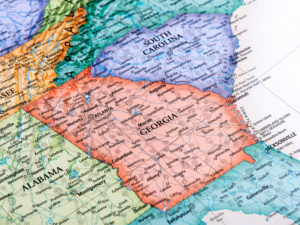
Higher numbers of non-working adults are concentrated in Georgia communities struggling with poverty and distress.

Lawrenceville, Georgia, launched a unique partnership called ReCAST (Resiliency in Communities After Stress and Trauma) in 2021 to address poverty and expand opportunities in the city. 

Because growing vibrant, resilient communities isn’t ever a solo endeavor, ReCAST coordinators connected with local organizations that could meet the needs of underserved residents where it mattered most—in Lawrenceville’s homes and neighborhoods. 

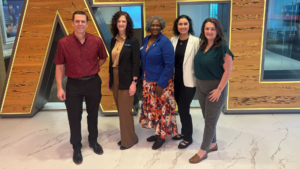
ReCAST engages three dynamic partners to meet its goals. Impact46 provides essential housing services to people experiencing financial hardship. View Point Health offers mental and behavioral health assistance. And the Georgia Center for Opportunity (GCO) helps chronically unemployed or underemployed people prepare for and find rewarding work.

Eric Cochling, GCO’s Chief Program Officer and General Counsel, noted:

“We chose to participate in ReCAST because of the comprehensive approach to addressing community needs envisioned by the initiative. The focus on collaboration among local groups and on helping families develop community relationships reflects GCO’s method of supporting people in need.”

Lawrenceville recently produced a mini-documentary highlighting the third year of ReCAST’s accomplishments. It shows what’s possible when community members unite to open doors to a brighter future for local residents.

Connecting Lawrenceville job seekers with meaningful work

Employment plays a key role in healing communities after stress and trauma. In Gwinnett County, where Lawrenceville is located, GCO’s BETTER WORK program furthers ReCAST’s goals by bringing together local employers, nonprofits, and mentors to help people find fulfilling jobs close to home.

Carolina Pachon, GCO’s BETTER WORK Program Manager in Gwinnett County, explained that the program changes lives by giving people “a sense of hope, stability, and a way forward.”

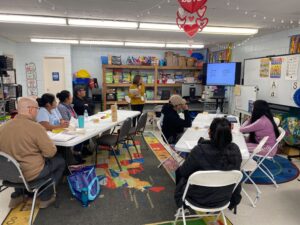
As part of the BETTER WORK initiative, GCO offers a class called Jobs for Life. The class teaches valuable work skills, but it’s much more than a job training or placement course. It helps participants form the supportive community relationships that can point them in a new direction in life.

During the class, Jobs for Life students learn that meaningful work brings more than just a paycheck. It provides a sense of dignity and purpose that’s essential for human flourishing. A rewarding job also gives workers the confidence and courage to rise out of poverty and build a better future. This resiliency then spreads, revitalizing and strengthening workers’ families and communities as well.

GCO’s programs are particularly impactful in Lawrenceville, where many residents struggle with barriers to opportunity. The city’s poverty rate is 17.2%, well above Gwinnett County’s average rate of 10.5%. The higher poverty rate also correlates with data showing that about 19% of prime-age (25-54) adults in Lawrenceville aren’t currently working.

Sparking change in a young man’s life

Josiah, a young Lawrenceville resident, found Jobs for Life at a point when he most needed his local community to listen and offer support. He was having a hard time finding a sense of purpose in his life.

Carolina described Josiah as shy at first, but during the class, she saw a big transformation in his mindset. Josiah’s self-esteem soared as facilitators and fellow students created a caring community around him. At the end of the program, he gave an inspiring graduation speech emphasizing the significance of the personal connections he’d made. “I’ve come to believe that the purpose of life is to build meaningful relationships with people,” he shared.

Josiah now works in a restaurant and has a passion for cooking. He’s looking for ways to combine this enthusiasm with his desire to serve others. “I’m super excited,” he said.

Josiah offered this valuable advice to others who are struggling: “Let go of uncertainty. If you think you want to do something, do it.”

Making Lawrenceville a true hometown

Communities grow stronger when people invest in the well-being of their neighbors. ReCAST enables Lawrenceville residents to do just that through vital local initiatives.

Support for neighbors who need a hand empowers people like Josiah to take meaningful steps forward, to rise out of poverty, and to help the whole community thrive. The interconnectedness that ReCAST has set in motion makes Lawrenceville a true hometown—a place to belong—for the individuals and families who live there.

new years resolution, 2024, year in review

Key Points

  • Research has shown that safe communities, stable relationships, and meaningful education and work are essential to making poverty escapable. 
  • In 2023, we focused on helping communities develop solutions and tools to improve public safety, jobs, education and student achievement, and family formation. 
  • Through these accomplishments in 2023, more communities are being empowered to help people imagine and pursue better futures for themselves. 

It seems like everywhere you go these days, people are struggling. You can see it on street corners, in grocery stores, in news headlines, and—most heartbreaking of all—in the eyes of the people who have lost hope.

What they need is opportunity. And that’s exactly what the mission of the Georgia Center for Opportunity (GCO) is built to deliver. As the year draws to a close, let’s take a moment to celebrate the good that has been done to alleviate poverty by removing barriers to opportunity and creating conditions that empower people to flourish and achieve their full potential.

The good news is that research consistently shows that people who experience personal safety, get a good education, find meaningful work, and have healthy, committed relationships only have a 2% chance of falling into poverty. And for those currently living in poverty, these opportunities are the way out to experience freedom and flourishing.

In 2023, GCO celebrated big wins in several key areas that foster community transformation: public safety, jobs, education, and family formation. Here are a few examples of how we’ve helped our neighbors live better and build thriving communities. 

Public safety

Thanks to our public safety research, we convened state policymakers and city leaders in Atlanta and Columbus to look at the causes of increasing violence, and provided a proven set of practical solutions for reducing crime—especially in low-income communities. At the national level, our public safety recommendations were well received in Dallas and Louisville, and an opinion piece we co-authored reached 28.7 million people through Newsweek. Soon thereafter, MSN and other media outlets amplified its reach to another 167.1 million Americans.

And given how important it is for people to live in safe communities where they feel comfortable walking around and living their lives, we also created a resource page on our website so that elected officials, law enforcement, and community leaders can easily find the best practices for addressing crime. 


Workforce

On the jobs front, our BETTER WORK program continues to help communities build local employment support systems that bring employers, nonprofits, and community partners together to help more Georgians find local jobs. We’ve also joined forces with Lyft to help people get to work and focused on solutions to the benefits cliff challenges that keep many mired in government dependency. 


Safety-net reform

This year, GCO remained on the vanguard of educating lawmakers and the public about the need for reforming the safety net. Broadly, we worked to reveal the challenges posed by benefits cliffs, which discourage people from looking for meaningful work and gaining independence. Specifically, we expanded our impact to Utah, Arkansas, and Missouri, in addition to launching a redesigned benefits cliffs website and calculator that adds Utah and West Virginia to the models.

As we educate states and businesses about the benefits cliff problem within the welfare system, we are also developing solutions that equip them to do something about it. This year, we released our first report focused on benefits cliffs solutions, which focused on fixes for the Supplemental Nutrition Assistance Program (SNAP).


Education

Our efforts to expand educational opportunity have given nearly 84,000 Georgia kids access to the schooling option that best fits their needs. And we led efforts to advance a groundbreaking school choice bill through the state senate. This means there’s strong momentum going into 2024 to expand education options for 500,000 more students stuck in Georgia’s failing schools. We also updated our Education Guide for parents and received the Lilburn Middle School Business Partner Recognition Award for partnering to deliver free relationship education classes for parents and students.

See How The Georgia Center For Opportunity Is Expanding Hope In 2024!

See How The Georgia Center For Opportunity Is Expanding Hope In 2024!


Family

For families, parents continued to graduate from our Strengthening Families Program. And GCO kicked off our Raising Highly Capable Kids (RHCK) program with a vision-casting meeting attended by more than 20 community organizations. By reaching into homes, schools, and faith-based groups, RHCK teaches parents how to raise responsible, caring kids—and turns local communities into nurturing places where healthy families help people escape poverty. An example of how RHCK brings key stakeholders together to foster thriving families is the Lilly Endowment grant that introduced the Parents First Initiative to Lawrenceville.


National and state impact

Finally, GCO had a number of important wins with far-reaching, favorable media coverage on topics we care deeply about. This means that our voice was out there advancing importance conversations about human flourishing. For example, The Wall Street Journal ran our opinion piece calling out pre- and post-COVID crime comparisons for what they really are—an excuse not to blame bad public safety policies. And RealClearPolicy ran an article on our ideas to make safety nets more successful at turning welfare into work support.

Beyond these, GCO’s views were featured in important conversations about Georgia’s position among the leading states for economic freedom and why people remain trapped in poverty when there are so many public assistance programs. And for those concerned about rising crime across the nation, the Atlanta Journal-Constitution carried our must-read piece on public safety.


Wrapping up

Of course, these are just a handful of GCO’s successes in 2023. Yet each win adds to the legacy we are building to help our neighbors enjoy meaningful and productive lives in safe, vibrant communities that value work, education, and family. We’re proud of our successes this year, and we look forward to continuing to advance common-sense policy solutions in 2024 that bring greater peace, dignity, and freedom to individuals and families across Georgia and beyond.

Georgia Center For Opportunity Press Release, current events, news, top stories

Lawrenceville, Ga. – Lilly Endowment Inc. has awarded an endowment grant to Lawrenceville First United Methodist Church. The grant will enable the church to facilitate the Raising Highly Capable Kids parenting program — called the Parents First Initiative — across the Lawrenceville community.

The Parents First Initiative is a unique partnership designed to empower parents to equip their kids for life. By leveraging the Raising Highly Capable Kids program, the initiative will help parents develop the skills they need while building the meaningful relationships that weave a community together.

“We are thrilled for the opportunity to work alongside Lawrenceville First United Methodist to make this curriculum available to more Georgia families,” said Joyce Mayberry, vice president of family at GCO. “The endowment will help this critical curriculum continue to thrive. Beyond resilient kids, we’re focused on building resilient communities. This grant will help us make a bigger difference in the lives of families across the state.”

“We need a village to raise kids today and we want to help build that village together,” said Rev. Dr. Adam Hilderbrandt of Lawrenceville First United Methodist Church. “Raising Highly Capable Kids’ 13-week course will give footings to build this village and the connections made will allow the village to grow from there.”

The Raising Highly Capable Kids program empowers adults to become stronger parents with healthier families. Its 13-week-long, evidence-based curriculum gives adults the tools and skills they need to confidently raise children who are caring, responsible, and healthy. 

Raising Highly Capable Kids is presented by the Georgia Center for Opportunity, in partnership with Rezilient Kids. It’s currently being offered to adults in communities across Georgia. 

The objective of Raising Highly Capable Kids is to help kids have healthier outcomes across all areas of their lives, including family life, academics, mental health, social wellbeing, and their eventual careers. By focusing on the family unit and the whole child, the program improves parent-child communication, strengthens bonds, and helps kids to avoid risky behaviors.

“We’re opening lines of communication between parents and students and improving academic outcomes,” Mayberry said. “And, we’re helping parents to see their strengths in parenting, equipping them with the right tools and resources to be successful.” 

The program also connects parents to one another, creating a stronger community as parents learn how to create healthier, more effective environments for their children. According to Mayberry, it’s critically important for parents to understand that they’re not alone, and they have support along the journey. 

One of the program’s most unique aspects is its focus on where parents excel in their roles as they raise their kids. 

“We’re here to support them and identify their strengths,” Mayberry said. 

According to Mayberry, this program isn’t just about improving parenting skills and kids’ outcomes in the here and now. It’s about facilitating change across entire communities and carrying those changes into the future for generations to come. 

“Through Raising Highly Capable Kids, we’re going to change the trajectory of families,” said Mayberry. “We’ll change the parents’ lives and the kids’ in turn. It’s all about generational transformation.” 

The bottom line is that communities need more programs like the Parents First Initiative. Raising Highly Capable Kids depends on community organizations, churches, and schools to get involved and help to facilitate its curriculum in local communities. From volunteer teachers to organizations that incentivize parents to complete their classes, there are many ways to get involved.

If you or your organization would like to help with Raising Highly Capable Kids, we’re looking for leaders in: 

    • School environments who can provide parents in their communities with the tools they need to help their kids succeed in academics
    • Churches who are willing to offer courses locally
    • Nonprofit organizations who are willing to host local classes 

There is also an ongoing need for volunteers to teach the courses wherever they’re made available.

Want to get involved? Get in touch with Joyce Mayberry at joycem@foropportunity.org.

Key Points

  • Positive relationships impact the opportunities and potential future for every child.
  • GCO is partnering with RezilientKids to bring the evidence-based program, Raising Highly Capable Kids to the Gwinnett area.
  • GCO is recruiting partners who are willing to local partners who could hold a class and for adults who might be interested in taking it.

Nothing has more impact on the life of a child than positive relationships.

That basic truth was the cornerstone of a kickoff event March 9 to launch the Raising Highly Capable Kids (RHCK) program across Georgia.

We’re thrilled to report that 43 people representing more than 20 community organizations attended the event at First United Methodist Church of Lawrenceville. The kickoff helped us build an inaugural network of RHCK trainers and liaisons who will help the Georgia Center for Opportunity (GCO) team bring the program to communities.

Attendees at the kickoff event heard from Angela Davis, regional representative for the Southeast region for RezilientKids, the national nonprofit that publishes the RHCK program. She shared how the program will work in Georgia.

Angela Davis of RezilientKids shares the power of Raising Highly Capable Kids with Gwinnett-area leaders.

Angela Davis of RezilientKids shares the power of Raising Highly Capable Kids with Gwinnett-area leaders.

What is RHCK?

GCO has partnered with RezilientKids to present the program to adults across Georgia. RHCK is a 13-week evidence-based parenting program developed to build stronger families by empowering parents with the confidence, tools, and skills they need to raise healthy, caring, and responsible children.

The program increases parents’ knowledge and skill level of the essential building blocks every child needs — the 40 Development Assets from Search Institute, which are proven to increase childhood resiliency and academic achievement.

The lessons are available to schools, nonprofits, churches, and other organizations focused on helping to build stronger families for Georgia — and ultimately stronger communities. Through a community grant issued by RezilientKidz, GCO is facilitating course offerings for interested parents who want to learn more effective skills and strategies as they raise their children.


What’s next?

We’re still looking for partners across Georgia to bring the RHCK program to parents. We are starting an interest list for local partners who could hold a class and for adults who might be interested in taking it.

If you are interested in referring contacts or getting involved in other ways, contact Joyce Mayberry, JoyceM@foropportunity.org, to start the conversation.

Story: Joyelle got an education, a job, and a promotion. She never expected her success would mean this. . .

Joyelle never expected to be a position where the very system she thought was a safety net ultimately failed her.


After fleeing an abusive relationship, this single mother of four ended up in public housing in Lawrenceville, Georgia. Until that point, Joyelle had never relied on welfare for help. She always paid her rent on time and made ends meet. So, falling back on public housing was an entirely new scenario for her. It was not where or how she wanted to live, or where she wanted her four children to grow up. 

That’s why she was determined to get back on her feet. She graduated from school and was offered a full-time job with the state of Georgia, a career trajectory that put her above the poverty line. Things were looking up. 

“I was excited and grateful,” Joyelle says. “I had worked hard: I started out with the state as a student assistant and worked my way up.”


Falling over the benefits cliff

But that’s when Joyelle got a shocking surprise: Due to her new salary, her subsidized housing allowance disappeared and she was forced to pay almost $1,000 a month in rent.

“I was heartbroken,” she says of learning that she was losing her housing subsidy. “You work hard. They tell you to go to school and get a job. You do all these things, and you’re still not able to provide for your family. That’s devastating. I suffer from anxiety. It causes stress. It causes severe depression.”

She now faces the difficult decision of looking to move but being unable to afford apartment rent even with her salary increase.


Hindering upward mobility

Joyelle encountered what we call the “benefit cliff,” where well-intentioned policies actually prevent people from getting off public services. They make just enough to not qualify for services, but not enough to make up for the services lost in extra income. The result is a system that keeps people trapped in poverty rather than one that propels them toward self-sufficiency and the dignity that comes with it.

“There’s no help for people like me, stuck in the wealth gap,” Joyelle shares. “You have help, but if you help yourself you’re faced with adversities that you shouldn’t be faced with.”

We believe that these services should move people into a prosperous life, not keep them stuck in cycles of dependency. Visit welfarecliff.org to learn more about ways to end benefits cliffs so that more Georgians can prosper.


Should you have any questions or comments about the content of this update, please email Eric Cochling.

Weather Dominates Week

As the General Assembly meets today for day 14 of the session, the subject dominating the headlines is the two days of utter chaos on Georgia’s roads this week. With so many children stranded at school and commuters stranded in their cars, the official response to the snow quickly took on political dimensions.

Our 5th Annual School Choice Celebration and Rally was cut short by the weather, but not before many of our participants were able to voice their support of school choice with their legislators. Thanks to all of our partner organizations, volunteers, and participating schools for braving the weather to show their support for more school choice options in Georgia. We’d like to especially thank the Georgia Charter Schools Association, Agudath Israel of America, Americans for Prosperity, Grace Scholars, Students First, and Hennessy Transportation for their partnership in hosting the event.

Legislation, Study Committees, and Rumors to Watch

– Education –

Given the high demand for Tax Credit Scholarships, Rep. Ehrhart (R-Powder Springs), introduced House Bill 759 that would raise the cap on the program from $58 million annually to $100 million, nearly doubling the size of the program.

In other education news, supporters of Parent Trigger legislation (House Bill 123) are hoping to see it resurrected this year after gaining some traction last session but ultimately failing to make it out of the General Assembly.

Finally, whatever your thoughts about the DeKalb School Board, it does seem strange that the private organization accrediting our school districts (SACS) is, itself, not subject to transparency, especially in regard to how it makes its accreditation decisions. Those decisions impact the public interest in a major way and should be open to public scrutiny. The Attorney General is right to be pressing the case.

– Adoption and Child Welfare –

Rep. Buzz Brockway (R-Lawrenceville) introduced House Bill 524 last session with the goal of making it easier for adopted individuals to access their original birth certificates and the information about birth parents they contain. The legislation, which is being reconsidered this session, was met with opposition by those concerned that disclosing information about birth parents could discourage adoption.

House Bill 771, sponsored by Rep. Jason Spencer (R-Woodbine), would effectively lift the statute of limitations related to civil claims for damages brought by victims of childhood sexual abuse. Currently, the law requires these claims to be brought by a victim within five years of turning 18 years old. Should this bill become law, suit could be brought against a defendant at any time.

– Constitutional Convention? –

Citing a crushing federal debt burden, continued overspending, out of control federal mandates, and overreaching constitutional interpretations, Senate Resolution 736, sponsored by Sen. Cecil Staton (R-Macon), calls for a constitutional convention of the states to amend the US Constitution. Presumably, the convention would allow for the states to address the problems cited by the resolution. Of course, any convention would also open the Constitution up to mischief, so caution is in order.

– Expansion of Medical Marijuana –

Rep. Allen Peake (R-Macon) introduced House Bill 885, referred to as Haleigh’s Hope Act (warning: link is to a heartbreaking video) on Tuesday which would expand the permissible medical uses for marijuana to include the treatment of seizure disorders. Under current Georgia law, extracts made from marijuana may be used to treat cancer and glaucoma patients only. Unlike other states that have recently legalized the recreational use of marijuana, House Bill 885 specifically states that it is not intended to encourage recreational use and requires the delivery of the drug to be accomplished in the ways virtually all other drugs are delivered (i.e. via pill, liquid extract, etc.) and forbids smoking as a form of delivery.

Upcoming Events

Our friends at the American Federation for Children are hosting a nonpartisan candidate training school in Atlanta on February 22nd. The training is free but requires registration to attend. For more information, please see this flyer for the event or email Brian Pleva to register.

Thanks to Jamie Lord, our director of government affairs, and Jacob Stubbs, our legislative intern and John Jay Fellowship alumnus for their able contributions to this update.


Subscribe

* indicates required

Subscribe

* indicates required