HomePostTopic: Interpersonal relationship

Interpersonal relationship

Key Points

  • Andre and Takara Knighton have been married for 15 years. 
  • The couple was facing some challenges in their relationship, and Elevate turned out to be just what they needed!
  • Learn more about Elevate at https://foropportunity.org/elevate/

Andre and Takara Knighton stumbled across the Georgia Center for Opportunity’s Elevate relationship enrichment class purely by accident. But it was a wonderful accident! The couple was facing some challenges in their relationship, and Elevate turned out to be just what they needed. Check out this Q&A for more.

Q: Please introduce yourselves – your family background, kids, jobs, school, work, where you live, etc.

We are Andre and Takara Knighton. We have been married for 15 years and produced two beautiful and funny children. We currently live in Georgia but have lived in other states before deciding to reside here. We both have done social work in different fields, but after the pandemic we decided to focus more on our multimedia company, Vizion Image Media.

Q: How did you first learn about Elevate?

Takara learned about the program randomly at a county office. She was registering the car tags and while she was waiting saw a flier for Elevate. So she went home and started researching more about it.

Q: What prompted you to want to attend Elevate?

We were in a tight spot in our relationship. We had been allowing little things to bother us and had been a little distant from one another. We kind of lost ourselves in just life and slowly began to lose our friendship. So when Takara saw this flier and did her research on the program, we decided to just go for it. We went with expectations to try something new and honestly have set dates for ourselves that would also be a building block for our relationship.

To learn more about Elevate and how you can participate, visit:

foropportunity.org/elevate


Q: What was your experience like in the class? What did you learn?

 The class was eye opening. We saw couples who had been married for 20 years to newly married couples that also had the same stories. It was encouraging to know that there are couples—especially couples married longer than us—that just needed a little extra help to learn to reconnect. We learned how to look at each other again, but in a new light. The major thing we learned is how to stop and refocus our negative thoughts back to the positive. Sometimes when you have been with someone for so long you tend to focus on all the negative attributes of the person instead of the good qualities that brought you two together. Also, you forget to tell your spouse how much they mean to you and remind them of why you feel in love. Now we are telling each other almost two to three times a week what we appreciate about one another.


Q: Of the seven core relationship skills and qualities for success, which one did you find most impactful for your own relationship?

Definitely “Enlighten.” We weren’t dealing with each other in a healthy manner because we only focused on the past. We forgot that people can change and likes and dislikes can change. We still looked at each other as the 20-somethings we used to be. So we had to become enlightened about who our spouse was again. We had to discover our passions and loves separately and apart. We had to be more sensitive to each other’s feelings and listen. We had to rediscover “us.”  


Q: What are some reasons you can think of for other couples to attend Elevate?

We believe that everyone should experience this class because it does open your eyes to some questions that you may never have thought to talk about before. You can be married for two years or 25 years and still never think to ask your partner some of these questions. This class allows you to explore a new part of you, and the you in your relationship. People change over time and so does your relationship. So instead of ditching it because you changed, learn how to deal with the new you in your relationship and discover how you both can make the changes work.


Q: What are your future goals and plans?

 We plan on dating each other more and trying new things together. We definitely want to travel overseas again and take our kids on their first overseas adventure so they can learn about life and other cultures.


Key Points

  • Elevate program: couples are enrolled in eight 90-minute sessions that cover the seven core skills and qualities for relational health.
  • Elevate is available free-of-charge to couples.
  •  Elevate classes provide — an opportunity for couples to practice better intentionality, to understand their partner better, and how to prioritize their relationship.

Today, couples face both internal and external pressures like never before. Many couples who weren’t struggling before the pandemic are struggling now, while those who were already in crisis now face an even worse situation.

Thankfully, there is a resource for couples in Georgia. It’s called the Elevate program and it’s a core part of the Georgia Center for Opportunity’s (GCO) mission.

Through the Elevate program, couples are enrolled in eight 90-minute sessions that cover the seven core skills and qualities for relational health. Given the need for a remote option, workshops are available both in-person in 12 counties in Georgia — including Gwinnett, Henry, and Houston counties — and virtual workshops where couples can participate from home.

Topics covered include how to:

  • Be more intentional and focused in your relationship
  • Better manage stress in your life
  • Strengthen your connection with each other
  • Develop a greater appreciation for one another
  • Spend more quality time together
  • Deal with differences in healthy ways
  • Build support for your relationship and family

To learn more about Elevate and how you can participate in one of the upcoming workshops, click here.


To learn more about Elevate and how you can participate in one of the upcoming workshops, click here.

One of the best parts is that Elevate is available free-of-charge to couples. This is made possible through a federal grant through the Fostering Relationship and Economic Enrichment Project (Project F.R.E.E.).

There is a common thread in what Elevate classes provide — an opportunity for couples to practice better intentionality, to understand their partner better, and how to prioritize their relationship.

“I appreciate my spouse more as a result of the Elevate experience,” shared one class participant.

Another said, “The biggest thing we gained were ways to refocus the positivity in our relationship even when conflict arises and life is difficult.”

Still another couple shared that Elevate enabled them to communicate on a more intimate level: “We still have layers to work through but the Elevate experience has given us fresh insight to navigate our path forward.”

Here are a few of the reasons couples chose to enroll in Elevate:

  • Create better intentional dialogue between partners
  • Create a closer connection through communication
  • Meet other couples similar to us
  • Tips for understanding my partner better
  • How to handle stressful moments in a relationship

“What I love about Elevate are the techniques that they teach the couples when dealing or handling stressors in their life,” said Katherine Greene, healthy families program manager for GCO. “I also love the way it taps into helping couples understand how their emotions, thoughts, and behaviors can influence their decision making and physical health. Elevate is extremely engaging and makes every interaction applicable to the lives of the couples, their family, and community.”

family breakthrough

Transforming broken relationships into flourishing families

Key Points

  • Many people are experiencing broken relationships at home, work, and school.

  • Helping people have healthy relationships will result in nothing less than full community transformation.

  • The event is on Thursday, August 25, from 10:30am to 12:30pm at Sonesta Gwinnett Place Atlanta in Duluth, Georgia.

Family makes us stronger

The world is filled with negative headlines right now. These headlines reflect the real pain we’re all experiencing in our communities. Today, more than ever, we are experiencing broken relationships at home, work, and school.

In dating relationships, Pew Research tells us that nearly half of U.S. adults say dating has gotten harder for most people in the last 10 years. As for relationships at work, Gallup finds that 60% of people are emotionally detached at work and 19% are miserable. Meanwhile, the COVID-19 pandemic has contributed to increased rates of divorce.

We know that a key way to restore community health is by fostering healthy relationships. These relationships are the bedrock of our culture. When they suffer, we all suffer. Helping people have healthy relationships will result in nothing less than full community transformation.

That’s the theme of an upcoming Breakthrough event focused on family and relational health sponsored by the Georgia Center for Opportunity. The event is on Thursday, August 25, from 10:30am to 12:30pm at Sonesta Gwinnett Place Atlanta in Duluth, Georgia.

At the event, we will do a deep dive into the Attitudes, Behaviors, and Choices (ABCs)  of individuals and families and how those relate to relational and, more broadly, community health. You don’t want to miss it!


Register Now

Speakers at the event include:

  • Kristen Hypolite, COO of Every Woman Works
  • Dr. Natalie Looney, Principal of Summerour Middle School
  • Michael Doyne, Parent Instructional Coordinator at Lilburn Middle School

  • Ian Rowe, Senior Fellow at the American Enterprise Institute

Family makes us stronger

Each of us has within us the option of having the right attitude will drive our behavior which allows us to make better choices. When you leave the session, you’ll have a deeper understanding of what family formation means and the reason it is important.

We are inviting everyone to attend, whether you represent a school, a church, a government agency, institution of local government, or nonprofit, we want you at this event.


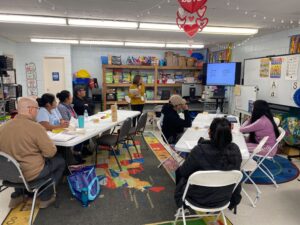
 It was a rainy Thursday night in Georgia, but that didn’t stop couples from gathering for a night of food and fun, and strengthening couples and marriages in their relationships.  #ElevateCouples Pop-up Event was hosted by GCO’s Family team (formerly Healthy Families Initiative) as a time to emphasize the importance of romantic relationships and keeping them thriving. Over a meal, couples were engaged in a course appetizer for the Elevate: Taking Your Relationship To The Next Level! Workshop. 

Elevate is offered to Georgia couples free of charge (as part of a partnership with University of Georgia and Project F.R.E.E.) as a time to invest in their marriage and relationships. The course is an eight week commitment from couples to discover ways to elevate their relationship to the next level. The course is offered in-person and virtually, and during this time couples are not in counseling, but lead through exercises to learn how to manage stress inside and outside of their relationship, conflict resolution, dealing with differences, and most importantly finding ways to connect to each other. It’s designed for couples of all ages (18 years old and up) who are in committed relationships and/or married. 

The pop-up event allowed couples a VIP look at what the course has to offer and how they can benefit from it both emotionally and physically. The group was able to hear one of the facilitators talk about highlights of the program and the best part of the course which is seeing couples grow. It didn’t stop there; attendees also watched a recorded testimony from previous workshop participants who explained the teachings of Elevate, and how it had a ripple effect in their family. What they learned went beyond their own marriage, but allowed for a trickle down of knowledge and modeling behavior for their grandchildren to see an example of a healthy relationship. 

To learn more about how you and your honey can Elevate, click here


Boundaries Define Us 


By Joyce Mayberry


“Boundaries define us. They define what is me and what is not me. A boundary shows me where I end and someone else begins, leading me to a sense of ownership. Knowing what I am to own and take responsibility for gives me freedom.”
Dr. Henry Cloud

Merriam Webster defines boundary in this way:

  • Something that indicates or fixes a limit or extent.
  • A line that marks the limits of an area, a dividing line.


When we talk about boundaries, we talk about restrictions and not necessarily freedom. There are several types of boundaries: mental, physical, and emotional. What type of boundaries do you have in your life? I think of obeying the law. Most recently, I think of COVID-19 and I think of social distancing. I just got married, so another boundary is being faithful to my spouse.


Let’s look at what’s going on today. The first thing that comes to my mind is the tragic death of George Floyd. In this case I would think that the four officers lost sight of their emotional and personal boundaries. What about the boundaries of COVID-19? Do you feel that the coronavirus is creating stress? You may need to create mental boundaries that help to give you freedom from listening to all the news. 


Are there areas in your life where things are in disarray? If there are, then you most likely do not have boundaries in that area. At the Georgia Center for Opportunity, in the impact area of Family Formation, we see regularly where people refuse to set clear boundaries. It’s important as we work to strengthen families and to see individuals flourish that we all seek to acknowledge when this does not happen. The Healthy Families Initiative has relationship education classes to help you to begin to experience that freedom that Dr. Henry Cloud talks about. Until you sign up for a class, here are some quick strategies that will help you to begin setting healthy boundaries:


  1. Know your value. Be clear about knowing who you are and where you stand.
  2. Say what you mean and mean what you say. Have your words speak for you!
  3. Trust yourself and have the courage to say no.


As Dr. Henry Cloud says, setting boundaries is key to knowing where you end and someone else begins, and it allows you take ownership. Individually, we each can begin to take responsibility for what happens in our state, community, and families.


We need distribute healthy messages in our home not only to our spouse, but to our children, pets, friends, etc. Here are some techniques you can begin using today and continue throughout a lifetime in order to help keep a healthy home and family.

3 times a day

Give the people you love an endearing touch.

2 times a day

Model the behavior you want the people you love to see in the future.

1 time a day

Come to the center and do something together.

Regaining trust takes two participants.

Tina Taylor, an experienced professional counselor for more than ten years, joins us to discuss the principle of trust. This session continues the discussion on regaining and building trust.

Below is the outline to follow along with as she presents.


OUTLINE
A.  How do you know if someone is trustworthy?

1. Does this person keep promises?
2. Does this person show empathy towards others?
3. Does this person show they are aware of how their actions affect others?
4. Does this person run away from problems?
5. Does this person use or take advantage of others?
6. Does this person behave helpless and look for others to take care of them?


B. Four Ingredients for Change

1. Insight- Acknowledge the offense
2. Gain new information (partner and other resources)
3. Effort to correct (intentional)
4. Time and practice

Examples: Defaulted on a loan from a friend and Spent more money than agreed

Key: It is work. Do the work. Work starts in your heart as this is where your intentions start. Conscious inner feeling or voice that helps decide between right and wrong.

C. Doing the work to battle here has results in how you relate to others.

1. Think about the feelings of others
2. Think about the ramifications of your actions
3. Look to give rather than receive
4. What a trustworthy partner looks like:

a. Maturity
b. Adaptable
c. Relationship Skills
d. Responsible
e. Inner Confidence
f. Anger Management
e. Gracious
d. Emotionally Stable

D. Conclusion

1. As one seeking to build or rebuild trust- Keep your head before your heart
2. As one seeking to regain trust- It is work. Do the work.

Subscribe

* indicates required

Subscribe

* indicates required