Media statement, in the news, Georgia news, ga news

PEACHTREE CORNERS, GA—The Georgia Center for Opportunity (GCO) offers its full support to the Stronger Workforce for America Act of 2026 and commends Congressman Tim Walberg, Chair of the House Committee on Education and Workforce, for introducing this significant legislation to reauthorize the Workforce Innovation and Opportunity Act.

GCO is a nonprofit, nonpartisan organization that focuses on ensuring access to quality education, fulfilling work, and healthy family lives through research, policy analysis, and community initiatives. We advance solutions that increase opportunity and give Georgia families a durable path out of poverty. We are also a founding member of the Alliance for Opportunity, a multi-state coalition focused on improving state-administered public assistance and workforce programs to help Americans achieve lasting opportunity and stability.

The Stronger Workforce for America Act aligns with our work and includes an invaluable option for state flexibility, the Make America Skilled Again Grants. These grants would allow 10 states to implement the One Door to Work model, which would empower them to integrate their safety net and workforce systems.

Utah has had this authority for nearly 30 years, after being grandfathered into the strategy. This has enabled Utah to provide its citizens with both support to meet their immediate needs and a clearer path into the workforce and toward self-sufficiency.

The results of Utah’s One Door policy are impressive. For example, the state has outpaced the national labor force participation (LFP) rate, or the number of working-age people employed or looking for a job, by an average of 5.3%. As of late 2025, Utah’s LFP rate was approximately 67.6%, one of the highest in the nation.

In contrast, Georgia’s LFP rate is 60.6%. Put another way, nearly 40% of Georgians, many of them prime-age men, who can work are choosing not to.

Eric Cochling, GCO’s Chief Program Officer and General Counsel, emphasized the detrimental impact of these statistics and the critical importance of work for a flourishing life:

“A good job offers more than just a paycheck. It provides purpose and stability and is one of the most durable ways to empower people to break the cycle of poverty.”

He also stressed the need for reform: “If we truly want to expand opportunity in Georgia and across the country, individual workforce and safety net programs must start functioning as a true system—one that’s designed to support human dignity and flourishing. The Stronger Workforce for America Act is a much-needed step in the right direction.”

Georgia policymakers are paying attention to the success of Utah’s integrated welfare and workforce system and are seeking opportunities like the Make America Skilled Again Grants to implement similar reforms that benefit both Georgians and the state economy.

As Buzz Brockway, GCO’s Vice President of Public Policy, said:

“The ability to link workforce and safety net systems is key to boosting Georgia’s current trajectory as a leader in economic opportunity. The Make America Skilled Again Grants included in the Stronger Workforce for America Act would give Georgia’s leaders a powerful way to strengthen families, expand the workforce, and set the state on a path to more rapid growth.”

Randy Hicks, GCO’s President and CEO, added:

“Every state deserves the ability to design an integrated system that enables people to thrive. Right now, every wasted hour navigating disconnected programs is an hour that could have been spent building a better future. This bill ensures that states can rethink the status quo and create pathways to opportunity for every citizen.”

Through the changes it proposes, the Stronger Workforce for America Act of 2026 is poised to make meaningful welfare and workforce reforms possible in Georgia, and GCO strongly urges its enactment.

###

Georgia Center for Opportunity (GCO) is independent, non-partisan, and solutions-focused. Our team is dedicated to creating durable paths out of poverty for families in Georgia and beyond. To achieve our mission, we research ways to help remove barriers to opportunity and promote our solutions to policymakers and the public so that public policy and civil society can effectively and innovatively strengthen family stability, economic mobility, and child opportunity in the communities where lives are lived. 

Send media inquiries to:

Rebecca PrimisGeorgia Center for Opportunity
RebeccaP@foropportunity.org 

Parental love helps children gain the emotional health, behavioral skills, and academic success that unlocks social mobility.

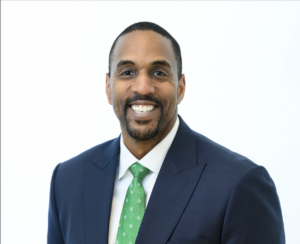
The Georgia Center for Opportunity (GCO) is honored to welcome Travis Thorne as the Vice President of Family. Travis will lead GCO’s Family Initiative and shape the future vision of its flagship program, Raising Highly Capable Kids (RHCK), which is an in-person, 10-week program designed to equip parents and caregivers with practical tools, honest conversations, and confidence to raise healthy, responsible, and caring kids.

Travis brings more than 20 years of experience in leadership, relationship management, and strategic problem-solving. Alongside his corporate career, he has spent many years serving in ministry, leading family and men’s small groups focused on strengthening households through practical guidance around money, marriage, and legacy. A Georgia native who grew up in Jonesboro, Travis combines professional expertise with a deep personal commitment to families across the state.

Travis was drawn to GCO because of its holistic approach to poverty and opportunity. “At GCO, we understand that poverty, especially generational poverty, is about more than income,” Travis shared. “It’s often about fractured relationships and a loss of hope. Strong families are where a sense of purpose, belonging, and connection begins.” That belief closely aligns with GCO’s mission to advance solutions that expand opportunity and help Georgia families build durable paths out of poverty.

GCO selected Travis to lead the Family Initiative because of his unique ability to bridge strategy and relationships. His experience building trusted partnerships in high-performance environments, combined with years of hands-on ministry and family engagement, positions him to lead family-centered work that is both relational and scalable.

“I’m thrilled to welcome Travis to our team to lead our work in strengthening families,” said Eric Cochling, GCO’s Chief Program Officer and General Counsel. “Travis brings a unique mix of professional experience, drive, and a passion for this work that I am confident will take our family-focused initiatives to the next level and allow us to have a much deeper impact in the communities we serve.”

In his role, Travis will focus on empowering parents as the primary leaders in their children’s lives and strengthening parent-child relationships to drive generational change. This includes enhancing and expanding RHCK. Unlike many parenting programs that focus only on parents, RHCK brings families together in cohorts that build social relationships, trust, and connection, especially in communities connected to Title I schools, which serve high numbers of low-income households.

Looking ahead, Travis envisions RHCK growing through strong partnerships with faith-based organizations, schools, and community leaders. “We listen, we learn, and we build alongside families,” he said. His vision is to see RHCK become a trusted, community-anchored model that meets families where they are and creates a lasting impact across generations.

With Travis’s leadership, GCO is excited to expand the reach and success of its Family Initiative.

Hear from Travis on the vision behind GCO’s Family Initiative:

Georgia news, in the news, current events, Georgia happenings, GA happenings

Eric Cochling in the DC Journal

Originally published February 3, 2026

A full agenda is underway in the 35 states that have just convened their legislative sessions. Affordability is the buzzword heard far and wide, as millions of Americans continue to struggle with the high cost of living. Economic concerns are likely to dominate statehouses in 2026, especially in an election year, with 36 states holding gubernatorial races. The issues debated in the legislative halls will almost certainly spill onto the campaign trails.

Even without the election-year backdrop, state lawmakers will feel pressure from their constituents to do something about rising household costs. Beyond the cost of groceries and lingering inflation, nothing has quite captured the cost-of-living spotlight like the skyrocketing price of housing.

Home ownership, once a staple of the American Dream, is out of reach for many, but especially the poor and younger generations. The average first-time homebuyer is now 40, a striking shift from the 1980s and 1990s, when Americans usually bought their first home in their late 20s or early 30s.

Owning a home is the key to moving up the economic ladder and building wealth, but it also plays an important role in helping people build families and communities. When Americans no longer see homeownership as part of their future, they delay starting families and putting down roots.

Many state and local governments recognize the magnitude of this problem — and, thankfully, have a great deal of control over housing policy through zoning, permitting and land-use rules. State leaders can look to Montana as an example; it recently passed housing reforms that are set to expand supply and reduce prices.

Read full article here

Eric Cochling is chief program officer and general counsel at the Georgia Center for Opportunity.

Higher numbers of non-working adults are concentrated in Georgia communities struggling with poverty and distress.

Lawrenceville, Georgia, launched a unique partnership called ReCAST (Resiliency in Communities After Stress and Trauma) in 2021 to address poverty and expand opportunities in the city. 

Because growing vibrant, resilient communities isn’t ever a solo endeavor, ReCAST coordinators connected with local organizations that could meet the needs of underserved residents where it mattered most—in Lawrenceville’s homes and neighborhoods. 

ReCAST engages three dynamic partners to meet its goals. Impact46 provides essential housing services to people experiencing financial hardship. View Point Health offers mental and behavioral health assistance. And the Georgia Center for Opportunity (GCO) helps chronically unemployed or underemployed people prepare for and find rewarding work.

Eric Cochling, GCO’s Chief Program Officer and General Counsel, noted:

“We chose to participate in ReCAST because of the comprehensive approach to addressing community needs envisioned by the initiative. The focus on collaboration among local groups and on helping families develop community relationships reflects GCO’s method of supporting people in need.”

Lawrenceville recently produced a mini-documentary highlighting the third year of ReCAST’s accomplishments. It shows what’s possible when community members unite to open doors to a brighter future for local residents.

Connecting Lawrenceville job seekers with meaningful work

Employment plays a key role in healing communities after stress and trauma. In Gwinnett County, where Lawrenceville is located, GCO’s BETTER WORK program furthers ReCAST’s goals by bringing together local employers, nonprofits, and mentors to help people find fulfilling jobs close to home.

Carolina Pachon, GCO’s BETTER WORK Program Manager in Gwinnett County, explained that the program changes lives by giving people “a sense of hope, stability, and a way forward.”

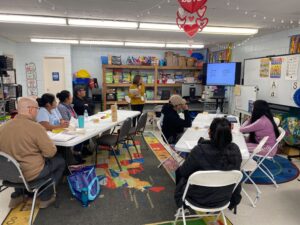
As part of the BETTER WORK initiative, GCO offers a class called Jobs for Life. The class teaches valuable work skills, but it’s much more than a job training or placement course. It helps participants form the supportive community relationships that can point them in a new direction in life.

During the class, Jobs for Life students learn that meaningful work brings more than just a paycheck. It provides a sense of dignity and purpose that’s essential for human flourishing. A rewarding job also gives workers the confidence and courage to rise out of poverty and build a better future. This resiliency then spreads, revitalizing and strengthening workers’ families and communities as well.

GCO’s programs are particularly impactful in Lawrenceville, where many residents struggle with barriers to opportunity. The city’s poverty rate is 17.2%, well above Gwinnett County’s average rate of 10.5%. The higher poverty rate also correlates with data showing that about 19% of prime-age (25-54) adults in Lawrenceville aren’t currently working.

Sparking change in a young man’s life

Josiah, a young Lawrenceville resident, found Jobs for Life at a point when he most needed his local community to listen and offer support. He was having a hard time finding a sense of purpose in his life.

Carolina described Josiah as shy at first, but during the class, she saw a big transformation in his mindset. Josiah’s self-esteem soared as facilitators and fellow students created a caring community around him. At the end of the program, he gave an inspiring graduation speech emphasizing the significance of the personal connections he’d made. “I’ve come to believe that the purpose of life is to build meaningful relationships with people,” he shared.

Josiah now works in a restaurant and has a passion for cooking. He’s looking for ways to combine this enthusiasm with his desire to serve others. “I’m super excited,” he said.

Josiah offered this valuable advice to others who are struggling: “Let go of uncertainty. If you think you want to do something, do it.”

Making Lawrenceville a true hometown

Communities grow stronger when people invest in the well-being of their neighbors. ReCAST enables Lawrenceville residents to do just that through vital local initiatives.

Support for neighbors who need a hand empowers people like Josiah to take meaningful steps forward, to rise out of poverty, and to help the whole community thrive. The interconnectedness that ReCAST has set in motion makes Lawrenceville a true hometown—a place to belong—for the individuals and families who live there.

Austin, TX, Texas Flag

Get Buzz’d in Austin, Texas at the Heritage Foundation Resource Bank Conference 


Buzz Brockway and Eric Cochling talk about their experience at the Resource Bank Conference

VIDEO - FB LIVE

Subscribe

* indicates required

Subscribe

* indicates required