Georgia prison spending has increased, even as prison populations have declined.

Key Points

  • The nation’s prison population has declined in many states, including in Georgia, but a new report shows that prison reforms to decrease the number of inmates haven’t translated into meaningful taxpayer savings.
  • Departments of Corrections budgets are actually increasing throughout the country, but prison costs still account for no more than about 5% of most states’ total budgets.
  • Instead of focusing on state prison budgets and costs per inmate, policymakers need to consider the total cost of crime—both monetary and social—that a community pays and how to reduce it.

Prison reform debates often focus on reducing prison populations to save taxpayers money. But is that actually possible?

In a new report for the Manhattan Institute, Joshua Crawford, a Public Safety Fellow at the Georgia Center for Opportunity (GCO), argues that marginally decreasing prison populations doesn’t yield the taxpayer savings policymakers have long touted. Crawford also shows that continuing to focus mainly on cost savings instead of on other measures to reduce crime and recidivism may lead to unintended fiscal and social consequences for states, including Georgia.

To understand this argument, it’s essential to first understand the landscape of state prison populations and the associated costs of incarcerating an individual.

Understanding prison populations and associated costs

State prison populations decreased by 24% overall between 2010 and 2023, with 43 out of 50 states experiencing a decline. But despite those significant decreases, Departments of Corrections budgets haven’t followed suit. 

In fact, Crawford’s report shows there is little to no relationship between changes in prison populations and changes in corrections spending. 

Departments of Corrections budgets are actually increasing, but corrections costs still account for no more than about 5% of most states’ total budgets. 

Nevertheless, many policymakers and advocates continue to argue that cutting prison populations will save money. So where is the disconnect between the numbers and the messaging? 

Most often, the total cost per inmate per year is calculated by dividing the total costs of the prison system by the number of incarcerated people, but this is a misleading figure. Many of the more costly parts of a Department of Corrections budget (e.g., staff salaries, utility bills) are long-run or fixed costs that don’t vary with marginal changes in a prison’s population. To get a more accurate estimate of possible savings, it’s more important to consider short-run costs, like food and toiletries, which can vary immediately with a change in a prison’s population.

Interpreting the numbers for Georgia prisons

Georgia is one of the 43 states that, on average, saw a decrease in their prison populations between 2010 and 2023. The state experienced an 11.7% decrease in the number of inmates during that time. 

Georgia falls in line with overall national trends year over year. The figure below illustrates the decrease in both Georgia’s and the nation’s number of incarcerated people. The biggest departure was in 2019, when Georgia seemingly had a sharp increase, but that increase was actually minimal at just 2.2%.

And like most states in recent years, Georgia saw a rebound in the number of inmates after the COVID-19 pandemic, when more people were released to help alleviate stress on prison systems.

Georgia's prison population decreased between 2010 and 2023, in line with national trends.

Black Line = National Trend, Blue Line = Georgia Trend

The data for Georgia also reinforces the lack of a relationship between the change in the number of inmates and the change in corrections spending. The table below reveals that even though Georgia’s prison population decreased from 2010 to 2023, corrections spending increased 23.6% during that time.

Georgia's prison population decreased from 2010 to 2023, but prison spending went up during that time.

Data from 2019 further reinforces this absence of a relationship. During that year, Georgia saw a very slight increase of 1,169 people in its prison population, but the state spent $21,430 less on corrections that year compared to 2018.

A better focus for Georgia policymakers

Instead of focusing on state prison budgets and costs per inmate, policymakers need to consider the total cost of crime—both monetary and social—that a community pays and how to reduce it. 

Crime itself costs our nation anywhere from $2.6 trillion to $5.76 trillion each year, with violent crime accounting for 85% of those costs. A single homicide can cost upwards of $9 million in government resources and lost potential earnings of victims. This doesn’t account for the financial burdens it can put on families and communities. 

In addition to the monetary cost of crime, communities pay a significant social price—and none more so than high-crime, impoverished areas. Effective public safety measures are foundational to upward mobility. Without them, these communities will continue to see the loss of businesses, local resources, and community connections that help people flourish.

With this in mind, policymakers and advocates should refocus criminal justice efforts toward reforms proven to reduce crime and recidivism. Improvements on both of these fronts generate cost savings of their own, in addition to saving lives and lowering fear of personal harm.

Best practice criminal justice reforms fall into eight solution categories that could spark meaningful change:

  • Addressing community disrepair
  • Investing in a well-trained police force
  • Building trust by protecting victims
  • Addressing gang violence
  • Addressing the low number of homicide detectives and low clearance rates
  • Ensuring appropriate sentencing
  • Implementing cognitive behavioral therapy for juvenile offenders
  • Evaluating and updating re-entry programs

In Georgia, policymakers and advocates should consider these specific efforts to reduce crime and recidivism:

  • Implementing reforms to help law enforcement close non-fatal shooting cases (e.g., the Firearm Assault Shoot Team in Denver, Colorado)
  • Broadening cognitive behavioral therapy offerings for juvenile offenders, which has shown promising results in juvenile recidivism rates
  • Prioritizing data collection and evaluation to help guide future programs and reforms
  • Helping communities through a holistic approach that includes job training and opportunities, affordable housing, and family programs

In addition to the above policy suggestions, GCO has prepared in-depth reports focusing on reducing crime in two major Georgia cities—Atlanta and Columbus.

As Crawford says of potential criminal justice reforms in Georgia, “lawmakers should focus conversations about criminal justice where they belong: on protecting the public and creating a fair and just system that values the lives, liberty, and property of Georgia families.” In doing so, policymakers can transform entire communities by making them safer for the people who live there.

Image Credit: Canva

Parental love helps children gain the emotional health, behavioral skills, and academic success that unlocks social mobility.

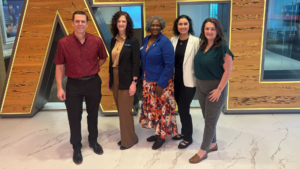
The Georgia Center for Opportunity (GCO) is pleased to welcome two new team members, Mariah Thomas and Angelique Valentine. They will be program specialists for our BETTER WORK initiative.

BETTER WORK empowers communities to be the first line of assistance for local residents experiencing poverty and unemployment. The initiative brings together employers, nonprofits, and local organizations, creating a community support system that prepares people for work and helps them connect with local job opportunities.

BETTER WORK goes far beyond helping people to provide for their families financially. It encourages individuals to recognize their full potential and reconnect with work as a key source of dignity, purpose, and belonging in their lives.

In their roles, Mariah and Angelique are the first point of contact for BETTER WORK clients—many of whom have experienced significant bias and struggle to trust others. Because of this, Mariah and Angelique prioritize clear communication; consistent follow-through; transparency; and a strong, supportive presence.

Mariah and Angelique guide new clients through the BETTER WORK program, lead interview training to boost confidence, and manage volunteer support. One of the most impactful parts of their roles is meeting with clients one-on-one for career assessments, resume help, and mock interviews. Through these responsibilities, Mariah and Angelique are helping people take meaningful steps toward a better future. 

“Together, Mariah’s and Angelique’s combined strengths will make them highly effective in supporting our clients with their job search needs. They draw on their unique life experiences to empathize deeply with clients and understand the challenges they face while seeking employment,” said Kristin Barker, Vice President of Workforce Solutions at GCO. “We can anticipate more successful interviews and new hires, as clients feel genuinely heard and receive training that aligns more closely with employers’ needs.”

Mariah and Angelique each bring personal experiences and professional passion that make their positions at GCO especially meaningful to them.  As a former human resources specialist for the city of Columbus, Georgia, Mariah has a firsthand understanding of people who aren’t typically given another chance after facing life’s twists and turns.

“Every person on this earth deserves a second chance, regardless of their background and circumstances,” said Mariah. “The GCO team strives to understand the needs of our community and works to find creative and practical solutions to correct the unfortunate realities that exist.”

Angelique has a unique perspective as a former participant in BETTER WORK’s Jobs for Life class, which helps students learn job skills, build positive mindsets around work, and form community relationships. During the class, Angelique discovered GCO’s commitment to the community and those who simply need a chance. In her new role, Angelique now has the opportunity to connect with people who feel misunderstood and yearn to make a difference.

“GCO is focused on the deeper issues. By addressing things like employment, education, and family support, they help create real, lasting change. It strengthens families, neighborhoods, and even future generations,” said Angelique.

Learn more about how we’re expanding opportunities for work in Georgia communities:

Georgia news, in the news, current events, Georgia happenings, GA happenings

This week, we launched our Jobs for Life program with an inspiring open house, highlighting the life-changing opportunities available to individuals in our community. Through this free program, participants gain critical job skills, build confidence, and set themselves up for long-term success in the workforce.

At Georgia Center for Opportunity’s BETTER WORK Columbus initiative, we believe that investing in people is key to breaking the cycle of poverty and creating lasting change. Our partnership with Jobs for Life ensures that individuals not only receive job training but also the support and mentorship needed to thrive both personally and professionally.

In the news coverage from WTVM, you’ll see how this program is already creating a positive ripple effect in our community. From improving local employment rates to fostering a sense of belonging, Jobs for Life is transforming lives—and it’s just the beginning.

Watch the news coverage from WTVM 9 Columbus, GA.

teamwork, people, hands, business partner, corporate business, nonprofit business

Key Points

  • Our BETTER WORK program harnesses the transformative power of local partnerships to get more people hired and build prosperous, stable communities.

  • Four standout collaborators—Essendant, Neighborhood Cooperative Ministries, D.P. Jones Electrical, and Chattahoochee Valley Episcopal Ministries (CVEM)—are showing how business and nonprofit involvement can fuel economic opportunity and serve the holistic needs of those working to escape poverty.

  • Together, GCO and our partners are dedicated to more than building better work. We’re building environments where everyone has a chance to reach their full potential.

In the tapestry of a thriving community, threads of collaboration weave a narrative of hope and opportunity for those who need it most. The collective efforts of local organizations, community leaders, and neighbors form the foundation upon which individuals facing challenges can build a brighter future. 

In the pursuit of creating a more prosperous and stable community, the Georgia Center for Opportunity’s (GCO) BETTER WORK program has harnessed the transformative power of partnerships. Among these alliances, four standout collaborators—Essendant, Neighborhood Cooperative Ministries, D.P. Jones Electrical, and Chattahoochee Valley Episcopal Ministries (CVEM)—exemplify how synergy between businesses and nonprofits makes it possible for communities to experience greater transformation and well-being. 

Essendant: A Distributor with a Difference

Type of Business: Distinguished distribution company based in Suwanee, Georgia.

Partnership History: Has been an employer partner in GCO’s BETTER WORK Gwinnett (BWG) program since August 2022. 

Their Impact: Essendant’s involvement is not merely transactional—it represents a commitment to community growth and development. By actively participating in the BETTER WORK program, Essendant contributes to the creation of a more vibrant and economically stable community. 

  • Their commitment to the program is evident in their proactive approach, going above and beyond in reaching out and interviewing every candidate referred by GCO.
  • Their consistency in communication has been a cornerstone of their partnership. By keeping us updated on the progress of candidates, they ensure a transparent and collaborative process.
  • Three individuals referred by BWG have been employed at Essendant for over three months, highlighting the tangible impact of this partnership on local employment opportunities.

Neighborhood Cooperative Ministries: Nurturing Communities, Transforming Lives

Type of Business: Nonprofit organization in Norcross, Georgia.

Partnership History: Has been a community partner since the inception of GCO’s BETTER WORK program. 

Their Impact: NCM has stood as an unwavering partner, embodying values of compassion, faithfulness, and trustworthiness that align seamlessly with the BETTER WORK initiative’s people-centric approach. Their impact extends well beyond the professional realm, delving into the core of individual needs. 

  • Their comprehensive support system—encompassing financial aid, shelter, and food resources—plays a pivotal role in empowering candidates referred by the BETTER WORK program. 
  • NCM’s commitment to addressing the holistic needs of individuals creates an environment where securing employment becomes a stepping stone toward self-sufficiency.
  • Together, BETTER WORK and NCM orchestrate various initiatives, with NCM hosting job events that connect job seekers with potential employers. NCM’s clients benefit from the invaluable support provided by the BETTER WORK program, including job coaching, resume assistance, and essential career advice.

“Through these partnerships, GCO and our collaborators are doing so much more than building better work. We are tirelessly constructing a better future for all, fostering an environment where individuals can reach their full potential and proving that this approach is possible for any community seeking hope and opportunity.”

“Through these partnerships, GCO and our collaborators are doing so much more than building better work. We are tirelessly constructing a better future for all, fostering an environment where individuals can reach their full potential and proving that this approach is possible for any community seeking hope and opportunity.”

D.P. Jones Electrical: Illuminating Opportunities

Type of Business: Family-owned and operated business established in 1939. 

Partnership History: Recent addition to the employer partner network for BETTER WORK Columbus. 

Their Impact: D.P. Jones Electrical brings with them a legacy of customer satisfaction and an eagerness to give back to the community. 

  • Their commitment to offering opportunities is exemplified by the employment of a BETTER WORK candidate who was initially feeling defeated in his job search.

  • The collaborative efforts between the candidate, the BETTER WORK team, and D.P. Jones Electrical resulted in permanent full-time employment. Edward Russel, the newest member of the D.P. Jones’ team, expresses his appreciation for working in a company that values him and shares his family values.

  • The company’s commitment to on-the-job training provides individuals like Edward with the chance to learn a trade while supporting their families.

Chattahoochee Valley Episcopal Ministries (CVEM): Empowering Communities in Times of Need

Type of Business: A non-profit outreach ministry in Columbus, GA

Partnership History: Community partner with BETTER WORK Columbus

Their Impact: CVEM stands as a beacon of support for individuals facing great need or crisis. 

  • Collaborating with BETTER WORK Columbus, CVEM addresses concerns related to housing, medical expenses, household furnishings, education, and job-related expenses. 
  • Their flexibility and responsiveness empower individuals to succeed as they position themselves for better job opportunities and futures.

Partnerships Unlock the Life-Changing Power of Work

It’s through local partnerships that we are able to help more people achieve a better life through the power of work. Partners like Essendant, Neighborhood Cooperative Ministries, D.P. Jones Electrical, and Chattahoochee Valley Episcopal Ministries are a few of the shining examples that illustrate the positive outcomes that come from strategic alliances. 

Through these partnerships, GCO and our collaborators are doing so much more than building better work. We are tirelessly constructing a better future for all, fostering an environment where individuals can reach their full potential and proving that this approach is possible for any community seeking hope and opportunity. 

Learn More About Partnering with BETTER WORK

If you are connected to a business or nonprofit organization interested in collaborating with our local BETTER WORK chapters, go here to learn more and contact us:

Georgia news, in the news, current events, Georgia happenings, GA happenings

A new community initiative is set to launch in Columbus, but it’s not run by any one person or organization. It’s running name is the “Columbus Empowerment Initiative.”

The program is based on – but not affiliated with – a similar group in Nebraska, the Omaha Empowerment Initiative. The Nebraska-based group, also known as Omaha 360, is “focused on Collaboration, Prevention, Intervention, Enforcement Support, Reentry and Community Engagement,” according to its webpage.

Roughly 60 individuals showed up, including Columbus Mayor Skip Henderson, local philanthropists, businesspersons and other community leaders. Representatives of the Georgia Center Opportunity and Better Work Columbus were also in attendance.

“Violence, homicide in particular, is the worst thing that a human being can do to another person,” said Josh Crawford, director of criminal justice initiatives at the Georgia Center for Opportunity.

He continued, “By restoring public safety in a community with a high rate of violence, you’re really taking the first step towards making a more prosperous and flourishing community.”

Read the full article here


Columbus Cityscape

Key Points

  • Reducing crime and restoring community safety is vital to addressing poverty and increasing opportunity.
  • While major metro areas are typically the focus of crime reduction efforts, there is a need to address crime in smaller communities seeing an uptick in crime.
  • Columbus, GA has seen an increase in violent crime over the last 5 years.
  • The Columbus community and municipalities must come together to address crime and work on preventative solutions.

We know that crime in major metro areas across the United States is up. Here in Georgia, Atlanta is front and center on that issue, highlighted by a recent report by the Georgia Center for Opportunity showing a concerning rise in violent and property crime over the last few years.

While the crime problem in larger cities is crucial to address, smaller cities tend to get overlooked. Yet these cities represent a large portion of the country’s population. There are 335 cities with population levels between 100,000 and one million, but only 14 cities with populations over one million.

Take Columbus, Georgia as an example. The city’s population now stands at approximately 203,000—a slight reduction from 2020 when the population was 207,000. Since 2017, Columbus has seen a spike in crime.

The crime problem—and what to do about it—is the focus of a new GCO report. Titled “Reducing Crime in Columbus: Safer Communities Through Policy,” the report is authored by Josh Crawford, Director of Criminal Justice Initiatives at GCO.

Quick Facts on Crime in Columbus

  • Columbus saw one of its most violent years with 59 murders in 2021.
  • The city’s population is on the decline, correlated to the rise in violent crime.
  • A decrease in Columbus police has gone hand-in-hand with the crime spike.
  • Attempted murder convicts in Columbus who were released in 2022 only served 35% of their time.

“The human cost of this violence is dramatic, cutting lives short and leaving behind grieving families and fractured communities,” Crawford said. “The toll of violent crime goes beyond the physical cost to those directly impacted and includes financial costs to victims and taxpayers, the loss of productive years, and decreased economic mobility and growth in communities afflicted with high rates of crime.”

Cover of the Columbus Crime Report

Access the Report:

Reducing Crime in Columbus

Our Columbus Crime Report details six practical solutions that city leaders can use to reduce crime in Columbus and restore safety, hope, and opportunity to the broader community. 

Learn About the Report

Why Smaller Cities Matter

Our focus at GCO is on empowering underserved, disadvantaged, and low-income communities. By starting with Columbus, we want to equip more of these overlooked cities across Georgia and the U.S. with policy reforms that will reduce crime and restore community safety. 

Six Policy Recommendations to Reduce Crime

Because Columbus is smaller, it’s easier to implement changes that would make a big difference. Success in Columbus could provide a model to inspire change in similar-sized cities.

Fixing the Columbus crime problem is about focusing on the most violent offenders. By addressing gang-related violence and solving more homicide investigations, Columbus can restore community safety, improve trust with city officials and law enforcement, and expand upward mobility and opportunity for residents.

Crawford suggests:

  • Addressing disrepair in Columbus’ communities by expanding cleanup efforts, tearing down or renovating abandoned buildings, and installing adequate street lighting.
  • Building trust between community residents and law enforcement and social services, particularly through protecting the rights of victims.
  • Removing egregious offenders from communities by implementing gang-enhancement provisions such as SB44 (2023) that keep these individuals incarcerated.
  • Improving and requiring pre-entry cognitive behavioral therapy services for all juvenile offenders, no matter how non-violent their offenses.
  • Reevaluating reentry programs through an external third party, examining the impact on revocation, rearrest, and reconviction.

C3 job fair, Columbus ga, better work Columbus

Key Points

  • Community Collaboration for Empowerment: The Collaborative Community Connection (C3) organized a successful job fair in South Columbus through a partnership involving various entities, including the City of Columbus Parks and Recreation, Boys and Girls Club of the Chattahoochee Valley, Goodwill Southern Rivers, YMCA of Metro Columbus GA, BETTER WORK Columbus team, and more. 
  • Diverse Employment Opportunities: The job fair showcased a wide range of industries, including manufacturing, healthcare, law enforcement, and retail, providing immediate employment opportunities. 
  • Impact and Hope for Neglected Community: Better Work Columbus played a significant role in assisting job seekers and facilitating connections with potential employers. Beyond the event’s surface, the job fair highlighted the significance of community support for an often-neglected area.

In a display of community solidarity, the Collaborative Community Connection (C3) recently hosted a transformative job fair at the Frank Chester Recreation Center. This dynamic partnership, comprising entities such as the City of Columbus Parks and Recreation, Boys and Girls Club of the Chattahoochee Valley, Goodwill Southern Rivers, YMCA of Metro Columbus GA, our BETTER WORK Columbus team and more, united to channel resources where they’re needed most in South Columbus. The event’s spotlight shone on a diverse range of industries, including manufacturing, healthcare, law enforcement, and retail, all of which offered immediate employment opportunities. With local employers like Pratt and Whitney, Aflac, and Kia in attendance, the job fair collectively sought to fill over 2,000 positions.

One organization that played a pivotal role in the success of the event was Better Work Columbus. Their on-site assistance and support proved invaluable in helping job seekers navigate the job fair and connect with potential employers.The job fair’s impact reverberated beyond the surface, as it underscored the importance of community support in an area that has often faced neglect. By uniting organizations with a shared goal of upliftment, C3 demonstrated their unwavering belief in the untapped potential and inherent value of South Columbus residents.


Beyond the event’s surface, the job fair highlighted the significance of community support for an often-neglected area. It emphasized the belief in the potential of South Columbus residents and demonstrated that collaborative efforts can lead to transformative change and a brighter future for the community.

Beyond the event’s surface, the job fair highlighted the significance of community support for an often-neglected area. It emphasized the belief in the potential of South Columbus residents and demonstrated that collaborative efforts can lead to transformative change and a brighter future for the community.

The C3 job fair not only provided a platform for individuals to secure gainful employment but also symbolized a beacon of hope for an often-overlooked community. It signified that collaborative efforts, like those of C3, can bridge gaps, open doors, and amplify voices that deserve to be heard. As this successful event has shown, when a community comes together with dedication and purpose, it can spark transformative change and pave the way for a brighter, more inclusive future.


Subscribe

* indicates required

Subscribe

* indicates required