new years resolution, 2024, year in review

Key Points

  • Research has shown that safe communities, stable relationships, and meaningful education and work are essential to making poverty escapable. 
  • In 2023, we focused on helping communities develop solutions and tools to improve public safety, jobs, education and student achievement, and family formation. 
  • Through these accomplishments in 2023, more communities are being empowered to help people imagine and pursue better futures for themselves. 

It seems like everywhere you go these days, people are struggling. You can see it on street corners, in grocery stores, in news headlines, and—most heartbreaking of all—in the eyes of the people who have lost hope.

What they need is opportunity. And that’s exactly what the mission of the Georgia Center for Opportunity (GCO) is built to deliver. As the year draws to a close, let’s take a moment to celebrate the good that has been done to alleviate poverty by removing barriers to opportunity and creating conditions that empower people to flourish and achieve their full potential.

The good news is that research consistently shows that people who experience personal safety, get a good education, find meaningful work, and have healthy, committed relationships only have a 2% chance of falling into poverty. And for those currently living in poverty, these opportunities are the way out to experience freedom and flourishing.

In 2023, GCO celebrated big wins in several key areas that foster community transformation: public safety, jobs, education, and family formation. Here are a few examples of how we’ve helped our neighbors live better and build thriving communities. 

Public safety

Thanks to our public safety research, we convened state policymakers and city leaders in Atlanta and Columbus to look at the causes of increasing violence, and provided a proven set of practical solutions for reducing crime—especially in low-income communities. At the national level, our public safety recommendations were well received in Dallas and Louisville, and an opinion piece we co-authored reached 28.7 million people through Newsweek. Soon thereafter, MSN and other media outlets amplified its reach to another 167.1 million Americans.

And given how important it is for people to live in safe communities where they feel comfortable walking around and living their lives, we also created a resource page on our website so that elected officials, law enforcement, and community leaders can easily find the best practices for addressing crime. 


Workforce

On the jobs front, our BETTER WORK program continues to help communities build local employment support systems that bring employers, nonprofits, and community partners together to help more Georgians find local jobs. We’ve also joined forces with Lyft to help people get to work and focused on solutions to the benefits cliff challenges that keep many mired in government dependency. 


Safety-net reform

This year, GCO remained on the vanguard of educating lawmakers and the public about the need for reforming the safety net. Broadly, we worked to reveal the challenges posed by benefits cliffs, which discourage people from looking for meaningful work and gaining independence. Specifically, we expanded our impact to Utah, Arkansas, and Missouri, in addition to launching a redesigned benefits cliffs website and calculator that adds Utah and West Virginia to the models.

As we educate states and businesses about the benefits cliff problem within the welfare system, we are also developing solutions that equip them to do something about it. This year, we released our first report focused on benefits cliffs solutions, which focused on fixes for the Supplemental Nutrition Assistance Program (SNAP).


Education

Our efforts to expand educational opportunity have given nearly 84,000 Georgia kids access to the schooling option that best fits their needs. And we led efforts to advance a groundbreaking school choice bill through the state senate. This means there’s strong momentum going into 2024 to expand education options for 500,000 more students stuck in Georgia’s failing schools. We also updated our Education Guide for parents and received the Lilburn Middle School Business Partner Recognition Award for partnering to deliver free relationship education classes for parents and students.

See How The Georgia Center For Opportunity Is Expanding Hope In 2024!

See How The Georgia Center For Opportunity Is Expanding Hope In 2024!


Family

For families, parents continued to graduate from our Strengthening Families Program. And GCO kicked off our Raising Highly Capable Kids (RHCK) program with a vision-casting meeting attended by more than 20 community organizations. By reaching into homes, schools, and faith-based groups, RHCK teaches parents how to raise responsible, caring kids—and turns local communities into nurturing places where healthy families help people escape poverty. An example of how RHCK brings key stakeholders together to foster thriving families is the Lilly Endowment grant that introduced the Parents First Initiative to Lawrenceville.


National and state impact

Finally, GCO had a number of important wins with far-reaching, favorable media coverage on topics we care deeply about. This means that our voice was out there advancing importance conversations about human flourishing. For example, The Wall Street Journal ran our opinion piece calling out pre- and post-COVID crime comparisons for what they really are—an excuse not to blame bad public safety policies. And RealClearPolicy ran an article on our ideas to make safety nets more successful at turning welfare into work support.

Beyond these, GCO’s views were featured in important conversations about Georgia’s position among the leading states for economic freedom and why people remain trapped in poverty when there are so many public assistance programs. And for those concerned about rising crime across the nation, the Atlanta Journal-Constitution carried our must-read piece on public safety.


Wrapping up

Of course, these are just a handful of GCO’s successes in 2023. Yet each win adds to the legacy we are building to help our neighbors enjoy meaningful and productive lives in safe, vibrant communities that value work, education, and family. We’re proud of our successes this year, and we look forward to continuing to advance common-sense policy solutions in 2024 that bring greater peace, dignity, and freedom to individuals and families across Georgia and beyond.

Parents and Children
Family Portrait
Family Bond
Happy Family
Love and Togetherness
Family Time
Family Happiness
Family Unity
Multi-Generational Family
Family Love
Smiling Family
Family Fun
Joyful Family
Family Connection
Family Memories
Family Gathering
Family Affection
Close-knit Family
Family Support
Family Values

Key Points

  • Utah’s economic success and high levels of happiness are attributed to the quantity of marriages and cohabiting married parents, leading to strong family structures and economic mobility.
  • The “Family Impact Perspective” proposed by Brad Wilcox offers guidelines to strengthen marriages, encourage desired parenthood, improve family affordability, and enhance family relationships in pursuit of economic success and well-being.
  • Georgia, facing economic challenges and family-related issues, can learn from Utah’s success and consider implementing similar policies and projects to foster a “Georgia Family Miracle” and improve economic mobility rates.

No matter how you spin it, Utah has enjoyed great success in recent years. The Beehive State tops national charts economically—with particular success in economic mobility— as well as scoring highly in happiness, evaluated through emotional health ratings. 

Sociologist Brad Wilcox attributes these achievements to the quantity of marriages in the state. In Utah, adults ages 18-55 are 10% more likely to be married than other Americans (55% versus the national average of 45%) and children are 7% more likely to grow up with cohabiting married parents than their peers in other states (82% versus the national average of 75%).

What’s more, Utah enjoys some of the greatest economic mobility in the country. And according to numerous economists, this is probably due to young people living in married families. Wilcox writes that the poor children in the Salt Lake area whose lot is improving “are much more likely to be raised in a two-parent family and to be surrounded by peers from two-parent families than poor kids in other metro areas.” 

Yet Utah’s economic success has also attracted many newcomers to the state, who have driven the marriage and fertility rates down, as Wilcox explains. Across the state’s counties, from Salt Lake City to rural areas to Utah County, which boasts some of the highest population and birth rate growth, immigration has inflated population counts and decreased fertility. While the state still leads the country in fertility and marriage, there are indeed “clouds on the horizon” as national cultural norms descend upon the state. 

The “Utah Family Miracle” might be seeing its last days. 


Where do we go from here?

In a recent report with the Sutherland Institute, Wilcox promotes a “Family Impact Perspective” through which all “states laws, regulations and initiatives” might be considered. He writes that this framework would assist in the pursuit of the following targets: 

  • Strengthen marriagemeasured in terms of both the rate and stability of marriage
  • Encourage couples to have the children they wish to have 
  • Make family life affordable for ordinary working families 
  • Enable husbands, wives, children, and especially parents to maximize their time with their families
  • Increase the quality of family relationships by increasing positive and reducing negative (e.g., domestic violence) interactions in families.

 This perspective is flexible to the needs of the state and offers guidelines and signs of success for legislators and the families that they serve.

Georgia, facing economic challenges and family-related issues, can learn from Utah’s success and consider implementing similar policies and projects to foster a “Georgia Family Miracle” and improve economic mobility rates.

Georgia, facing economic challenges and family-related issues, can learn from Utah’s success and consider implementing similar policies and projects to foster a “Georgia Family Miracle” and improve economic mobility rates.

Sutherland and Wilcox’s report culminates in five policy recommendations that solidify the Family Impact Perspective. Utah already enjoys ranking as the best state in the country for families, but even there these productive steps are under consideration.

  1. State reports should consider family structure when they track other socioeconomic factors.  
  2. The “Success Sequence” proposed by the Institute for Family Studies should be worked into public school curricula and premarital education.
  3. States should provide families with young children a monthly allowance to “empower parents in their capacity to make choices about how to best care for their children.”
  4. Address families’ cost of living, considering housing, schooling, and food as issues integral to family decisions.
  5. Create a state commission on men and boys, as men everywhere increasingly fall by the wayside. 

These ideas address the biggest issues facing families in a holistic, productive manner. Georgia would do well to consider implementing similar policies and undertaking such projects. 


What’s in it for Georgia? 

A Georgia Family Miracle. 

The state has much to gain by considering what it would take to improve economic mobility rates until they rival Utah’s. Currently, Georgia lags in 12th economically and 24th for fiscal stability, and the economic mobility rate has drawn critical attention for a decade. While many factors feed into economic mobility, leading Georgians ought to encourage study into the impact of family structure and costs of living on the prospects of the youngest citizens. 

Georgia’s immigration rates are much lower than Utah’s (-2.5%, whereas 8.4% of Utah’s population are immigrants). This means Georgia might enjoy greater cultural stability, which should not be taken for granted. Rather, Georgia’s leaders ought to double down in their service to the constituency’s families and help them build happier homes where they have better relationships.

By multiple measurements, marriage in Georgia is far from the worst in the country, but there is still much work to be done if Georgians are to have the families and futures that they want. The U.S. Centers for Disease Control and Prevention reports that, in 2021, Georgia’s marriage rate was only 60% of Utah’s (at rates of 5.5% and 9.1%, respectively). Demographers have reported for years that Georgia’s divorce rate is among the highest in the U.S., and a 2020 study by the Annie E. Casey Foundation and the Georgia Family Connection Partnership found that 33.5% of Georgia’s kids live in single-parent households—not accounting for cohabiting, unmarried parents.  

The easiest ways to increase familial connection include reducing tech use in the home, making family life more affordable with an allowance, and strengthening existing marriages through close review of couple’s needs, especially men struggling to be dependable citizens and fathers.

Talk To An Expert

About The Author

David Bass

Press Manager

David Bass is a journalist and communications professional with nearly two decades of experience in the world of PR, marketing, and publications.

Man sitting with his hands folded

Key Points

  • Indiana passed a scholarship program that will allow any family below 400% of the amount required to qualify for the federal free and reduced-price lunch program to access education scholarships.
  • South Carolina expanded their scholarship program with similar guidelines to those in Indiana.
  • Georgia failed to pass a transformative education scholarship program that would have positively impacted the lowest performing communities in the state.

The year isn’t even halfway over, and six states have already enacted laws that create universal educational access for all students in 2023.

In total, Iowa, Utah, Arkansas, Florida, and now South Carolina and Indiana have enacted either universal—or nearly universal—educational opportunity this year. That’s on top of Arizona and West Virginia, which did so in 2021 or 2022.

Each state has its own version of a scholarship or educational savings account that the state funds for children’s needs outside of traditional public school. For example, these types of accounts send a portion of each student’s public school dollars to allow the child to attend a private school of their family’s choice. In some cases, families who choose to homeschool their children can use the funds for educational expenses.


Indiana

Indiana is the most recent state to join that list. That state’s scholarship program will now be available to any family below 400% of the amount required to qualify for the federal free and reduced-price lunch program. That translates to a salary of around $222,000 a year for a family of four. 

Previously, requirements were in place that further limited the program, such as it only being open to families with students previously enrolled in a public school or to children in the foster care system. Under the new law, only an estimated 3.5% of Indiana’s families won’t qualify for this option.


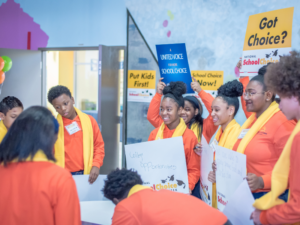
The Georgia Center for Opportunity led a state-wide campaign to educate parents and legislators on the positive impact that choice brings to public education.

The Georgia Center for Opportunity led a state-wide campaign to educate parents and legislators on the positive impact that choice brings to public education.

South Carolina

Meanwhile, South Carolina governor Henry McMaster recently signed a bill into law that eventually expands that state’s scholarship program to families at or below 200% of F&R priced lunch as well. The program is more limited in scope than Indiana’s. It will only be available to 5,000 students the first year, 10,000 the second year, and 15,000 students the third year.

South Carolina’s program allows for the establishment of Educational Scholarship Trust Funds. Funds deposited in these accounts can be used not only for expanded school choice, but may also be used for special needs therapies, such as physical therapy, speech therapy, and occupational therapy. Tutors and transportation may also be included for families caring for special needs students. 

So, what happened in Georgia?

If the Georgia Legislative Session had passed Senate Bill 233, also known as the Georgia Promise Scholarship Act, it would have put $6,500 per student back into parents’ pockets so they could fund the best educational approaches for their children. The funds would have been eligible for use as private school tuition and public school alternatives, such as homeschooling. 

According to the Georgia Department of Education, families who qualified would have had students enrolled into the lower 25% of schools in Georgia. This amounted to roughly 400,000 students. 

SB 233 was a strong bill, passing the Senate with unanimous Republican support and going on to the House. Despite receiving no support from Senate Democrats, it’s excellent news that the bill made it so far through legislative proceedings. 

The House vote proved to be tougher, with bipartisan representatives voting against it. Rep. Mesha Mainor of Atlanta was the lone Democrat in the House to vote in favor. On its final day of session, SB 233 was only six votes short of the 91 it needed to pass. 

The good news is that the Georgia Promise Scholarship Act is eligible for reconsideration during the 2024 legislative session. 

Looking to what’s next

Public schools are not the problem. We love and support public schools—they will remain the right and best choice for the vast majority of Georgia families. But we can love, support, and move public schools forward while expanding education into new areas.

Public education is a foundational and vital part of the success of American society, but an increasing number of families are looking toward alternatives—and their choices are just as valid. We must work to deliver quality education to all students, which means finding ways to support families who take a different schooling path. While many will access their education through public schools, not all kids are a perfect fit for that system, and they cannot be left behind.

In The News

OpEd Written by Corey Burres, VP of Communication

Unedited Title: Public Schools Are At the Heart of School Choice

As states like Utah and Iowa pass sweeping school choice legislation, it is important to understand no one is trying to defund public schools. The millions of American parents pleading with legislators across the country to open up educational options for their kids are not secretly hoping public schools go away. It’s a partisan myth that is dividing us on education and resulting in burnout and frustration for everyone.

I grew up riding the big yellow bus to my local public school. My kids spent most of their education in public schools. I’m thankful for public schools and the teachers who work so hard to educate and enlighten our children.

Public schools are immeasurably valuable.

It’s my respect for that value that makes me question why so many have politicized fear around educational concepts like school choice, charter schools and scholarship programs. We must face the fact that our education system is overwhelmed. There is no possible way an area public school can meet the diverse needs of every single student.

Yet that is exactly what many expect of them. We expect that public schools will be able to address the learning needs of kids with a wide array of abilities, physical and emotional needs and unique home and personal challenges. You can understand why teachers are leaving the profession in droves.

Imagine going to work with a lesson plan and knowing that five of your students will struggle because they have a diagnosed or undiagnosed learning disability, another five will have ADHD and struggle to focus and another five will be facing home issues and food insecurity. A teacher’s lesson plan is expected to get each of these different students to the same level of success. Add in that we are asking teachers to instruct or guide moral standards and you have a recipe for frustration and burnout.

But it’s not just about teachers. It’s about the kids getting a quality education. Let me be clear, quality education is not an input solely determined by great teaching but an output of what is learned. You can have the greatest teacher, but if the child isn’t learning, they aren’t receiving a quality education. Many years ago, I worked on filming a documentary on education called “Flunked.”

Then, like now, the United States was falling behind internationally, and we wanted to see if there were any schools doing something different. We traveled up and down the West Coast talking with schools that served low-income, inner-city students, schools in rural areas and others that focused on performing arts. As a young parent, it was fascinating and inspiring to see what was available.

Sadly, as I returned home, I faced a different reality for my family. The teacher assigned to my then-5-year-old daughter told my wife and I that our daughter was likely to be bored and not challenged. The local school simply couldn’t provide what she needed, and we were forced to find alternatives.

Thankfully, we had family and others who helped us collect the money necessary to get her into an option that would challenge her. Eventually, we moved and were able to get her back into a public school where she thrived.

But what about the many kids and parents who have no opportunity because they can’t afford it or live in the wrong district? Is quality education only promised to those who can pay up or live in the right ZIP code?

We are stressing public schools by expecting them to be all things to all kids and we are failing to deliver quality education. Even as school choice options become more mainstream across the country, we’re still clinging to the fear of public schools going away. Even the fear that public schools will suddenly be defunded is a myth with per-student funding actually going up over the last decade despite more options being available.

We need to look to innovation in education and stop fearing change. Keep public schools at the center while decreasing the stress on the system by creating alternatives. After all, what we all want is a great education for our kids.

Originally posted by The Atlanta Journal-Constitution

Subscribe

* indicates required

Subscribe

* indicates required