A new research paper from GCO shows the ways social safety-net programs like food stamps and Medicaid provide critical support but also discourage career advancement.
The “benefits cliff” is a significant barrier, where earning more can mean losing benefits, deterring workers from seeking higher-paying jobs.
Government benefits can blur the true income disparity between low-income and middle-income households.
Policy reforms are needed to remove these barriers and encourage upward mobility.
At a time when income inequality and lack of economic mobility are hot topics, a report from the Georgia Center for Opportunity (GCO) sheds light on how our social safety-net system could be contributing to these trends.
Safety-net systems include programs like food stamps, housing subsidies, and Medicaid, designed to provide financial assistance to those in need. While these programs are essential, they can inadvertently create barriers to long-term financial independence. This phenomenon is known as the “benefits cliff,” where individuals and families turn down career advancement opportunities to avoid losing government benefits.
The Source of Income Disparities
The GCO report reveals that government benefits often obscure the true income disparities between low-income and middle-income households.
When examining work-capable households, the unearned income from government benefits can paint a misleading picture of economic equality. Without these benefits, it’s clear that households in the lowest income quintile earn significantly less than their counterparts in higher income quintiles.
The report also highlights how these safety-net benefits can create disincentives for the lowest-paid workers to move up the economic ladder. For instance, after adjusting for taxes and transfer payments, the net income of households in the lowest quintile is almost equal to those in the second quintile, despite the latter earning nearly four times more.
This equalization is largely driven by government transfers, which provide significantly more support to the bottom quintile compared to the second quintile. This scenario leads to nearly identical average per capita net incomes between these groups.
Workforce Engagement
A Missing Link in Understanding Income Inequality
The compelling new report that examines the unintended consequences of our nation’s social safety-net system on low-wage workers.
Understanding the dynamics of income inequality and the unintended consequences of social safety-net systems is crucial for fostering economic mobility and improving the quality of life for low-income workers.
To boost workforce engagement and reduce reliance on social safety nets, the report suggests several policy reforms:
Reducing Benefits Cliffs: Adjust thresholds for benefit eligibility to prevent sudden losses of support as income increases.
Work Incentives: Offer incentives for part-time workers to transition into full-time roles.
Education and Training: Provide better access to educational resources and vocational training programs.
GCO is dedicated to working within underserved communities to understand the realities of poverty and the public policies that perpetuate it. Our previous research, including on intergenerational poverty, underscores that America’s social safety net is designed to address situational poverty rather than systemic poverty.
Key Points
Georgia has seen a decline in marriage rates, mirroring a national trend. Only 30% of Georgians have been married at least once, and U.S. marriage rates have fallen by nearly 60% over the past 50 years.
Despite these trends, marriage remains a significant predictor of adult well-being, more so than education, race, age or gender. Married individuals often report higher happiness and satisfaction levels, and benefits include emotional stability, financial security, and social support.
We must address economic, education, and social safety-net barriers to marriage while creating a supporting environment that fosters marriage and family formation.
Recent reports,including a piece from Axios, have highlighted a concerning trend in Georgia—declining marriage rates.
According to data from theAmerican Community Survey, only 30% of Georgians have been married at least once in their lives. This is indicative of a larger national trend: The marriage rate across the U.S.has fallen by nearly 60% over the past 50 years.
While societal pressures to marry have lessened and many young people doubt the benefits of marriage, this decline raises important questions about the impact on individual well-being and societal mobility.
Marriage rates in Georgia are a leading factor in quality of life
Helping people form healthy, committed relationships is a key pillar of the Georgia Center for Opportunity’s mission to help all Georgians flourish. Relationships are essential to well-being in general, but marriage has a particular impact on the quality of life and upward mobility for men, women, and children.
Quality of life
Marital status is one of the strongest predictors of adult well-being, surpassing other factors like education, race, age, and gender.According to the Institute for Family Studies and Gallup, married individuals often report higher levels of happiness and satisfaction compared to their unmarried peers. This isn’t just about companionship—marriage can provide emotional stability, financial security, and social support, all of which contribute to a better quality of life.
Upward mobility
Marriage also plays a critical role in economic mobility. Couples often benefit from dual incomes, shared resources, and consolidated expenses, making it easier to save and invest in the future. This financial stability can lead to better opportunities in terms of education, homeownership, and overall wealth accumulation. Essentially, marriage can act as a catalyst for achieving a higher economic status and breaking free from cycles of poverty.
Benefits for children
Children raised in two-parent, married families often experience greater stability and economic advantages, contributing significantly to their overall well-being. Additional research from the Institute for Family Studies shows that children who live in households with married parents experience more financially secure environments, less conflict, and more parental support.
According to polling from Gallup, married people report higher levels of happiness and life satisfaction. This is another indicator of how essential relationships are for personal well-being and quality of life.

Certain barriers in Georgia make marriage and its benefits hard to pursue
Despite marriage’s benefits, Georgia has several barriers that discourage marriage as a path to fulfilling relationships and flourishing lives. Educational challenges and a social safety net that frequently discourages marriage are a couple of significant roadblocks that can make it harder for people to pursue marriage.
Educational challenges
Educational attainment is another significant barrier. Those with higher levels of education are more likely to marry, but educational opportunities are not evenly distributed across the state. Addressing these disparities could encourage higher marriage rates and, consequently, greater upward mobility.
A social safety net that punishes marriage
Another significant barrier to marriage in Georgia isthe “marriage penalty” embedded within many social safety net programs. The term refers to the phenomenon where low-income individuals or couples may actually lose financial benefits by getting married.
Programs such as Medicaid, housing assistance, and food stamps often have income thresholds that discourage marriage. When two low-income individuals marry, their combined income might exceed these thresholds, leading to a reduction or complete loss of benefits—creating a “benefits cliff.”
This financial disincentive can make marriage less appealing for low-income individuals who rely on these crucial programs to make ends meet. By losing access to necessary support, the economic stability that marriage can potentially offer is compromised, perpetuating a cycle where the cons outweigh the pros.
Addressing these safety-net barriers is essential for fostering an environment where marriage can thrive and contribute positively to individual and societal well-being.
The way forward
While the decline in marriage rates in Georgia is a complex issue influenced by various societal and economic factors, it’s essential to recognize the underlying benefits of marriage. Beyond the romantic ideals, marriage plays a pivotal role in enhancing quality of life and facilitating upward mobility.
To counteract the downward trend, it’s necessary to address the barriers that discourage marriage and create a more supportive environment for couples.
PEACHTREE CORNERS, GA—Yesterday, a bipartisan majority of the U.S. House passed H.R. 6655, a Stronger Workforce for America Act, which establishes a crucial demonstration waiver for a handful of states to implement safety-net reforms similar to Utah’s “One Door” policy. As a member of the coalition group the Alliance for Opportunity, the Georgia Center for Opportunity has played an important role in educating lawmakers on the perils of the current social safety net that creates barriers to work and upward mobility.
H.R. 6655 revises the Workforce Innovation and Opportunity Act for the first time since 2014. The bill would give four states leeway to explore a “One Door” safety-net reform strategy similar to Utah’s model enacted in the 1990s. Utah consolidated federal workforce development and social safety-net programs into a single state entity and fully integrated the safety-net system into workforce development programs.
“This is an important first step toward improving the social safety-net in all 50 states and breaking down barriers to work and a flourishing life,” said Randy Hicks, president and CEO of the Georgia Center for Opportunity. “The next step is to broaden the scope to allow every state to explore ways to integrate workforce and safety-net programs. These reforms are badly needed. There are 8.9 million open jobs across the U.S., and the workforce participation rate hasn’t fully recovered from the COVID-19 pandemic. We must create a safety-net system that doesn’t trap people in generational poverty but provides a pathway to a better life.”
Under H.R. 6655, the five-year innovation waiver is only available to states with populations of less than six million and a labor force participation rate below 60%. According to the Alliance for Opportunity, currently only nine states fit the bill: Louisiana, West Virginia, Missouri, South Carolina, Arkansas, Alabama, Maine, Kentucky, and New Mexico.
Under the current version of WIOA, states are barred from implementing such reforms. Utah was grandfathered in and is the only exception.
The bill contains another potential pathway toward a One Door model as well. Three years after enactment of the law, any state’s governor can consolidate workforce programs into one entity, but doing so would require the approval of half of the chairpersons of local workforce boards.
“These reforms would advance the end goal for every work-capable individual in a safety-net program to participate in effective employment and training programs,” added Hicks. “Numerous studies show that the benefits of work extend well beyond finances, encompassing overall wellbeing and a host of other benefits. One Door reforms will help ensure we have a system that encourages people to find work and improve their lives.”
###
Georgia Center for Opportunity (GCO) is independent, non-partisan, and solutions-focused. Our team is dedicated to creating opportunities for a quality education, fulfilling work, and a healthy family life for all Georgians. To achieve our mission, we research ways to help remove barriers to opportunity in each of these pathways, promote our solutions to policymakers and the public, and help effective and innovative social enterprises deliver results in their communities.
PEACHTREE CORNERS, GA—U.S. Sen. Mitt Romney, R-Utah, has introduced a bill that would free up the 50 states to implement a “One Door” safety-net reform strategy similar to the very successful model created in Utah. As part of the Alliance for Opportunity, a coalition of groups seeking to drive state-level change in the safety-net system, the Georgia Center for Opportunity is in full support of the bill.
U.S. Rep. Burgess Owens, R-Utah, has previously introduced a “One Door” bill in the House, a version of which passed out of the House Committee on Education and the Workforce in December.
Despite a historically low unemployment rate across the country, states are still facing a workforce crisis with millions of able-bodied Americans on the economic sidelines. Our nation’s workforce participation rate has not fully recovered from the COVID-19 pandemic. By the end of 2023, 41 million Americans relied on food stamps to make ends meet and nearly 90 million Americans were enrolled in Medicaid.
Many of these Americans remain stuck in a safety-net system that simply doesn’t work. The One Door to Work Act, introduced by Sen. Romney on Feb. 28, would allow states the flexibility to implement Utah’s consolidation of federal workforce development and social safety-net programs into a single state entity. The end goal is to help work-capable recipients reintegrate more quickly into the workforce, empowering them to achieve the independence, stability, and purpose that are crucial to human well-being.
“Every state should have the flexibility to design an integrated workforce and safety-net model that enables people to succeed,” said Randy Hicks, president and CEO of the Georgia Center for Opportunity. “Every hour a safety-net recipient spends finding their way through the system is an hour they can’t spend working their way into opportunity. The One Door to Work Act allows states to create a system that works for people.”
The dozens of programs that make up the system have different and, at times, competing goals, inconsistent rules, and overlapping groups of recipients. Often, recipients must resubmit the same information multiple times for multiple programs with the aid of multiple caseworkers. This disconnect fosters despair and keeps recipients in a cycle of poverty—as every hour spent navigating the system is an hour not spent pursuing a path out of it.
What’s more, there is often a disconnect between safety-net programs and welfare-to-work initiatives. The end result is that people stay mired in generational poverty rather than receiving a helping hand to live a better life. The One Door to Work Act would free up state governments to explore ways to create a safety net that works for all citizens and doesn’t cause generational poverty.
“There are 8.7 million open jobs in this country, and the workforce participation rate has not fully recovered from the COVID-19 pandemic. States need the flexibility in the One Door to Work Act to use our workforce dollars to move our people off the sidelines,” said Greg Sindelar, executive director and chief operating officer of the Texas Public Policy Foundation, which is a member of the Alliance for Opportunity.
“A robust workforce is not only integral to a thriving state economy, but also to its social fabric,” added Daniel Erspamer, CEO of the Pelican Institute for Public Policy, also a member of the Alliance. “When a person is unemployed for longer than six months, it is associated with decreased well-being, even measurably affecting mortality. The One Door to Work Act gives workers, employers, and taxpayers the system that they deserve.”
Georgia Center for Opportunity (GCO) is independent, non-partisan, and solutions-focused. Our team is dedicated to creating opportunities for a quality education, fulfilling work, and a healthy family life for all Georgians. To achieve our mission, we research ways to help remove barriers to opportunity in each of these pathways, promote our solutions to policymakers and the public, and help effective and innovative social enterprises deliver results in their communities.
Legislation pending in the Georgia Legislature, House Bill 738, would create a task force to explore how Georgia could use Utah’s One Door policy to allow more people to find meaningful work and pathways out of poverty through our safety-net system.
Georgia’s economy remains strong, but many individuals who could be employed are still missing from the labor force or are discouraged from working. Barriers in the safety-net system are a big reason this is happening.
Creating a One Door policy task force would be an important first step in reimagining a safety net in Georgia that empowers upward mobility and better opportunities for millions of Georgians.
Georgia’s labor force continues to show its historic resilience, as there are tens of thousands of jobs available across the Peach State. As of December 2023, there were 313,000 job openings, according to the Georgia Department of Labor.
Even so, there are problems. Although the state boasts a robust unemployment rate of 3.4%, our state’s labor force participation rate stands at 61.5% as of December 2022, compared to 62.2% prior to the COVID-19 pandemic. These percentages mean a considerable number of Georgians who could work are not doing so.
Part of the reason is due to design flaws in our nation’s social safety-net system. The complexity and requirements of programs like food stamps, housing assistance, and medical benefits turn these programs into poverty traps instead of bridges to work and independence.
There is a policy states can use to give people an easier path out of the safety net and into work. It’s called the One Door policy, and the solution is in the name: This reform transforms how the safety net delivers support by streamlining multiple disconnected programs into a single welfare and workforce program.
The One Door policy solves the overwhelming barriers of the safety-net system
The truth of the matter is that our nation’s welfare system is a fragmented hodgepodge of programs. The dozens of programs that make up the system have different and, at times, competing goals, inconsistent rules, and overlapping groups of recipients. Often, recipients must resubmit the same information multiple times for multiple programs with the aid of multiple caseworkers. This disconnect fosters despair and keeps recipients in a cycle of poverty—as every hour spent navigating the system is an hour not spent pursuing a path out of it.
At the same time, there is often a disconnect between safety-net programs and welfare-to-work initiatives. The end result is that people stay mired in generational poverty rather than receiving a helping hand to live a better life.
How many people are affected in Georgia? For the 2022 calendar year, more than 1.6 million Georgians were enrolled in the food stamps program, while more than 2.4 million were on the Medicaid/CHIP program—two of the largest safety-net programs. That compares to a statewide population of 10.9 million people.
These groups of millions are made up of real individual people who have their own futures and potential. When a safety-net system discourages work and family stability—two of the most important building blocks of a better future—people lose hope. As individual states and as a country, we can better address the suffering of poverty, unemployment, and fragmented families and relationships by creating a simpler, more humane system that rewards work and supports family and community stability.
For individuals on welfare, every hour spent navigating the system is an hour they can’t pursue a path out. The One Door policy would change that.
Proposed legislation (House Bill 738) takes the first step to bring the One Door policy to Georgia
In this environment, the Georgia Center for Opportunity team is on the vanguard of educating about safety-net reform. A key way we are doing so in Georgia is by pushing forward this legislation to create a One Door task force in the state, House Bill 738—Task Force on Workforce and Safety Net Integration.
The task force would create a plan to integrate the safety net with workforce development, in line with the successful One Door approach in Utah. Other states, including West Virginia and Louisiana, are weighing similar proposals. So why not here in Georgia?
People across the political spectrum agree that work is key to lifting people out of poverty. Toward this end, the goal of the task force authorized by the bill is to “study the intersection of workforce development programs and safety net programs.” The Task Force on Workforce and Safety Net Integration, housed within the Technical College System of Georgia, would be composed of nine members appointed from various corners of the government.
Georgia has already taken important steps forward to improve our safety-net and workforce development systems. The Georgia Gateway is a unified enrollment system for food stamps, Temporary Assistance for Needy Families, the Childcare and Parent Services program, and the Supplemental Nutrition Program for Women, Infants, and Children, but is limited to only those programs. Georgia has also taken steps to consolidate workforce programs under the Technical College System of Georgia.
But to remain a great place to live, work, and raise a family, Georgia must make sure all its citizens are participating in the economic growth we are experiencing. That’s why we need HB 738.
How would Georgia’s One Door policy task force work?
The duties of the task force would include:
Developing best practices for the state agencies and departments involved with administering workforce and safety-net programs.
Exploring ways to merge state agencies or departments to better serve Georgia citizens.
Exploring how to best integrate the delivery of Georgia’s various workforce development programs and safety-net programs.
Creating implementation strategy for an integrated delivery system, including a customer-driven platform, simplified program governance and operations, and safeguards to ensure program integrity.
A final report is due to the governor and the General Assembly no later than December 31, 2025.
What problems does the task force solve?
By forming a task force, Georgia can explore further consolidating service delivery via Georgia Gateway and the Technical College System of Georgia—and how those entities and others can better coordinate service delivery.
The task force will also prepare Georgia in the event that Congress reauthorizes the Workforce Innovation and Opportunity Act, which could include the process allowing individual states to pursue a Utah-style One Door consolidation of welfare and work support services.
The great news is that Georgia doesn’t have to wait on Congress to act. Through the task force and other means, the state can explore additional means of consolidation, up to and including consolidating entire departments. Georgia can also provide job training to more of its citizens, fueling additional economic growth.
The exciting part is the end result of these changes—more Georgians who will have the opportunity to escape systemic poverty, achieve self-sufficiency, and climb the economic ladder to create a better, more prosperous future for themselves and their children.
Key Points
A lack of connection and supportive relationships, especially at home, is a driving factor of long-term poverty. Marriage is one type of relationship that research has shown to be a building block of stable lives and communities.
Communities in Georgia and beyond are struggling with a barrier called the marriage penalty—a government tax policy that forces couples to pay more in taxes as a result of increasing household income through marriage.
The marriage penalty tax discourages those in poverty from improving their financial situation and forming strong support systems at home.
Strong relationships are a cornerstone of vibrant communities. Of the many types of relationships in day-to-day life, research shows that marriage is one of the most important for empowering individuals, regardless of race or circumstance, to avoid long-term poverty and find stability and opportunity.
But communities in Georgia and beyond are struggling to reap the benefits of marriage—and a big reason is a government tax policy called the marriage penalty.
Why does marriage matter for those in poverty?
We celebrate marriage because it provides people with relational connection and support. When we think about helping someone escape or avoid long-term poverty, we might assume that a person’s economic needs are most important to address. But that would be missing a critical piece of the puzzle.
A lack of connection and supportive relationships, especially at home, is a driving factor of long-term poverty.
Of course, not every person will get married, but the impact that close, healthy relationships have on the stability of lives and communities cannot be understated.
The impact that close, healthy relationships have on the stability of lives and communities cannot be understated. In fact, it’s one of the biggest factors in helping people overcome long-term poverty.
Understanding the marriage penalty tax
A marriage penalty occurs when a couple faces higher taxes as a result of marrying and filing jointly. Higher taxes are linked to higher income, so it might seem like the marriage penalty is simply an inconvenience for households with high enough earnings to afford it.
But the marriage penalty poses a significant problem for low-income households, as well. It creates a financial risk if one or both spouses are receiving government benefits and getting married would increase household income. That increase can trigger a sudden loss in benefits—even if households aren’t fully earning enough to offset the loss. This scenario holds particularly true for couples who earn a modest income—those in the working class or lower middle class earning around $28,000 to $55,000 a year.
Marriage penalties apply at the federal tax level, but there are 15 states that also have marriage penalties built into their state income tax brackets. Georgia is one of them.
Marriage penalties stifle financial independence
The gap between the “haves” and the “have nots” has increased when it comes to marriage. While the wealthy and upper middle class continue to marry at high rates, marriage is far less common among the poor, working class, and lower middle class.
According to data from the 2015 American Community Survey, 56% of adults between the ages of 18 and 55 are married who fall into the upper middle class. That contrasts with 39% of those in the working class and just 26% of those who are poor.
There are many reasons why marriage rates have declined for these groups, but in the realm of government policy, the marriage penalty is one of the most discouraging factors.
For example, a single mom with a few kids would need to find a spouse who earns a significantly higher salary than her in order to overcome the loss of benefits if they chose to get married. In some cases, the penalty is so extreme that she would need to marry someone earning more than $40 per hour—or more than $80,000 annually if full time—to recover from the loss in safety-net benefits like food stamps, refundable tax credits, and medical assistance.
Through a focus group organized by GCO and the Institute for Family Studies, we met Tiana, who experienced this situation firsthand. “I chose not to marry,” she told us. “For one, I get a lot of assistance. I have a disabled child. So being if I did marry or put any other type of income in, I would not qualify for anything.”
More than one-in-10 unmarried Americans whose income falls below the median reported they were not married for fear of losing “access to government benefits,” according to a recent IFS/Wheatley Institution survey. The research indicates that penalties can amount to between 10% and 30% of household income for many families in the poor and working-class income brackets.
Marriage penalties discourage strong support systems at home
The bottom line is that the marriage penalty harms many of the poor who are working and attempting to make a better life for themselves and their families. It does so by discouraging the very thing we know impacts poverty the most—family and relationship formation.
Fewer marriages is bad news for children: Social science research shows, time and again, that children do best in a stable, married two-parent household.
The ultimate solution to eliminate marriage penalties is federal action to reform how government benefits are structured. However, states can take the lead as they streamline eligibility standards and form individual action plans.
That’s why GCO is hard at work at in Georgia and across the country to educate lawmakers on the perils of benefits cliffs and possible fixes.
At the end of the day, however, government reforms are only part of the solution. The institutions of marriage and family are suffering not only from government obstacles, but also societal challenges. Civil society organizations—such as churches, nonprofits, and schools—are critical avenues for local support and examples of how to cultivate healthy family relationships. While this is not something that government programs can accomplish, classes and curriculum may be incorporated into case management.
Americans deserve a strong safety net that serves as a bridge out of poverty. But no government program or policy should be a barrier to the relationships needed in the places where lives are formed and transformed— in homes and communities.
Key Points
As Georgia lawmakers convene for the 2024 legislative session, multiple bills are on the table that could break down barriers in poor and disadvantaged communities.
A key issue to track: education opportunity. Lawmakers have a chance to enact several options, including Georgia Promise Scholarships (SB 233), expansion of the Tax Credit Scholarship Program, and public school transfers.
Other bills to know include job licensing reforms to expand work opportunities for people with criminal records (SB 157) and a reform to better connect welfare and work support in Georgia (HB 738)
Georgia lawmakers are back in Atlanta for what could prove to be the most impactful legislative session in years. Georgia’s legislature is considering multiple bills that could break down barriers facing poor and disadvantaged communities.
The timetable is short. The session will end by March 28, so time is of the essence if our elected officials are going to improve the quality of life for the people they serve. Below is a list of a few bills our team is watching and working on to lift up vulnerable and low-income communities across Georgia.
Our hope for the 2024 session: Give more Georgians better pathways out of poverty and into opportunity
“During the 2024 session, we hope to see tremendous progress on expanding school choice through passage of Senate Bill 233, the Promise Scholarship bill,” said GCO’s vice president of public policy, Buzz Brockway. “In addition, we hope to see an increase in the cap on Georgia’s Tax Credit Scholarship program, which would also expand private school options parents have.”
“We also will be working on seeing SB 157 passed into law,” Brockway added. “This bill will create a pathway for people with a criminal record many years in the past to obtain an occupational license, opening up opportunities for many people to earn a living and support their family. Finally, we hope to make progress on reforming how Georgia delivers workforce and safety-net programs, placing people on a pathway toward self-sufficiency.”
Education: Expanding schooling options to help families find the best fit for their kids
SB 147, public school district transfers: Would allow students to transfer to a different public school within their district or a different district. This would provide much needed support for the majority of families who chose to continue sending their students to public schools in Georgia. Status: The Senate tabled this bill in 2023 but it is eligible for consideration this year.
HB 54 and HB 101, Tax Credit Scholarship cap increase: Would raise the cap on the Tax Credit Scholarship from $120 million to $130 million. Through this program, businesses and individuals can donate toward private school scholarships for K-12 students enrolled in public schools. In return, they receive a dollar-for-dollar state income tax credit. In 2022, lawmakers raised the cap from $100 million to $120 million, but demand continues to increase, making another jump necessary. Status: The measures weren’t considered in 2023 but they are eligible for reconsideration this year.
HB 318, improve charter school laws: This measure would reestablish the Office of Charter School Compliance under the State Charter Schools Commission. Currently, two entities oversee charter schools in Georgia: The State Charter School Commission oversees state authorized charter schools, while the Georgia Department of Education oversees charters authorized by local boards of education. This creates confusion and differences in application of laws and rules governing charter school laws. HB 318 would bring oversight of all charters under one roof, providing more resources and uniformed application of laws and rules regarding charters. Status: Both chambers passed this bill in 2023 but the Senate amended it and the House did not reconsider the changes. The bill is eligible to be considered this year.
Safety-net reform: Connecting our welfare system to work support
One Door task force bill in Georgia, HB 738: Our nation’s welfare system is a fragmented hodgepodge of programs. The dozens of programs that make up the system have different and, at times, competing goals, inconsistent rules, and overlapping groups of recipients. At the same time, there is often a disconnect between safety-net programs and welfare-to-work initiatives. The end result is that people stay mired in generational poverty rather than receiving a helping hand to live a better life. In this environment, the GCO team is on the vanguard of educating about safety-net reform. A key way we are doing so in Georgia is by pushing forward this legislation to create a One Door task force in the state. The task force would study how to integrate the safety net with workforce development, in line with the successful One Door approach in Utah. Other states, including West Virginia and Louisiana, are weighing similar proposals. So why not here in Georgia? Status: The bill was introduced in the House in 2023 and is now moving through committee this year.
SCALE THIS CONTENT To properly fit into the middle of this box but adjusting the spacing in DIVI.
Insert the same content here to work on mobile and tablet.
Occupational licensing and public safety: Increasing personal safety and job opportunities in local communities
Senate Bill 157, appeals process for justice involved individuals: Would create a preclearance process in licensing of individuals with criminal records who make an application to or are investigated by certain licensing boards and commissions. Often, returning citizens from the criminal justice system face huge barriers in finding work, and we know that attachment to work is a significant determinant of an individual not ending up back behind prison walls. Status: This measure was added to the House Rules calendar last year but didn’t receive any attention.
House Bill 212, Niche-Beauty Services Opportunity Act: Would offer barbers and cosmetologists the opportunity to provide services like blow-dry styling, braiding, threading, and the application of cosmetics without requiring licensure by the State Board of Cosmetology and Barbers. Occupational licensing is needed in some industries and job categories due to public health and safety concerns, but the laws on the books today in many cases are an unnecessary roadblock to employment for workers. Status: The House tabled the bill last session but it is eligible for consideration this year.
House Bill 334: Expungement: Would revise Georgia’s requirement that criminal history records be disclosed in certain situations. Known as expungement, this is an important step for individuals who have served their time and need to reintegrate into the workforce. Status: The bill was amended onto Senate Bill 157 but never came to a vote.
To stay informed on these issues and ways to get involved in your community, sign up for our monthly newsletter.
Key Points
Building off our success in 2023, the new year presents unique opportunities to build better lives for our neighbors through the power of work, education, family, and safer communities.
Our goal is for 2024 to be the year that safety-net reform takes hold in states across the country, while educational freedom becomes a reality at home here in Georgia as Promise Scholarships finally become a reality.
We hope this year will also bring safer communities in big and small cities alike through key public safety reforms.
One word that often comes to mind at the beginning of a new year is “hope.” As 2024 dawns, the Georgia Center for Opportunity (GCO) is working hard to help everyone — especially the poor and disadvantaged — experience the wonder of hope by envisioning a better future for themselves and their loved ones. They can live better. They can become better.
Time and time again, government has proven that it can’t help people escape systemic, generational poverty. While the safety net is important, viewing it as a way of life saps people of their humanity and unfairly limits their potential. The poor deserve to know that poverty is escapable, not just survivable. And they deserve a helping hand to escape.
These solutions come from homes, neighborhoods, and local communities. This is where aspirations and dreams are born. No handout can substitute for this.
With this vision in mind, we will be dedicating 2024 to making positive changes in a few key areas that greatly affect the quality and trajectory of life for those who are most vulnerable. We built significant momentum last year on a range of issues, and that’s setting the stage for even bigger impact this year.
Here’s some of what’s on tap for us in the new year.
Safety-net reform will yield new opportunities
We’re taking on the safety-net system by advancing reforms in Congress, Georgia, and states across the country to create a more humane system that rewards work and creates a bridge to self-sufficiency.
We should look to Utah as an example of a state in the nation that is leading the way on safety-net reforms. The Beehive State’s One Door policy has integrated human services with workforce services and provides citizens with a single program to work through. Welfare becomes work support, and people have a clear path to get the help they need while receiving education, training, and other support to find employment. This year, working with our Alliance for Opportunity partnership as a platform, we are advancing federal legislation to allow all states to adopt the One Door model—something that federal law currently prohibits. In Georgia, we are working with state policymakers to create a One Door task force so that our state is prepared to implement more holistic safety-net policies, especially when federal law is no longer a barrier.
On a similar front, we are working to educate lawmakers and the public on the problem of benefits cliffs. Put simply, benefits cliffs are when an individual, family, or household loses more in net income and benefits from governmental assistance programs than it gains from additional earnings. This net loss is a perverse incentive that undermines the natural desire to earn more income. Thanks to GCO’s original research, we are crafting program-specific solutions to reduce benefits cliffs in food stamps/SNAP and childcare assistance.
These solutions will build off the momentum created in states like Missouri, which became the first last year to address public assistance provisions, breaking ground in reforming safety-net benefits.
Safety-net programs have a role in helping the most vulnerable in our society. Ultimately, reforms are not about making government more efficient. They are about ensuring safety-net progams serve as a bridge, not a barrier, to better opportunities and futures.
Expanding educational opportunity will benefit all students
Could 2024 be the year that—finally—education opportunity is extended to all of Georgia’s students, not just a privileged few?
Our hope is the answer is yes. We’re fighting to give every child in Georgia access to a quality education as the Georgia Promise Scholarship bill comes back for a final vote in the recently convened 2024 legislative session. Promise Scholarships would give parents $6,500 per student per year to find the right education option for their kids. The bill cleared the state Senate in 2023 but stalled in the House.
Promise Scholarships are the cornerstone of our education agenda in 2024, but they are not the only priority. We are also encouraging lawmakers to expand the ceiling on the tax-credit scholarship, to free up families to transfer students between public schools within districts and in separate districts entirely, and make key improvements to charter school laws.
It’s well past time Georgia caught up with the rapidly growing list of other forward-thinking states that are expanding educational opportunity to all.
Support for parents will strengthen families
This year is an exciting phase for our Raising Highly Capable Kids (RHCK) program, which we launched in 2023 to give communities a better resource for nurturing family stability and well-being.
RHCK is a 13-week evidence-based parenting program designed to build stronger families by empowering parents with the confidence, tools, and skills they need to raise healthy, caring, and responsible children.
A driving factor of long-term poverty is a lack of connection and supportive relationships, especially at home. That’s why we are prioritizing RHCK. At its heart is a curriculum that teaches the building blocks of healthy child development. In 2024, we’re working with partners and schools to expand RHCK. We believe the program will be a powerful way to give parents, caregivers, and educators tools and support to improve kids’ academic achievement, relationships, and overall success in life.
In 2024, the Georgia Center for Opportunity spearheads transformative initiatives, ranging from safety-net reforms and educational advancements to family support and community safety, all geared towards breaking the cycle of poverty and fostering a brighter, more empowered future for individuals and families.
Key reforms will lead to safer communities
Community violence is another barrier to economic opportunity and healthy communities. Individuals and families can only truly thrive when neighborhoods and streets are safe.
Through community collaborations with law enforcement, policymakers, and community leaders, we’ll help Georgia cities like Atlanta and Columbus reverse the tide of rising violence that has been damaging the family bonds, work opportunities, and educational pathways needed to break the cycle of poverty.
Our team is also active in moving forward policy in other states, including California, Massachusetts, Tennessee, Washington State, and Kentucky. In Louisville, for example, our work has helped shape an omnibus crime solution bill, which is expected to pass their state House this year. Louisville is important as a national example because it’s one of the most challenging public safety environments in the country, and solutions that work in this city have a good probability of working elsewhere—including Georgia.
Breaking down employment barriers will transform generations
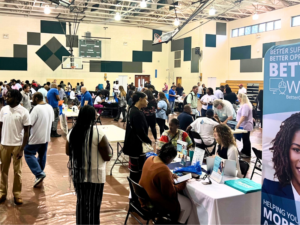
For those who struggle in poverty, an upwardly mobile job is often the first and best step toward self-sufficiency. That’s why we will continue to work through our BETTER WORK initiative in Gwinnett County and Columbus to build our local support systems to empower men and women to find work. We’ll also cultivate an environment of community safety where business and job opportunities abound.
In Columbus, a new focus for 2024 will be on partnering with local leaders and law enforcement to keep crime from driving away businesses and job opportunities. Meanwhile in Gwinnett, we’re laser focused on building out our network of employer partners, nonprofits, schools, and other community organizations to provide a bridge to a better life for the disadvantaged. And overall, we will continue our partnership with Jobs for Life as well as our mentor program.
Key Points
Government shutdowns occur when Congress doesn’t pass a set of bills that give federal agencies and services the approval and funding necessary to operate.
Government shutdowns and political wrangling distract from the real issues facing the poor and delay much-needed safety net reforms that would help people move out of government dependency.
There are bipartisan solutions Congress can act on to better serve low-income and marginalized communities.
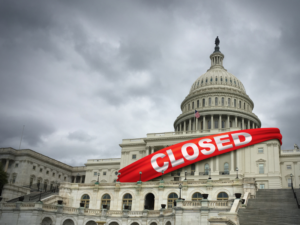
Government shutdowns occur when Congress doesn’t pass a set of bills that give federal agencies and services the necessary funding to operate. Without this approval, agencies must pause all non-essential activity until Congress takes action. Government shutdowns often go hand-in-hand with political conflicts among federal leaders. When this dynamic takes hold in D.C., government shutdowns become, at best, a distraction from the real issues facing the poor and, at worst, a roadblock to helping people achieve stability and economic opportunity.
Benefits from Social Security, Medicare, and most other need-based programs still go out, but shutdowns often lead to furloughs or reduced staffing levels in federal agencies that administer these programs. As a result, beneficiaries may experience longer processing times for applications, appeals, and inquiries.
Many federal employees are temporarily out of a job. They are instructed not to show up to work and aren’t paid during the shutdown window, though they typically receive back-pay once a shutdown ends.
Essential government employees, such as members of the military, air traffic controllers, and Transportation Security Administration (TSA) agents, are expected to keep working, usually without pay.
Americans may experience delays in government-administered processes, such as permits and passports.
Government shutdowns and safety net programs
For many Americans who currently need assistance from programs like SNAP, WIC, Temporary Assistance for Needy Families (TANF), and Social Security, a government shutdown can be a fearful prospect. The worry of losing essential benefits and facing greater financial hardship can take a significant toll on individuals and families in low-income households and communities.
Impact of a shutdown on SNAP benefits
SNAP, the nation’s second largest safety net program, helps eligible families buy food. Around 42 million Americans currently receive this vital support. The federal government pays for SNAP benefits, and funds are delivered to the states for distribution to the individuals and families who need them.
During a government shutdown, there are typically enough funds available to provide SNAP benefits for about a month. Few shutdowns in American history have gone on that long, so recipients usually don’t notice any change in financial assistance.
But on November 1, 2025, the current government shutdown surpassed the one-month point, and SNAP recipients didn’t receive any benefits for the coming month. To address this critical situation, the federal government will use its emergency funds to provide SNAP support. Unfortunately, this will only be a short-term solution, and it isn’t likely to cover all the SNAP assistance the government would usually distribute during the month.
It’s important to note that a pause in SNAP benefits during a government shutdown hurts not only individuals and families, but also local economies. Food stamps help support the businesses where people spend them, like grocery stores and farmers markets. Every dollar of SNAP benefits generates about $1.54 in economic activity, but this grinds to a halt when the government doesn’t fund this essential public assistance.
Impact of a shutdown on WIC benefits
WIC provides families with free healthy foods, breastfeeding support, nutrition education, and referrals to other services. Almost 7 million pregnant women, new moms, and children up to age 5 currently depend on WIC support.
The 2025 shutdown has put WIC benefits in jeopardy, and federal funding for this crucial assistance becomes more uncertain the longer the government remains closed. In the short term, federal officials are using revenues from other sources to keep the program running.
Government shutdowns can push people struggling with hardships further below the poverty line. Recent data shows that a pause in crucial welfare assistance would cause an additional 2.9 million Americans to fall into poverty in late 2025. This would also put future generations at risk of becoming trapped in long-term cycles of poverty.
During a government shutdown, community support for our neighbors is critical. Churches, food banks, charities, and other nonprofit organizations can increase their efforts to provide food to people in need to help them through the difficult time, and community members can provide urgently needed donations.
There is a solution Congress can act on to create a better pathway out of poverty
A government shutdown may not cut off food stamps, WIC, Social Security, or other safety net benefits immediately. However, low-income and vulnerable communities still suffer.
In the short term, lawmakers need to better serve people living on the margins by being willing to compromise and end the government shutdown. This will make it less likely that the struggles of low-income Americans get lost in political conflicts.
In the longer term, the shutdown is a reminder that we need a better safety net system—one that encourages economic opportunity and stability instead of leaving millions of Americans exposed to the ups and downs of federal government turmoil. By ending the shutdown, Congress could take up the more important priority of One Door reform.
In the current welfare system, recipients are forced to navigate multiple, disconnected programs, eligibility requirements, and caseworkers—a maze that becomes a trap for welfare dependence instead of a secure path out of poverty.
The One Door Model makes it possible for the safety net to be a bridge rather than a barrier to opportunity. It does away with the disconnected programs and integrates human services with work support so beneficiaries who are capable of working have a clear, supportive, and accessible path to personal well-being and meaningful jobs.

The One Door Model provides welfare recipients with a greater sense of direction, dignity, and purpose, empowering people to become self-sufficient and enabling them to truly flourish.
FAQs about the government shutdown
Will SNAP benefits be paid in November 2025?
The federal government plans to use its emergency funds to provide SNAP benefits in November 2025. Unfortunately, these funds aren’t likely to cover all the SNAP assistance the government would usually distribute during the month. The payments will also be delayed because states will have to adjust their automated systems to distribute reduced amounts.
Will WIC benefits be paid in November 2025?
The federal government has currently made funds available to pay WIC benefits for the first few weeks of November 2025.
Are Head Start programs affected by the shutdown?
Head Start programs provide early learning, health, and well-being services to families with young children. The programs receive funding from the federal government, and many are closing due to the shutdown. Some are staying open by providing limited services, reducing staff, or shortening operating hours.
Where can Georgia families go for food assistance?
Foodfinder.usis a free, nonprofit website and mobile app that helps people find nearby food pantries and free food programs. Users can easily search for local support by entering their zip code.
Feeding Georgia is a statewide network of food banks that collaborates to end hunger in Georgia. Its website offers helpful links to local food resources.
Where can Georgians get help to find work quickly?
The Georgia Center for Opportunity’s BETTER WORK program partners with employers and local resources throughout Gwinnett County and the city of Columbus to connect people with training and support services and to help them find meaningful work.
How are government shutdowns related to welfare benefits cliffs?
A benefits cliff occurs when an individual, family, or household loses more in benefits from government assistance programs than it gains from additional earned income. When a person experiences a benefits cliff, they are thrust into serious difficulties: losing housing, going hungry, fearing that their children will be taken by Child Protective Services, and more. A government shutdown can have similar effects to benefits cliffs because it can cause big delays or cuts to essential safety net program payments. This creates significant financial hardship for people who are struggling and can push them deeper into poverty.
What are the political games in D.C. costing communities?
Americans deserve better than having their day-to-day well-being threatened by political dynamics in D.C. Shutdowns result when federal leaders devote energy to political distractions instead of bipartisan opportunities to fix our broken safety net system. This costs millions of people the chance for a more fulfilled, self-sufficient life.
We need a safety net system that gives people hope and independence from D.C. To make that possible, the current government shutdown needs to end so legislators can get back to the work of serving people—truly putting citizens’ needs first and creating policies that allow Americans to escape poverty and flourish.