As August ushers in a new school year, nearly two million students are headed back to Georgia’s 2,300 public schools. How are Georgia schools doing when it comes to preparing kids for work and life? Here are a few key measures of education in Georgia that parents and communities should know as students return to the classroom. 

Learning in Georgia

Results from the latest Georgia Milestones Assessment show students are still struggling with math and reading. In math, 54% of third-graders and 56% of eighth-graders were below proficiency. 

In reading, 45% of eighth-graders were at grade level or above. Third-graders are even further behind—only 38% met proficiency in reading. While that number is up from 36% in 2020, it’s still below pre-pandemic levels. In 2019, 42% of third-graders were reading at grade-level or above. 

Demographic data from the Milestones Assessment shows Black and Hispanic third-graders are struggling most when it comes to reading.

Reading proficiency by third grade is a crucial milestone for Georgia’s students. Not only is it necessary for learning in later grades, but it’s also an indicator of future stability and economic opportunity. That’s because literacy is closely linked to high school completion and participation in the workforce. 

 Children who can’t read proficiently by third grade are more likely to drop out of high school, have lower earning potential, and experience higher rates of poverty and unemployment. 

  • The median annual earnings of adults ages 25 to 35 who had not completed high school was $6,300 less than those with a high school diploma.
  • Data from the Bureau of Labor Statistics shows a 6.2% unemployment rate for people with no high school diploma. It drops to 4.2% for high school graduates and 2.8% for those with an associate’s degree.
  • The poverty rate for those with no high school diploma is 25.1%, compared to 13.1% for those who have finished high school. In Georgia, where an estimated 1.4 million people live in poverty, 25% would roughly equate to 350,000 people. 

A literacy study from the Annie E. Casey Foundation sums up what’s at stake for kids in Georgia and the country if reading proficiency continues to slide: 

 “The bottom line is that if we don’t get dramatically more children on track as proficient readers, the United States will lose a growing and essential proportion of its human capital to poverty, and the price will be paid not only by individual children and families, but by the entire country.” 

Enrollment

Georgia public schools enrolled 1,736,730 students in pre-kindergarten through 12th grade, according to the Georgia Department of Education’s spring 2025 enrollment count. That number marks a drop of 10,964 students from spring 2024. 

As Georgia has taken steps to expand education opportunities, more families are embracing new schooling options to find the best education fit for their kids. Homeschooling is on the rise, and over 15,000 families applied to Georgia’s newest school choice program, the Promise Scholarship, between March 2 and June 30.

Students missing school

Georgia, like many states, is battling a crisis of chronic absenteeism. These are students missing 10% or more of school days—a situation that puts kids further behind in academic progress and raises the high school dropout risk.

Chronic absenteeism and its risks tend to be higher among students from low-income families, students of color, and students with disabilities.  

In Georgia, absenteeism skyrocketed between 2020 and 2021 in the wake of pandemic school closures. In 2019, 12.1% of students had been chronically missing school. By 2021, that number had jumped to 20.1%. Only recently, in 2025, did the percentage dip below 20% for the first time in four years. 

Public school spending

On average, Georgia spends $14,660 on K-12 education per pupil. Pre-kindergarten and K-12 education spending accounts for 38% of the state budget, making it Georgia’s biggest line item. In 2025, the state budget included $13.3 billion for Georgia’s public schools, which was a $1.4 billion increase from 2024. 

Despite these amounts, state funding is only a portion of overall revenue for public schools. Local taxes are the biggest source of education dollars, and a small percentage comes from federal funding. 

New education laws in place this year

Georgia lawmakers passed a handful of education-related bills in 2025 that will impact schools as of this academic year. 

The Georgia Literacy Act stops the use of an instructional reading method called “three-cueuing,” which research has shown to be ineffective. Instead, the law ensures teachers are trained in the science of reading—the evidence-based methods that have proven most successful for teaching reading. 

This is a hopeful step for Georgia students, especially in light of results that similar reforms have had in other states. ExcelinEd specifically noted the astonishing transformation in Mississippi: “Mississippi’s fourth-grade Black students have risen to third in the nation in both reading and math, and Hispanic and low-income students have claimed the top spots in reading and second place in math nationwide.” 

In addition to addressing literacy, Georgia lawmakers have also taken steps to improve school learning environments. Starting this year, a new cell phone law will put stricter limits on student phone use during school hours. The goal is to cut down on distractions and help students stay engaged in the classroom. 

What’s next for education in Georgia?

Georgia’s education measures are more than data. Behind the numbers are real children who will be the next generation of mothers, fathers, business owners, employees, and voters in our state. A quality education is necessary for giving them strong, opportunity-filled futures. 

Solutions to boost math and reading proficiency and address chronic absenteeism can strengthen Georgia’s public schools. These are worthwhile steps to support students whose best—and often only—education option is the local public school. 

At the same time, Georgia leaders should be doing everything possible to remove financial and social barriers to quality education and empowering students and families to access the school of their choice. Prioritizing more opportunities over limited choices is the best way to prevent a lack of quality education from locking Georgia’s kids and communities into poverty.

Image Credit: Canva

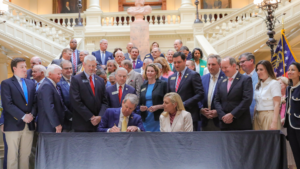
Georgia lawmakers passed bills affecting schooling, work, and family opportunities in 2025.

Georgia lawmakers wrapped up the 2025 legislative session with some big decisions that affect our state’s families, students, and workers.

Several new laws were passed to improve education, job opportunities, and access to childcare — while a few important changes didn’t quite make it through.

“The 2025 session included some key victories to improve public school classrooms, expand school choice options, and improve workforce opportunities,” said Buzz Brockway, vice president of policy for GCO. “While there were some disappointments on bills that didn’t make it across the finish line, we are pleased with the progress lawmakers made this year in promoting an agenda to allow all Georgians to flourish.”

What Passed: New Georgia Laws in 2025

These bills passed out of both the House of Representatives and the Senate and are headed to the governor for signing. 

House Bill 340: Less phone distraction, more student engagement

K-8 classrooms now face stricter limits on student cell phone use during school hours. The goal of this policy is to cut down on distractions and help kids stay engaged in the classroom.

Senate Bill 82: More support for charter schools

With this legislation, local boards of education must reconsider denied charter petitions and provide detailed explanations for their decisions. To incentivize approvals, schools receiving charters are eligible for grants of $250,000 a year for three years to help them get started.

House Bill 307 and Senate Bill 93: Helping kids read better

Two bills aimed to boost reading skills among Georgia students. HB 307 updates dyslexia screening and interventions and improves statewide coordination to help at-risk students earlier. SB 93 makes sure future teachers are trained in proven methods to teach reading. State-approved educator preparation programs must align their core curricula with the science of reading—a move that aims to enhance literacy instruction by prioritizing evidence-based methods.

House Bill 136: Bigger tax break for child care

Families can now get a larger credit on their state taxes (up to 40% of the federal tax credit) for expenses related to child and dependent care. By allowing Georgia families to subtract more child care expenses from their annual taxes, this measure eases the financial burden on working families across the states.

House Bill 579: Simplifying licensing for businesses and trades

HB 579 makes it simpler and faster to get professional, business, or trade licenses in Georgia, reducing paperwork, red tape, and other barriers getting in the way of people looking for steady work.

Senate Bill 63: Free college prep tests for homeschoolers

SB 63 mandates that homeschool students in Georgia must have free access to take AP, SAT, and PSAT exams at their local public schools. Improving access to testing for  all students helps level the playing field for college readiness.

​​What Didn’t Pass (But Could Still Come Back) 

Despite these successes, some significant bills were left on the table when the legislative session abruptly adjourned early.

Senate Bill 207: Second chance for job-seekers with a criminal record 

This measure would have helped people with past criminal records get job licenses more easily.  A simpler, fairer process gives returning citizens better opportunities to rejoin  the workforce and build stable livelihoods and futures. However, due to legislative discord, the bill didn’t get a final vote. 

House Resolution 884: Making Georgia’s welfare programs work better 

This proposal sought to create a task force to streamline safety net and workforce development systems in Georgia. It was shelved due to disagreements, but it’s on the radar for next year’s session. Connecting welfare and workforce programs should be an immediate priority because it’s one of Georgia’s best opportunities to remove barriers to work and upward mobility for more people. 

Image Credit: Canva

Students zoned for 512 public schools may be eligible to receive the Georgia Promise Scholarship.

Key Points

  • The Georgia Promise Scholarship school list is now available. Families zoned for one of 512 elementary, middle, and high schools across Georgia will eligible to apply for the new Promise Scholarship program.
  • Starting in the 2025-2026 school year, the Georgia Promise Scholarship will give families up to $6,500 per student to choose the learning environment that’s best for their child.
  • Families can apply for the Georgia Promise Scholarship between March 1 and April 15, 2025. Sign up here for application tips and updates. 

There’s exciting news for Georgia families and students: 

Students zoned for one of 512 elementary, middle, and high schools across Georgia will be able to apply for Georgia’s new Promise Scholarship program to attend an educational alternative. That’s according to a list released by the Georgia Education Savings Authority (GESA), the state government entity responsible for overseeing the new program.

This program offers students a chance to access education opportunities best suited to their needs. The funds can be used for private school tuition, homeschooling expenses, tutoring, or other approved education expenses. The total amount of scholarships is capped at $141 million for the upcoming school year. That amount is estimated to cover around 22,000 students.

The first application period is now open and will run through April 15, 2025. Families can learn more at mygeorgiapromise.org.

If your student is zoned for a school on the Georgia Promise Scholarship School List, your family meets the attendance zone requirement to apply. 

See the List of Eligible Schools

If your student is zoned for a school on the Georgia Promise Scholarship School List, your family meets the attendance zone requirement to apply. 

See the List of Eligible Schools

Does your family quality for the Georgia Promise Scholarship? 

Parents can quickly determine their child’s eligibility by taking a 45-second quiz available on the GESA website.

Eligibility criteria:

To apply, students must meet the following requirements:

  1. Be zoned for at least one of the 512 eligible public schools.  
  2. Have been enrolled in a Georgia public school for two consecutive semesters, or is a rising kindergarten student. 
  3. Parents must have lived in Georgia for at least one year, with exceptions for active-duty military families. 

The program prioritizes lower-income Georgia families. If applications exceed available slots, priority goes to families with household incomes below 400% of the Federal Poverty Level (roughly $120,000 for a family of four). 

Are Promise Scholarships a stable option for the future?

Promise Scholarships are off to a strong start. Governor Brian Kemp has allocated full funding for the program in his new proposed budget, which is pending approval by the state legislature. A bill has also been introduced, sponsored by Sen. Greg Dolezal, that would broaden eligibility for Promise Scholarships, including provisions for foster families.

Opportunities like the Promise Scholarship give families a brighter future

The creation of Promise Scholarships has been a crucial step forward for Georgia families. Education is the foundation for a thriving life. For families feeling limited by their current school options, Promise Scholarships provide the hope of access to a better fit for their child’s unique needs. Whether it’s finding the right private school, funding homeschooling expenses, or other learning resources, this program empowers parents to make the best decision possible for their children.

Promise Scholarships will open for eligible Georgia families in 2025.

Key Points

  • Students from hundreds of public schools across Georgia can now apply for up to $6,500 per year to cover approved educational expenses, including private school tuition, tutoring, and more.
  • The program is available to students in the bottom 25% of Georgia’s public schools, enrolled during the previous two semesters or entering kindergarten, with lower-income families favored first.
  • Applications open throughout 2026. Sign up here to be notified when the program opens. 

Starting in the 2025-2026 school year, thousands of families now have greater access to flexible education options through the new Promise Scholarship.

Education is a vital pathway to opportunity, and every child deserves the chance to succeed. Unfortunately, many Georgia students remain stuck in underperforming schools without access to better alternatives. The Promise Scholarship aims to change that by expanding access to diverse, high-quality education opportunities. 

What are Promise Scholarships? 

The Georgia Promise Scholarship is a state-funded initiative designed to give families more control over their children’s education. Through this program, qualifying students will receive up to $6,500 annually* to cover a range of education-related expenses. Unlike traditional vouchers, which are limited to school tuition, Promise Scholarships provide greater flexibility.

Funds can be used for approved expenses such as: 

  • Private school tuition and fees 
  • Tutoring services 
  • Textbooks and curriculum 
  • Education therapies 
  • Education-related technology 
  • Transportation costs 

With this comprehensive approach, Promise Scholarships aim to help families create a personalized education path that meets their unique needs.

Who can apply?

Promise Scholarships are targeted to empower families with the fewest resources and the greatest need. There are specific eligibility criteria to qualify for the program, including:

  • Enrolled in eligible public schools: Students must be attending one of the bottom 25% of Georgia’s public schools (as ranked by the Governor’s Office of Student Achievement) during the 2025-2026 school year or be entering kindergarten.
  • Residency requirement: Parents must have lived in Georgia for at least one year, with exceptions for active-duty military personnel.
  • Income priority: If the number of applicants exceeds available funding, families with household incomes below 400% of the Federal Poverty Level (around $130,000 for a family of four) will be prioritized. 

Funding is available for up to 20,000 students, creating access to resources and opportunities they wouldn’t otherwise have.

Key dates to remember

Student applications will open four times in 2026:

  • March 1 March 31, 2026 
  • May 1May 31, 2026 
  • August 1August 31, 2026 
  • November 1November 30, 2026

Families are encouraged to start preparing now by gathering necessary documentation and confirming eligibility to apply as soon as possible.

What can parents do now?

Parents can take steps today to prepare for the Promise Scholarship application windows. Here’s how you can get started: 

Check for eligibility: Ensure your child qualifies by reviewing the criteria. This includes confirming their enrollment in a qualifying school or kindergarten for the 2025-2026 school year. See eligibility details here.

Prepare documentation: Gather residency proof and any other information that may be required for the application.

Start exploring education options: While the list of eligible schools hasn’t been released yet, it’s a good idea to consider the types of educational settings or services that could best meet your child’s needs. A list of participating private schools is available here.

Learn more about education choices: For additional guidance, consult the Parents’ Guide to Education in Georgia to better understand the options available to you and your family.

Education savings accounts in Georgia empower parents to customize their child's education.

Key Points

  • Education plays a powerful role in breaking the cycle of poverty and helping children lead healthy, flourishing lives. Education savings accounts in Georgia are a solution to help more kids get the benefits of a quality education. 
  • Georgia’s education savings account program is the Promise Scholarship. Starting in fall 2025, it will give eligible families $6,500 scholarships to access the education option that best meets their child’s needs. 
  • Education savings accounts, or ESAs, in Georgia can have several positive impacts on communities, including better support for public schools, less crime, and greater upward mobility. 

Education is an essential building block for a healthy, flourishing life. It has the power to break the cycle of poverty that can persist across generations.

When children from impoverished backgrounds receive a quality education, they’re more likely to escape poverty themselves and provide better opportunities for future generations. 

Good education goes hand-in-hand with many other positive outcomes—like better jobs, higher personal income, valuable relationships, better physical health, and a longer life. 

We all want these good things for children in our communities. Education savings accounts are one solution that Georgia can use to increase opportunity and prosperity for students who need it most.

What are education savings accounts?

Education savings accounts, also called ESAs, give parents a portion of state education funding that they can use to tailor their child’s education if traditional public school isn’t a good fit.

ESA programs expand education opportunity by giving parents greater flexibility and freedom in education choices. Whether a family prefers homeschooling, private schooling, or other alternatives, ESAs let parents access the best type of education for their child’s unique needs and interests.

The Georgia Promise Scholarship helps students in low-performing public schools access education options for their needs.

Get Started With Georgia’s ESA Program: The Georgia Promise Scholarship

Georgia is getting ready to launch Promise Scholarships in the fall of 2025. If you’re interested in enrolling your child, make sure you’re signed up to hear about next steps.

Get on the List for Updates

How do ESAs work?

To create education savings accounts programs, states must first pass a law. States then take a portion of what they would have spent on the student’s public school education and put it into a state-administered account.

Parents can use these funds for a range of education expenses—tuition, tutoring, homeschooling curriculum, educational therapies, online programs, or even a combination of educational services. States require parents to complete an application process to switch to an ESA. 

What do families get from education savings accounts in Georgia?

  • Flexibility: ESAs let parents customize their kid’s education.
  • Financial Support: ESAs allow states to expand access to options that families may not be able to afford otherwise. 
  • Empowerment: Parents can take charge of their child’s education journey with confidence.
  • Diverse Options: Parents can explore various educational paths that suit their child’s needs and interests.

What is Georgia’s ESA program?

Created in 2024, Georgia’s ESA program is the Georgia Promise Scholarship. It provides state-funded scholarship accounts that give eligible families $6,500 per student for each school year.

The program will be available starting in the 2025-2026 school year, and it will be limited to students in the lowest-performing public schools.

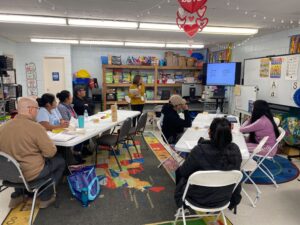
Child raising hand in classroom

Georgia’s Promise Scholarship Explained
Find out what the program is, how it works, and which students will be eligible. 

See the Promise Scholarship FAQs

Who do education savings account help in Georgia?   

ESAs are for all kinds of students. Whether a child is struggling in school or has special learning needs, ESAs can help. Georgia’s ESA program, the Promise Scholarship, is specifically designed to help families who may not have the resources to access better opportunities. 

Students in Underperforming Schools

Thousands of Georgia kids are stuck in public schools that have received a failing grade from the Governor’s Office of Student Achievement. To help these kids in particular, the Promise Scholarship will be for students in the bottom 25% of Georgia’s public schools. With an ESA, these students can access higher-quality education options that prepare them for successful careers and fulfilling lives.  

Low-Income Students

Choosing a different school or educational path has often been a privilege for wealthier families. What about families that struggle to make ends meet? 

With an ESA, low-income families can consider schooling options that may be out of reach otherwise. The Georgia Promise Scholarship makes sure these students are helped first. Available scholarships will go to families below 400% of the federal poverty level (around $120,000/year for a family of four). Any leftover funding can then serve students above that threshold. 

Students With Special Needs

ESA programs are a lifeline for students who need support beyond what their local public school can provide. ESAs make it possible to access schools that are set up to help students who have unique learning needs and disabilities. ESA funds can also help pay for other essential resources like tutoring, therapies, and learning technologies. 

Homeschooling Families

ESAs don’t just cover school tuition. They can pay for curriculum, online programs, and supplies, giving parents the option to fully customize their child’s education. This flexibility means that ESAs can help families who want to homeschool as an alternative to public or private schools. 

What kind of impact could ESAs have on communities in Georgia? 

Since Georgia’s ESA program, the Georgia Promise Scholarship, is new, it will be a few years before we know its exact impact on our communities. But we can get an idea from other states that have ESAs, including a couple of Georgia’s neighbors.

  • Better support for public schools: In 2011, Arizona became the first state to adopt ESAs. The state soon found that the program was helping to redirect state and federal dollars back to public schools where it could be used for teacher pay and operational needs.

  • Better outcomes for low-income students: Created in 2019, Florida’s ESA program is now the largest in the country. A November 2023 study of Florida’s education system looked at the impact of growing school choice. It found students of lower socioeconomic backgrounds—including those who stayed in public schools—experienced some of the greatest benefits.

  • Better economic opportunity and healthier societies: Tennessee is still working to expand its ESA program, but a study from the Beacon Center of Tennessee found that a statewide program could have incredible social impact. Their model predicted that Tennessee could have more high school graduates, higher overall personal income, less criminal activity and fewer felons, and $2.9 billion in economic benefits.

Do parents want education savings accounts in Georgia? 

Overall, Americans are worried about the direction of public K-12 education. 

  • Half of Americans think it’s moving in the wrong direction. 
  • 82% of teachers say the state of public K-12 education has worsened in the last five years. 
  • Only 46% of school parents in Georgia think K-12 education is on the right track in the state of Georgia. 

It’s not surprising, then, that Georgia parents are open to more school choice policies: 76% of Georgia school parents say they’re in favor of an ESA program.

A majority of school parents in Georgia think it's a good idea to have education savings accounts in Georgia.

What are common concerns about education savings accounts in Georgia?

Concern: ESAs take funding away from public schools.  

Georgia communities don’t have to worry about this because state lawmakers are not using public school funding for the Georgia Promise Scholarship. Promise Scholarship funding is also not allowed to exceed 1% of public school funding. This set-up means public school funding is fully protected. 

In general, more research is showing that, when states invest in school choice programs like ESAs, public schools benefit financially and academically. They have more per-pupil funding, less budgetary pressure, and better student outcomes

Concern: ESAs favor wealthy families and don’t help kids who actually need the opportunity. 

Quality education is a building block of a healthy, flourishing life, regardless of a family’s financial situation. ESAs are a tool states can use to ensure there’s more equality when it comes to education opportunities. 

Even if an ESA program is universal—where every student is eligible—the students who gain the most opportunities are those most in need. Here in Georgia, our ESA program, the Promise Scholarship, limits eligibility to students in low-income households to make sure they get helped first. 

Concern: ESAs are just another private school voucher. 

Education savings accounts can be used for private school tuition but also for much more! Unlike private school scholarships, ESAs can be used for a wider range of education expenses—including tuition, tutoring, online programs, education therapies, curriculum, and textbooks. 

Concern: ESAs don’t help families in rural areas. 

Rural areas may not have as many schools to choose from, but thanks to the flexibility of ESAs, this doesn’t have to be a reason for states to avoid ESA programs.

Take Tanya Schlegel’s story, for example. Tanya is a mom of two kids with special needs living in rural Georgia. Despite her best efforts to work with the local public school, it just isn’t equipped to give special needs students the help they need. An ESA would give her the resources to homeschool and access specialized therapies so that her kids can have the type of education that matches their needs. 

Georgia ESAs: Quick Facts

  • Georgia is one of 16 states with an ESA program. 
  • 10 states have universal ESA programs, meaning all students are eligible. Georgia is not yet one of them. 
  • Georgia’s ESAs are worth $6,500 per student per school year.
  • 76% of school parents in Georgia support ESAs.

Interested in Georgia’s ESA program? 

Go here to sign up for updates as the Georgia Promise Scholarship gets up and running. 

Other Schooling Options in Georgia

Georgia news, in the news, current events, Georgia happenings, GA happenings

Education is one of the most powerful ways that kids connect with positive role models, ideas and skills that enable them to imagine and pursue meaningful, prosperous futures.

Read the full article here


Subscribe

* indicates required

Subscribe

* indicates required