COVID-19 Makes the Case for

Educational Flexibility Even Stronger

By Benjamin Scafidi 

With respect to school openings during this COVID-19 pandemic, a public health professor recently observed, “There are no ideal solutions here. No matter what schools do, they won’t make everyone happy.” Of course, that is true in the monolithic K-12 education system we have now.  But we can move away from a monolithic system. We can move to a system that empowers parents with more choices.

Calls for giving families choice in K-12 education go back to Thomas Paine in the Rights of Man, John Stuart Mill in On Liberty, and—the modern father of choice in education—Milton Friedman. Instead of giving government exclusive control over taxpayer funds for the education of youth, Paine, Mill, and Friedman suggested that taxpayer funds should go directly to families of school-aged children—where families would decide where their children are educated. The core issue is this: Who decides how taxpayer funds for education are spent—the government, as is largely the case now, or families?


Many reasons to support expanded educational opportunity

There are so many reasons to give families more choice in K-12 education. The balance of the extensive empirical research finds that choice programs have improved student achievement and educational attainment for students who exercise choice and improved outcomes for students who remain in public schools. Further, private schools appear to do a better job of providing students with important civic virtues like tolerance and volunteerism, and private school choice programs have promoted integration. And choice programs, including Georgia’s tax credit scholarship program, have been designed to save taxpayers money

Giving parents control over where their children are educated allows them to choose school and non-school offerings that are tailored to their children’s interests and needs. Under such a choice system, prospective schools and other education providers are incentivized to provide customized educational and social environments that meet the interests and needs of students and their families. And the evidence—including evidence here in Georgia—suggests that families that exercise choice are overwhelmingly much happier with the services in their students new schools of choice. 

In this era of COVID-19, there are now additional reasons to support educational opportunity—families have different health risk tolerances; families, students, and teachers have different underlying health conditions; and families have different health preferences. Public school districts going fully online do not permit families to sort their children into schools (and teachers to sort into schools) based on their varying health preferences. When entire public school districts go entirely online, they are providing what many families desire, but they are not providing what many other families want or need. 

As an example, a family with (a) one parent who can stay at home or work part-time from home; (b) a family member with an underlying health condition; and (c) older children may be delighted that their public school is fully online.

However, other families may not be happy with fully online schools. A family with one parent who works full-time outside the home; (b) young children; and (c) no underlying health concerns may desire five-day, full-day, face-to-face schooling with safety precautions. Online schooling may force some parents to quit their jobs. Of course, families of children with special needs may be subject to the most hardships with online schooling.

It is impossible for a one-size-fits-all approach to health concerns to meet the needs of all families. Meeting the diverse educational and social needs and interests of children—and now the differing health needs of students and their families in this era of COVID-19—is only possible in a choice system. 


What can states do to provide more educational choice to families? 

First, to the extent permitted by federal law, states should use existing and forthcoming federal education funds to offer families choice. South Carolina and Oklahoma are using federal CARES funding to provide scholarships for school-aged children. South Carolina is providing scholarships to defray private school tuition costs up to $6,500 for 5,000 students from low- and middle-income families, where $6,500 is just over half of what taxpayers spend to educate students in their public schools. 

Second, states should create new choice programs or expand existing ones.

The track record of existing education choice programs in the United States is strong. COVID-19 only makes the case for choice stronger. Hopefully, policymakers will rise to the occasion and give students and families an educational lifeline during these challenging times. 

 

BenJamin Scafidi
BenJamin Scafidi

Benjamin Scafidi is the director of the Education Economics Center at Kennesaw State University and a Friedman Fellow at EdChoice.

EVERY CHILD WITH ACCESS TO A QUALITY EDUCATION


A quality education is key to a child’s future success. Academic achievement paves the way to a good job, self-sufficiency, and the earned success we all want for our children. To learn more about education options in Georgia click here

Children excited as they leave school

This op-ed was originally published in the Savannah Morning News on March 26th. Check out the original post here.  

By Randy Hicks

Once again, it’s an election year. And as in the past, we’ll probably hear a lot of talk about the state of education in Georgia. But what does it really mean to have an excellent education for K-12 students? What constitutes real education reform that will prepare Georgia’s children for the jobs of the future and bring the benefits of competition to education?

Most basically, it’s a mistake to measure the quality of education by the amount spent on education. Instead, the quality of education must be measured by results. And that starts with two goals: First, finding the right school setting for each child. Two, ensuring that parents can take advantage of choice and place their child in that setting.

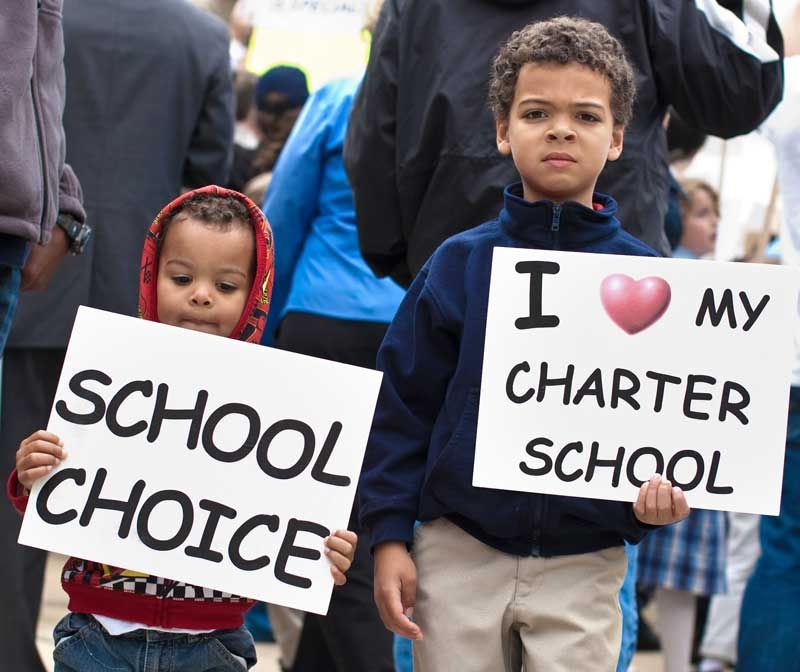
Every child is different. That’s why families should have a variety of educational options for their child. The goal of real education reform—of enhancing choice in education—is to ensure that families have high-quality options. Of course, this includes traditional public schools, but it also includes public charter schools (where Georgia’s programs are growing in popularity); private schools (including for children with special needs and those who benefit from the Georgia Tax Credit Scholarship program); online education, homeschooling, and hybrid education options. Parents can then select the option or options that help their child learn and grow the best.

Fortunately, Georgians already favor choice in education. Now, as the campaign season is intensifying, the Legislature can prove their dedication to our kids by taking real steps towards education reform this year. For instance, lawmakers can raise the arbitrary cap on the tax credit scholarship program, as two bills propose to do. More parents want these scholarships, and more people want to give to make them a reality for Georgia’s children. The Legislature shouldn’t stand in the way. Special needs children, children with disabilities, and others can benefit from expanded scholarship programs based on choice.

As the legislative session winds down and the campaign season begins, I hope that voters will take the time to inform themselves on education issues and ask the candidates where they stand and why, rather than simply being satisfied with proposals for higher spending for public K-12 schools. A vibrant education system in Georgia will include high-performing public schools all across the state, but it will include independent schools as well. Each sector should be committed to excellence, and parents should have the option of choosing the educational settings that are right for their child.

Seven years ago, Gov. Nathan Deal called on Georgians to “be frugal and wise. Let us restore the confidence of our citizens in a government that is limited and efficient.” His words ring true with a spirit of promoting true education reform which contributes to both of the Governor’s goals – frugality and efficiency. Public education, too, will benefit from the competition that true choice brings, and the results will benefit both Georgia’s children and Georgia’s taxpayers. The competition that comes from true choice for parents will improve all schools, making education in Georgia not only more frugal and efficient but also much more effective.

And that is the point of true education reform: more choice, and better schools, for everyone. Let’s keep that in mind and keep education reform a priority in this political year.

In the wake of the recently concluded legislative session, I found myself at a local charter school discussing school choice with a group of parents, teachers, and administrators.

While upbeat in many ways, the conversation was heavy with a feeling of barely-restrained desperation. It was in the air and occasionally expressed by a frown, joined with a shake of the head.

7135-news05-20-11coweta-charter-school-rally-capitolcolor

The school’s staff explained the wonderful academic success of their students, nearly all minorities and all female, despite the statistical odds stacked against this school and others like it. At the same time they lamented how the treatment of charter schools in Georgia, which are public schools open to all students, results in their receiving much less funding per student than traditional public schools and forcing them to bear substantial additional costs.

Fewer dollars and higher costs mean that charters often must forego offering classes that are taken for granted in most public schools. Fewer dollars and higher costs mean students go without other, seemingly normal, parts of school life, like a playground, a sports field, recreation equipment, etc.

How much less funding? By my calculation, it amounts to nearly 20 percent less per student per year for state-approved charter schools. It’s that much less, yet charters – by definition – are held to a higher standard of academic achievement than traditional public schools. Unlike traditional public schools that linger forever regardless of their instructional performance or the academic success of their students, charter schools actually close for failure to meet targets. Despite the disparity in how they’re treated, charters typically perform well.

What about those additional costs? The big one for charters is the cost of renting or buying a school building, a cost that traditional public schools do not have to shoulder that can run into the many tens of thousands of dollars each month. Behind teacher pay, this is one of a charter school’s largest expenses.

For the parents in the room who were all unsatisfied with their local, traditional public schools, the issue was a lack of real alternatives. While Georgia can boast that it has some educational options, including charter schools and some private school scholarship programs, the reality is that those options are unavailable to most families.

Why? The answer is that charter schools are not present in every community and those in operation only have enough seats available for a small percentage of the state’s 1.8 million students. In a similar fashion, private school scholarships are severely limited by funding caps (this year, the cap on the tax credit scholarship was reached in the first 22 days of the year) or, by design, target only a very small group of students. The result is that waiting lists for these schools and programs often far exceed the actual number of students they are able to serve.

So what does this have to do with the legislative session, you might ask?

Well, if you were to just look at legislation that actually passed this session, you would be right to conclude that our legislature has little to do with or concern for the school choice needs of families in Georgia. You’d likely conclude that because, quite literally, nothing much happened to expand choice or to right the inequities in current education choice programs.

Now, if you followed the session from the beginning and paid close attention, you would know that the legislature had the opportunity to make serious strides in reforming the system and expanding choice, including adding more scholarships for private choice, allowing charter schools to use vacant public school buildings, and allowing charter schools to quickly replicate without unnecessary bureaucratic hoop-jumping, among others.

Yet, each opportunity ultimately withered on the vine. The unusually intense power struggle between house and senate Republicans, coupled with the active efforts of at least one committee chairman to kill school choice legislation, meant that nothing very meaningful survived to see the Governor’s pen.

So the children who desperately need a lifeline tossed to them are left to flounder another year in a system they didn’t choose and can’t leave. The powers-that-be and the protectors of the status quo win another round.

Who knew a prison could be so effectively

erected using only a zip code?

Some say that reform was mostly stopped this year because of election year politics; and we hear from some elected officials that next year will be different. After all, they say, we can’t do anything controversial in an election year; we can’t afford to anger the wrong constituency.

But wait, bills related to gun rights and abortion were hardly uncontroversial, yet they passed. Favors were called in and political capital was spent to insure their success. So being “controversial” couldn’t be the excuse….right?

Could it be, instead, that the parents of children most in need of rescue from failing schools vote neither often enough to warrant the risk, nor in the “right” way when they do? A skeptic – this skeptic – might answer “yes.” It’s difficult to come to any other conclusion. Of course, it doesn’t help that these same families are not typically campaign donors either.

It takes real courage to stand up to entrenched thinking in public education and I’m thankful for those few, brave elected officials who have done so, because they are truly standing up for our children. They recognize that few things in life offer an escape from poverty and a path to self-sufficiency as effectively as a quality education. But, what’s more, they understand that elections, holding office, and wielding power are not simply ends in themselves.

Here’s to hoping they receive reinforcements very soon because the children of Georgia can’t afford to continue to wait.

In communities across Georgia, too often parents that have school choice options are unaware of the opportunities that exist. Not because they don’t care, but because we haven’t done enough to share. Share the options, what they mean, and how to access them. GCO’s School Choice Handbook does just that. This is one of my favorite parts of the job—making information available to parents in a real way so they are armed with information and ready to proactively address the needs of their children.

Unfortunately, some areas in Georgia are limited in its choice options where they need alternative approaches to educating students in a way that sparks not only academic growth but personal character development as well. I believe we will get there one day, perhaps maybe even one choice at a time. However, we must begin with one student at a time.

Maybe you know someone that may need an alternative for a special needs student in a public school. Perhaps you know of a student who wants to pursue private school or charter school options after being bullied in a local neighborhood school. Possibly you know a parent who wants to transfer their child to another public school in their district. Regardless, this handbook gives an overview of all scenarios mentioned above. Please share this resource with other parents or use it to address your own situation.

Let’s seek better options together!

Click  here to download a copy of GCO’s School Choice Handbook.

Subscribe

* indicates required

Subscribe

* indicates required