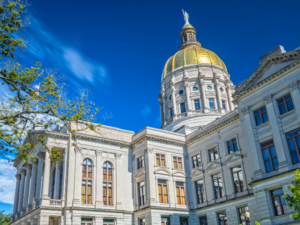
Columbus Cityscape

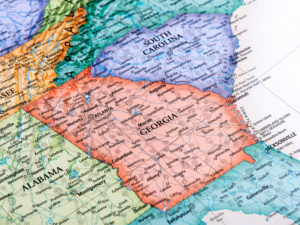
Violent crime is on the rise in Columbus, Georgia. What are the reasons, and can anything be done to stop it? Those questions are the topic of a new report from the Georgia Center for Opportunity (GCO) focused on Columbus’ recent spike in crime and ideas on how to mitigate it.

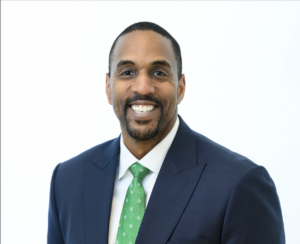
Titled “Reducing Crime in Columbus: Safer Communities Through Policy,” the report is authored by Josh Crawford, Director of Criminal Justice Initiatives at GCO.

Cover of the Columbus Crime Report

Access the Report:

Reducing Crime in Columbus

Our Columbus Crime Report details six practical solutions that city leaders can use to reduce crime in Columbus and restore safety, hope, and opportunity to the broader community. 

Learn More About This Report

Reducing Crime in Columbus: Safer Communities through Policy

“Since 2017, crime has been on the rise in Columbus. And it’s only gotten worse during the COVID-19 pandemic,” Crawford said. “It’s imperative that city and community leaders come together to solve this problem. Our new report provides the groundwork.”

Quick Facts on Crime in Columbus

  • Columbus saw one of its most violent years with 59 murders in 2021.
  • The city’s population is on the decline, correlated to the rise in violent crime.
  • A decrease in Columbus police has gone hand-in-hand with the crime spike.
  • Attempted murder convicts in Columbus who were released in 2022 only served 35% of their time.

“The human cost of this violence is dramatic, cutting lives short and leaving behind grieving families and fractured communities,” Crawford said. “The toll of violent crime goes beyond the physical cost to those directly impacted and includes financial costs to victims and taxpayers, the loss of productive years, and decreased economic mobility and growth in communities afflicted with high rates of crime.”

Six Policy Recommendations to Reduce Crime

Fixing the Columbus crime problem is about focusing on the most violent offenders. By addressing gang-related violence and solving more homicide investigations, Columbus can restore community safety, improve trust with city officials and law enforcement, and expand upward mobility and opportunity for residents.

Crawford suggests:

  • Addressing disrepair in Columbus’ communities by expanding cleanup efforts, tearing down or renovating abandoned buildings, and installing adequate street lighting.
  • Building trust between community residents and law enforcement and social services, particularly through protecting the rights of victims.
  • Removing egregious offenders from communities by implementing gang-enhancement provisions such as SB44 (2023) that keep these individuals incarcerated.
  • Improving and requiring pre-entry cognitive behavioral therapy services for all juvenile offenders, no matter how non-violent their offenses.
  • Reevaluating reentry programs through an external third party, examining the impact on revocation, rearrest, and reconviction.

Schedule An Interview

About The Author

Josh Crawford

Director of Criminal Justice Initiatives

Josh Crawford is a native of Massachusetts. He went to Penn State for his undergraduate degree and then finished law school in Boston. After a brief stint in Sacramento, California, working in the county district attorney’s office, Josh moved to Kentucky to help start the Pegasus Institute, a nonpartisan organization designed to promote opportunity. In addition to serving as executive director of the organization, Josh had a special focus on criminal justice policy.

“By focusing on public safety and order, we can restore hope and opportunity to rural communities.”

Best practices for reducing crime can empower California to build safer communities through policy.

Key Points

  • There has been a concerning increase in violent crime and homicide rates in California.
  • Cities like San Francisco and Oakland have been adversely affected by rising crime, leading to economic challenges, a decline in safety perception, and demands for action from various community groups.
  • Over the years policies and decisions at both the state and local levels are believed to have contributed to the rise in crime. These include changes in sentencing laws, budget reallocations, and the election of progressive district attorneys. However, there is still great potential for political repercussions and the need for innovative solutions to address crime.

A recent headline from the satirical news website The Babylon Bee read “California Achieves World’s First Crime Rate Of Zero After Legalizing All Crime.” That piece reads in part:

“This is a great moment for our state,” Governor Gavin Newsom said. “No other state in the nation’s history has successfully brought the crime rate down to nothing. California is once again leading the way! Now, please, for the safety of your loved ones, don’t venture out of your homes at night. Or at least carry an air horn. Whatever. I don’t care.”

Analysts point to the state’s legalization of all criminal acts as the catalyst for reaching a zero crime rate. “It was a bold but revolutionary move,” said Professor Kyle Ray of the California Crime Institute. “California has effectively eliminated all crime from existence simply by making every unlawful or despicable act completely acceptable. Murder, assault, robbery — these are yesterday’s terms. Californians are now truly free to express themselves however they choose. Zero crime!”

Unfortunately, sometimes life comes a little too close to imitating art. In California’s case, de-carceration, de-prosecution, and de-policing has led to a toxic mix that has eroded public safety in the Golden State.

While crime began to crest in many states in 2022, the 2022 Crime in California report shows:

  • State-wide violent crime was up 6.1% compared to 2021.
  • Property crime was up 6.2% over the same time period.
  • The homicide rate increased 23.9% in the five years since 2017. 
  • By contrast, the rates for overall arrests and homicide arrests declined in 2022.


San Francisco and Oakland: California Beacons of Opportunity Turned Cautionary Tales 

Two Bay-area cities—San Francisco and Oakland—exemplify California’s public safety decline.

In San Francisco, a destination once regarded as the booming tech hub of the world, rising violent crime, homelessness, and open-air drug markets have led to massive exits from businesses large and small. In fact, the number of fleeing businesses is so large that several media and advocacy groups have developed databases of all the companies leaving. 

This trend has severely damaged the city’s reputation. A recent Gallup poll found that only 52% of Americans thought San Francisco was safe—down from 70% in 2006. It has also opened San Francisco up to the negative impact that crime has on economic opportunity. As multiple studies have found, violent crime robs communities of job growth and economic mobility—an outcome that tends to hurt disadvantaged communities and low-income residents the most. 

Across the Golden Gate Bridge in Oakland, CA, residents have become so tired of unabated violent crime that the local NAACP chapter joined Black religious leaders in calling on city leadership to declare a “state of emergency” over the impact of surging violence on minority communities. They specifically called out “failed leadership, including the movement to defund the police,” as well as the failure to “prosecute people who murder and commit life threatening serious crimes.” 

Bad ideas in Oakland have contributed to a cycle of violence that has trapped low-income residents in places they feel unsafe. The NAACP chapter there is demanding accountability, both of the offenders and of the politicians who placate them. In the first six months of 2023, crime is up 26% overall in Oakland,  according to the Oakland Police Department.


How Did California Get Into This Crime Crisis?

How did California get here? A brew of bad policies at the state and local levels over the last decade appears to have finally come to a head. 

  • Beginning in 2011, in response to a lawsuit about prison crowding, the California legislature passed AB 109, “Public Safety Realignment,” which made most property and drug offenses ineligible for state prison sentences and eliminated state parole supervision in most instances in favor of less intensive county options.


  •  Then, in 2014, voters approved Proposition 47,  “The Public Safety and Rehabilitation Act,” which made all types of theft under $950 and some drug crimes misdemeanors.


  • In 2016, voters approved Proposition 57, “The Public Safety and Rehabilitation Act of 2016” which created a system of earned early release that applied to many inmates, including those convicted of rape, gang, and gun crimes.


  • Finally, in 2020, in an effort to slow the spread of COVID-19 in state prisons, Governor Newsom released more than 10,000 inmates back onto the street, many of whom had violent and serious convictions.

At the local level, both San Francisco and Oakland reduced or repurposed portions of their police department budgets amid calls to “defund” the police. In 2020, San Francisco diverted $120 million from the police department and sheriff’s office budgets over the next two years. In Oakland, the city council repurposed $17 million away from the police department in favor of doubling the budget of a civilian crime prevention entity.

And then there are the elected District Attorneys. In San Francisco, progressive defense attorney Chesa Boudin was elected in 2020, along with a wave of other progressive prosecutors around the country with large financial backing. In addition to not prosecuting a host of lower-level crimes, Boudin quickly announced he would not pursue enhanced penalties for gang members. Crime rose dramatically, and Boudin was recalled in 2022.

Shortly after the Boudin recall, Oakland elected district attorney Pamela Price, who promised to discontinue use of those same enhanced penalties and favor probation over incarceration. She is currently facing the potential of her own recall effort.


“MY SON IS DEFINITELY WORTH THAT FIGHT”

The tragic story of Christian Gwynn who was fatally shot as a result of violence is a wake-up call to the need for change in policies that will reduce urban violence.

“MY SON IS DEFINITELY WORTH THAT FIGHT”

Rising Crime Doesn’t Have to be the New Norm in California—or Anywhere Else

Now there is mounting fear of even greater political blowback. But political implications aside, it doesn’t have to be this way.

We recently published our first analysis of a city and state’s public safety infrastructure. While this initial report looks at Atlanta, GA, the implications extend to cities and states across the country. Blue and red cities in blue and red states have been innovating and implementing best practices to reduce crime and violence, and these steps are helping several communities restore safety, hope, and opportunity. 

For more on how cities and states can get back on the right track, check out the report and recommendations here.

Schedule An Interview

About The Author

Josh Crawford

Director of Criminal Justice Initiatives

Josh Crawford is a native of Massachusetts. He went to Penn State for his undergraduate degree and then finished law school in Boston. After a brief stint in Sacramento, California, working in the county district attorney’s office, Josh moved to Kentucky to help start the Pegasus Institute, a nonpartisan organization designed to promote opportunity. In addition to serving as executive director of the organization, Josh had a special focus on criminal justice policy.

“By focusing on public safety and order, we can restore hope and opportunity to rural communities.”

Josh Crawford, Washington murder rates, murder rates, Washington rates

Key Points

  • A new report reveals Seattle’s murder rate defied national trends with a 13% increase in homicides in 2022. 
  • Washington has veered toward the wrong side of the “crime divide” as violent and property crime have worsened in the wake of recent policy decisions.
  • Enacting best practices for crime reduction will empower cities like Seattle to reverse the violence.

Homicides were likely down nationwide—about 4% according to one report—in 2022. But declining national numbers only tell part of the story. Families and individuals don’t live in “the nation.” They live in specific communities that are much smaller. Unfortunately, the homicide declines experienced in the aggregate did not translate evenly across these communities.

Seattle’s Murder Rate Goes Opposite the National Decline 

2022 began what we have referred to as “the great crime divide” in which some cities saw dramatic decreases in homicide—40% in Richmond, VA, and 11% in Austin, TX, for example—while other cities continued to see increases in homicides. One of those cities, Seattle, WA, saw a 13% increase in homicides in 2022 compared to 2021.

A recently released annual crime report from the Washington Association of Sheriffs further details this increase and shows a 15% rise in homicides statewide in Washington, once again setting a record for murders. Equally troubling, aggravated assaults, robberies, and car thefts were also up statewide. Car thefts are typically a good proxy for property crime because they have such high reporting rates relative to other property offenses.

Seattle’s Crime Problem Is a Policy Choice

Once again, it’s clear that rising crime is a policy choice. Beginning in 2020, the Seattle City Council voted two years in a row to cut police funding and are now down more than 350 police officers due to resignations and early retirements. Seattle has also become one of the national standard-bearers for “revolving door” justice. The Seattle Times used a 2022 arrest to highlight the problem.

Cuong Cao, was, as of Friday, still loose, described now by a federal justice spokesperson as a “fugitive.” There’s no reason for him to be a fugitive though, because he was arrested at 12th and Jackson last month, after police say they watched him selling fentanyl pills on the sidewalk and then crouching over a woman who was overdosing.

When Cao was booked, he was carrying heroin, meth and 88 “blues” — street slang for fentanyl pills — along with $800 in cash and a Canik 9-mm pistol. He’s got a slew of felony convictions for burglary, car theft and drug dealing, and he’s had 39 arrest warrants going back 20 years because of a propensity to not show up in court.

 Yet he was out of jail 45 hours later on just $2,500 bail, down from the $75,000 requested by prosecutors.

State policymakers have also played a role in exacerbating Washington’s crime problem. In 2021 they passed into law two “police reform” bills (here and here) that limited pursuits, use of force, and other tactics in a way that likely discouraged proactive policing. But the bad ideas roll on. Legislators have filed, but not yet passed bills that allow for early release for violent felons and reduce penalties for drive-by shootings. Passage of these measures would only make a bad situation worse, and further push Washington state down the path to more crime and more disorder. 


The tragic story of Christian Gwynn who was fatally shot as a result of violence is a wake-up call to the need for change in policies that will reduce urban violence.

The tragic story of Christian Gwynn who was fatally shot as a result of violence is a wake-up call to the need for change in policies that will reduce urban violence.

Reducing Crime is Essential to Building Vibrant Communities

 As I wrote in this op-ed for Newsweek, there’s a direct link between rising crime and the well-being of our communities: “When communities become less safe, they become less prosperous. Our poorest residents end up shouldering the burden.”

Whether it’s Seattle, Atlanta, or any other city struggling with increasing violence, getting serious about reducing crime is more than a policy decision. It’s an act of compassion, especially toward the most vulnerable in our communities.

While bad decisions have led to increased crime, enacting best practices at the local and state level not only reverse Washington’s current trajectory but can meaningfully reduce violent and serious property crime so that Washingtonians can lead safer, more fulfilled lives.

Related Reading

A Violent Start to the Year: Murders Are Already Soaring in These Six Major Cities

Murder Is Actually Going Down—Wherever They’re Paying Cops More and Targeting Gangs

How to Turn Back the Tide of Violent Crime

A Path That Could Reduce Atlanta’s Juvenile Crime

Community Benefits of a Strong Police Force

There’s Hope for Reducing Crime in Georgia


Schedule An Interview

About The Author

Josh Crawford

Director of Criminal Justice Initiatives

Josh Crawford is a native of Massachusetts. He went to Penn State for his undergraduate degree and then finished law school in Boston. After a brief stint in Sacramento, California, working in the county district attorney’s office, Josh moved to Kentucky to help start the Pegasus Institute, a nonpartisan organization designed to promote opportunity. In addition to serving as executive director of the organization, Josh had a special focus on criminal justice policy.

“By focusing on public safety and order, we can restore hope and opportunity to rural communities.”

Black History Month School Choice

Key Points

  • Access to quality education is a top conversation in Georgia and many other states and has been for decades.
  • Stories of black educators offer inspiration for continuing to pursue better education opportunities for every kid. 
  • The examples set by African American educators remind us how critical education is for supporting kids’ mental health, preparing them for jobs, and helping them become active citizens in their communities.

No matter what chapter of history you look at, education is often one of the top issues that states and communities have wrestled with. Even today, Georgia is grappling with the reality that thousands of kids are stuck in underperforming schools, and change is needed if we are going to give them a chance to thrive. 

As we celebrate Black History Month this February, it’s a perfect time to look to the African American community for inspiration on the issue of education. Having suffered obstacles ranging from zero education access to segregation and racism in schools, numerous African Americans throughout our country’s history know firsthand the struggle—and the gift—that education can be. Many have dedicated themselves to the cause of education, driven by a shared passion and vision for giving every kid a quality education, regardless of their race or circumstance of their birth. 

Let’s meet a few of these leaders who dedicated their lives to fighting for more educational freedom and opportunity.   

  1. Charlotte Forten Grimké (1837-1914)

Charlotte Forten Grimké grew up in Philadelphia in a family well-known for its activism against slavery. In her early school years, she was taught at home by tutors. Because Philadelphia’s school system was segregated, Charlotte’s parents sent her to Salem, Massachusetts, where she could attend a more progressive school that accepted Black students. As an adult, Charlotte paid the opportunity of education forward. She attended teacher training school, and during the Civil War, she was the first Black teacher to work at the Penn School in South Carolina, a school established to teach African-American children both while they were enslaved and after they were freed. After the war, Charlotte worked for the Freedmen’s Union Commission and the U.S. Treasury Department to help recruit and train more African-American teachers. 


May those whose holy task it is,

To guide impulsive youth,

Fail not to cherish in their souls

A reverence for truth;

For teachings which the lips impart

Must have their source within the heart.

– From The Journal of Charlotte Forten, 1853

    1. Fanny Jackson Coppin (1837-1913)

    Fanny Jackson Coppin was born into slavery and was not freed until age 12. For the rest of her young adult years, she worked as a servant for author George Henry Calvert in Newport, Rhode Island. Fanny yearned for education, so she used her earnings to employ a tutor for about three hours a week. Thanks to her academic diligence and financial help from an aunt and the local African Methodist Church, Fanny entered Oberlin College, Ohio, which was the first college in the United States to enroll both black and female students. 

    It was at Oberlin College that Fanny embarked on her career as an educator—a vocation that would create learning opportunities for thousands of African Americans. While a student at Oberlin, she taught a free night class for African Americans in reading and writing. The College also appointed her to teach classes at their preparatory division, the Oberlin Academy, making Fanny the first black teacher among the Academy’s faculty. After graduating with her bachelor’s degree in 1865, becoming one of only three African American women to do so, she accepted a position at Philadelphia’s Institute for Colored Youth. Over the course of her career, Fanny would become the first African American woman to serve as a school principal and to fill the role of superintendent of a United States school district. 


    “I feel sometimes like a person to whom in childhood was entrusted some sacred flame…This is the desire to see my race lifted out of the mire of ignorance, weakness and degradation; no longer to sit in obscure corners and devour the scraps of knowledge which his superiors flung at him. I want to see him crowned with strength and dignity; adorned with the enduring grace of intellectual attainments.” – Fanny Jackson Coppin, writing to Frederick Douglass in 1876

    1. Inez Beverly Prosser (1895-1934)

    Inez Beverly Prosser was born into a family that highly valued education. Opportunities were scarce for African American kids during Inez’s childhood, and her family moved often in search of the best education available for Inez and her 10 siblings. Inez’s schooling led her to earn a teaching certificate, a bachelor’s degree, and a master’s degree in educational psychology. 

    Inez had a deep passion for education and believed in its power to change lives. She held various roles as a teacher and assistant principal in segregated schools, but her interest in psychology set her apart from other educators. She devoted herself to understanding and improving the educational and psychological development of African American students. In 1933, she became one of the first black women to earn a PhD in psychology. Her research undertook a pioneering and bold examination of segregation’s impact on black students’ social, psychological, and educational development. Findings and arguments from her dissertation were cited in the larger debate about school segregation, carving out a legacy for Inez as one of the leading advocates for the educational and mental health of African American kids.  


    “I am interested in that type of research which will lead to better teaching in elementary and high schools.” – Inez Beverly Prosser

    “Many have dedicated themselves to the cause of education, driven by a shared passion and vision for giving every kid a quality education, regardless of their race or circumstance of their birth.”

    “Many have dedicated themselves to the cause of education, driven by a shared passion and vision for giving every kid a quality education, regardless of their race or circumstance of their birth.”

    1. Kelly Miller (1863-1939) 

    From his early school days, Kelly Miller showed a talent for math. After an impressive academic career spanning the study of math, sociology, Latin, and Greek, Kelly received a bachelor’s degree from Howard University. He became the first black man to be accepted into Johns Hopkins University for post-graduate work in mathematics, physics, and astronomy. 

    However, Kelly was forced to leave Johns Hopkins when the school increased its fees, and he returned to Howard University where he took a teaching job and continued his own education, earning advanced degrees in math and law. In 1907, Kelly became the dean of the College of Arts and Sciences at Howard. His passion for education motivated him to modernize the College’s curriculum and to tour states across the South in recruitment of new students. Under his leadership, enrollment tripled, and curriculum improved. 

    “The instruction which you have received here, and upon which your diplomas set a seal, will be of value to you only in so far as you digest and assimilate it, and wisely adapt it to the tasks which lie before you.” — Kelly Miller

    1. Nannie Helen Burroughs (1879-1961)

    Nannie Helen Burroughs was born in Virginia, and after her father’s death, she moved to Washington, D.C., with her mother where she completed high school and graduated with honors. While Nannie’s career began with roles in secretarial and bookkeeping work, education would eventually become her focus. 

    Her mark in education was a unique one: Nannie wanted to help poor, working African American women. She believed that these women should have opportunities to learn skills beyond domestic work, so in 1909, she founded the National Training School for Women and Girls in partnership with the National Baptist Convention and through the support of small donations from the black community. The school provided job training and academic instruction to young black women, giving them the option to enter the workforce and pursue careers. The school was one of the first of its kind in the early 20th century, and Nannie served as its president until her death in 1961. 


    “To struggle and battle and overcome and absolutely defeat every force designed against us is the only way to achieve.” — Nannie Helen Burroughs

    1. Esau Jenkins (1910-1972) 

    Esau Jenkins was a shining example of how community members can contribute to improving education for underserved kids. Having grown up in the era of segregation, Esau knew what it was like not to have access to educational opportunities. If he had anything to do with it, the kids in his South Carolina community would not have to suffer the same injustice. 

    So, Esau and his wife used part of their income to buy a bus to transport their own kids and fellow children on South Carolina’s Sea Islands to schools in Charleston. Esau also used his bus to help adult workers get to their jobs. During these rides, he and his wife would teach the workers about the U.S. Constitution and other information that was required to pass literacy exams and become a registered voter. This experience showed Esau that a better approach to adult education was desperately needed, and he founded the first Citizenship School on Johns Island to provide more structured education for adults, including instruction in basic literacy and politics. Thanks to his efforts, thousands of African Americans became registered voters. 

    Even while supporting adult education, Esau’s motivation to help kids did not falter. In 1951, Esau played a key role in establishing Haut Gap School on Johns Island so that the youth in that community would have a quality education option. Today, Haut Gap is a middle school that functions as a magnet school—a type of public school option that specializes in certain curriculum areas, such as STEM (Science, Technology, Engineering, and Math), the arts, or vocational training.


    “It takes a pretty large person to love. Any small person can hate.” – Esau Jenkins


    1. Septima Poinsette Clark (1898-1987) 

    Septima Poinsette Clark’s legacy was that of a community teacher. Septima grew up in Charleston, South Carolina—a place where the lines of segregation and class were strictly and harshly drawn, especially when it came to education. Septima was a bright student. After sixth grade, she tested directly into ninth grade at the Avery Institute and graduated from high school in 1916. Financial constraints prevented her from attending college, but even without a degree, she passed the state examination that allowed her to teach. 

    Charleston did not allow African Americans to teach in its public schools, so Septima took a teaching job in the rural community of Johns Island just outside of Charleston. Throughout her 40 years as an educator, Septima had various jobs where she would teach children during the day. At night, on her own time, she would teach African American adults how to read and write and, in the process, she developed several innovative methods to help them pick up these skills more quickly. Septima believed that literacy and citizenship went hand-in-hand, so as she taught basic literacy skills, she also helped adults learn about their rights and become informed, registered voters. Through her work, she became an influential civil rights leader and activist, known as “The Mother of the Movement” by Dr. Martin Luther King, Jr., and many others. 


    “What we are working for is an educational program that has become a resource and rallying point for scores of brave southerners who are leading the fight for justice and better race relations in these crucial days.”

    The Georgia Center for Opportunity (GCO) is excited to announce a new addition to our team! Josh Crawford joins us as senior fellow focused on criminal justice reform.

    GCO has long understood the impact the criminal justice system has had on those experiencing the barriers keeping them in poverty. Josh will fill a crucial role in helping add expertise and focus to address these issues.

    Josh is a native of Massachusetts. He went to Penn State for his undergraduate degree and then finished law school in Boston. After a brief stint in Sacramento, California, working in the county district attorney’s office, Josh moved to Kentucky to help start the Pegasus Institute, a nonpartisan organization designed to promote opportunity. In addition to serving as executive director of the organization, Josh had a special focus on criminal justice policy.

    Josh first encountered GCO during the 2021 State Policy Network annual meeting in Florida. He was impressed with GCO’s work on welfare cliffs and by the principles the organization lives by.

    “GCO’s focus on opportunity and upward mobility for the most left-behind members of our communities very much aligns with my own passions,” Josh says. “Additionally, it became clear to me that GCO understands the holistic nature of prosperity and a life well-lived. Prosperity is too-often discussed in merely economic terms. But true prosperity comes from not only financial security but community, family, and the ability to help one’s children lead better and more prosperous lives than the generation before them.”

    One of the top policy issues that motivates Josh is public safety: “The freedom to walk to the corner grocery store after dark or to let your kids play outside without fear of victimization is not a universal experience in American cities. In the absence of the most basic assumptions of personal safety, it becomes very hard to encourage economic growth or upward mobility. In fact, multiple studies have found that increases in violent crime depress private sector job growth and opportunity.”

    Josh’s role at GCO will focus on criminal justice reforms and the pathways for ex-offenders transitioning out of prison to attach to work to lower their risk of recidivism.

    “Reversing the trend of increased violence in American cities will require a combination of policy seriousness and political courage. It is my hope to bring the existing work I’m doing to GCO and expand upon it,” Josh added. “This means focusing attention on everything from policing and sentencing to the physical environment of a city and re-entry policy. The first city and state that gets these policy areas right will see not only huge public safety gains but will become the 21stt century model. Together we can make that a reality.”


    homeless no job

    Is there any reason not to cheer? Georgia’s unemployment rate dropped to 4.1 percent in May. 

    Here are three reasons why this looks good for Georgia. 

    First, the unemployment rate is declining, giving optimism that the economy is bouncing back from the pandemic.

    Second, there were only two periods in recorded history when Georgia’s unemployment rate was this low or lower. Starting from 1976—the extent of available data from the U.S. Bureau of Labor Statistics (BLS) on unemployment rates for the states—the first period was between October 1998 and July 2001 when the rate reached as low as 3.4 percent. This period occurred after the long economic expansion of the 1990s. 

    The other period—from April 2018 to the start of the pandemic—just occurred with Donald Trump in the White House. During this period, Georgia broke its best record by achieving 3.3 percent.

    Third, Georgia’s rate is the 16th lowest in the country, beating out 34 other states. For comparison, the United States as a whole has a rate of 5.8 percent rate, considerably higher than Georgia’s.


    But wait. Is the unemployment rate artificially low?

    While optimism is merited, it is important to put the unemployment numbers in perspective.

    Unemployment percentages do not capture those who do not participate in the labor force. According to the BLS, anyone not employed who had not actively looked for a job during the prior four weeks is not part of the labor force. Therefore, any person temporarily not looking for work is not accounted for when the BLS calculates the official unemployment rate. Especially now with all the repercussions of the pandemic, all those potential workers who have been sitting on the sidelines for the last four weeks are simply not counted.

    The behavior of labor force participation is a loose link for unemployment numbers. Normally, when economic times are good, sidelined workers and even retirees come back into the labor force, which can push the unemployment rate up. When times are bad, the opposite happens. Workers drop out of the labor force, artificially lowering the unemployment rate.

    During the depth of the pandemic, and as expected, the labor force participation rate in Georgia dropped—to 59.4 percent to be precise, compared to 62.9 percent just prior to the pandemic. In terms of real people, there were an estimated 260,575 fewer workers participating in the labor force—who were not counted among the unemployed, to emphasize the point. Participation bounced back some to 61.7 percent, but still there are 40,934 fewer workers in the labor force.

    Other ways to measure it

    BLS’s U-6 labor underutilization metric is another way to shed light on unemployment. It adds to the unemployed those discouraged and other “marginally attached” workers as well as part-time workers wanting full-time work but cannot find it. 

    Nationally, the U-6 rate hit a historic high of 22.9 percent in April 2020 representing 36.3 million people. It has since dropped to 10.2 percent representing 16.5 million people. However, in the months prior to the pandemic, the rate was at historic lows—in fact, as low as 6.8 percent. Obviously, while 10.2 percent is far better than 22.9 percent, it is significantly worse than 6.8 percent, representing a difference of 5.3 million workers.

    Unfortunately, monthly U-6 data is not available for the states, making any comparison difficult. The BLS currently publishes only experimental U-6 state data averaged over a year’s time.

    More useful for the states is the Nonfarm Employment estimates from BLS’s Current Employment Statistics survey. Only two states—Utah & Idaho—have caught up with employment from where they were in February 2020 before the pandemic hit. In contrast, the U.S as a whole is still 5% behind. Georgia ranks 16th among the states and is 4.0 % behind. Hawaii (-14.8%), New York (-9.6%), and Nevada (-8.6%) are the three states furthest behind. 

    If we use standard economic ARIMA Model time-series forecasting to estimate where employment would have been absent the pandemic, no state is back on track. The United States is 6.8% behind, and Georgia ranks near the middle in 27th place at −6.1%. Utah and Idaho lead the pack being the furthest ahead, while Hawaii, Nevada, New York, California, and Massachusetts trail the pack.

    Observations on state differences and policies

    In viewing the differences in employment among the states, the more rural states appear to be doing better. The states more dependent on tourism appear to be doing worse. State governments that implemented less severe lockdowns appear to be doing better. To test these observations, we will be running regression analyses to tease out any correlations. We will post the results when completed.

    In the meantime, it is important for government to adopt policies that will help businesses to rebound and make it easier for startups. The goal should be not to just lower unemployment but also to bring those sidelined workers back into the labor force.


    Erik Randolph is the Director of Research at the Georgia Center for Opportunity.

    Stacks of Coins

    This is the second entry in a series of posts highlighting GCO’s report, A High Price to Pay: Recommendations for Minimizing Debt’s Role in Driving Recidivism Rates. The first entry provided an overview of the report, as well as a recent update to one of the recommendations.

    Returning citizens often face a mountain of debt upon leaving prison that makes it more difficult to successfully reenter society. Some of this debt may have existed prior to incarceration – such as consumer debt and child support – while much of it arises as a direct result of a criminal conviction, and is made much worse by subsequent incarceration and unemployment. Studies have shown average debt amounts in certain jurisdictions to be as high as $20,000 in child support arrears[i] and between $500 and $2,000 in offense-related debt.[ii] This onerous amount of debt, combined with the lack of opportunity to earn or save money while in prison, cause many offenders to reenter society with little hope of being able to repay what they owe.

    Consumer Debt

    It is common for people who are incarcerated to carry some level of consumer debt into prison, whether it is from outstanding mortgages, car loans, school loans, or credit cards.[iii] Missed payments on these mortgages, loans, and bills result in back interest, fees, and fines accumulating over the course of a person’s incarceration. The end result can be the offender accumulating an unmanageable amount of debt by the time he or she is released, leading him or her to file for bankruptcy.[iv]

    Child Support

    Child support typically comprises the largest debt returning citizens owe,[v] as non-custodial parents who are unable to modify their orders during incarceration can owe tens of thousands of dollars in arrears by the time they are released.[vi]

    One study examining Massachusetts’ inmates and parolees revealed that non-custodial parents entering prison owed an average of $10,543 in unpaid child support and were likely to generate an additional $10,000 in arrears by the time they were released.[vii] More startlingly, one-fifth of the state inmates were estimated to generate arrears balances in excess of $30,000 while in prison.[viii] Another study of 350 parolees in Colorado demonstrated that they had an average balance of $16,651 in arrears.[ix]

    Many returning citizens in Georgia are likely to be impacted by child support debt, as 60 percent of offenders in Georgia self-report having one or more children upon entering prison.[x] Accepting the circumstances of the incarcerated, some states allow offenders to modify their child support while in prison to avoid the accrual of arrears. However, Georgia offenders are prohibited from modifying their arrears while incarcerated, as the state deems incarceration to be a form of “voluntary unemployment.”[xi] As such, there is no mechanism for indigent offenders in Georgia to avoid accruing child support debt.

    Once child support arrears have accrued, federal law requires non-custodial parents to pay the full amount owed to custodial parents, even if modification of orders is granted upon release from prison.[xii] However, federal law does permit arrears owed to the state to be forgiven retroactively. Child support arrears become owed to the state when the Department of Human Resources supplies Temporary Assistance for Needy Families (TANF) to custodial parents who are not receiving requisite child support payments from non-custodial parents. Once funds are distributed, the non-custodial parent becomes obligated to repay the state for supplying the amount of assistance he or she was originally responsible for paying the custodial parent.[xiii]

    Restitution

    Another source of debt which many returning citizens owe upon reentry is payment of restitution to victims. The amount of restitution owed by offenders usually ranges from several hundreds of dollars to several thousands of dollars, depending on the offense.[xiv] Restitution provides a way for offenders to pay for financial loss and other damages suffered by victims including lost property, medical expenses, costs of counseling, funeral and burial expenses, and lost wages.[xv] It also serves as a way for the offender and the state to demonstrate that they recognize the harm that the victim suffered and the offender’s obligation to make amends.[xvi] One study conducted in Pennsylvania found that paying restitution is related to lower recidivism.[xvii] As such, it is an important obligation for returning citizens to pay.

    However, problems occur when a person’s financial status and earning capacity is not considered in forming restitution orders.[xviii] This can result in unrealistic terms of repayment being formed, which, combined with other court-imposed financial obligations, create a financial burden for the returning citizen and may discourage him or her from repaying anything at all.[xix] When this situation happens, it leaves victims without compensation for financial loss or damages and diminishes their confidence in the criminal justice system.

    In Georgia, the Crime Victims Restitution Act of 2005 mandates that offenders make restitution payments to victims while under parole supervision.[xx] The court determines the amount of restitution and manner of paying it during sentencing, and parole officers are responsible for facilitating and monitoring payment compliance once the offender is in the community. Parolees must begin paying restitution upon release and are required to pay a minimum of $30 per month. [1],[xxi]

    Fees, Fines, and Surcharges

    A third source of debt that encumbers returning citizens is fees, fines, and surcharges that arise as a direct result of a criminal conviction.

    Fees are amounts charged to offenders in exchange for the services provided by courts, probation departments, parole supervision, and other agencies.[xxii] For example, the Georgia State Board of Pardons and Paroles collects a monthly supervision fee of $30 from every parolee with a supervision period of three months or longer. [2],[xxiii]

    Fines imposed by the court are intended to punish offenders and deter others from committing such crimes.[xxiv] The amount of the fine varies based on the person’s charge and can be mandatory or discretionary.[xxv] A fine for a third DUI offense in Georgia, for instance, can be as high as $5,000.[xxvi]

    Finally, surcharges are add-on amounts often unrelated to the crime but used to generate revenue for criminal justice agencies.[xxvii] Revenue is designated toward such things as retirement funds for sheriffs and peace officers, law enforcement facilities and training, indigent defense programs, and education and treatment programs.[xxviii] While small in isolation, surcharges can total hundreds and even thousands of dollars.[xxix]

    Georgia began collecting surcharges in 1950 when the legislature passed a statute requiring a deduction to be taken from every criminal fine to support the Peace Officers’ Annuity and Benefit Fund. By 2001, the number of court-imposed surcharges had risen to 21 to support nine state programs, five local programs, and the State General Fund.[xxx] Surcharges range from $0.50 per case to 50 percent of the total fine amount.[xxxi]

    Inability to Earn or Save Money in Prison

    A fourth reason returning citizens in Georgia have difficulty repaying debts upon release is that they do not have the ability to earn money for their work performed while incarcerated.[xxxii] As one of only three states that do not pay inmates for work,[3][xxxiii] Georgia bars those who are indigent from being able to meet current obligations, pay-down debt, or save for their inevitable reentry while in prison. This policy removes a strong incentive for them to work and develop skills and experience that will be helpful in obtaining a job upon release.

    Conclusion

    Without having a realistic plan and payment options to pay-off all of this debt, people returning from prison are less likely to pay anything at all, more likely to engage in the underground economy to avoid wage garnishment, and more likely to make bad decisions that may result in re-incarceration. The consequences of debt can be detrimental for returning citizens.


    Footnotes

    [1] Payment is required upon release for parolees serving 90 days or more under parole supervision.

    [2] Parolees serving for violent offenses pay a monthly victim compensation fee of $30 in lieu of the supervision fee.

    [3] Georgia inmates who participate in the Prison Industry Enhancement Certification Program (PIECP) and inmates who are placed in a transitional center are the exception, as they do have a chance to earn money while incarcerated. However, PIECP is limited to two prisons – though the state has plans to expand it to three to five more prisons – and there are only 13 transitional centers across the state serving 2,674 of 53,558 inmates . The other two states who do not pay inmates for work are Arkansas and Texas.


    Endnotes

    Some of the citations listed below are abbreviated. To view the full citation, see the “Notes” section in our report, A High Price to Pay.

    [i] Nancy Thoennes, Child Support Profile: Massachusetts Incarcerated and Paroled Parents, Center for Policy Research, May 2002, 26, https://cntrpolres.qwestoffice.net/reports/profile%20of%20CS%20among%20incarcerated%20&%20paroled%20parents.pdf.

    [ii] Carl Reynolds et al., A Framework to Improve How Fines, Fees, Restitution, and Child Support are Assessed and Collected from People Convicted of Crimes, Council of State Governments Justice Center and the Texas Office of Court Administration, Interim Report, March 2, 2009, 8, https://csgjusticecenter.org/wp-content/uploads/2013/07/2009-CSG-TXOCA-report.pdf.

    [iii] Erica Sandberg, “Ex-offenders face big debt challenges after prison,” CreditCards.com, August 30, 2010, accessed May 8, 2014, para. 7, https://www.creditcards.com/credit-card-news/ex-offenders-felons-prisoners-jail-in-debt-1264.php.

    [iv] Connie Prater, “How to prepare financially for time in prison,” CreditCards.com, October 15, 2010, accessed March 26, 2014, para. 7, https://www.creditcards.com/credit-card-news/how-to-prepare-inmate-financially-jail-prison-1265.php.

    [v] Carl Reynolds et al., A Framework to Improve, 10.

    [vi] Nancy Thoennes, Child Support Profile, 18.

    [vii] Ibid., 26.

    [viii] Ibid.

    [ix] Jessica Pearson, “Building Debt While Doing Time: Child Support and Incarceration,” Judge’s Journal 43 (2004): 7; Jessica Pearson and Lanae Davis, Serving Parents Who Leave Prison: Final Report on the Work and Family Center, Center for Policy Research, 2001, ii, https://www.hawaii.edu/hivandaids/Serving%20Parents%20Who%20Leave%20Prison.pdf.

    [x] Georgia Department of Corrections, Inmate Statistical Profile, 8.

    [xi] Office of Child Support Enforcement, “Project to Avoid Increasing Delinquencies: ’Voluntary Unemployment,’ Imputed Income, and Modification Laws and Policies for Incarcerated Noncustodial Parents,” U.S. Department of Health and Human Services, July 2012, 4, https://www.acf.hhs.gov/sites/default/files/programs/css/paid_no_4_companion.pdf; See O.C.G.A. § 19-6-15(j).

    [xii] Jessica Pearson, “Building Debt,” 5.

    [xiii] Rachel L. McLean and Michael D. Thompson, Repaying Debts, Council of State Governments Justice Center, 2007, 26, https://csgjusticecenter.org/wp-content/uploads/2012/12/repaying_debts_full_report-2.pdf.

    [xiv] Judge Brian Amero, Henry County Superior Court, telephone conversation with author, May 29, 2014.

    [xv] National Center for Victims of Crime, “Restitution Procedures,” in Promising Practices and Strategies for Victim Services in Corrections, 1997, https://www.victimsofcrime.org/library/publications/archive/promising-practices-and-strategies-for-victim-services-in-corrections; National Center for Victims of Crime, Making Restitution Real: Five Case Studies on Improving Restitution Collection, 2011, 3, 4, https://csgjusticecenter.org/wp-content/uploads/2011/11/2011-Natl-Center-for-Victims-of-Crime-report.pdf.

    [xvi] National Center for Victims of Crime, Making Restitution Real, 4.

    [xvii] R. Barry Ruback, Restitution in Pennsylvania: A Multimethod Investigation, Submitted to Pennsylvania Commission on Crime and Delinquency, Final Grant Report, August 2002, 9, 98, https://www.ncjrs.gov/pdffiles1/Archive/221282NCJRS.pdf.

    [xviii] National Institute of Justice, “Restitution,” Archived material that is the product of five regional symposia held on restorative justice between June 1997 and January 1998, accessed April 9, 2014, para. 5, https://nij.gov/topics/courts/restorative-justice/promising-practices/Pages/restitution.aspx.

    [xix] Carl Reynolds et al., A Framework to Improve, 1.

    [xx] Georgia State Board of Pardons and Paroles, “Restitution,” accessed April 10, 2014, https://pap.georgia.gov/restitution.

    [xxi] Ibid.

    [xxii] Rachel L. McLean and Michael D. Thompson, Repaying Debts, 2; Georgia State Board of Pardons and Paroles, “Supervision & Victim Fees,” accessed April 10, 2014, https://pap.georgia.gov/supervision-victim-fees.

    [xxiii] Georgia State Board of Pardons and Paroles, “Supervision & Victim Fees,” accessed May 12, 2014, https://pap.georgia.gov/supervision-victim-fees.

    [xxiv] Paul Peterson, “Supervision Fees: State Policies and Practices,” Federal Probation 76 (2012): para. 2, https://www.uscourts.gov/uscourts/FederalCourts/PPS/Fedprob/2012-06/supervision.html.

    [xxv] Rachel L. McLean and Michael D. Thompson, Repaying Debts, 2.

    [xxvi] O.C.G.A. § 40-6-391.

    [xxvii] Rachel L. McLean and Michael D. Thompson, Repaying Debts, 2.

    [xxviii] Administrative Office of the Courts, Court Fees in Georgia – Laws and Information, Court Business and Process Improvement Program, October 2004, 5, https://www.georgiacourts.org/aoc/publications/courtfeesbook10_2004.pdf.

    [xxix] Alicia Bannon, Mitali Nagrecha, and Rebekah Diller, Criminal Justice Debt: A Barrier to Reentry, Brennan Center for Justice, New York University School of Law, 2010, 1, https://www.brennancenter.org/sites/default/files/legacy/Fees%20and%20Fines%20FINAL.pdf.

    [xxx] Russell W. Hinton, “Court Fees,” Department of Audits and Accounts, Performance Audit Operations Division, October 2001, 1. This executive summary can be found in the following report: Administrative Office of the Courts of Georgia, Municipal Court Fee Study, November 2003, Appendix A-1, https://www.georgiacourts.org/aoc/publications/municipal_court.pdf.

    [xxxi] Ibid.

    [xxxii] Adam Crisp, “Georgia inmates strike in fight for pay,” timesfreepress.com, December 14, 2010, accessed May 20, 2014, https://www.timesfreepress.com/news/2010/dec/14/georgia-inmates-strike-in-fight-for-pay/?local.

    [xxxiii] Cindy Upton and Sarah Harp, Cost of Incarcerating Adult Felons, Kentucky Legislative Research Commission, Program Review and Investigations Committee, Research Report No. 373, 45, https://www.lrc.ky.gov/lrcpubs/RR373.pdf; A.J. Sabree, Strategic Planning and Implementation Consultant for the Georgia Department of Juvenile Justice, email message to author, June 5, 2014; Peter Wagner, “Section III: The Prison Economy,” in The Prison Index: Taking the Pulse of the Crime Control Industry, Western Prison Project and the Prison Policy Initiative, April 2003, 130-131, https://www.prisonpolicy.org/prisonindex/prisonlabor.html; Adam Crisp, “Georgia inmates strike in fight for pay,” timesfreepress.com, December 14, 2010, https://www.timesfreepress.com/news/2010/dec/14/georgia-inmates-strike-in-fight-for-pay/?local.


    Subscribe

    * indicates required

    Subscribe

    * indicates required