Parental love helps children gain the emotional health, behavioral skills, and academic success that unlocks social mobility.

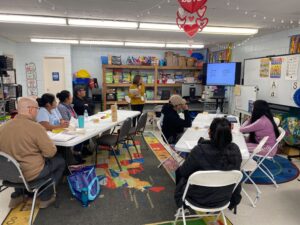
The Georgia Center for Opportunity (GCO) is honored to welcome Travis Thorne as the Vice President of Family. Travis will lead GCO’s Family Initiative and shape the future vision of its flagship program, Raising Highly Capable Kids (RHCK), which is an in-person, 10-week program designed to equip parents and caregivers with practical tools, honest conversations, and confidence to raise healthy, responsible, and caring kids.

Travis brings more than 20 years of experience in leadership, relationship management, and strategic problem-solving. Alongside his corporate career, he has spent many years serving in ministry, leading family and men’s small groups focused on strengthening households through practical guidance around money, marriage, and legacy. A Georgia native who grew up in Jonesboro, Travis combines professional expertise with a deep personal commitment to families across the state.

Travis was drawn to GCO because of its holistic approach to poverty and opportunity. “At GCO, we understand that poverty, especially generational poverty, is about more than income,” Travis shared. “It’s often about fractured relationships and a loss of hope. Strong families are where a sense of purpose, belonging, and connection begins.” That belief closely aligns with GCO’s mission to advance solutions that expand opportunity and help Georgia families build durable paths out of poverty.

GCO selected Travis to lead the Family Initiative because of his unique ability to bridge strategy and relationships. His experience building trusted partnerships in high-performance environments, combined with years of hands-on ministry and family engagement, positions him to lead family-centered work that is both relational and scalable.

“I’m thrilled to welcome Travis to our team to lead our work in strengthening families,” said Eric Cochling, GCO’s Chief Program Officer and General Counsel. “Travis brings a unique mix of professional experience, drive, and a passion for this work that I am confident will take our family-focused initiatives to the next level and allow us to have a much deeper impact in the communities we serve.”

In his role, Travis will focus on empowering parents as the primary leaders in their children’s lives and strengthening parent-child relationships to drive generational change. This includes enhancing and expanding RHCK. Unlike many parenting programs that focus only on parents, RHCK brings families together in cohorts that build social relationships, trust, and connection, especially in communities connected to Title I schools, which serve high numbers of low-income households.

Looking ahead, Travis envisions RHCK growing through strong partnerships with faith-based organizations, schools, and community leaders. “We listen, we learn, and we build alongside families,” he said. His vision is to see RHCK become a trusted, community-anchored model that meets families where they are and creates a lasting impact across generations.

With Travis’s leadership, GCO is excited to expand the reach and success of its Family Initiative.

Hear from Travis on the vision behind GCO’s Family Initiative:

Key Points

  • Summers are for more family time and enjoyment!
  • Studies show parental involvement is key to children’s health and development. 
  • Raising Highly Capable Kids (RHCK) has tools to help parents.

School breaks, warm weather, longer daylight hours—these are a recipe for more relaxation and fun as parents and kids enjoy a few weeks free of school-related commitments. On the other hand, summer can be challenging when kids have time off but parents must continue their regular work schedules and responsibilities. 

Numerous studies have shown that parental involvement is key to children’s health and overall development. But how can parents maintain this involvement and nurture their child’s development in a season where kids might be on break but adults are not? 

Our parenting class, Raising Highly Capable Kids (RHCK), has tools to help parents—and any adult caring for young people—answer this question. RHCK teaches the 40 developmental assets that are essential for raising healthy, responsible, caring kids. Several of these building blocks provide simple, inexpensive, and effective ideas that adults can use throughout the summer to support kids’ development. Plus, all of these ideas have a larger benefit of cultivating overall family well-being and connection.

1. Embrace evenings for family activities

In our Raising Highly Capable Kids parenting class, one of the developmental building blocks we teach is “Time at Home”—where a child spends some time each day interacting with their parents and doing activities at home that don’t involve TV or video or computer games. This type of interaction has been shown to improve young people’s leadership skills, health, and achievement in school. 

One benefit to summertime schedules is that flexible bedtimes and longer daylight hours can free up evenings for quality time as a family. For many families, summer evenings can be good opportunities for connection and fun, especially if parents are working during the day or if a vacation isn’t feasible for your budget. 

Activities to try:

  • Game night with your favorite board or card game
  • Family movie night
  • Visit a local pool or playground 
  • Go for a walk after dinner and talk about favorite moments from the day
  • Plan a picnic for dinner

2. Cultivate responsibility by getting kids involved around the house

Building personal responsibility in kids goes beyond rule-following. It’s about giving kids opportunities to practice caring for themselves and their environment and learning from successes and mistakes in the process. 

When it comes to the developmental asset of responsibility, summer is a great time to get creative. As kids get a break from school assignments, they can practice cultivating responsibility in other areas of life. For example, parents could have their child pick a household chore to be in charge of throughout the summer. Or, they could involve kids in tasks that introduce new skills and experiences—things like gardening, cooking, reading to siblings, or taking care of pets. 

The important thing is to involve your child in selecting responsibilities for the summer. Being able to choose, even if it’s from a limited list of options, encourages young people to feel that they have positive control over their choices and actions

 3. Let your child choose a special hobby for the summer

Participating in creative activities two or more times helps kids develop several important skills: intellectual comprehension, communication, cultural understanding, and overall creativity and problem-solving. 

Summer can be a great time to encourage kids to explore new interests. Plus, parents can use new hobbies as a tool to set much-needed routines in the midst of a less structured season. Have your child pick an activity or two to try this summer, and if it fits within your budget, take them to the store to pick out items they’ll need for their project. 

Activities to try: 

  • Creative writing or journaling
  • Painting or drawing
  • Building (lego sets, puzzles, block sets)
  • Listening to or playing music

“What we’re doing with Raising Highly Capable Kids is helping them develop those core assets so they have a strong foundation to have a successful life and be a positive contributor to our community.” 

“What we’re doing with Raising Highly Capable Kids is helping them develop those core assets so they have a strong foundation to have a successful life and be a positive contributor to our community.” 

4. Encourage reading for pleasure

Reading is strongly connected to developing positive values and learning concepts, facts, and emotions in creative, inspirational ways. Summer is the perfect time to help kids experience the pleasure of reading for fun, not just for school assignments.

Activities to try: 

  • Put reading material—chapter books, picture books, comic books, etc.—in easy-to-reach places around the house.
  • Set a family reading time once a week to read aloud to younger kids or hang out with older kids while reading different books. 
  • Take advantage of summer reading programs through local libraries or bookstores. These programs often set up reading challenges or adventures to get kids excited about completing a goal. 
  • Join forces with families in your neighborhood to create a summer book club for older kids or story time for younger children

5. Pick one way to serve others

One way to have a memorable, satisfying summer is to dedicate time to making a difference in the world around you. Research shows that young people who serve others are more likely to develop respect, kindness, patience, and helpfulness. Get together with your kids and brainstorm some ways that you could help out in your community. It could be as simple as weeding the yard for an elderly neighbor, or perhaps you could plan a volunteer activity or a home project for the whole family to help out with. 

Get your kids involved in picking summer goals for the family 

For many families, the key to a rejuvenating summer is to set a few goals that will be meaningful and enjoyable. Not sure what to prioritize? Consider having a conversation with your family to brainstorm what you want your summer to include. 

Here are a few questions to use as starting points:

    • How do you want your summer to feel? 
    • What are some local attractions or activities that you could enjoy as a family? 
    • What is a hobby or project that your child would enjoy spending time on? 
    • What are some books you would like to read or movies you would like to watch? 
    • How could you invest in your family’s physical health? How much time should your kids be outside playing or staying inside and relaxing?
    • How much screen time will be allowed? 
    • What seasonal meals or snacks would the family enjoy? 
    • How do you want to build friendships during the season?  

Finalize your list by choosing a handful of things that appeal to your family or by allowing each person to choose one thing that appeals to them. Then, go and enjoy your summer! 

Key Points

  • Event is Thursday, August 25 from 10:30am to 12:30pm
  • Sonesta Gwinnett Place Atlanta in Duluth, Georgia
  • Dive into the Attitudes, Behaviors, and Choices (ABCs) of individuals and families

Our upcoming event focused on family and relational health features a line-up of speakers you’ll definitely want to come out to hear.

As a reminder, the family Breakthrough event sponsored by the Georgia Center for Opportunity is on Thursday, August 25, from 10:30am to 12:30pm at Sonesta Gwinnett Place Atlanta in Duluth, Georgia.

At the event, we will do a deep dive into the Attitudes, Behaviors, and Choices (ABCs) of individuals and families and how those relate to relational and, more broadly, community health. We want you there!

Here are our featured speakers:

Kristen Hypolite, COO of Every Woman Works

Kristen is an engineer by trade and utilizes her talents in helping the women of EWW help reengineer who they are.


Dr. Natalie Looney, Principal of Summerour Middle School

Natalie has served as head of Summerour Middle School since 2019 but has worked in public education for over 20 years. She has been married for 23 years and has two wonderful children.


Michael Doyne, Parent Instructional Coordinator at Lilburn Middle School

Michael has worked as the Parent Instructional Coordinator at Lilburn Middle School for 13 years. He speaks English and Spanish, and he enjoys travel and hanging out with his friends and family.


Ian Rowe, Senior Fellow at the American Enterprise Institute

At AIE, Ian focuses on education and upward mobility, family formation, and adoption. Ian is also the co-founder of Vertex Partnership Academies, a new network of character-based International Baccalaureate high schools opening in the Bronx in 2022; the chairman of the board of Spence-Chapin, a nonprofit adoption services organization; and the cofounder of the National Summer School Initiative. He concurrently serves as a senior visiting fellow at the Woodson Center and a writer for the 1776 Unites Campaign.


family breakthrough

Transforming broken relationships into flourishing families

Key Points

  • Many people are experiencing broken relationships at home, work, and school.

  • Helping people have healthy relationships will result in nothing less than full community transformation.

  • The event is on Thursday, August 25, from 10:30am to 12:30pm at Sonesta Gwinnett Place Atlanta in Duluth, Georgia.

Family makes us stronger

The world is filled with negative headlines right now. These headlines reflect the real pain we’re all experiencing in our communities. Today, more than ever, we are experiencing broken relationships at home, work, and school.

In dating relationships, Pew Research tells us that nearly half of U.S. adults say dating has gotten harder for most people in the last 10 years. As for relationships at work, Gallup finds that 60% of people are emotionally detached at work and 19% are miserable. Meanwhile, the COVID-19 pandemic has contributed to increased rates of divorce.

We know that a key way to restore community health is by fostering healthy relationships. These relationships are the bedrock of our culture. When they suffer, we all suffer. Helping people have healthy relationships will result in nothing less than full community transformation.

That’s the theme of an upcoming Breakthrough event focused on family and relational health sponsored by the Georgia Center for Opportunity. The event is on Thursday, August 25, from 10:30am to 12:30pm at Sonesta Gwinnett Place Atlanta in Duluth, Georgia.

At the event, we will do a deep dive into the Attitudes, Behaviors, and Choices (ABCs)  of individuals and families and how those relate to relational and, more broadly, community health. You don’t want to miss it!


Register Now

Speakers at the event include:

  • Kristen Hypolite, COO of Every Woman Works
  • Dr. Natalie Looney, Principal of Summerour Middle School
  • Michael Doyne, Parent Instructional Coordinator at Lilburn Middle School

  • Ian Rowe, Senior Fellow at the American Enterprise Institute

Family makes us stronger

Each of us has within us the option of having the right attitude will drive our behavior which allows us to make better choices. When you leave the session, you’ll have a deeper understanding of what family formation means and the reason it is important.

We are inviting everyone to attend, whether you represent a school, a church, a government agency, institution of local government, or nonprofit, we want you at this event.


Eda Beacham

Importance of Family

At GCO, the impact area of Family, we always need volunteers. Since  we devote much of our time and efforts to family, we enjoy hearing what about family inspires people to volunteer.  

Eda Beacham is a current volunteer for GCO and we wanted to share her story with you.  Let us know in the comments what strength and or similarities you have in common with Eda. We invite you to send in stories about your family, too. 


Eda’s Inspiration

The makeup of my family has changed over time. Through marriage, divorce, birth and death, there has been an ever-changing clan at the Thanksgiving table. The birth of nieces, nephews and our own two sons added to the joy; and the passing of my mom and later, my husband, brought sorrow and some empty chairs. Then the grandchildren came, and they filled the empty spaces with laughter and love. The cycle continues today with this next generation, as it does in most families.


Families are always changing, but what holds them together? For me, it was my mother and her eternal optimism. Her life was not easy, but she always believed things would get better. With a limited education, she worked hard and put all her love and determination into raising a family. She came through the Great Depression and WWII, so she knew how to stretch a dollar and “make do.” She taught us values like hard work and sharing with others. She believed in God and made sure we went to church.


a family playing on the couch

Our family will likely have the greatest impact on our lives and play a critical role as we grow throughout our lifetime. 

Creating strong family bonds and healthy family relationships is key to family wellness, mental stability, and physical health.

Learn more about free tools and resources available in the community to strengthen your relationships. 

Overcoming Circumstances

When my dad left after 27 years of marriage, Mom’s faith took on a new freshness and devotion; and she ventured out in search of where she could be of service. She decided to sell everything and move into a home as cook and housekeeper for a man who had survived a brain tumor, but was left with the mind of an eight-year old. After this gentleman passed away, my mom began to dream about a little piece of land in the country where she could put down new roots and serve.  She found a small tumbledown house on two acres, so she  went to work making it a home. While working full-time in the nearby little town, she hosted home Bible studies, planted big gardens every year, served scrumptious down-home meals to family, friends, or whoever came by, and took in few strays along the way. Even though my mother never made much money, she found a way to help people who were down on their luck – a friend or family member who was out of work and needed a place to live, a relative in prison who received encouragement and hope from her letters, families who needed food or money in a crisis. In what turned out to be my mom’s last year, just shy of 66 years old, she had taken in her first foster child, a young teenage girl. My mother never stopped dreaming; she never stopped giving. And Mom saw her dreams come to life.


A celebration of fathers.

Since Father’s Day is upon us, I am sure many of you are thinking about the presence or lack thereof your father in your life.  Hopefully some of you are thinking about the father that you are or want to become. No matter where you land, take it from an adult woman in her 50s that my dad still plays an important role in my life. He has long gone from this world—he passed in July 1997—but he impacts my decisions daily. He was an impact in my dating decisions, in my choice of who I married, and his influence continues to this day to guide me.

I am sure I sound like a daddy’s girl—and for the record I am! No one had a dad more special than mine. My dad was the type of man everyone loved. Whenever you asked him how he was doing, he would yell out “MAGNIFICENT!” I am the youngest of three girls. Everyone knew that I was his favorite. We both were the youngest of our siblings so we had a special bond. It wasn’t that my dad was a huge talker—in fact he was quite low key. However, he taught us a lot by his actions. He was a hard worker, he went to church regularly, and he was an entrepreneur.   He loved Christmas and loved family. It is no coincidence that I married a man that is a lot like him and is also a great dad too!


A family sitting on the floor together

FROM THE BLOG

ORIGINS OF THE GEORGIA CENTER FOR OPPORTUNITY

WHY WE CHOOSE TO FOCUS ON HEALTHY FAMILIES

As a root cause for poverty, we knew we had to focus on building healthy families if we wanted to help individuals flourish—and strengthen our communities and state.

Read The Full Blog

A father’s impact cannot be understated

The reason that this is so important is because it speaks volumes about the man when he can still impact his daughter even when she is older. I suppose that remembrance can go both ways: While my dad has a positive impact on me, other women are living out the consequences of their dad not being present in their life. Research tells us that father-absent girls display a host of outcomes including increased sexual promiscuity, higher rates of teen pregnancy, and unhealthy relationships.

As we move into another year of celebrating fathers it is always great to remember the value a healthy relationship with your father can bring. While we know not all people have access to a father like I had, it is still something we can and should strive for. The stability and value of fathers is why we have a day to recognize them. We celebrate the role because we recognize the significance  of it.

This is just another reason why I love working at the Georgia Center for Opportunity. We help those who do not have that foundation. We have workshops that help to give you a baseline of what is really important in life. You can reach us across all social media and maybe you would like to go one step further and let us know how your dad is still influencing your life.  I would love to hear about him! 


As an organization whose mission is to alleviate poverty in communities across Georgia, we are sometimes asked why we choose to focus on healthy families. After all, some of the most contentious flash points in our culture today center on the divergent views Americans hold about the definition of marriage and the role of family in society. 

This is why many groups working on poverty alleviation sidestep the crucial role that family plays as the bedrock of society and instead focus on resolving the presenting symptoms of poverty—as important as they are—rather than the root causes.    

But back in 2005, the Georgia Center for Opportunity (GCO) was asked to participate in a healthy marriage initiative. In considering our involvement, we looked at the research on stable, intact, two-parent households and saw that this type of family structure is optimal when looking at a wide variety of social metrics—including poverty alleviation. 

And while there’s no doubt that single parents often do a great job raising children who become highly productive members of society, the data clearly show superior outcomes for children who come from loving, low-conflict, two-parent households—and that this family structure is key to dismantling generational poverty and building thriving communities. 

The bottom line is that while poverty can still be experienced in the context of two-parent households, it’s less likely to happen than in single-parent households. And as a root cause for poverty, we knew we had to focus on building healthy families if we wanted to help individuals flourish—and strengthen our communities and state.  

This is why GCO has invested heavily over the years in programs that offer relationship education to men and women. And this is why we have worked hard to build coalitions of nonprofits, faith groups, and local businesses to go into communities and lovingly address factors that destabilize marriage and family like divorce, out-of-wedlock births, and domestic violence.

The Success Sequence provides an outline of how to reverse the cycle of poverty in our communities. GCO uses this as a framework for much of our work.

Learn more about the impact GCO is making on families within our state. 

To this end—thanks to a federal grant from the Bush Administration—we were able to offer training to help couples overcome barriers and strengthen their relationships. Through this healthy marriage initiative, we certified 1,000 trainers to go out into their communities and teach more than 5,000 couples how to improve the quality of their relationship and stabilize their families.  

Today, GCO continues to move forward with a holistic and comprehensive solution to poverty that takes aim at its root cause—family instability. And while we continue to offer relationship education, we have expanded our focus beyond romantic relations with our Healthy @ series that works with churches, schools and businesses to examine healthy relationships in other areas of life, including education and work. 

Our goal at GCO has always been to remove barriers to human flourishing. And as we know through the PERMA model that an underlying barrier to overcoming poverty is improving the quality of relationships. 

By focusing on healthy families, GCO helps people recognize and regulate their emotions, learn how to effectively communicate with family members, identify unhealthy behaviors and relationships, and establish appropriate boundaries. More than anything else, learning these skills changes the trajectory of individual lives. And this is how generational poverty is defeated and communities are transformed—one life at a time.


A focus on the contributions of the African American family

As we head into February, we at the Georgia Center for Opportunity (GCO) are proud to celebrate Black History Month and the experience of the African American community. In particular, we plan to take this month to celebrate and promote the African American family and how it has positively shaped our nation as a whole.

We believe that all communities can learn from each other. The strength and generational bond that is particularly strong within the African American family is something that should be applauded and modeled for others. African American families have had to face so much in our nation’s history—from slavery to legally sanctioned discrimination—yet there are so many stories of the triumphs and stories of these strong relationships. They inspire us all.

So this month we will feature blogs and commentary around family and the strength of the African American community.  Expect to see features on Marriage Week (Feb. 7-14), the foundational principles that define family, creating an extended family for foster children, and fundamentals for a healthy marriage. These universal principles will help shape our understanding of what it means when we say “better relationships”.


The Success Sequence provides an outline of how to reverse the cycle of poverty in our communities. GCO uses this as a framework for much of our work.

Family makes us stronger

We are all stronger when we have the support base of a family that will stand by us throughout hardships. We know that the support structure and relationships formed out of strong family bonds lead to success throughout life. It is why we provide training and support to further family development in our communities. Healthy relationships and strong family bonds are a key part of the Success Sequence, a process that helps people avoid poverty and leads to meaningful work, finances, and relational lives.  In short, it leads to a vibrant and thriving life.

We value the importance of listening and learning from the experiences of others. That is why throughout February we will be highlighting the strength and values of the African American family from the perspective of those in the African American community. GCO staff members will share their experiences and we will draw on the experiences of those we serve—all of this with the purpose of applauding the marriage, family, and diversity of experience


As we enter the holiday season it’s important to recognize the changes that have taken place in 2020, and are shaping the way families are gathering for celebrations.  

Laura Cochling of Changing Perceptions Therapy walks us through healthy ways to accept our new normal. 

To learn more about the Healthy @ Home series and see additional videos click here


We are driven by a belief – supported by experience and research- that people from all walks of life are more likely to flourish if they have an intact, healthy family and strong relationships.


To learn more about how the Healthy Families Initiative is active in the community, click here

Subscribe

* indicates required

Subscribe

* indicates required