Local job seekers in the Columbus area might beef up their resumes with the launch of a new initiative. Free job skills courses started Aug. 5 with an open house at Victory Mission.

Local job seekers in the Columbus area might beef up their resumes with the launch of a new initiative. Free job skills courses started Aug. 5 with an open house at Victory Mission.

One word that often comes to mind at the beginning of a new year is “hope.” As 2024 dawns, the Georgia Center for Opportunity (GCO) is working hard to help everyone — especially the poor and disadvantaged — experience the wonder of hope by envisioning a better future for themselves and their loved ones. They can live better. They can become better.
Time and time again, government has proven that it can’t help people escape systemic, generational poverty. While the safety net is important, viewing it as a way of life saps people of their humanity and unfairly limits their potential. The poor deserve to know that poverty is escapable, not just survivable. And they deserve a helping hand to escape.
These solutions come from homes, neighborhoods, and local communities. This is where aspirations and dreams are born. No handout can substitute for this.
With this vision in mind, we will be dedicating 2024 to making positive changes in a few key areas that greatly affect the quality and trajectory of life for those who are most vulnerable. We built significant momentum last year on a range of issues, and that’s setting the stage for even bigger impact this year.
Here’s some of what’s on tap for us in the new year.
We’re taking on the safety-net system by advancing reforms in Congress, Georgia, and states across the country to create a more humane system that rewards work and creates a bridge to self-sufficiency.
We should look to Utah as an example of a state in the nation that is leading the way on safety-net reforms. The Beehive State’s One Door policy has integrated human services with workforce services and provides citizens with a single program to work through. Welfare becomes work support, and people have a clear path to get the help they need while receiving education, training, and other support to find employment.
This year, working with our Alliance for Opportunity partnership as a platform, we are advancing federal legislation to allow all states to adopt the One Door model—something that federal law currently prohibits. In Georgia, we are working with state policymakers to create a One Door task force so that our state is prepared to implement more holistic safety-net policies, especially when federal law is no longer a barrier.
On a similar front, we are working to educate lawmakers and the public on the problem of benefits cliffs. Put simply, benefits cliffs are when an individual, family, or household loses more in net income and benefits from governmental assistance programs than it gains from additional earnings. This net loss is a perverse incentive that undermines the natural desire to earn more income. Thanks to GCO’s original research, we are crafting program-specific solutions to reduce benefits cliffs in food stamps/SNAP and childcare assistance.
These solutions will build off the momentum created in states like Missouri, which became the first last year to address public assistance provisions, breaking ground in reforming safety-net benefits.
Safety-net programs have a role in helping the most vulnerable in our society. Ultimately, reforms are not about making government more efficient. They are about ensuring safety-net progams serve as a bridge, not a barrier, to better opportunities and futures.
Could 2024 be the year that—finally—education opportunity is extended to all of Georgia’s students, not just a privileged few?
Our hope is the answer is yes. We’re fighting to give every child in Georgia access to a quality education as the Georgia Promise Scholarship bill comes back for a final vote in the recently convened 2024 legislative session. Promise Scholarships would give parents $6,500 per student per year to find the right education option for their kids. The bill cleared the state Senate in 2023 but stalled in the House.
Promise Scholarships are the cornerstone of our education agenda in 2024, but they are not the only priority. We are also encouraging lawmakers to expand the ceiling on the tax-credit scholarship, to free up families to transfer students between public schools within districts and in separate districts entirely, and make key improvements to charter school laws.
It’s well past time Georgia caught up with the rapidly growing list of other forward-thinking states that are expanding educational opportunity to all.
This year is an exciting phase for our Raising Highly Capable Kids (RHCK) program, which we launched in 2023 to give communities a better resource for nurturing family stability and well-being.
RHCK is a 13-week evidence-based parenting program designed to build stronger families by empowering parents with the confidence, tools, and skills they need to raise healthy, caring, and responsible children.
A driving factor of long-term poverty is a lack of connection and supportive relationships, especially at home. That’s why we are prioritizing RHCK. At its heart is a curriculum that teaches the building blocks of healthy child development. In 2024, we’re working with partners and schools to expand RHCK. We believe the program will be a powerful way to give parents, caregivers, and educators tools and support to improve kids’ academic achievement, relationships, and overall success in life.
In 2024, the Georgia Center for Opportunity spearheads transformative initiatives, ranging from safety-net reforms and educational advancements to family support and community safety, all geared towards breaking the cycle of poverty and fostering a brighter, more empowered future for individuals and families.
Community violence is another barrier to economic opportunity and healthy communities. Individuals and families can only truly thrive when neighborhoods and streets are safe.
Through community collaborations with law enforcement, policymakers, and community leaders, we’ll help Georgia cities like Atlanta and Columbus reverse the tide of rising violence that has been damaging the family bonds, work opportunities, and educational pathways needed to break the cycle of poverty.
In Columbus, the Columbus Empowerment Network is leading to crime reductions, and we expect more local policy reforms to be adopted in 2024. While much of the focus on increasing crime rates centers on large metro areas, smaller cities like Columbus are still important and have seen concerning upticks in crime.
Our team is also active in moving forward policy in other states, including California, Massachusetts, Tennessee, Washington State, and Kentucky. In Louisville, for example, our work has helped shape an omnibus crime solution bill, which is expected to pass their state House this year. Louisville is important as a national example because it’s one of the most challenging public safety environments in the country, and solutions that work in this city have a good probability of working elsewhere—including Georgia.
For those who struggle in poverty, an upwardly mobile job is often the first and best step toward self-sufficiency. That’s why we will continue to work through our BETTER WORK initiative in Gwinnett County and Columbus to build our local support systems to empower men and women to find work. We’ll also cultivate an environment of community safety where business and job opportunities abound.
In Columbus, a new focus for 2024 will be on partnering with local leaders and law enforcement to keep crime from driving away businesses and job opportunities. Meanwhile in Gwinnett, we’re laser focused on building out our network of employer partners, nonprofits, schools, and other community organizations to provide a bridge to a better life for the disadvantaged. And overall, we will continue our partnership with Jobs for Life as well as our mentor program.

A new community initiative is set to launch in Columbus, but it’s not run by any one person or organization. It’s running name is the “Columbus Empowerment Initiative.”
The program is based on – but not affiliated with – a similar group in Nebraska, the Omaha Empowerment Initiative. The Nebraska-based group, also known as Omaha 360, is “focused on Collaboration, Prevention, Intervention, Enforcement Support, Reentry and Community Engagement,” according to its webpage.
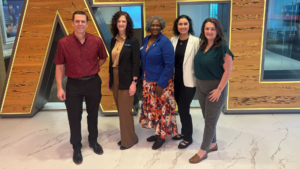
Roughly 60 individuals showed up, including Columbus Mayor Skip Henderson, local philanthropists, businesspersons and other community leaders. Representatives of the Georgia Center Opportunity and Better Work Columbus were also in attendance.
“Violence, homicide in particular, is the worst thing that a human being can do to another person,” said Josh Crawford, director of criminal justice initiatives at the Georgia Center for Opportunity.
He continued, “By restoring public safety in a community with a high rate of violence, you’re really taking the first step towards making a more prosperous and flourishing community.”

We know that crime in major metro areas across the United States is up. Here in Georgia, Atlanta is front and center on that issue, highlighted by a recent report by the Georgia Center for Opportunity showing a concerning rise in violent and property crime over the last few years.
While the crime problem in larger cities is crucial to address, smaller cities tend to get overlooked. Yet these cities represent a large portion of the country’s population. There are 335 cities with population levels between 100,000 and one million, but only 14 cities with populations over one million.
Take Columbus, Georgia as an example. The city’s population now stands at approximately 203,000—a slight reduction from 2020 when the population was 207,000. Since 2017, Columbus has seen a spike in crime.
The crime problem—and what to do about it—is the focus of a new GCO report. Titled “Reducing Crime in Columbus: Safer Communities Through Policy,” the report is authored by Josh Crawford, Director of Criminal Justice Initiatives at GCO.
“The human cost of this violence is dramatic, cutting lives short and leaving behind grieving families and fractured communities,” Crawford said. “The toll of violent crime goes beyond the physical cost to those directly impacted and includes financial costs to victims and taxpayers, the loss of productive years, and decreased economic mobility and growth in communities afflicted with high rates of crime.”

Our Columbus Crime Report details six practical solutions that city leaders can use to reduce crime in Columbus and restore safety, hope, and opportunity to the broader community.
Our focus at GCO is on empowering underserved, disadvantaged, and low-income communities. By starting with Columbus, we want to equip more of these overlooked cities across Georgia and the U.S. with policy reforms that will reduce crime and restore community safety.
Because Columbus is smaller, it’s easier to implement changes that would make a big difference. Success in Columbus could provide a model to inspire change in similar-sized cities.
Fixing the Columbus crime problem is about focusing on the most violent offenders. By addressing gang-related violence and solving more homicide investigations, Columbus can restore community safety, improve trust with city officials and law enforcement, and expand upward mobility and opportunity for residents.
Crawford suggests:

Violent crime is on the rise in Columbus, Georgia. What are the reasons, and can anything be done to stop it? Those questions are the topic of a new report from the Georgia Center for Opportunity (GCO) focused on Columbus’ recent spike in crime and ideas on how to mitigate it.
Titled “Reducing Crime in Columbus: Safer Communities Through Policy,” the report is authored by Josh Crawford, Director of Criminal Justice Initiatives at GCO.

Our Columbus Crime Report details six practical solutions that city leaders can use to reduce crime in Columbus and restore safety, hope, and opportunity to the broader community.
“Since 2017, crime has been on the rise in Columbus. And it’s only gotten worse during the COVID-19 pandemic,” Crawford said. “It’s imperative that city and community leaders come together to solve this problem. Our new report provides the groundwork.”
“The human cost of this violence is dramatic, cutting lives short and leaving behind grieving families and fractured communities,” Crawford said. “The toll of violent crime goes beyond the physical cost to those directly impacted and includes financial costs to victims and taxpayers, the loss of productive years, and decreased economic mobility and growth in communities afflicted with high rates of crime.”
Fixing the Columbus crime problem is about focusing on the most violent offenders. By addressing gang-related violence and solving more homicide investigations, Columbus can restore community safety, improve trust with city officials and law enforcement, and expand upward mobility and opportunity for residents.

Josh Crawford is a native of Massachusetts. He went to Penn State for his undergraduate degree and then finished law school in Boston. After a brief stint in Sacramento, California, working in the county district attorney’s office, Josh moved to Kentucky to help start the Pegasus Institute, a nonpartisan organization designed to promote opportunity. In addition to serving as executive director of the organization, Josh had a special focus on criminal justice policy.
“By focusing on public safety and order, we can restore hope and opportunity to rural communities.”

Q: What is the Small Changes = Big Results class? Who does it serve and what does it cover?
Amber: The new training that’s being offered through GCO’s Better Work Columbus program is a four-part series to help those in our community understand the “why” behind essential skills. The training was offered at SafeHouse Ministries in Columbus, Georgia, and many of their clients were in attendance. Now, SafeHouse serves the homeless population to help them obtain shelter, permanent housing, and employment.
Q: So what inspired the class? How did it get started?
Amber: There are many trainings and opportunities for job seekers in the community to gain knowledge of the topics that we introduced in class, but we noticed a disconnect as many were not seeing the value in these trainings or incorporating them into their job search and interviewing process. They were being taught how to do these things, but not necessarily why they were important. The focus of our training was to help explain why it matters. We wanted to complement and not duplicate the services already being offered, so at the end of each session participants were provided with resources where they could obtain more training and information about what we talked about during that class.
Q: What are some topics covered in the class?
Amber: Our Better Work Columbus program director Kristin Barker, and the lead recruiter from Columbus Water Works Inez Godbee, facilitated the first session. They helped to inform and educate the participants on why what you share in an interview matters, and then tips for best practices during interviewing. They also covered how to utilize job descriptions and job postings to make your resume stand out.
In the second session, we talked about why good communication and time management are essential before, during, and after employment, and how they directly relate to respect. The third session, one of our guest facilitators helped us understand why healthy relationships matter and how to build and maintain those relationships. They also introduced social capital — what it is and how it can be used to overcome roadblocks to employment.
For our fourth session, we had The Family Center in Columbus and Renasant Bank come in, and they brought valuable information to help the participants understand why budgeting matters and tips to get started on creating a budget and savings plan. They also touched on credit — what it is and how credit is sometimes used by employers and rental companies.
Work means more than just a paycheck. That is why we are focused on opening up the opportunities to work and thrive in every community.
Q: What’s some of the best advice to come out of the sessions?
Amber: There are so many golden nuggets that happened, but here are some of the best pieces of advice I heard. First, presenting a positive self-image will encourage an employer to consider you for hire regardless of your background or past mistakes. Second, being on time matters. It communicates to others whether they can trust and rely on you.
Third, your value comes from God, and believing that will impact how you see yourself and how others see you as well. And then the fourth and final one is to avoid setting goals that someone else tells you to set, or goals that you feel obligated to set. Set goals that are realistic and personal to you.
Each one of these has a correlation to how someone views themselves. If you have a negative view of yourself, others will see that too, but if you change the story in your mind — from failure to gratitude or even success — this can help us to portray a positive self-image. As a result, others will pick up on our energy and start to see us in that light also, and this can create many opportunities and open doors that we thought should or would be closed to us.
Q: That’s great! So were there any stories from the inaugural training that stood out in particular?
Amber: Yes! We had a participant who had limited skills in reading and writing, and this has been a roadblock for him for many years, but he now knows that there are people who care and are willing to invest their time to see him succeed. I assisted him throughout each session and we built a relationship, and he started to trust me and to share more of his story with everyone. Then, through collaboration with the SafeHouse, he is now being connected with a personal tutor who’s going to work with him on his reading and writing skills so that he can obtain a better paying position.
Q: Any overall advice for employers or community partners who are looking to connect with people looking for work?
Amber: I thought about this one for a while, and my advice would be to try to understand the different social norms of groups, and use that knowledge to help educate others on the expectations for the workplace. Every failed interview can be an opportunity to provide constructive feedback to help that person succeed in their next interview.
Q: What’s in store for the rest of the year?
Amber: We’ve got to do an “after action” review, but I would say that this is going to be something that is going to continue and to grow in Columbus.

Every May, a week is designated as National Police Week to honor America’s law enforcement members, especially those officers who sacrificed their lives while serving their communities. Along with remembering these local heroes, Police Week is an opportunity to reflect on the role law enforcement has in building vibrant communities where everyone can achieve their potential.
In 2020, 21% of U.S. residents had contact with the police, with most interactions relating to traffic stops or accidents, reporting of crimes, or seeking help with non-crime emergencies. Behind all of these interactions is a larger societal benefit of well-staffed, well-managed police forces: less violence.
Josh Crawford, GCO’s Director of Criminal Justice, notes: “Police are the element of the criminal justice system most visible to the public and the arm with which citizens are most likely to interact.”
That presence is key to discouraging crime and boosting people’s confidence in the safety of their communities. Over the past couple of decades, research has affirmed what many intuitively know—that having more police helps lower crime and violence.
Georgia is one of many states grappling with a shortage of police officers. Areas like Atlanta and Columbus in particular have struggled to recruit and retain enough officers, and communities are feeling the strain as violence rises and wait times increase for emergency responses.
According to the Police Executive Research Forum (PERF), police shortages have had three major drivers:
According to Crawford, defunding or otherwise redirecting money away from local police is not the answer.
“Proponents of ‘defund the police’ are quick to point to the fact that the money taken from police agencies would be reallocated to a myriad of social programs and direct investment in underserved communities,” said Crawford. “Worthy as these individual programs and investments may be, there is no social program that can replicate the essential functions of policing.”
In 1995 and again in 2009, federal grants from the Office of Community Oriented Policing Services (COPS) helped state and local law enforcement agencies address officer recruitment and retention challenges. The track record of this funding was strong: Police hires increased, and crime went down. Various research on COPS funding suggests another grant round could help police agencies address today’s staffing shortages — as long as the funding is tied to increasing full-time, sworn officers within the specific departments receiving the grants.
Whether it’s at the federal level or efforts closer to home, we should direct resources to what we know serves our neighborhoods best. Communities benefit when they have more officers with more hours of better training, not fewer officers with less training.

Q: Please tell us a little about yourself.
I come from generational poverty. I grew up very poor. I also struggled with addiction for a couple of years, but I’m now five years clean, which is great. God brought me out of that and He has also brought me out of poverty through employment and networking. Now, I have social capital which I didn’t used to have. I also have a better view of myself now than I used to. I thought that was just my life and that it wasn’t ever going to get any better. Then I got tired of living like that and I was like, “I’m going to do something different.” And I did whatever it took. It was a lot of work.
I have a criminal background as well. Looking at me on paper, most people wouldn’t hire me, but they bring me in for an interview. Then, they hear my story and they’re like, “Oh, wow! I want to give you a chance.” I’ve never been not hired because of my background, which is great in the position that I’m currently in.
A lot of the candidates that I work with at BETTER WORK Columbus deal with a lot of what I’ve already been through and overcome, so I can take my life experiences and bring that to them and help them come through that. That’s kind of me in a nutshell. As far as work experience, I feel like I’ve done it all. I’ve done it all like resorts, chicken plants, textile mills, and retail. I’ve done it all.
Q: What brought you to BETTER WORK Columbus?
I’m not from Columbus. I’m actually from Northeast Georgia, a little bitty, small town in White County. My husband and I moved down here. There just weren’t a lot of opportunities up there and he had a network down here. So, about a year after we got married, we moved down here, and then I didn’t work for a while, and then I started going back to work. It was just kind of part-time, just to kind of get out of the house.
We got involved with Fountain City Church in Columbus. Pastor Grant Collins is amazing. We love him. Before we became members, I asked him, “What’s your ministry? Who do you partner with? How are you trying to reach the community?” He told me that Jobs for Life is what they partnered with. And at the time I wasn’t working and I was like, “Oh well, I don’t know if that’s something that I would be interested in because I don’t even have a job.”
That’s when I met Kristin Barker. She was holding a Jobs for Life luncheon for employer partners at the church. I didn’t know that’s what it was. My pastor asked me to help volunteer serving food, and so I went and I got to sit through the presentation and it touched me because we didn’t have that where I was from and I had to do all of it on my own — like build my own connections and make myself more marketable to employers.
So many people need that and it gives you such an advantage in the work market place. And so after that, I was like, “I have to be a part of this.” You know, I have to and so a little bit later, Pastor Grant comes back. He asked me, ” Hey, do you want to be a facilitator for Jobs for Life?” I was hesitant. I got all nervous and I was like, “I don’t know. I don’t know if I can do it”. He said that he thinks I’d be great and so I said yes.
Kristin and I worked closely together for 13 weeks. And then the job posting came up with BETTER WORK Columbus, and she was like, ” I think you should apply for it.” I was a little worried because I didn’t have a degree or this or that and there’s my criminal background but she knew all of that. She’s heard my story and she still encouraged me to apply. And I was like, ” You know what, if God wants me to have it, then I’ll have it. ” And so I did and I applied and went through the interview process, and here I am.
Q: What’s your role at BETTER WORK?
I’m the program specialist for BETTER WORK Columbus. I’m the point of contact for candidates and am working on becoming the point of contact for employers as well. When candidates put in their applications — whether it’s for employment, training, or mentorship — I speak with them. We kind of figure out what it is exactly that they need, and what’s going to be a good fit for them. I help pair them with resources in the community as well as job opportunities. Or, if they’re interested in mentoring or having a mentor, then I partner them with that mentor as well and kind of foster that relationship.
“What really touches my heart is being able to help those people who are maybe underemployed or have just been out of the workforce for a while or moms that are trying to come into the workforce and being able to connect with those opportunities.”
Q: What are some of your favorite aspects of BETTER WORK’s mission?
Our positive relationship with employers is my favorite part. In Columbus there are around 300 applicants for every open job. It’s a tough environment. But with BETTER WORK, we have those relationships so we can kind of help the candidates get a foot in the door. What we’re doing though is we’re targeting people who are in poverty.
We don’t turn anybody away. I have people who come to me with Bachelor’s Degrees that’s just relocated and it’s great to be able to help them to gain employment, too. But what really touches my heart is being able to help those people who are maybe underemployed or have just been out of the workforce for a while or moms that are trying to come into the workforce and being able to connect with those opportunities. A lot of them are on government programs. Eventually, the goal is to be self-sufficient and connect them with opportunities where they can work.
It’s not just a job. It’s something that’s supposed to be long-term where they can grow. They can learn more about themselves. They learn more about the workforce and they can move up in the industry. I love being able to give those opportunities to people that want them.
Q: What are some of the things that motivate you, personally, in your work?
My hope for the future of BETTER WORK is that I want us to become the go-to place for job applicants and employers. Applicants can feel confident that we’re going to be able to place them somewhere. Employers are going to be confident that we’re going to send them people that are going to be there till they retire, and they’re going to be wonderful employees. Also, it could also reduce unemployment rates and things like that. I really want to create a childcare program. That’s what I want to do.

“I look forward to moving on up.”
That’s how Eddie Craig describes his current career aspirations. He has light in his eyes and hope in his heart, now that he has a steady job and a place to call home. But life wasn’t always so good for Eddie.
Eddie spent nearly five years on the street, homeless and working odd jobs. He earned money by raking and mowing yards, but it wasn’t enough to pay for a place to live. Every night, he slept in his car.
Then, he came to Home For Good, where he got in touch with an advocate named Ms. Terry. One morning, Ms. Terry located his car, where she woke him and introduced herself.
“I heard her tap on the car window one morning. To be honest with you, I thought it was the police, because they were white,” Eddie says. “But I stepped out of the car and found out her name was Ms. Terry. She got my name and everything.”
For about a month, Ms. Terry worked with Eddie to find affordable housing.
“The next thing I knew, she was calling me to tell me I had my own place,” he says. “We went over there and checked it out. I didn’t care what it looked like. She said, ‘You like it?’ I said, ‘Yeah, I like it, no problem.’”
With his housing secure, Eddie’s next step was to find more permanent work. That’s where BETTER WORK Columbus stepped in. Eddie attended a job fair hosted by BETTER WORK. Eddie met Kristin, who went on to help him complete his hiring paperwork and get his questions answered.
“Between BETTER WORK and Home For Good, getting Eddie into housing and a steady job was a team effort,” Kristin says.
Unfortunately, once Eddie was hired at his first job through BETTER WORK, reliable transportation proved to be an obstacle. His employer changed his schedule to another shift, and he couldn’t get to work. Still, he was determined to find another job, so he reached back out to BETTER WORK for help any time he encountered a roadblock.
“He succeeded because he didn’t give up,” Kristin says.
Fortunately, Eddie was able to get connected at a new job with the Marriott Hotel, where he’s happily employed and thriving. Since Eddie doesn’t have a formal education, Kristin and Ms. Terry helped him complete and submit his application paperwork. Along the way, he also got help obtaining the identifying documentation he needed to get hired — items such as his birth certificate, ID, and Social Security card.
“I had to start from the bottom,” he says.
Eddie credits Kristin for the job and Ms. Terry for his escape from homelessness.
“Thank God for BETTER WORK,” says Eddie. “I’m a living witness this has helped me.”
Eddie’s success story at BETTER WORK is largely attributed to the fact that he had a genuine desire to earn an honest living for himself. He knew others in the homeless community who didn’t share his drive, but he was determined to build a better future for himself.
“I consider myself physically healthy and mentally healthy,” he says. “As far as a paycheck, everybody loves a paycheck.”
For others like Eddie who are looking for a steady job, he offers reassurance that the team at BETTER WORK will take their interests and strengths into consideration during the job search process.
“BETTER WORK is going to help you find what you love to do,” he says. “It won’t just be digging ditches — unless you like digging ditches.”
Ultimately, Eddie is excited and proud to have taken steps toward building the life he wants. And BETTER WORK is proud to have played a part in his story.
“It’s just good to be in the workforce,” he says.

On July 7th the first group 11 men and women graduated from the Better Work Jobs for Life class at the Asbury UMC training site. This course was the first of its kind in partnership between Jobs for Life and BETTER WORK Columbus.The goal was to give men and women a stronger foundation in life skills so they can go on to be reliable employees for local businesses.
“The Jobs for Life job-readiness training course helps men and women understand their dignity and God-given identity and gifts, develop character, and foster a supportive community that will equip them for work, life, and their overall goals. This method, combined with soft skills training, has proven to enable unemployed and underemployed men and women to find and keep meaningful employment.”
The Columbus community came together to support this group of students overcome their circumstances, and we are excited to see this partnership become a staple of the BETTER WORK program.