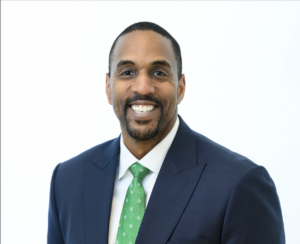
Media statement, in the news, Georgia news, ga news

PEACHTREE CORNERS, GA—The Georgia Center for Opportunity (GCO) offers its full support to the Stronger Workforce for America Act of 2026 and commends Congressman Tim Walberg, Chair of the House Committee on Education and Workforce, for introducing this significant legislation to reauthorize the Workforce Innovation and Opportunity Act.

GCO is a nonprofit, nonpartisan organization that focuses on ensuring access to quality education, fulfilling work, and healthy family lives through research, policy analysis, and community initiatives. We advance solutions that increase opportunity and give Georgia families a durable path out of poverty. We are also a founding member of the Alliance for Opportunity, a multi-state coalition focused on improving state-administered public assistance and workforce programs to help Americans achieve lasting opportunity and stability.

The Stronger Workforce for America Act aligns with our work and includes an invaluable option for state flexibility, the Make America Skilled Again Grants. These grants would allow 10 states to implement the One Door to Work model, which would empower them to integrate their safety net and workforce systems.

Utah has had this authority for nearly 30 years, after being grandfathered into the strategy. This has enabled Utah to provide its citizens with both support to meet their immediate needs and a clearer path into the workforce and toward self-sufficiency.

The results of Utah’s One Door policy are impressive. For example, the state has outpaced the national labor force participation (LFP) rate, or the number of working-age people employed or looking for a job, by an average of 5.3%. As of late 2025, Utah’s LFP rate was approximately 67.6%, one of the highest in the nation.

In contrast, Georgia’s LFP rate is 60.6%. Put another way, nearly 40% of Georgians, many of them prime-age men, who can work are choosing not to.

Eric Cochling, GCO’s Chief Program Officer and General Counsel, emphasized the detrimental impact of these statistics and the critical importance of work for a flourishing life:

“A good job offers more than just a paycheck. It provides purpose and stability and is one of the most durable ways to empower people to break the cycle of poverty.”

He also stressed the need for reform: “If we truly want to expand opportunity in Georgia and across the country, individual workforce and safety net programs must start functioning as a true system—one that’s designed to support human dignity and flourishing. The Stronger Workforce for America Act is a much-needed step in the right direction.”

Georgia policymakers are paying attention to the success of Utah’s integrated welfare and workforce system and are seeking opportunities like the Make America Skilled Again Grants to implement similar reforms that benefit both Georgians and the state economy.

As Buzz Brockway, GCO’s Vice President of Public Policy, said:

“The ability to link workforce and safety net systems is key to boosting Georgia’s current trajectory as a leader in economic opportunity. The Make America Skilled Again Grants included in the Stronger Workforce for America Act would give Georgia’s leaders a powerful way to strengthen families, expand the workforce, and set the state on a path to more rapid growth.”

Randy Hicks, GCO’s President and CEO, added:

“Every state deserves the ability to design an integrated system that enables people to thrive. Right now, every wasted hour navigating disconnected programs is an hour that could have been spent building a better future. This bill ensures that states can rethink the status quo and create pathways to opportunity for every citizen.”

Through the changes it proposes, the Stronger Workforce for America Act of 2026 is poised to make meaningful welfare and workforce reforms possible in Georgia, and GCO strongly urges its enactment.

###

Georgia Center for Opportunity (GCO) is independent, non-partisan, and solutions-focused. Our team is dedicated to creating durable paths out of poverty for families in Georgia and beyond. To achieve our mission, we research ways to help remove barriers to opportunity and promote our solutions to policymakers and the public so that public policy and civil society can effectively and innovatively strengthen family stability, economic mobility, and child opportunity in the communities where lives are lived. 

Send media inquiries to:

Rebecca PrimisGeorgia Center for Opportunity
RebeccaP@foropportunity.org 

A full agenda is underway in the 35 states that have just convened their legislative sessions. Affordability is the buzzword heard far and wide, as millions of Americans continue to struggle with the high cost of living. Economic concerns are likely to dominate statehouses in 2026, especially in an election year, with 36 states holding gubernatorial races. The issues debated in the legislative halls will almost certainly spill onto the campaign trails.

Even without the election-year backdrop, state lawmakers will feel pressure from their constituents to do something about rising household costs. Beyond the cost of groceries and lingering inflation, nothing has quite captured the cost-of-living spotlight like the skyrocketing price of housing.

Home ownership, once a staple of the American Dream, is out of reach for many, but especially the poor and younger generations. The average first-time homebuyer is now 40, a striking shift from the 1980s and 1990s, when Americans usually bought their first home in their late 20s or early 30s.

Owning a home is the key to moving up the economic ladder and building wealth, but it also plays an important role in helping people build families and communities. When Americans no longer see homeownership as part of their future, they delay starting families and putting down roots.

Many state and local governments recognize the magnitude of this problem — and, thankfully, have a great deal of control over housing policy through zoning, permitting and land-use rules. State leaders can look to Montana as an example; it recently passed housing reforms that are set to expand supply and reduce prices.

Read full article here

Eric Cochling is chief program officer and general counsel at the Georgia Center for Opportunity.

With 2025 behind us, violent crime — especially murder — is likely down nationally once again. Although it will be months before we have official statistics, early indicators suggest a continuation of the trend that began in mid-2022 and has resulted in tens of thousands of fewer crime victims.

Americans are taking notice. For the second year in a row, respondents are reporting crime as a less serious problem. Less than half of Americans think crime is now rising.

All of this should be welcome news. And like most policy successes, where you sit politically likely informs what you believe about why it happened. Also like most policy achievements, there is disagreement at this point exactly what has contributed to the decline.

Yes, the Biden administration did spend hundreds of millions of dollars on “community violence intervention” programs. Police departments spent much more than that recruiting new officers. States passed laws strengthening sentences for violent offenders. Voters in big cities also began to reject progressive prosecutors, and police departments all over began to implement best practices focused on violent groups and repeat offenders.

What no one is claiming, however, is that the recent decline in murder and violence is the result of dramatic improvements in poverty, education, inequality, racial prejudice or any other so-called “root cause” of crime.

For the uninitiated, “root causes” refers to the set of social conditions that many far-left politicians, progressive activists, and sociology and criminology professors argue are the true drivers of criminal behavior. These argue that reducing crime would first require addressing issues such as poverty, inequality, and housing. They consider policing, prosecution, punishment, and incapacitation as stop-gap measures at best. Some will even argue that these actually contribute to crime by worsening social and economic problems.

By focusing on underlying social conditions rather than individual decision-making and free will, progressives try to divert focus away from individual accountability toward society more broadly. But as crime has dropped in recent years, the social conditions said to produce crime have been unchanged or gotten worse.

On the economic front — and contrary to popular belief — inequality has remained largely unchanged in recent years. A broader measure of poverty that accounts for government benefits and taxes shows that poverty has increased in recent years among working-age adults and children. (The rate is down for seniors, but that isn’t a group frequently committing violent or serious crime.)

Read full article here

Joshua Crawford is a public safety fellow with the Georgia Center for Opportunity.

Reforming the Supplemental Nutrition Assistance Program can help families get short-term help without discouraging long-term goals for work and financial independence.

Key Points

  • SNAP’s benefit cliffs discourage work and career growth by abruptly cutting off assistance when recipients earn even modest income increases, trapping families in financial instability and reducing workforce participation.
  • Proposed reforms aim to eliminate benefit cliffs through gradual benefit reductions, clear exit points, and adjusted benefit levels, encouraging financial independence without penalizing career advancement.
  • Comprehensive SNAP reform benefits all stakeholders, empowering workers, stabilizing families, addressing labor shortages for businesses, and potentially reducing program costs by $30 billion annually.

Benefit cliffs discourage work and trap families in long-term financial struggles. A new policy solution offers a way out.

The Supplemental Nutrition Assistance Program (SNAP) is one of the largest anti-poverty programs in the U.S., providing over 41 million Americans with critical food assistance in 2024. But for many recipients, a system designed to support often ends up trapping—with significant barriers known as benefit cliffs.

These cliffs occur when small increases in income result in recipients suddenly losing their SNAP assistance, leaving them in a worse financial position for working more hours or earning an income boost. For example, a single parent’s modest hourly raise might lead to a benefit cut that completely offsets their increased take-home pay.

The negative ripple effects extend far beyond individuals and households. Benefit cliffs reduce workforce participation and make it harder for plenty of small businesses and industries to find the workers they need to grow and serve customers.

A new proposal for reform, developed with research by Erik Randolph at the Georgia Center for Opportunity in collaboration with Angela Rachidi of the American Enterprise Institute (AEI), offers a way to dismantle SNAP benefit cliffs and restore the program’s original mission—helping families achieve financial independence and stability.

A new SNAP reform report from American Enterprise Institute and Georgia Center for Opportunity shows how improve access to work and reduce costs to taxpayers.

SNAP’s design discourages career growth among recipients

SNAP is meant to help low-income families put food on the table. But the system unintentionally penalizes those who pursue better wages or career opportunities.

For many recipients, earning extra income—not just large raises but even modest increases as one gains skills or works more hours—means abruptly losing SNAP benefits altogether. Instead of slowly tapering down, benefits “fall off a cliff” as income rises.

This financial disincentive creates a dilemma for households relying on SNAP. While accepting additional shifts or applying for a higher-paying position could signify career growth, it may financially set them back without SNAP assistance offsetting basic expenses.

The economic impact is widespread. With fewer prime-age workers, employers encounter labor shortages, and their ability to operate efficiently is compromised. Workforce productivity also declines when workers are stuck in part-time, lower-skilled jobs rather than advancing to higher economic opportunities. The result is a cycle that makes it harder for families to break free from reliance on public assistance programs.

New SNAP reform proposals offer a way forward

Research by AEI and GCO outlines actionable steps to eliminate benefit cliffs while maintaining SNAP costs close to historical levels. These recommendations include changes to critical factors within the program’s structure to allow for a smoother, gradual reduction in benefits as income rises.

Key reforms involve adjusting the following elements of SNAP’s benefit system:

  • Adjust participants’ cost-sharing responsibilities. The proposed plan would reduce the benefit reduction rate from 30% to 18%, making it easier for families to transition off benefits.
  • Cost-sharing should begin as soon as income increases. Right now, deductions delay cost-sharing, which creates benefits cliffs when income limits run out. The new plan is a middle ground, starting benefit reductions earlier but at a lower rate. While it might lower benefits for many families, benefit cliffs are eliminated or reduced.

These structural adjustments effectively close the gap between earned income and benefit loss, removing financial penalties for participants who work more hours or accept higher-paying opportunities.

A win for workers, families, small businesses, and taxpayers

Simplifying and improving SNAP’s benefit structure solves major labor market challenges. For recipients, reforms encourage workforce participation and career advancement, empowering them to climb the economic ladder without fear of a financial setback.

For employers, these changes help restore a steady supply of available workers, addressing hiring difficulties in industries that rely on hourly, shift-based, or entry-level staff. Additionally, SNAP reform creates fiscal balance while allowing the government to save money long term—potentially reducing program expenses by 27% or $30 billion annually.

GCO continues to investigate ways to improve safety-net programs to help families escape poverty, and these recommendations for SNAP are an important piece of those efforts. Employment is one of the most reliable ways to break cycles of poverty, yet benefit cliffs trap too many families in stagnant economic conditions. Eliminating these barriers will strengthen the workforce, stabilize families, and create economic momentum that benefits us all.

Download the full report from American Enterprise Institute and Georgia Center for Opportunity here.

Subscribe

* indicates required

Subscribe

* indicates required