HomeGeorgia Work First

Georgia Work First

Georgia Work First: A Clearer Path to Meaningful Work

Georgia has hundreds of thousands of open jobs—and hundreds of thousands of Georgians disconnected from the workforce. A Work First strategy can help state leaders build a more coordinated system that opens doors to meaningful work, strengthens families, and supports Georgia’s continuing economic growth.

Georgia’s Workforce Gap: Jobs Are Only Part of the Equation

Georgia has made major strides in attracting businesses and creating jobs. But creating jobs is only half the equation. Too many Georgians are still on the sidelines while employers have open positions to fill. For people struggling to enter the workforce or earn a family-sustaining wage, those jobs represent an opportunity—but they also need a clear path to reach them.

60.8%
Labor force participation (36th nationally)
275,000
Job openings
800,000
Georgians out of work or disengaged from work, education, and family care
157,600
Young people neither in school nor working
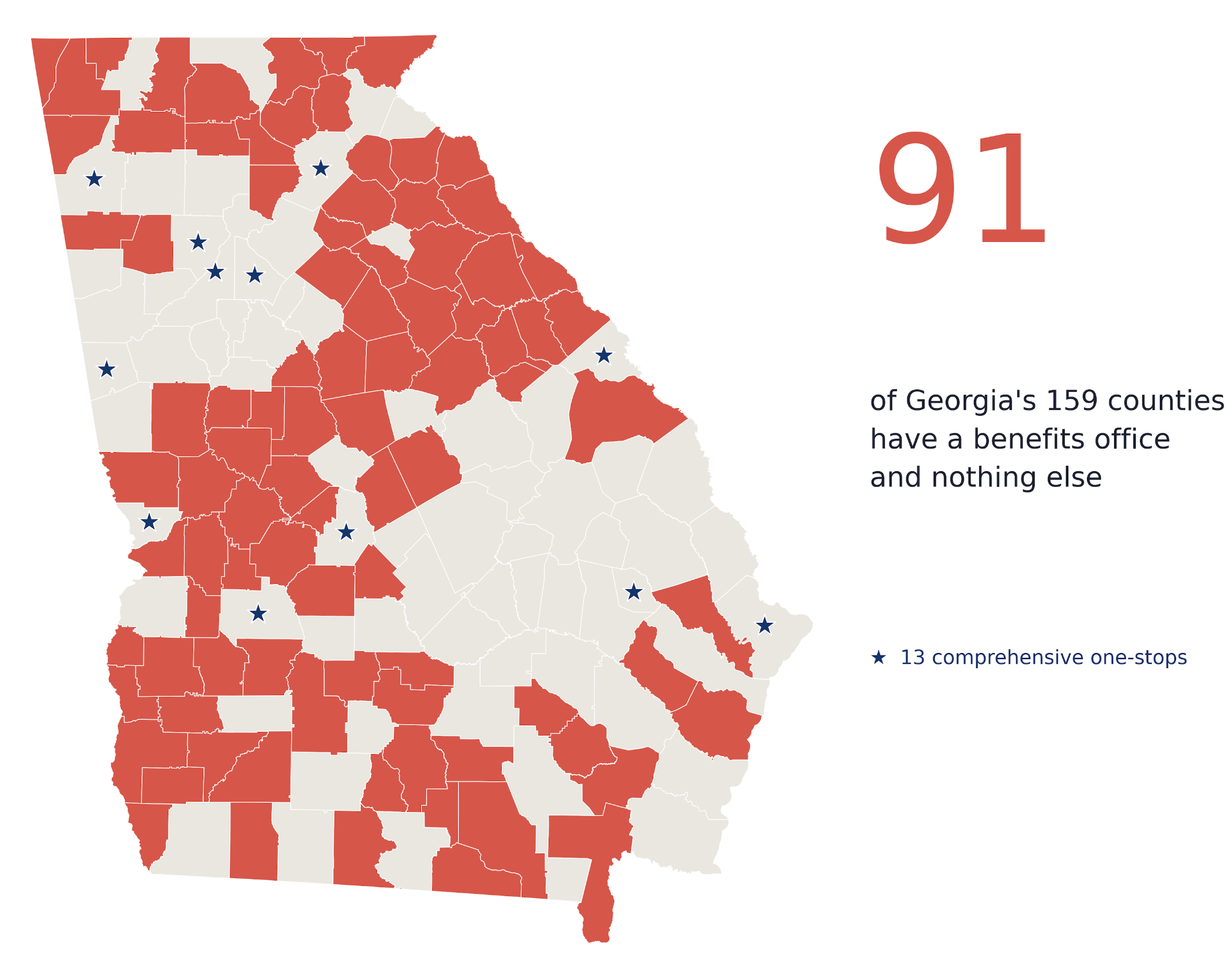
91 of 159 counties
With a benefits office but no help to get a job
1.2 million
SNAP recipients
1.8 million
Medicaid/CHIP enrollees

Georgia has programs. People need a clearer path through them.

Georgia has workforce programs, training opportunities, and safety net services designed to help people overcome barriers and find stability. But these programs often operate separately. That can make it harder for Georgians to find the right help—and harder for state leaders to coordinate services around the shared outcome of connecting more people to work. GCO’s roadmap identifies three hurdles:

Workforce services are fragmented.

People looking for work must navigate multiple programs, offices, caseworkers, and rules. Georgia has not had a coordinated statewide workforce system, which has made it difficult for job-seekers to know where to start or get connected to all the services they need. Recent legislation has begun to change this. In 2026, Georgia lawmakers passed House Bill 1302 to coordinate state agencies for education, student achievement, and workforce readiness under the Governor’s Office of Education and Workforce Strategy (GOEWS).
Assistance isn’t consistently linked to work.

Getting help with an immediate need doesn’t always lead to a plan for long-term independence. Someone seeking SNAP, Medicaid, child care, or other support isn’t connected to employment, training, or other assistance that could help them move toward work.

Fragmentation makes it harder for the state to use resources effectively.

Separate programs mean duplicate administration, disconnected data, and fewer resources reaching job-seekers and employers. A more coordinated system could give state leaders greater visibility into what’s working and make it easier to focus resources on employment outcomes.

How Georgia’s System Is Set Up Today

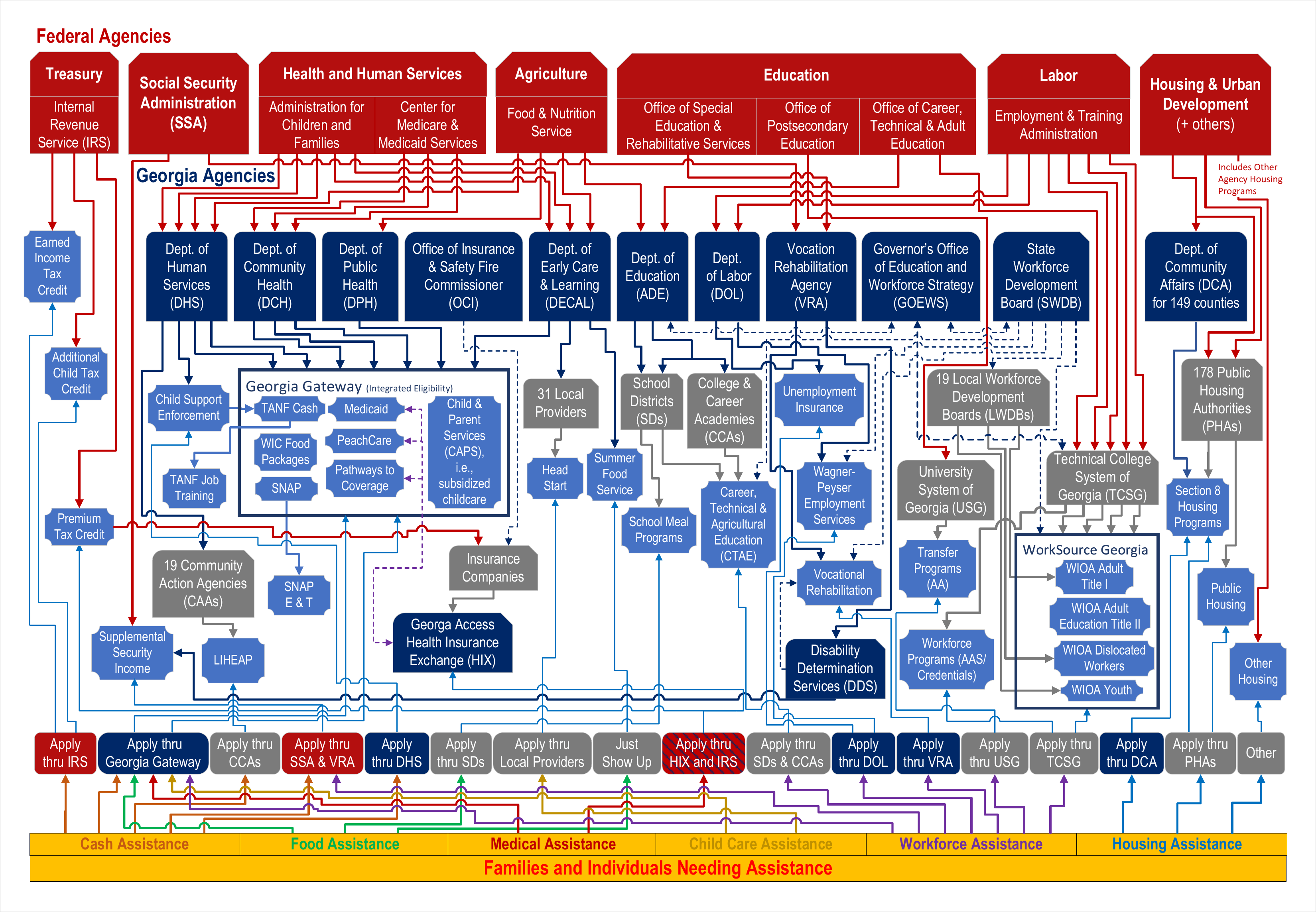
Georgia safety net and workforce agencies and programs
Georgia’s safety net and workforce programs operate through separate systems. Someone seeking benefits must start at the bottom of the diagram above and navigate multiple agencies and programs to access basic services. Almost none of those offer assistance with obtaining work.
Workers in a woodworking workshop

More Than a Job: Why Work Matters for Georgia Families

Systems exist to serve people and improve their lives. GCO’s vision for a statewide Work First strategy isn’t just about economic growth, nor is it about structural changes for the sake of the system. It’s about creating thriving communities where families can flourish.

Work is more than a paycheck; it’s a connection to meaning and community. GCO’s research review found that prolonged unemployment has been associated with greater stress, social isolation, and poorer mental and physical health. Overall, the evidence suggests that work can provide not only economic stability, but also purpose, social connection, and a stronger foundation for long-term well-being.

A system that allows people to get basic assistance quickly—and connects them to work effectively and consistently—gives families more opportunities to avoid long-term dependence and its many negative outcomes.

A Work First Opportunity Roadmap for Georgia

GCO’s proposed Work First strategy for Georgia would integrate workforce development and safety net support into a single system focused on one goal: helping more Georgians find work and greater economic opportunity.

The strategy would bring Georgia’s workforce programs and human services together through a One Door to Work model, building on the state workforce audit’s recommendations. Instead of sending Georgians to separate programs, people, and paperwork, services would be coordinated around a person’s path to work and independence.

Inside: Georgia workforce data • State audit findings • Executive and legislative actions • Work First recommendations • Lessons from other states

What Changes Under a Work First System?

GCO’s model proposes the following changes to how people access services and how the state tracks results:

Current ApproachWork-First Approach
Residents navigate multiple officesA clearer, coordinated front door to opportunity
Eligibility and services handled program by programPrograms work together for whole-person service delivery
Workforce programs and human services don’t interactIntegrated work-focused case management
Enrollment-focused success metricsOutcome-focused accountability

Three Steps to Connect More Georgians to Work

GCO’s Work First roadmap proposes three changes to bring Georgia’s workforce programs and human services together around employment and upward mobility.

Two industrial workers reviewing a laptop
  1. 1. Adopt one statewide workforce strategy.

    A single Cabinet-level agency would bring workforce programs and major human services into one coordinated system focused on employment and upward mobility.

  2. 2. Create one coordinated path from assistance to work.

    Integrated intake, eligibility, and case management would connect employment, training, and the supports Georgians need to work. Instead of handling services program by program, caseworkers could use a shared process that puts a person’s employment plan and community connections at the center.

  3. 3. Align funding and accountability around outcomes.

    Coordinated funding streams would support a statewide system rather than separate programs, with the goal of reducing duplicative administration. Tracking and reporting outcomes would help state leaders evaluate whether programs are helping people find work, increase earnings, and move toward economic independence.

What Georgia’s Own Workforce Audit Found

A December 2025 examination by the Georgia Department of Audits and Accounts confirmed that Georgia’s workforce system faces challenges that go beyond how much the state spends. Coordination, access, and data are also factors.

Georgia counties with benefits offices and workforce services

Key Finding #1: Fewer Georgians are being served.

Enrollment in WIOA Title I programs fell by more than half over five years, and 11 of Georgia’s 17 Local Workforce Development Areas had waiting lists for at least one program.

Key Finding #2: Programs aren’t consistently connected.

Most Local Workforce Development Areas reported little or no coordination with SNAP Employment & Training, even though the programs serve overlapping populations and provide related services.

Key Finding #3: The state needs better visibility into results.

Workforce programs generally meet federal benchmarks, but the audit identified opportunities for additional measures such as job retention, employer satisfaction, and cost per participant. Performance information is also spread across multiple sources rather than housed in one place.

After reviewing the findings, Georgia lawmakers passed the Education and Workforce Strategy Act during the 2026 legislative session. The Act created the Governor’s Office of Education and Workforce Strategy (GOEWS), which will coordinate state agencies involved in education, student achievement, talent development, and workforce readiness. The new office is an important first step toward a statewide Work First strategy, and it would also work closely with the Cabinet-level agency GCO recommends.

What Georgia Can Learn from Other States

GCO’s roadmap examines state efforts to make workforce programs easier to access and connect more people to work and a family-sustaining wage. These efforts bring employment, training, and other workforce support services together through a statewide workforce strategy.

Utah

Utah’s Department of Workforce Services was created in 1997 and brings more than 50 programs under one unified state strategy and administrative agency. Utahns have a single point of access for government assistance and a single caseworker who provides comprehensive support, including connecting people to work.

The first point of access involves developing an employment plan and registering for work. Eligibility for benefits such as SNAP or child care is handled through a single division, rather than requiring people to interact with multiple agencies.

Louisiana

Louisiana’s One Door to Work initiative followed a series of performance audits of safety net and workforce services. In 2024, the state created a task force to develop a plan to integrate and modernize workforce and welfare programs.

As a first step, lawmakers passed legislation in 2025 transferring particular support programs to the state workforce agency and renaming it Louisiana Works. The legislation also established pilot locations to bring safety net benefits and workforce services together. The roadmap describes additional steps toward a single statewide workforce system, improved coordination, and programs more closely aligned with employer demand.

Download the Work First Roadmap for Georgia

What would it take to build a work-focused system in Georgia?

GCO’s roadmap lays out specific actions Georgia’s governor and lawmakers can pursue to better connect workforce programs and human services, improve delivery of services, and help more Georgians move toward employment and economic independence.

Explore the research behind the recommendations, findings from Georgia’s workforce audit, and lessons from other states working to bring employment, training, and support services together.

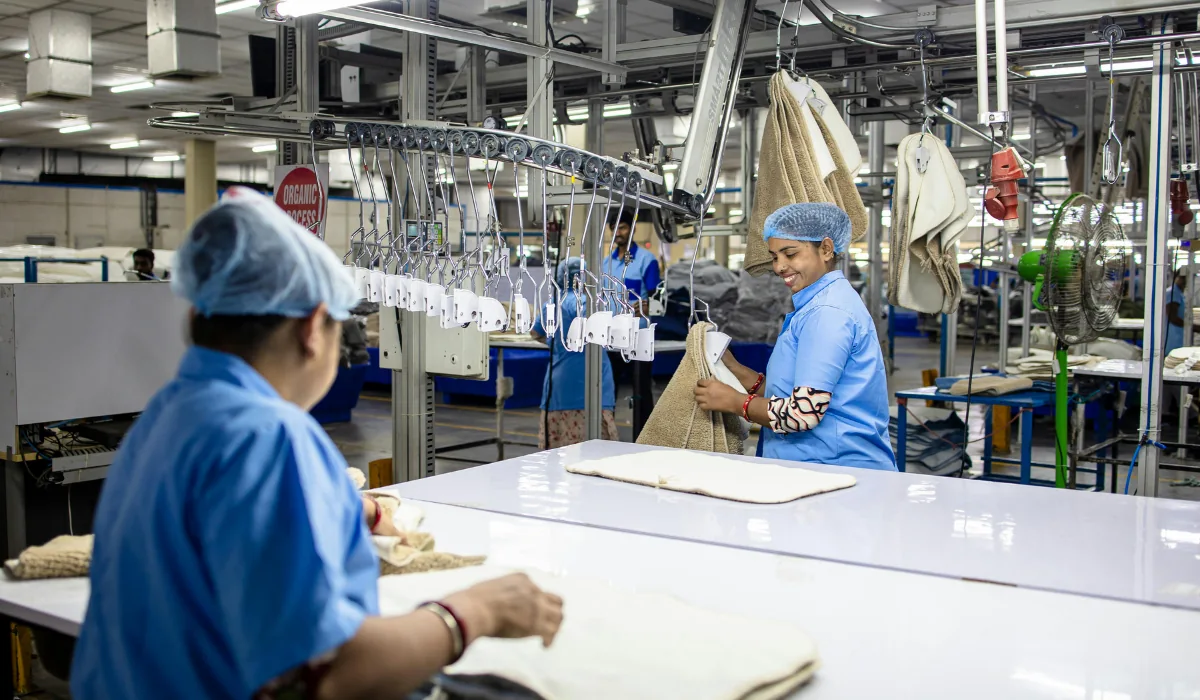
Workers on a textile production floor

Questions About Georgia Work First

Is Georgia Work First a new benefits program?

No. Georgia Work First will strengthen the connections between existing safety net programs, employment services, and educational pathways to help Georgians more easily navigate available resources and pursue meaningful jobs.

What is the One Door to Work model?

This model would integrate safety net support and workforce development into a single system. Instead of sending people to separate offices for benefits, training, and employment help, those services would be coordinated around a person’s path to work and independence.

What would change for someone seeking help?

People who receive SNAP, Medicaid, child care, or other supports would work with one caseworker who could also connect them to employment and training opportunities. The changes would give people a much clearer, more efficient route from government dependence to rewarding jobs and self-sufficiency.

Would One Door to Work change benefits or work requirements?

No. Existing welfare program rules and work requirements would stay the same.

Which states offer useful examples?

Utah is the only state with a fully operational One Door to Work system in place. Federal legislation implemented in 1998, after Utah integrated its welfare and workforce services, sends federal funds directly to local workforce boards and prevents administration at the state level across the rest of the country. But Louisiana and Arkansas, among other states, are taking big steps to implement similar Work First strategies.

How does a Work First approach help prevent fraud?

Integrated welfare and workforce systems will improve transparency across programs and help administrators identify duplications, inconsistencies, and incorrect payments sooner. The focus on employment also helps welfare recipients move toward work and financial independence more quickly.

How does a Work First approach help local communities thrive?

By connecting more people with employment, education, and career development opportunities, the Work First strategy can help families build financial stability and can strengthen the local workforce. These outcomes will help create more resilient households, healthier communities, and greater economic prosperity.

Talk with a GCO Workforce Policy Expert

Get in touch to book a GCO policy expert for an interview or speaking engagement.

Rebecca Primis

Rebecca Primis
Vice President of Communications
rebeccap@foropportunity.org

About the Georgia Center for Opportunity

The Georgia Center for Opportunity is an independent, nonpartisan organization advancing community-based solutions and statewide policy reforms that expand opportunity and help families achieve durable pathways to prosperity.

Subscribe

* indicates required